
Faith
What Happens When a Baby Survives the Pills They Sent Her


Faith Facts
- A five-pound baby was discovered alive in a toilet after the mother took mail-order abortion pills in Durham, North Carolina
- The case has exposed gaps in accountability for telemedicine abortion providers who send pills across state lines
- The incident raises urgent questions about whether existing laws can protect women and unborn children from dangerous at-home abortion procedures
A disturbing case from Durham, North Carolina has brought the issue of mail-order abortion pills to the forefront of the national conversation. Inside a residential bathroom, emergency responders discovered a five-pound baby floating in a toilet bowl, barely clinging to life. The mother had taken abortion pills obtained through the mail, highlighting the growing risks of telemedicine abortion services that operate without proper medical oversight.
The incident has sparked renewed debate about the accountability—or lack thereof—of abortion pill suppliers who send medication across state lines. These providers often operate from states with minimal regulation, mailing pills to women in other states without in-person medical examinations or follow-up care. When complications arise, as they did in this Durham case, the women are left to face the consequences alone.
The baby’s survival stands as a testament to the sanctity of life that conservatives have long championed. Despite being subjected to chemical abortion, this child fought for life and was discovered before it was too late. The case underscores the reality that these pills don’t just terminate pregnancies—they deliver full-term babies into toilets, sinks, and bathtubs across America.
What troubles many faith-based advocates most is that the suppliers of these pills face no legal consequences. They operate in a gray area of the law, shielded by interstate commerce protections and the lack of clear federal standards for telemedicine abortion. Meanwhile, women suffer physical and psychological trauma, and babies like this five-pound infant are left fighting for survival in the most undignified circumstances imaginable.
The Durham case reveals the ugly truth behind the abortion industry’s push for “convenience” and “access.” These mail-order services prioritize profit over patient safety, sending powerful medications to women without proper screening for gestational age, ectopic pregnancy, or other risk factors. When something goes wrong—as it inevitably does—the providers face no accountability.
Christian conservatives have long warned about the dangers of expanding abortion access without proper safeguards. This case validates those concerns in the most heartbreaking way possible. A mother was left alone to deliver a baby into a toilet, and the child who should have been protected by law instead had to fight for every breath.
State legislators across the country are now grappling with how to address this loophole. Some are proposing laws that would hold telemedicine abortion providers accountable for adverse outcomes, while others are seeking to ban mail-order abortion pills entirely. The challenge lies in enforcement—how can states regulate providers who operate from thousands of miles away?
Pro-life advocates argue that the solution must involve both state and federal action. States need stronger laws protecting unborn children and ensuring that women receive proper medical care, not just pills in the mail. Meanwhile, federal authorities must clarify whether these providers are violating existing drug safety laws and interstate commerce regulations.
The survival of this five-pound baby also raises profound questions about when life begins and what protections should be afforded to the unborn. If a child can survive outside the womb at this size and development, doesn’t that child deserve legal protection? The abortion industry would prefer we not ask such questions, but cases like this make them unavoidable.
For the Christian community, this incident serves as a stark reminder of why the fight for life matters. Every child is created in God’s image, with inherent worth and dignity. When we allow a system that treats human life as disposable—packaging it up and mailing it away with a few pills—we abandon our most fundamental moral responsibilities.
The mother in this case also deserves compassion and support. Women seeking abortions are often facing difficult circumstances, and the abortion industry exploits their vulnerability rather than offering genuine help. True compassion means providing resources, support, and alternatives that affirm both the mother’s dignity and the child’s right to life.
As this case moves through the legal system, it will likely set important precedents for how states can regulate telemedicine abortion and hold providers accountable. The outcome could determine whether similar tragedies continue to unfold across the nation or whether meaningful protections are finally put in place.
The fact that abortion pill suppliers continue to operate without consequence, even as babies are born alive and left struggling in toilets, should outrage every American who values life and justice. This is not healthcare—it’s an unregulated industry that prioritizes ideology and profit over women’s safety and children’s lives.
Let us know what you think, please share your thoughts in the comments below.

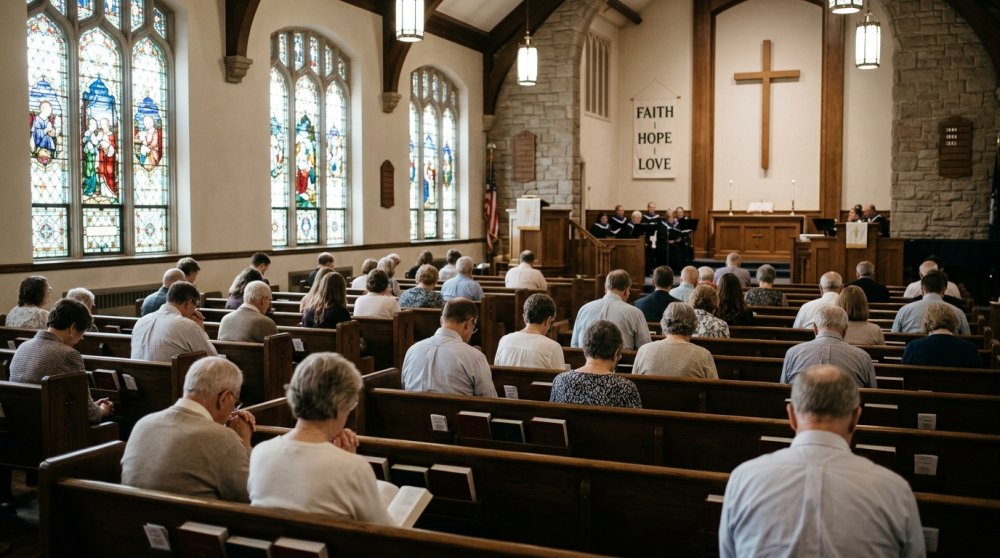
Faith Facts
- God examines the heart rather than outward gestures during worship.
- Scripture teaches that authentic faith is shown through obedience and love, not visible enthusiasm.
- Believers are called to honor every sincere heart that worships in spirit and truth.
Too often, outward expressions of enthusiasm are mistaken for spiritual maturity. But God looks at the heart, not whether we’re standing, sitting or raising our hands, says Dawn Butler.
“God looks at the heart, not whether we’re standing, sitting or raising our hands,”
Churches across America have seen a growing emphasis on physical expressions during worship. This trend can unintentionally pressure believers who prefer quieter reverence. The result is that some faithful Christians feel judged for their personal style of worship.
“Too often, outward expressions of enthusiasm are mistaken for spiritual maturity.”
True worship flows from a surrendered heart that seeks to honor God in every area of life. Scripture consistently points to inward devotion rather than external performance. When congregations focus on visible actions, they risk overlooking the quiet strength of those who serve faithfully in the background.
Christian liberty allows room for both raised hands and bowed heads. The key is whether each believer approaches the Lord with reverence and sincerity. Families benefit when churches encourage unity over uniformity in worship practices.
“God looks at the heart, not whether we’re standing, sitting or raising our hands.”
Let us know what you think, please share your thoughts in the comments below.

Faith Facts
- The Restoration Movement produced three distinct fellowships by 1906, with Churches of Christ emerging as a conservative, Bible-focused body
- Early 20th-century leaders in Indiana, Tennessee, and Texas held differing convictions on the Holy Spirit, millennial teaching, and church institutions
- The conservative Texas tradition ultimately shaped the doctrinal identity that guided Churches of Christ for much of the twentieth century
A new book from Abilene Christian University Press offers a detailed look at the doctrinal battles that forged the identity of Churches of Christ in the decades after 1906. The volume, the first of three planned works, draws on essays by eight authors who trace how congregations navigated questions of Scripture, worship, and church order.
By the early twentieth century, the Restoration Movement had separated into three distinct groups. Churches of Christ stood apart for their commitment to congregational autonomy and a plain reading of the New Testament.
The collection opens with Daniel Sommer’s 1889 Address and Declaration, which set the tone for separation from the Disciples of Christ. Subsequent chapters highlight the contributions of David Lipscomb and respected African-American leaders such as Preston Taylor, S.W. Womack, and Marshall Keeble.
“Allen and Hicks are to be commended for editing a splendid and illuminating volume. Readers interested in the history of Churches of Christ will eagerly anticipate the next installment in the series.”
Three regional traditions emerged, each with its own convictions. Leaders in Tennessee upheld belief in miraculous divine action and a future millennial kingdom, while Indiana voices favored noninstitutional simplicity and resisted Bible colleges. The Texas tradition, emphasizing the Word alone and strict obedience to positive commands, gradually gained dominance.
Through influential publications like R.L. Whiteside and C.R. Nichol’s Sound Doctrine series and N.B. Hardeman’s Tabernacle Sermons, the Texas perspective reached congregations across the nation. By the 1930s, the Gospel Advocate had become its leading voice.
The book closes with primary source excerpts that allow readers to hear the founders in their own words. Christian families and church libraries will find this careful history both instructive and encouraging for the challenges of today.
Let us know what you think, please share your thoughts in the comments below.

Faith Facts
- Bank of America closed a Christian ministry’s account in 2020 citing internal policies against certain business types.
- Multiple ministries and faith-based organizations have reported similar account closures from major financial institutions.
- Faith-based groups are increasingly facing challenges accessing traditional banking services across the United States.
In 2020, Bank of America informed a Christian ministry that its account was being closed because the institution had chosen not to service certain types of businesses. The ministry initially believed this decision was isolated to their organization alone.
Further investigation revealed that other faith-based groups had encountered the same treatment from the same financial institution. The pattern suggests a broader policy affecting religious organizations seeking banking services.
“I thought we were the only ones. We weren’t.”
This experience highlights growing concerns among Christian ministries about access to essential financial services. Many traditional banks appear to be reevaluating their relationships with faith-based organizations.
The closure of accounts for religious ministries raises questions about religious liberty and equal access to financial services. Christian organizations across the country are exploring alternative banking options that align with their values and mission.
Let us know what you think, please share your thoughts in the comments below.


-

 Self-Reliance2 years ago
Trump’s Bold Move Uncovers Massive Social Security Fraud
-

 Faith2 years ago
New Clues Emerge in Noah’s Ark Mystery
-

 News2 years ago
Governor Walz’s Rhetoric Sparks National Controversy
-

 News2 years ago
Mel Gibson’s ‘The Passion of the Christ’ Sequel Title Announced
-

 Family2 years ago
Texas Lawmaker Targets Furries in Schools
-

 Freedom2 years ago
Maine Lawmaker Challenges Sports Fairness Controversy
-

 Family1 year ago
Canada’s Controversial Policy Sparks Ethical Debate
-
Faith11 months ago
Congress Hears Pleas for Nigerian Christians