
Faith
Massive Christian Revival Sweeps Argentina’s Capital After Nearly a Decade


Faith Facts
- Tens of thousands gathered in Buenos Aires for the March for Jesus after a nine-year absence from the city
- The event united Christian families, leaders, and delegations from multiple provinces and nations in prayer and worship
- The return of this historic Christian gathering signals a renewed hunger for faith and public witness in Argentina
A powerful display of Christian unity filled the streets of Buenos Aires on Sunday as tens of thousands of believers returned for the March for Jesus, an event absent from Argentina’s capital for nearly a decade. The massive gathering demonstrated the enduring strength of Christian faith in South America and the growing desire among believers to publicly proclaim their devotion to Jesus Christ.
Organizers reported that the event drew families, Christian leaders, and delegations from various provinces across Argentina as well as international participants. The atmosphere was marked by fervent prayer, worship, and a spirit of revival that transcended denominational boundaries.
The nine-year gap since the last March for Jesus in Buenos Aires makes this year’s return particularly significant for Argentina’s Christian community. The event represents not only a celebration of faith but also a statement of resilience and commitment to Christian values in an increasingly secular world.
Christian gatherings of this magnitude serve as powerful reminders that faith remains a cornerstone of society, bringing together diverse communities under the banner of shared belief. The March for Jesus has historically provided believers an opportunity to publicly witness their faith, encourage one another, and demonstrate the transformative power of the Gospel in their lives and communities.
The success of this year’s event in Buenos Aires may signal a broader spiritual awakening taking place across Latin America, where Christian churches have experienced significant growth despite cultural and political challenges. Such public expressions of faith offer hope and inspiration to believers worldwide who seek to maintain their Christian witness in the public square.
As Argentina faces economic and social challenges, the massive turnout for the March for Jesus demonstrates that many citizens are looking to faith as a source of hope, guidance, and community strength. The event’s return after such a long absence underscores the enduring importance of religious freedom and the vital role Christianity plays in shaping the moral and spiritual foundation of nations.
Let us know what you think, please share your thoughts in the comments below.


Faith Facts
- Actress Danica McKellar credits Candace Cameron Bure with leading her to a personal relationship with Jesus Christ.
- McKellar is best known for her childhood role as Winnie Cooper on the beloved family series “The Wonder Years.”
- Bure, a committed believer, has consistently used her platform to point others toward faith and traditional values.
Danica McKellar opened up about the meaningful influence of her longtime friend Candace Cameron Bure in her journey toward faith. The two former child stars developed a friendship that extended far beyond their early careers in Hollywood.
McKellar explained that Bure was the one who introduced her to Jesus in a personal way. Their shared history in the entertainment industry gave McKellar a trusted voice to hear when spiritual matters came up.
“Wonder Years” actress Danica McKellar shares how fellow child star Candace Cameron Bure helped bring her to Jesus.
McKellar has spoken openly about her growing faith and the importance of surrounding herself with fellow believers. She has described how that friendship helped anchor her during seasons of change and uncertainty.
The story reflects a pattern seen among many in Hollywood who quietly seek truth and community outside the spotlight. For McKellar, that path led her straight to the feet of Jesus through the faithful witness of a friend.
Let us know what you think, please share your thoughts in the comments below.

Faith Facts
- Danica McKellar credits Candace Cameron Bure with leading her to Christ four years ago.
- McKellar now views her acting career through a faith-centered lens.
- She seeks roles that reflect her Christian values and convictions.
Actress Danica McKellar has opened up about the moment she found faith in Christ. She credits longtime friend and fellow former child star Candace Cameron Bure for guiding her on that journey four years ago.
McKellar shared that her new relationship with Jesus has transformed the way she sees her career and the projects she now chooses to pursue. Instead of simply chasing roles for fame or success, she is now more intentional about the stories she tells on screen.
“It’s been Jesus this whole time”
McKellar’s transformation reflects a deeper commitment to living out her faith both on and off the screen. She has expressed gratitude for the spiritual mentorship she received from Bure, whose own public witness as a believer has long been a steady presence in Hollywood.
The actress says her faith has redefined her purpose, helping her to focus on projects that align with her Christian convictions rather than simply accepting work based on popularity or financial gain.
Let us know what you think, please share your thoughts in the comments below.
Faith Facts
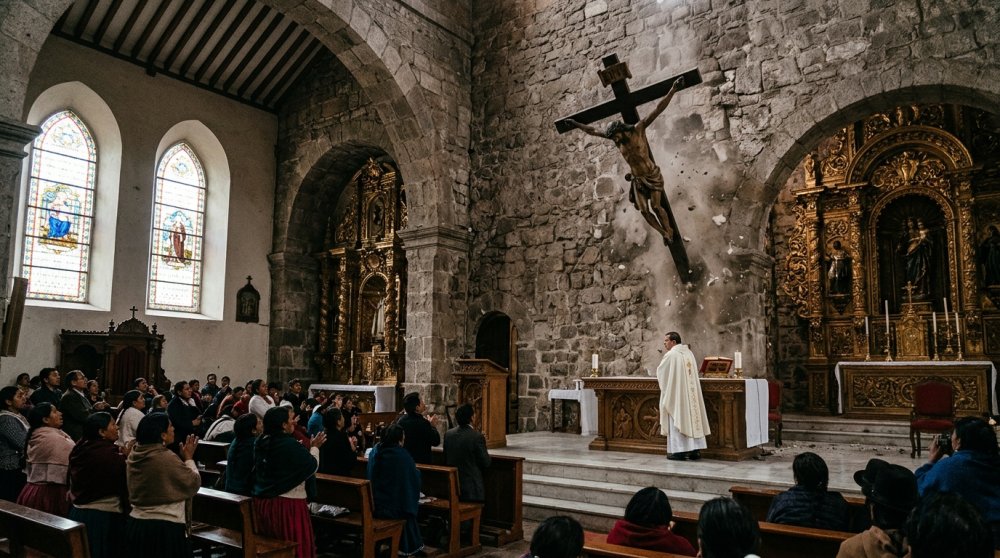
- A priest in Ecuador died during a church service when a large crucifix fell from the wall.
- Kenny Kinglesmith addresses unbelieving friends in an open letter about hope in Jesus amid suffering.
- Christian believers continue to place their trust in Christ even when tragedy strikes inside the sanctuary.
The sudden death of a priest while leading worship has shaken believers across Ecuador. Questions about suffering and divine purpose are rising again.
Kenny Kinglesmith has written an open letter to friends who do not believe. He explains why his hope in Jesus remains firm despite the pain.
“In the face of inexplicable suffering, I still choose to place my hope in Jesus.”
Many Christians are wrestling with how a loving God could allow such a loss inside His house. The event has prompted renewed reflection on the mystery of suffering.
Kinglesmith does not offer easy answers. Instead he points to the cross itself, where Christ endured the ultimate injustice yet brought redemption.
“I still choose to place my hope in Jesus.”
The tragedy has become a moment for believers to examine their own trust in God. It is also an opportunity to demonstrate compassion to those who question.
Kinglesmith urges Christians to live out their faith openly. He believes the witness of steadfast hope can speak louder than arguments.
“In the face of inexplicable suffering, I still choose to place my hope in Jesus.”
Let us know what you think, please share your thoughts in the comments below.


-

 Self-Reliance2 years ago
Trump’s Bold Move Uncovers Massive Social Security Fraud
-

 Faith2 years ago
New Clues Emerge in Noah’s Ark Mystery
-

 News2 years ago
Governor Walz’s Rhetoric Sparks National Controversy
-

 News2 years ago
Mel Gibson’s ‘The Passion of the Christ’ Sequel Title Announced
-

 Family2 years ago
Texas Lawmaker Targets Furries in Schools
-

 Freedom2 years ago
Maine Lawmaker Challenges Sports Fairness Controversy
-

 Family1 year ago
Canada’s Controversial Policy Sparks Ethical Debate
-
Faith11 months ago
Congress Hears Pleas for Nigerian Christians