
Faith
U.S. Actions Against Global Dictatorships Examined

Faith Facts
- The Trump administration directed the U.S. military to capture Venezuelan leader Nicolas Maduro for charges tied to narcotics and weapons offenses.
- Maduro, according to the U.S. State Department, led a criminal cartel and harshly suppressed opposition in Venezuela.
- America’s involvement in international regime change has often included the support of citizens and exiles seeking freedom from oppressive rule.
Actions taken against global tyrants raise important questions about the role of biblical justice and standing against evil in the world.
American intervention throughout history often reflects a willingness to stand with those yearning for liberty and to oppose repressive regimes, aligning with faith-based values of justice and compassion.
These events remind us to pray for the oppressed and for leaders to seek wisdom that upholds Christian morals and the blessing of freedom for all.


Faith Facts
- Lebanese Christians have declined from 54% of the population in 1932 to just 32% today due to decades of conflict and emigration.
- An estimated 14 million Lebanese Christians now live abroad, compared to only 1.5 million remaining in Lebanon.
- Christians across the Middle East face ongoing persecution and displacement, with ancient faith communities vanishing from the region where Christianity began.
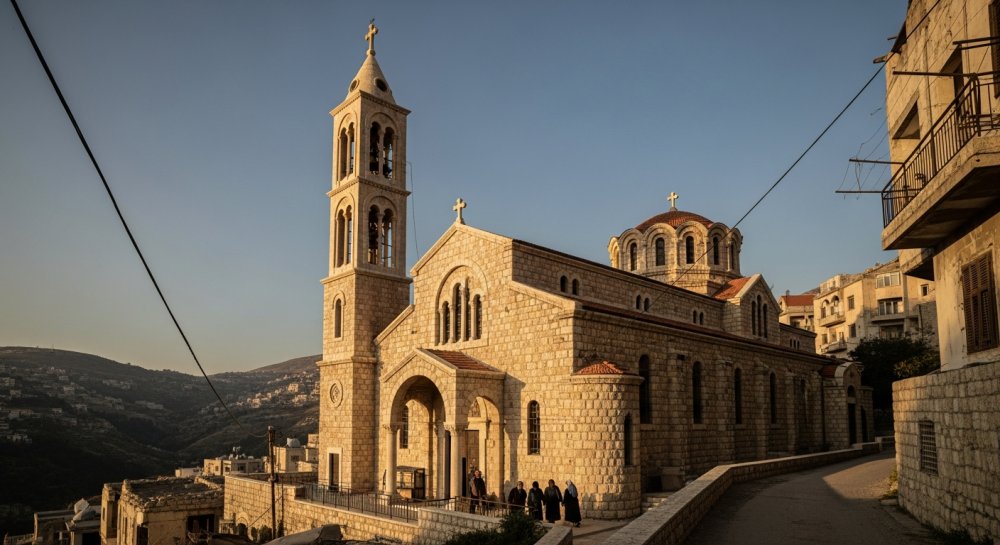
As Lebanon emerges from yet another devastating conflict, a critical question looms: Will the nation’s historic Christian community survive? The recent peace deal brings a temporary calm, but for Lebanese Christians, the existential crisis runs far deeper than any single ceasefire.
Lebanon once stood as a beacon of Christian presence in the Middle East. In 1932, Christians comprised 54% of the nation’s population, a thriving community that gave the country its unique character and democratic tradition.
Today, that number has plummeted to just 32%, and the decline shows no signs of stopping.
The statistics tell a sobering story of displacement and exodus. An estimated 14 million Lebanese Christians now live scattered across the globe—in Europe, the Americas, Africa, and Australia. Meanwhile, only 1.5 million remain in their ancestral homeland, a nation where their faith once flourished for nearly two millennia.
This isn’t merely a demographic shift—it represents the potential extinction of one of Christianity’s oldest and most resilient communities. Lebanese Christians trace their heritage directly to the earliest days of the faith, maintaining traditions and liturgies that connect them to the apostolic age.
The causes are complex but clear. Decades of civil war, regional instability, economic collapse, and the rise of radical Islamic movements have made life increasingly untenable for Christian families. Each new conflict accelerates the brain drain, as educated professionals and young families seek stability and opportunity abroad.
The latest peace agreement may halt immediate violence, but it does nothing to address the underlying forces driving Christians from Lebanon. Without economic revival, political stability, and genuine security guarantees for religious minorities, the exodus will continue.
Lebanon’s Christian decline mirrors a broader catastrophe across the Middle East. In Iraq, Syria, Egypt, and the Palestinian territories, ancient Christian populations have been decimated. The region where Christianity was born is becoming a place where Christians can barely survive.
For American Christians who cherish religious freedom and biblical heritage, this should be a clarion call. The disappearance of Middle Eastern Christianity would represent not just a humanitarian tragedy, but a spiritual and historical loss for the entire Christian world.
These communities have weathered Persian emperors, Roman persecution, Islamic conquests, and Ottoman rule. The question now is whether they can survive the 21st century. The answer may depend on whether the West—and particularly the American faith community—chooses to stand with them in their darkest hour.
Let us know what you think, please share your thoughts in the comments below.
Faith Facts
- A British children’s book publisher faced backlash from Muslim communities for depicting a lesbian woman wearing a hijab
- The controversy highlights how progressive ideology is creating unexpected tensions within traditional left-wing political coalitions
- Christian conservatives find themselves politically isolated as both major parties embrace values contrary to Biblical teaching
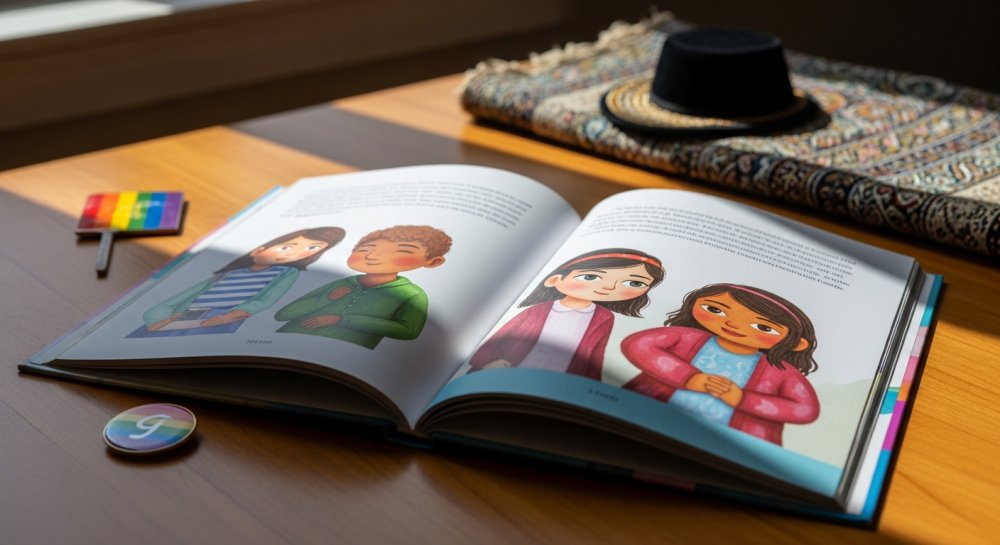
The collision between Islamic cultural values and progressive gender ideology has sparked an unexpected controversy in Britain, one that reveals deeper truths about the political landscape facing Christians today. A children’s book publisher recently came under fire from Muslim communities for portraying a lesbian woman wearing a hijab, exposing fundamental contradictions within modern progressive coalitions.
Lois McLatchie Miller, a Christian conservative commentator, points to this incident as evidence of the dramatically shifting definitions of “left” and “right” in Western politics. What was once a relatively straightforward political divide has become fragmented as competing interest groups within progressive movements discover their values are not as aligned as previously assumed.
“This controversy speaks to the changing definitions of ‘left’ and ‘right’ in British politics,” McLatchie Miller observes.
For decades, the political left has positioned itself as the coalition of minority groups and marginalized communities. However, the aggressive promotion of LGBTQ ideology—particularly transgender activism and the sexualization of children through educational materials—has created friction with socially conservative Muslim immigrants who hold traditional views on marriage, family, and modesty. This tension was perhaps inevitable, but it has accelerated rapidly in recent years.
The hijab controversy is just one example of many. Muslim parents in Birmingham, England, previously protested outside schools teaching LGBTQ content to young children. Similar conflicts have erupted in Canada and the United States, where Islamic communities have pushed back against curriculum they view as contrary to their faith values.
Meanwhile, Christians observing these battles find themselves in an awkward position—agreeing with the concerns about sexualized content and gender ideology, yet receiving none of the cultural sympathy or media attention afforded to Muslim objectors. When Christian parents raise identical concerns, they are frequently dismissed as bigots or extremists. When Muslim parents object, the response is often more cautious, revealing a double standard in how religious objections are treated.
McLatchie Miller argues that this dynamic illustrates why Christians are increasingly politically homeless. The political right, while more aligned with traditional values on marriage and family, often prioritizes economic concerns or foreign policy over cultural and religious issues. The political left has become openly hostile to Biblical Christianity, dismissing Christian moral teaching as oppressive while simultaneously accommodating other faiths.
“No political coalition can fully represent Christian values,” McLatchie Miller warns, reminding believers that ultimate allegiance belongs to God’s kingdom, not any earthly political party.
This is a critical point for Christian conservatives to remember. While political engagement is important—and faithful Christians should absolutely participate in the democratic process—no party platform will ever perfectly align with Scripture. The danger comes when Christians compromise core Biblical truths for the sake of political expediency or party loyalty.
The current moment requires discernment. Christians should welcome allies wherever they arise, including Muslim parents concerned about inappropriate content in schools. Common cause can be made on specific issues without compromising on the Gospel or the exclusive claims of Christ. Protecting children from sexual indoctrination is a cause that transcends religious boundaries.
At the same time, Christians must not fall into the trap of thinking that cultural conservatism alone is sufficient. The goal is not merely to preserve traditional values in the public square, but to proclaim the transforming power of Jesus Christ. A society that rejects pornographic materials in children’s books but also rejects the Gospel is still lost.
The hijab controversy reveals that progressive ideology, when taken to its logical conclusion, begins to consume itself. Identity politics creates ever-smaller and more fragmented groups, each demanding accommodation for their particular concerns. Eventually, these demands conflict, and the coalition fractures. We are witnessing that fracturing in real time.
For Christians, this should serve as a reminder that political power is temporary and cultural influence is fleeting. What endures is the Word of God and the mission of the Church. While we work to shape our communities and protect our children, we must keep our eyes fixed on eternal truths, not political victories.
The path forward requires both courage and clarity—courage to speak truth even when it’s unpopular, and clarity about what truly matters. Christians cannot afford to be naive about the challenges facing the Church in the West, nor can we afford to place our ultimate hope in political solutions.
Let us know what you think, please share your thoughts in the comments below.
Faith Facts
- A Mozambican bishop was fatally shot at his residence in a targeted killing that has shocked Christian communities across Africa.
- Christian leaders throughout the African continent are demanding a comprehensive investigation into the murder.
- The killing highlights growing security threats facing Christian clergy in the region.
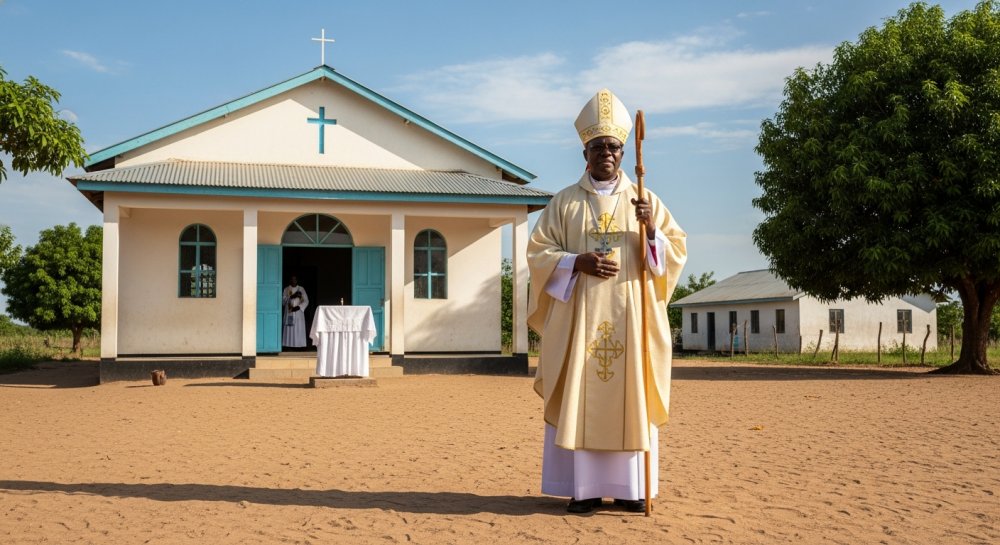
Christian leaders across the African continent are united in their call for justice following the shocking murder of a Mozambican bishop who was shot dead at his own residence. The targeted killing has sent shockwaves through Christian communities and raised serious concerns about the safety of religious leaders serving in the region.
The bishop was killed in what witnesses describe as a deliberate attack at his home, striking at the heart of the Christian community he served. Church leaders are now pressing authorities for answers and accountability in this brazen act of violence against a man of God.
The tragedy underscores the mounting dangers faced by Christian clergy in parts of Africa, where religious persecution and violence have become increasingly common. Faith leaders are calling not only for justice in this specific case but for broader protections for those who dedicate their lives to serving Christ and their communities.
African Christian organizations are mobilizing to ensure this murder does not go unanswered. They are demanding that law enforcement agencies conduct a thorough and transparent investigation to identify the perpetrators and bring them to justice. The unified response from church leaders demonstrates the gravity of this attack on the Body of Christ.
The international Christian community is watching closely as this investigation unfolds. Many see this killing as part of a disturbing pattern of violence targeting Christian leaders and communities across Africa, requiring urgent attention and action from both civil authorities and the global Church.
As believers, we are called to pray for justice, for the family of this fallen shepherd, and for the protection of Christian leaders who continue to serve faithfully despite growing threats. This tragedy reminds us that religious freedom remains under assault in many parts of the world.
Let us know what you think, please share your thoughts in the comments below.


-

 Self-Reliance1 year ago
Trump’s Bold Move Uncovers Massive Social Security Fraud
-

 Faith1 year ago
New Clues Emerge in Noah’s Ark Mystery
-

 News1 year ago
Governor Walz’s Rhetoric Sparks National Controversy
-

 News1 year ago
Mel Gibson’s ‘The Passion of the Christ’ Sequel Title Announced
-

 Family1 year ago
Texas Lawmaker Targets Furries in Schools
-

 Freedom1 year ago
Maine Lawmaker Challenges Sports Fairness Controversy
-

 Family1 year ago
Canada’s Controversial Policy Sparks Ethical Debate
-
Faith7 months ago
Congress Hears Pleas for Nigerian Christians