
Freedom
Toms River Church’s Fate Hangs in Balance as Controversy Erupts


In a troubling move that raises serious questions about the erosion of religious freedoms and the disregard for Christian compassion, the town council of Toms River, New Jersey, is aggressively pursuing the acquisition of Christ Episcopal Church’s historic 11-acre campus. This 160-year-old parish, a beacon of hope and support for the community, is currently seeking permission to establish a 17-bed shelter for the homeless—a mission that aligns perfectly with the Christian call to serve the least among us.
In a narrow 4-3 vote during an April 30 meeting, the council decided to proceed with plans to purchase the church and five other properties, or seize them if necessary, to construct two new public parks. Mayor Daniel Rodrick, who has been vocal in his criticism of homelessness, envisions pickleball courts, a soccer field, a playground, and a skate park replacing the church’s grounds.
The Rev. Lisa A. Hoffman, the church’s rector, expressed her shock and disappointment, stating, “It’s just really shocking and surprising and very disappointing.” The church was blindsided by this ordinance, learning of it mere hours before the vote, and no officials had the courtesy to notify the congregation in advance. Hoffman rightly questions the legitimacy of using the land for a park as a reason to seize church property.
Attorney Michael York, representing the church, highlighted the bad faith actions of the township and mayor, calling the ordinance “an excuse to obtain property.” He warned of impending litigation against officials who knowingly participate in this ill-conceived action. York pointed out that the township is in a “perilous position,” given the legal complexities involved, including the Episcopal Church’s Dennis Canon, which holds parish property in trust for the diocese and national church.
The council’s debate was brief but heated, with Council member Thomas Nivison unsuccessfully attempting to table the measure or exclude the church from consideration. James Quinlisk, who voted against the ordinance, passionately declared, “There’s no way on God’s green Earth that anyone should vote for this ordinance,” a sentiment that resonated with the audience, earning loud applause. In a powerful moment, David Ciccozzi stood to cast his no vote and led the room in the Lord’s Prayer, underscoring the deep faith that guides the church’s mission.
The church’s contributions to the community are invaluable. Each Sunday, more than 150 congregants gather for worship, and the church hosts over 20 support groups, operates a food pantry, and runs a weekly clothing giveaway. The property also houses the Ocean Christian Community and has been a base for the Affordable Housing Alliance, which has rehoused over 130 families in its first year.
This situation echoes a similar case in Bryan, Ohio, where a pastor faced legal challenges for keeping his church open to shelter the homeless. Such actions against churches dedicated to serving their communities are a stark reminder of the challenges facing religious institutions today.
As Christians, we are called to defend our faith and our freedoms. The actions of Toms River’s council not only threaten the church’s mission but also set a dangerous precedent for religious liberty. We must stand firm in our commitment to uphold traditional values, protect our places of worship, and ensure that the principles of faith, family, and freedom remain at the heart of our society.
Let us know what you think, please share your thoughts in the comments below.

Freedom
New Hampshire Parents Win Settlement After School District Bans Opposition to Males in Girls Sports


Faith Facts
- Scripture teaches that God created male and female, establishing biological reality as part of His divine order.
- Parents hold the God-given responsibility to protect their children from policies that undermine truth and safety.
- Christian teaching calls believers to speak truth in love while defending the dignity of young women created in God’s image.
Parents in New Hampshire have secured a settlement with their local school district after facing punishment for voicing concerns over a biological male competing in girls’ soccer.
The agreement comes two years after officials barred families from attending games or expressing opposition when a trans-identified male was allowed on the girls’ team.
One father was specifically prohibited from watching his own daughter play for the remainder of her senior season simply because he objected to the policy.
Christian parents across the country continue to stand for fairness in women’s sports while upholding the biblical understanding that God created two distinct sexes.
“We just wanted to protect our daughters and speak the truth about biology,” one parent stated after the settlement was reached.
The case highlights growing resistance among families who refuse to accept ideological policies that place girls at a physical disadvantage.
School districts that silence parents and enforce participation rules based on gender identity rather than biological sex are facing increasing legal pushback nationwide.
Advocates argue that allowing males in female categories undermines fair competition and erodes the purpose of separate girls’ sports established to ensure equal opportunity.
“Our girls deserve to compete on a level playing field without fear of losing scholarships or safety,” a mother involved in the dispute remarked.
The settlement marks another victory for parents defending truth and protecting their children from policies that contradict both science and Scripture.
Let us know what you think, please share your thoughts in the comments below.

Faith Facts
- The Alliance Defending Freedom is a legal ministry defending religious liberty and free speech for Christians and other people of faith.
- Christians have faced increasing debanking due to their biblical beliefs on marriage, gender, and life issues.
- PayPal’s policy change follows years of concerns from conservatives about viewpoint discrimination by financial institutions.
PayPal has removed the terms “hate” and “intolerance” from its acceptable use policy following an objection filed by the Alliance Defending Freedom before a federal banking regulator.
The change comes after ADF raised concerns that PayPal’s previous language could be used to target Christians and conservative organizations for their biblical beliefs.
PayPal’s updated policy now focuses on illegal activities rather than vague moral judgments that critics argued opened the door to viewpoint discrimination.
Conservative leaders have long warned that financial institutions were using subjective terms like “hate” and “intolerance” to justify debanking individuals and ministries that uphold traditional values.
“We are grateful that PayPal has removed this troubling language from its rules,” said an ADF spokesperson. “Vague terms like ‘hate’ and ‘intolerance’ have been weaponized against Christians who simply believe what the Bible teaches about marriage and human sexuality.”
The policy revision represents a win for religious liberty advocates who have argued that financial service companies should not serve as arbiters of moral or political speech.
Many Christian ministries and conservative organizations have reported being denied payment processing services or having accounts frozen over their stances on life, marriage, and gender issues.
ADF’s action before the federal regulator highlighted how such policies could chill free speech and religious exercise by giving private companies broad power to define acceptable beliefs.
The change signals growing pushback against corporate attempts to enforce ideological conformity through financial gatekeeping.
Let us know what you think, please share your thoughts in the comments below.
Faith Facts
- Colorado’s universal preschool program promises a free seat to every 4-year-old yet bars the state’s 34 Catholic preschools from participation.
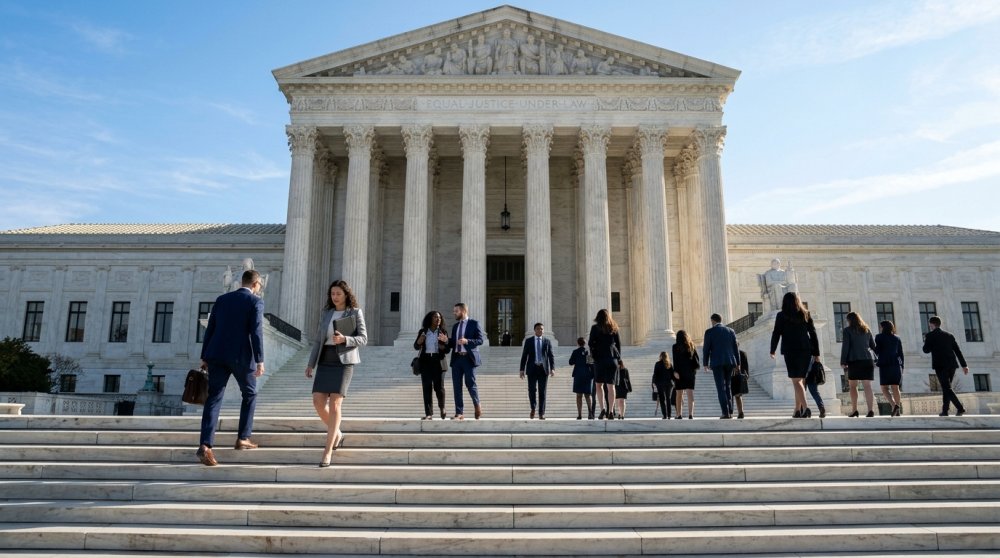
- Justice Brett Kavanaugh pressed state officials for a “win/win” solution during oral arguments before the Supreme Court.
- The case raises fundamental questions about religious liberty and equal treatment under the law for faith-based educational providers.
Colorado lawmakers crafted a universal preschool program that promises every four-year-old a free seat at taxpayer expense. The plan explicitly excludes the state’s 34 Catholic preschools, effectively forcing families who prefer faith-based education to forgo the benefit or leave their convictions at the door.
During oral arguments at the Supreme Court, Justice Brett Kavanaugh pressed Colorado’s attorneys to explain why the state could not accommodate religious providers. He asked whether a “win/win” arrangement was possible that would allow families to choose Catholic schools without losing the public subsidy. The state offered no answer.
Critics argue that the exclusion reflects an unconstitutional hostility toward religion that treats Catholic teaching as equivalent to racism. Supporters of the program maintain that public funds cannot flow to institutions that hold traditional beliefs on marriage, sexuality, and human life.
Christian leaders across the country see the case as another front in the ongoing struggle to preserve religious liberty in education. They note that Catholic schools have long served disadvantaged communities with strong academic and moral formation rooted in biblical principles.
Let us know what you think, please share your thoughts in the comments below.


-

 Self-Reliance2 years ago
Trump’s Bold Move Uncovers Massive Social Security Fraud
-

 Faith2 years ago
New Clues Emerge in Noah’s Ark Mystery
-
 News2 years ago
Governor Walz’s Rhetoric Sparks National Controversy
-

 News2 years ago
Mel Gibson’s ‘The Passion of the Christ’ Sequel Title Announced
-

 Family2 years ago
Texas Lawmaker Targets Furries in Schools
-

 Freedom2 years ago
Maine Lawmaker Challenges Sports Fairness Controversy
-

 Family1 year ago
Canada’s Controversial Policy Sparks Ethical Debate
-
Faith12 months ago
Congress Hears Pleas for Nigerian Christians