
Faith
The Trust You Place in Your Laundry Soap Could Reveal a Troubling Truth


Faith Facts
- Many Christians unconsciously place more trust in everyday consumer products than in God’s promises
- Scripture commands believers to trust in the Lord with all their hearts, not lean on their own understanding
- Examining our daily trust patterns can reveal spiritual blind spots that need correction
How often do we pour detergent into the washing machine without a second thought, fully confident it will clean our clothes? We trust it completely. We don’t question whether it will work, we don’t pray over the washing machine, and we don’t lose sleep wondering if our clothes will come out clean.
Yet when it comes to God’s promises, many of us struggle with doubt and anxiety. We say we believe, but our actions tell a different story.
This raises an uncomfortable question for every believer: Do I have more immediate confidence in man-made systems and mass-produced products than I do in the very words of God? It’s a convicting thought, but one worth examining honestly.
The Bible doesn’t mince words about where our trust should lie. Proverbs 3:5-6 instructs us clearly: “Trust in the Lord with all your heart and lean not on your own understanding; in all your ways submit to him, and he will make your paths straight.”
All your heart. Not some of it. Not the parts left over after we’ve trusted in our jobs, our savings accounts, our insurance policies, and yes, our laundry detergent.
Consider the absurdity: we trust a chemical formula created by fallible human beings more readily than we trust the Word of the infallible Creator of the universe. We have faith that a bottle of soap will deliver on its promise, but we waver when God promises to provide for our needs, guide our steps, or work all things for our good.
This isn’t about becoming irresponsible or ignoring practical wisdom. God gave us minds to use and common sense to apply. The issue is where our foundational trust rests.
When we use laundry detergent, we’re operating on earned trust—the product has worked before, so we expect it to work again. But God is calling us to a higher form of trust: faith. Faith believes even when we haven’t seen the outcome yet, even when circumstances look impossible, even when our understanding falls short.
Hebrews 11:1 defines it this way: “Now faith is confidence in what we hope for and assurance about what we do not see.” We’re called to have the same unquestioning confidence in God’s character and promises that we have in that bottle under our sink.
The uncomfortable reality is that our trust in consumer products is actually trust in consistency and predictability. We like systems we can control and outcomes we can anticipate. God, in His sovereignty, doesn’t always work that way—and that’s precisely why trusting Him requires genuine faith.
Perhaps the reason we struggle to trust God as readily as we trust our laundry detergent is that we’ve made an idol of control. We want guarantees on our terms, in our timing, according to our understanding.
But the Christian life is a call to surrender that control. It’s an invitation to trust Someone infinitely greater than ourselves, even when—especially when—we can’t see the full picture.
The next time you pour detergent into your washing machine without a moment’s hesitation, let it serve as a reminder. If you can trust a chemical compound to clean your clothes, how much more should you trust the Almighty God who spoke the universe into existence?
Our God has never failed. His track record is perfect. His promises are sure. His character is unchanging.
Maybe it’s time to trust Him at least as much as we trust the products in our laundry room.
Let us know what you think, please share your thoughts in the comments below.

Faith Facts
- Mississippi pastor completed 96-hour continuous Bible preaching marathon
- Texas woman practicing witchcraft attempted to curse pastor during livestream
- Woman converted to Christianity after spiritual attack backfired
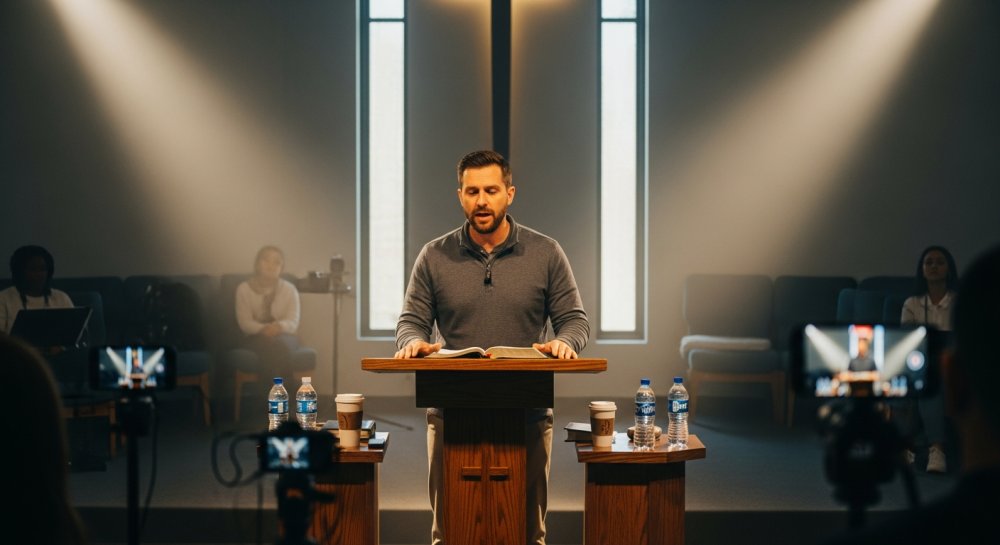
A Mississippi pastor who recently completed an extraordinary 96-hour marathon of preaching through the entire Bible has shared a remarkable testimony of spiritual warfare and redemption. His epic undertaking became the catalyst for an unexpected conversion when a practitioner of witchcraft attempted to curse him during the livestream.
The pastor revealed that a young woman from Texas, who identified as a witch, deliberately tried to place a curse on him while he was preaching. Her intent was clear and malicious — she wanted to cause him harm and even death through dark spiritual forces.
“We wanted you to die,” the woman later confessed to the pastor, acknowledging the evil intentions behind her attempted curse.
However, what was meant for evil became a testimony of God’s protecting power and redemptive grace. Instead of the curse achieving its intended purpose, the spiritual attack backfired in a profound way. The young woman experienced the conviction of the Holy Spirit during the pastor’s continuous Bible preaching.
The power of God’s Word, proclaimed faithfully for four days straight, penetrated the darkness surrounding this woman’s life. Rather than harming the pastor, her encounter with the living Word of God led to her own transformation.
The woman renounced witchcraft and surrendered her life to Jesus Christ, becoming a powerful testimony to the supremacy of God’s Word over the forces of darkness. This conversion stands as evidence that no weapon formed against God’s servants will prosper, and that the Gospel remains the power of God unto salvation.
The 96-hour Bible preaching marathon itself represents an extraordinary feat of endurance and dedication. Preaching through all 66 books of Scripture continuously requires not only physical stamina but deep spiritual preparation and commitment to God’s Word.
This testimony serves as a reminder to believers that spiritual warfare is real, but God’s power is infinitely greater than any force of darkness. It also demonstrates that even those deeply entrenched in occult practices can be reached by the transforming message of the Gospel.
The story echoes biblical accounts where those who opposed God’s messengers encountered the living God instead. Like the sorcerer Simon in Acts or the magicians in Pharaoh’s court, those who practice dark arts ultimately find that God’s power cannot be matched or manipulated.
For Christians engaged in evangelism and spiritual battle, this account offers encouragement that persistent proclamation of Scripture can break through even the strongest spiritual opposition. The Word of God remains living and active, sharper than any two-edged sword.
Let us know what you think, please share your thoughts in the comments below.
Faith Facts
- A Tennessee church known for giving away free gas to hundreds of commuters earlier this year has suffered a devastating fire on their property.
- Despite the significant damage, church leaders maintain their ministry will continue, declaring the fire ‘didn’t stop the word.’
- The congregation demonstrated Christ’s love through practical generosity by providing free gasoline to struggling families during difficult economic times.
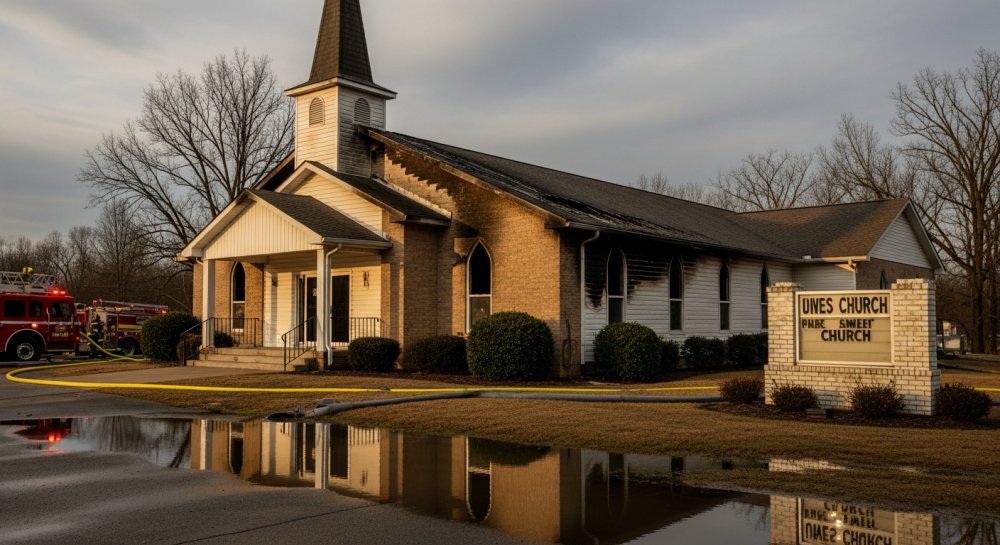
A Tennessee congregation that made headlines for their generous outreach to the community is now facing a significant trial of their own. The church, which blessed hundreds of families with free gasoline during a time of economic hardship, has suffered severe fire damage to their property.
Earlier this year, the church captured hearts across the nation when they opened their doors and their wallets to help commuters struggling with high gas prices. The ministry initiative provided tangible relief to families dealing with the burden of inflation and rising fuel costs, embodying the Biblical principle of loving your neighbor in action.
Now, the church that gave so freely finds itself in need. The fire caused substantial damage to the church property, though details about the extent of the destruction and the cause of the blaze are still emerging. What remains unshaken, however, is the faith and determination of the congregation.
Church leaders responded to the devastating loss with remarkable resolve, stating that the fire “didn’t stop the word.” This declaration reflects a deep commitment to their mission and ministry that transcends physical buildings and material loss.
The church’s response exemplifies the resilience that comes from faith rooted in Christ rather than circumstances. Their witness reminds believers that the Church is not a building but a body of believers united in purpose and calling.
This trial comes as a test for a congregation that has already demonstrated extraordinary generosity. Their earlier gas giveaway wasn’t just charity—it was an expression of Christian love that met people at their point of need, building bridges between the church and community.
The incident serves as a reminder that even those who minister to others face their own valleys. Yet it also presents an opportunity for the broader Christian community to rally around these faithful servants, returning the blessing they so freely gave to others.
As this Tennessee church rebuilds, their testimony stands as an encouragement to believers everywhere: faith perseveres through fire, ministry continues through trials, and God’s Word cannot be stopped by any earthly circumstance.
Let us know what you think, please share your thoughts in the comments below.

Faith Facts
- Prime Minister Andy Burnham has pledged to address the ongoing adult social care crisis in the United Kingdom
- Christian charity leader Stephen Hammersley warns the Church cannot wait for government action to care for elderly congregants and community members
- The promise represents a major policy shift, but faith-based organizations continue to be essential in meeting the spiritual and practical needs of seniors
The United Kingdom’s new Prime Minister Andy Burnham made headlines this week with a bold commitment to overhaul the nation’s struggling adult social care system. While the announcement has been met with cautious optimism across the political spectrum, Christian leaders are reminding believers that government action alone cannot address the deeper crisis facing elderly citizens.
Stephen Hammersley, chief executive of Pilgrims’ Friend Society, a Christian organization dedicated to serving older adults, applauded Burnham’s recognition of the problem but emphasized that the Church has a biblical mandate that transcends political promises. “We welcome any serious effort to improve care for our elderly population,” Hammersley stated. “However, the body of Christ has always been called to care for the vulnerable, especially widows and the aging, regardless of what policies emerge from Westminster.”
The adult social care system in Britain has faced mounting pressure for years, with underfunding, workforce shortages, and an aging population creating what many experts describe as a perfect storm. Families across the nation have struggled to find adequate, affordable care for elderly relatives, while care workers themselves face challenging conditions and low wages.
Burnham’s pledge to “end the drought” in social care signals a recognition at the highest levels of government that the current system is unsustainable. Yet the details of how such reform would be implemented and funded remain unclear. For Christians, this uncertainty underscores the importance of grassroots ministry and community support networks that don’t depend on government budgets or political cycles.
“Scripture is clear about our responsibility to honor and care for the elderly,” Hammersley continued. “In Leviticus 19:32, we’re told to ‘stand up in the presence of the aged, show respect for the elderly and revere your God.’ This isn’t optional for believers — it’s a core expression of our faith.”
Churches across the United Kingdom have long been at the forefront of caring for seniors, from visiting programs and meal deliveries to offering fellowship and spiritual support that institutional care often cannot provide. These ministries become even more critical as families become geographically dispersed and traditional support structures weaken.
The challenge facing Christian communities is not just about physical care but addressing the epidemic of loneliness and isolation that affects millions of elderly people. While government programs can provide healthcare and financial assistance, they cannot replace the personal connection, spiritual encouragement, and sense of belonging that faith communities uniquely offer.
Hammersley’s organization, Pilgrims’ Friend Society, operates care homes and retirement housing with an explicitly Christian ethos, demonstrating how faith-based approaches can complement secular services. “We’ve seen firsthand how integrating spiritual care with physical care transforms lives,” he explained. “Residents don’t just receive assistance with daily tasks — they’re part of a community centered on Christ, where they’re valued as image-bearers of God, not just recipients of services.”
The call for churches to step up comes at a time when many congregations are already stretched thin, facing their own resource constraints and demographic challenges. Yet Christian leaders argue that caring for the elderly shouldn’t be seen as an additional burden but as central to the Church’s mission and identity.
“When we care for older believers, we’re honoring those who built the faith communities we now enjoy,” Hammersley noted. “We’re also modeling for younger generations what it means to live out the gospel in practical ways. And we’re preparing for our own later years, creating the kind of communities we hope will care for us.”
While Burnham’s commitment to reforming social care is encouraging, the timeline and effectiveness of government action remain uncertain. Political promises, even well-intentioned ones, often face obstacles in implementation, funding disputes, and changing priorities. This reality makes the Church’s independent action all the more vital.
Christian organizations are encouraged to evaluate how they can expand or improve ministries to seniors, whether through formal care arrangements, volunteer visiting programs, intergenerational activities, or advocacy for better policies. Individual believers can also make a difference by regularly checking on elderly neighbors, inviting isolated seniors to family gatherings, or simply offering the gift of unhurried conversation and companionship.
The intersection of faith and social care policy also presents opportunities for Christians to influence public discourse with biblical values. Advocating for care systems that respect human dignity, support family involvement, and recognize the spiritual dimensions of wellbeing reflects a Christian worldview that can enrich secular policy debates.
As the Burnham government begins to flesh out its social care agenda, believers have reason to hope for meaningful improvements while recognizing that no government program can fully replace the compassionate, Christ-centered care that the Church is called to provide. The challenge ahead requires both celebrating political progress and redoubling efforts at the local church level to ensure no elderly person is forgotten or neglected.
Let us know what you think, please share your thoughts in the comments below.


-

 Self-Reliance1 year ago
Trump’s Bold Move Uncovers Massive Social Security Fraud
-

 Faith1 year ago
New Clues Emerge in Noah’s Ark Mystery
-

 News1 year ago
Governor Walz’s Rhetoric Sparks National Controversy
-

 News1 year ago
Mel Gibson’s ‘The Passion of the Christ’ Sequel Title Announced
-

 Family1 year ago
Texas Lawmaker Targets Furries in Schools
-

 Freedom1 year ago
Maine Lawmaker Challenges Sports Fairness Controversy
-

 Family1 year ago
Canada’s Controversial Policy Sparks Ethical Debate
-
Faith8 months ago
Congress Hears Pleas for Nigerian Christians