
News
The Nuclear Question No One Wants to Answer

Faith Facts
- Iran continues to advance its nuclear program while international oversight weakens, raising urgent questions about global security and Middle East stability.
- Israel faces an existential threat from a nuclear-capable Iran, with profound implications for the safety of the Jewish state and American interests in the region.
- The failure to prevent Iran from reaching nuclear threshold status represents a critical test of Western resolve and the protection of our closest allies.
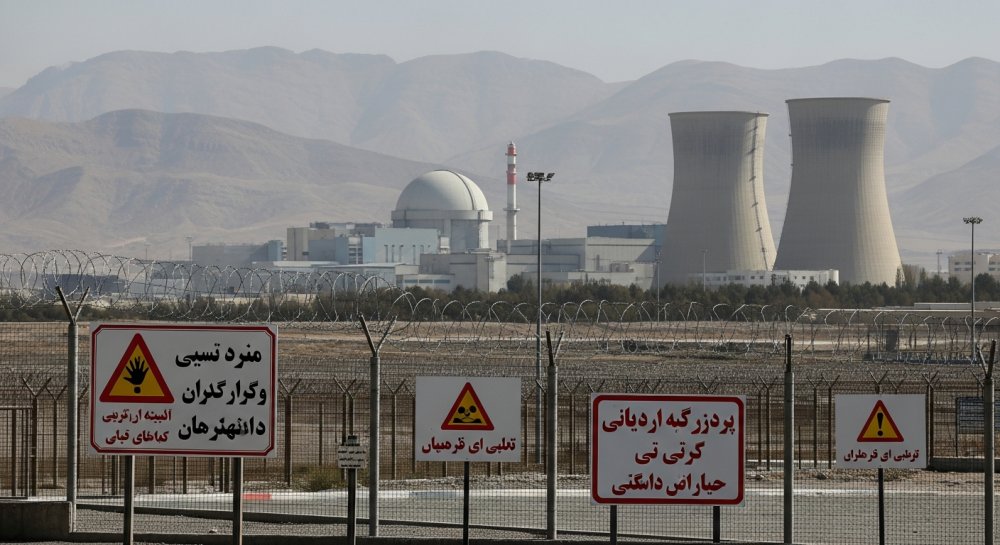
A pressing question confronts America, Israel, and freedom-loving nations worldwide: Can we accept an Iran perched perpetually on the edge of nuclear weapons capability?
The Islamic Republic has spent decades advancing its nuclear program despite international sanctions, diplomatic pressure, and economic isolation. Now, as Tehran edges closer to weapons-grade uranium enrichment, the world must confront an uncomfortable reality about the cost of inaction.
For Israel, the stakes could not be higher. A nuclear-armed Iran represents an existential threat to the Jewish state, whose right to exist Iranian leaders have repeatedly denied. The regime in Tehran has funded terrorist proxies throughout the Middle East, from Hezbollah in Lebanon to Hamas in Gaza, all while chanting “Death to America” and “Death to Israel” in its legislative chambers.
American security interests are equally at risk. Iran’s nuclear ambitions destabilize an already volatile region where U.S. forces maintain a presence and where critical energy resources flow to global markets. A nuclear Iran would embolden the regime’s aggression, potentially triggering a regional arms race as Saudi Arabia, Egypt, and Turkey consider their own nuclear options.
The question of whether the world can “live with” a nuclear-threshold Iran assumes that containment and deterrence strategies proven during the Cold War will work against a theocratic regime driven by apocalyptic ideology. This assumption may prove dangerously naive.
Unlike the Soviet Union, which operated under rational self-interest, Iran’s leadership has demonstrated a willingness to sacrifice its own people for ideological goals. The regime’s support for terrorism, its violent suppression of domestic protesters, and its stated commitment to exporting its revolution suggest a different calculation of risk and reward.
For years, diplomatic efforts have failed to curtail Iran’s nuclear ambitions meaningfully. The 2015 Joint Comprehensive Plan of Action, celebrated by its architects as a diplomatic breakthrough, merely delayed Iran’s path to nuclear weapons while releasing billions in sanctions relief that funded regional terror operations. The agreement’s sunset clauses guaranteed that restrictions on Iran’s nuclear program would eventually expire, leaving the regime free to pursue weapons development legally under the deal’s own terms.
Israel has made clear it will not permit Iran to obtain nuclear weapons, regardless of international opinion. The Jewish state has twice bombed nuclear facilities in hostile nations—Iraq in 1981 and Syria in 2007—demonstrating its willingness to act unilaterally when its survival is threatened.
The question facing policymakers is not whether a nuclear Iran poses unacceptable risks, but whether those risks will be confronted now through preventive measures or later under far more dangerous circumstances. Every month of delay sees Iran’s nuclear knowledge deepen, its stockpiles grow, and its defensive capabilities strengthen.
Christians have a particular interest in this question, both for the safety of persecuted believers within Iran and for the security of Israel, a nation of profound biblical significance. The Iranian regime ranks among the world’s worst persecutors of Christians, imprisoning and executing believers for their faith.
The failure of Western powers to prevent North Korea from developing nuclear weapons offers a sobering precedent. Diplomacy, sanctions, and international pressure all failed to stop Pyongyang’s program. Today, the hermit kingdom holds the world hostage with its nuclear arsenal, launching missiles over Japan and threatening American cities.
America and its allies must decide whether to accept this outcome repeating in the Middle East, with consequences far more severe given Iran’s central role in funding global terrorism and its stated hostility toward Israel’s existence. The answer to whether we can live with a nuclear Iran may ultimately be determined not by our choices, but by our willingness to prevent that scenario from becoming reality.
Let us know what you think, please share your thoughts in the comments below.

Faith Facts
- The World Evangelical Alliance addressed the United Nations Human Rights Council regarding violence in the West Bank.
- The group specifically highlighted Taybeh as the territory’s last predominantly Christian village.
- Evangelical leaders called for an end to settler attacks and settlement expansion in the region.
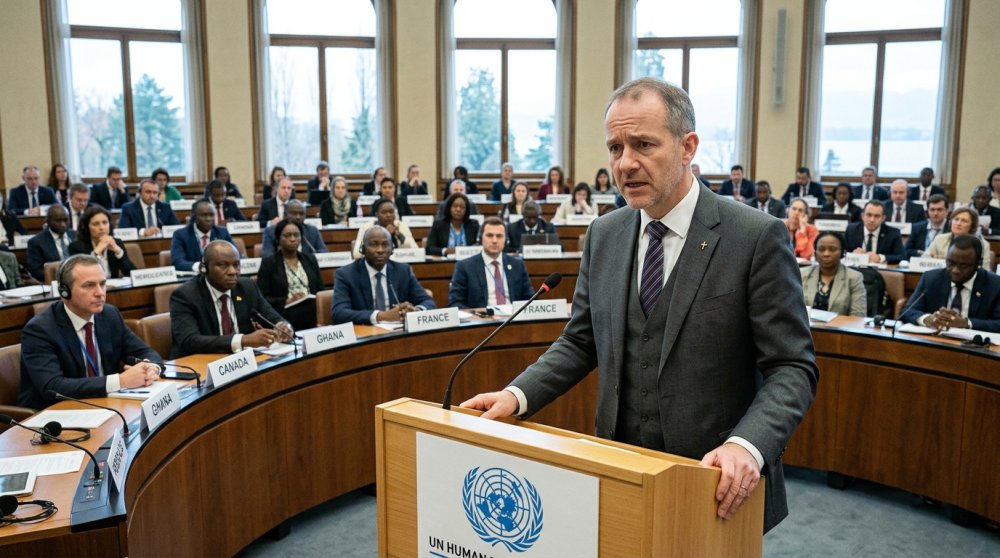
The World Evangelical Alliance issued a direct appeal to Israel on Tuesday during a session at the United Nations Human Rights Council.
The organization urged Israeli authorities to take immediate steps to halt settler violence and stop settlement expansion in the occupied West Bank.
Representatives from the alliance expressed particular concern for the village of Taybeh.
The group described Taybeh as the territory’s last predominantly Christian village and emphasized the need for its protection.
Let us know what you think, please share your thoughts in the comments below.
Faith Facts
- The grand jury in Mississippi concluded there was insufficient evidence to file charges in the death of 18-year-old Nolan Wells.
- District Attorney Angel Myers McIlrath affirmed the jury’s decision and called on Ben Crump to present evidence rather than make public accusations.
- McIlrath emphasized that justice in this case must be based on facts and the rule of law, not political pressure.
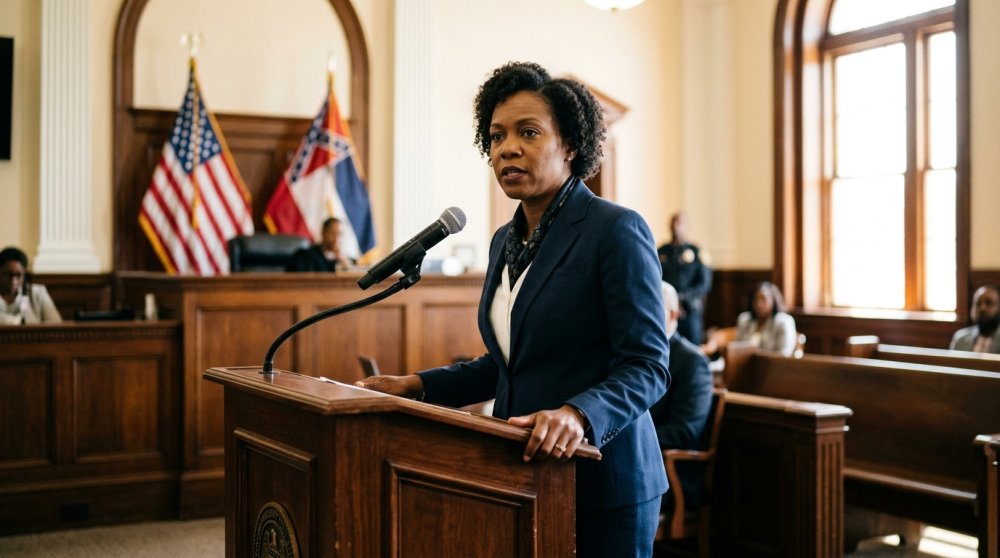
Mississippi District Attorney Angel Myers McIlrath is standing firm after a grand jury determined there was not enough evidence to bring charges in the death of 18-year-old Nolan Wells. The jury reviewed the case involving the young man’s death on Horn Island and concluded no one should face criminal prosecution.
McIlrath directly addressed civil rights attorney Ben Crump, who has publicly questioned the grand jury’s decision. She stated that Crump is “not worthy of our trust” if he continues to challenge the findings without presenting credible evidence.
The district attorney urged Crump to stop what she called political gamesmanship and instead focus on facts. She made clear that the justice system must rely on evidence rather than public pressure or media attention.
“The grand jury has spoken after careful review of the evidence,”
McIlrath said, defending the integrity of the legal process. She warned that undermining a jury’s decision without proof damages trust in the rule of law.
The case has drawn attention because of Crump’s involvement and his calls for further investigation. McIlrath stressed that her office has followed proper procedures and that justice will not be swayed by outside demands.
Let us know what you think, please share your thoughts in the comments below.
Faith Facts
- Quartz Mountain Christian Camp serves Churches of Christ families seeking to strengthen faith and fellowship.
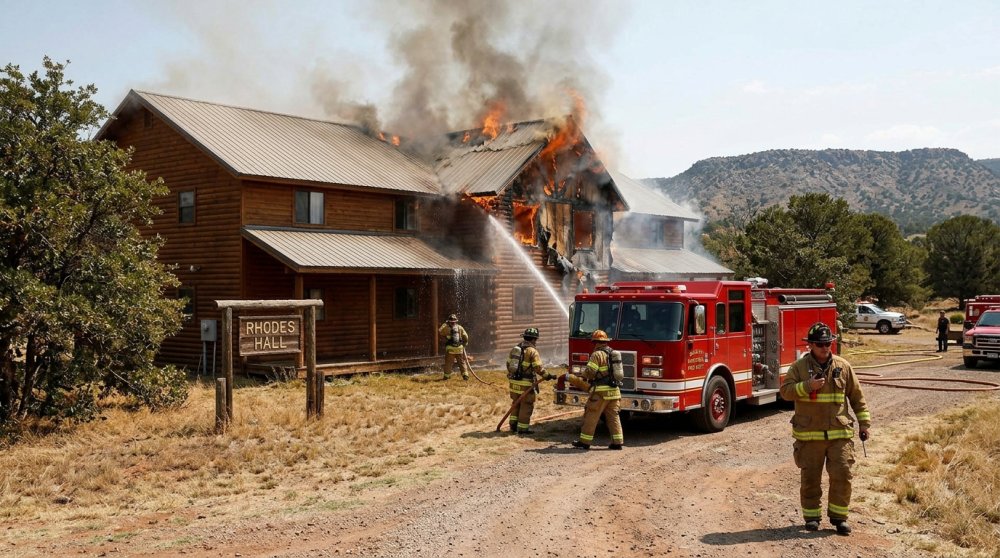
- No one was injured and no other structures were damaged when fire destroyed Rhodes Hall.
- Camp leaders are asking fellow believers to pray for wisdom as they assess physical and financial needs.
LONE WOLF, OKLA. — A devastating fire tore through Rhodes Hall, the central gathering place at Quartz Mountain Christian Camp, early Tuesday morning.
Board president Craig Dodgen confirmed that no campers or staff were harmed and that surrounding buildings remained untouched.
“No one was injured in the blaze and no other structures were affected,” Dodgen stated.
“I have already received questions about clean-up, reconstruction or donations. We need time to assess the damage and to consider our needs both physical and monetary.”
Camp leaders are turning first to prayer as they plan their next steps.
“Right now we covet your prayers for Quartz Mountain and for our caretaker, Dale Kastner, and his family.”
Christian Chronicle correspondent Scott Cassady visited the site to document the destruction and speak directly with Kastner and Dodgen about the road ahead.
Those moved to assist with rebuilding may contact Dodgen at [email protected] or (405) 919-7006.
Let us know what you think, please share your thoughts in the comments below.


-

 Self-Reliance1 year ago
Trump’s Bold Move Uncovers Massive Social Security Fraud
-

 Faith1 year ago
New Clues Emerge in Noah’s Ark Mystery
-

 News2 years ago
Governor Walz’s Rhetoric Sparks National Controversy
-

 News1 year ago
Mel Gibson’s ‘The Passion of the Christ’ Sequel Title Announced
-

 Family2 years ago
Texas Lawmaker Targets Furries in Schools
-

 Freedom2 years ago
Maine Lawmaker Challenges Sports Fairness Controversy
-

 Family1 year ago
Canada’s Controversial Policy Sparks Ethical Debate
-
Faith10 months ago
Congress Hears Pleas for Nigerian Christians