
News
Canadian Doctor’s Shocking Coffee Shop Assessment Exposes Assisted Suicide Crisis


Faith Facts
- A Canadian physician assessed a patient’s eligibility for assisted suicide in a coffee shop setting, raising serious concerns about the sanctity of life protocols
- The same doctor also failed to properly administer neuromuscular-blocking medication during another assisted suicide procedure, highlighting systematic failures in Canada’s Medical Assistance in Dying program
- Medical regulators have placed the physician under supervision, but the case underscores the dangerous normalization of assisted suicide in healthcare systems
A troubling case out of Canada has exposed the disturbing reality of how assisted suicide has become normalized in modern healthcare. A physician has been placed under regulatory supervision after conducting an assessment for Medical Assistance in Dying in a coffee shop and committing serious procedural errors during an assisted death procedure.
The case highlights the slippery slope that many Christian leaders warned about when Canada first legalized assisted suicide. What was promised as a carefully controlled option for extreme cases has deteriorated into casual assessments conducted in public coffee shops, treating the ending of human life with less gravity than a routine medical consultation.
Medical regulators discovered that the physician assessed a patient’s eligibility for assisted suicide in a coffee shop environment, far from the clinical setting that such a grave decision demands. The informal setting raises serious questions about the proper evaluation of mental competence, coercion, and whether the patient received adequate consideration of alternatives.
In a separate case involving the same physician, he failed to properly administer a neuromuscular-blocking medication during an assisted suicide procedure. This medication is a critical component of the assisted death protocol, and its improper administration could result in unnecessary suffering during the procedure.
The regulatory board’s decision to place the doctor under supervision rather than revoke his license entirely has sparked concern among pro-life advocates. Many see this as evidence that the medical establishment has become desensitized to the gravity of intentionally ending human life.
Canada’s Medical Assistance in Dying program has faced mounting criticism from Christian organizations and human rights advocates worldwide. Originally limited to terminal patients with unbearable suffering, the program has expanded dramatically to include those with mental illness and chronic conditions.
The expansion has alarmed faith leaders who view it as a departure from medicine’s fundamental purpose: to heal and preserve life. The Hippocratic tradition of “first, do no harm” seems increasingly distant when physicians conduct death assessments between ordering lattes.
This case arrives amid broader concerns about Canada’s assisted suicide regime. Reports have emerged of vulnerable individuals being offered death as a solution to poverty, homelessness, and treatable medical conditions. Veterans with PTSD have reportedly been offered assisted suicide as an option by government employees.
Christian healthcare professionals have long argued that true compassion means addressing suffering through palliative care, mental health support, and community resources—not ending the patient’s life. They emphasize that every human being is created in God’s image and possesses inherent dignity that cannot be measured by quality of life assessments.
The coffee shop assessment also raises practical concerns about patient privacy and confidentiality. Discussing intimate medical details and life-or-death decisions in a public setting violates basic standards of medical ethics and patient care.
Pro-life organizations are calling for stricter oversight of assisted suicide programs and questioning whether the practice can ever be conducted ethically. They argue that this case demonstrates the inevitable consequences of treating death as just another medical procedure rather than recognizing life as a sacred gift.
As the physician faces supervision rather than suspension, the incident serves as a stark reminder of how far medical culture has drifted from its foundational commitment to preserving life. For Christians who believe in the sanctity of every human life from conception to natural death, Canada’s approach represents a cautionary tale of what happens when society abandons these core principles.
Let us know what you think, please share your thoughts in the comments below.


Faith Facts
- Elevation College will charge up to $20,000 annually for ministry-related degrees starting fall 2025
- The program is offered through the 10,000-member Elevation Church based in Charlotte, North Carolina
- Only limited spots are available on the megachurch’s campuses for enrolled students
A new Christian higher education initiative is generating discussion as Elevation Church prepares to welcome its first class of college students this fall. The Charlotte-based megachurch announced that tuition and housing costs for its newly launched Elevation College will reach up to $20,000 per year.
The program represents a significant investment for families seeking ministry training within the megachurch environment. Students will pursue various ministry-related degree programs while living and learning on Elevation Church campuses.
The announcement comes as Christian families continue searching for faith-based alternatives to secular higher education. With limited enrollment capacity, the college will serve a select number of students in its inaugural year.
The tuition structure places Elevation College in the mid-range pricing tier compared to traditional Christian colleges and universities across the country. Housing costs are included in the annual figure, making the total investment more comprehensive than tuition-only programs.
Elevation Church, known for its contemporary worship style and multi-site model, is expanding its influence into Christian education with this new venture. The 10,000-member congregation provides the institutional foundation and resources for the academic program.
Ministry-focused curriculum will prepare students for various roles in church leadership and Christian service. The campus-based model offers an immersive experience unlike online or commuter-only programs.
Questions remain about accreditation, degree recognition, and how graduates will transition into ministry positions after completion. The limited availability of on-campus spots suggests high demand or capacity constraints in the program’s early stages.
Christian higher education continues evolving as churches and ministries develop new models for training the next generation of leaders. Elevation College represents one approach to keeping young believers engaged in faith-based learning environments.
Let us know what you think, please share your thoughts in the comments below.
Faith Facts
- Iran continues to advance its nuclear program while international oversight weakens, raising urgent questions about global security and Middle East stability.
- Israel faces an existential threat from a nuclear-capable Iran, with profound implications for the safety of the Jewish state and American interests in the region.
- The failure to prevent Iran from reaching nuclear threshold status represents a critical test of Western resolve and the protection of our closest allies.
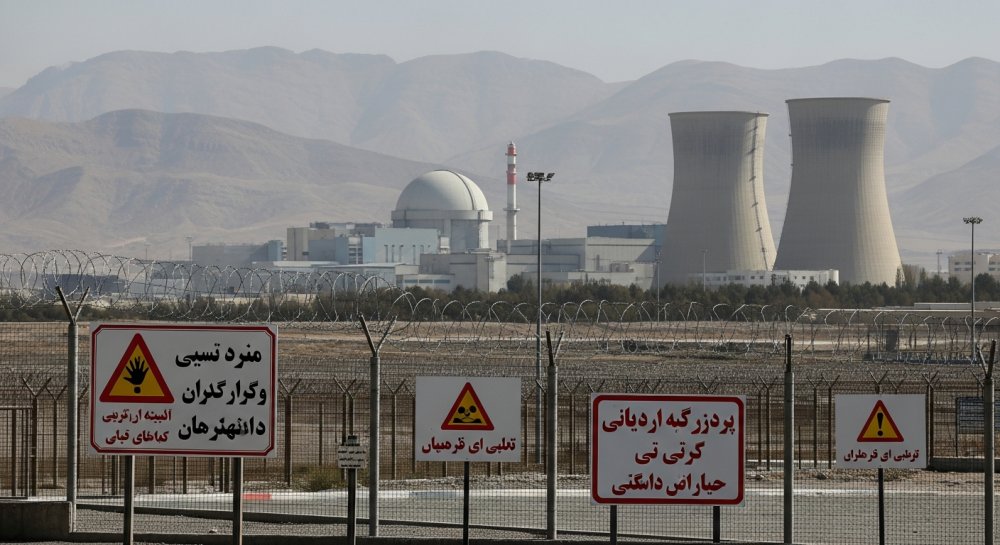
A pressing question confronts America, Israel, and freedom-loving nations worldwide: Can we accept an Iran perched perpetually on the edge of nuclear weapons capability?
The Islamic Republic has spent decades advancing its nuclear program despite international sanctions, diplomatic pressure, and economic isolation. Now, as Tehran edges closer to weapons-grade uranium enrichment, the world must confront an uncomfortable reality about the cost of inaction.
For Israel, the stakes could not be higher. A nuclear-armed Iran represents an existential threat to the Jewish state, whose right to exist Iranian leaders have repeatedly denied. The regime in Tehran has funded terrorist proxies throughout the Middle East, from Hezbollah in Lebanon to Hamas in Gaza, all while chanting “Death to America” and “Death to Israel” in its legislative chambers.
American security interests are equally at risk. Iran’s nuclear ambitions destabilize an already volatile region where U.S. forces maintain a presence and where critical energy resources flow to global markets. A nuclear Iran would embolden the regime’s aggression, potentially triggering a regional arms race as Saudi Arabia, Egypt, and Turkey consider their own nuclear options.
The question of whether the world can “live with” a nuclear-threshold Iran assumes that containment and deterrence strategies proven during the Cold War will work against a theocratic regime driven by apocalyptic ideology. This assumption may prove dangerously naive.
Unlike the Soviet Union, which operated under rational self-interest, Iran’s leadership has demonstrated a willingness to sacrifice its own people for ideological goals. The regime’s support for terrorism, its violent suppression of domestic protesters, and its stated commitment to exporting its revolution suggest a different calculation of risk and reward.
For years, diplomatic efforts have failed to curtail Iran’s nuclear ambitions meaningfully. The 2015 Joint Comprehensive Plan of Action, celebrated by its architects as a diplomatic breakthrough, merely delayed Iran’s path to nuclear weapons while releasing billions in sanctions relief that funded regional terror operations. The agreement’s sunset clauses guaranteed that restrictions on Iran’s nuclear program would eventually expire, leaving the regime free to pursue weapons development legally under the deal’s own terms.
Israel has made clear it will not permit Iran to obtain nuclear weapons, regardless of international opinion. The Jewish state has twice bombed nuclear facilities in hostile nations—Iraq in 1981 and Syria in 2007—demonstrating its willingness to act unilaterally when its survival is threatened.
The question facing policymakers is not whether a nuclear Iran poses unacceptable risks, but whether those risks will be confronted now through preventive measures or later under far more dangerous circumstances. Every month of delay sees Iran’s nuclear knowledge deepen, its stockpiles grow, and its defensive capabilities strengthen.
Christians have a particular interest in this question, both for the safety of persecuted believers within Iran and for the security of Israel, a nation of profound biblical significance. The Iranian regime ranks among the world’s worst persecutors of Christians, imprisoning and executing believers for their faith.
The failure of Western powers to prevent North Korea from developing nuclear weapons offers a sobering precedent. Diplomacy, sanctions, and international pressure all failed to stop Pyongyang’s program. Today, the hermit kingdom holds the world hostage with its nuclear arsenal, launching missiles over Japan and threatening American cities.
America and its allies must decide whether to accept this outcome repeating in the Middle East, with consequences far more severe given Iran’s central role in funding global terrorism and its stated hostility toward Israel’s existence. The answer to whether we can live with a nuclear Iran may ultimately be determined not by our choices, but by our willingness to prevent that scenario from becoming reality.
Let us know what you think, please share your thoughts in the comments below.

Faith Facts
- Scotland recorded nearly 18,800 abortions in 2024, the highest number in the nation’s history.
- An evangelical advocate is calling for compassionate, open dialogue about the sanctity of life in response to these alarming figures.
- The rising abortion totals highlight the urgent need for Christian communities to offer support and life-affirming alternatives to women in crisis.
Scotland has reached a tragic milestone, with government figures revealing nearly 18,800 abortions performed in 2024—the highest total ever recorded in the nation. The disturbing trend has prompted Christian leaders to call for renewed efforts to protect the unborn and support women facing difficult pregnancies.
The latest data underscores a growing cultural crisis that prioritizes convenience over the sanctity of human life. For Christians who believe that life begins at conception, these numbers represent thousands of lives lost and families that will never be.
A prominent evangelical advocate has responded to the figures by urging believers to engage in honest, compassionate conversations about abortion. Rather than remaining silent or judgmental, the advocate emphasized that Christian communities must create spaces where women feel supported, heard, and offered life-affirming alternatives.
The call for dialogue comes at a time when abortion has become increasingly normalized in Western societies, including Scotland. The rising numbers suggest that cultural acceptance of abortion continues to grow, making it all the more critical for people of faith to speak truth with love.
Christian pregnancy centers and support organizations across Scotland provide vital resources for women considering abortion, offering practical help including financial assistance, counseling, adoption services, and material support. These ministries demonstrate the compassion of Christ while affirming the value of every human life.
The record-high abortion total serves as a sobering reminder that the battle for life is far from over. It challenges believers to examine how effectively they are reaching women in crisis and whether churches are providing adequate support for mothers facing unexpected pregnancies.
For conservative Christians who hold firmly to biblical principles regarding the sanctity of life, these statistics represent both a tragedy and a call to action. The rising numbers demand more than political opposition—they require genuine engagement, practical support, and a commitment to walking alongside women through difficult circumstances.
The evangelical advocate’s emphasis on compassionate dialogue reflects a broader recognition within pro-life circles that judgment and condemnation drive people away, while love and practical support can change hearts and save lives. This approach aligns with the biblical mandate to speak truth while extending grace.
As Scotland grapples with these record abortion numbers, Christian communities face an opportunity to demonstrate the transformative power of the Gospel by offering hope, healing, and tangible assistance to women who might otherwise feel that abortion is their only option.
Let us know what you think, please share your thoughts in the comments below.


-

 Self-Reliance1 year ago
Trump’s Bold Move Uncovers Massive Social Security Fraud
-

 Faith1 year ago
New Clues Emerge in Noah’s Ark Mystery
-

 News1 year ago
Governor Walz’s Rhetoric Sparks National Controversy
-

 News1 year ago
Mel Gibson’s ‘The Passion of the Christ’ Sequel Title Announced
-

 Family1 year ago
Texas Lawmaker Targets Furries in Schools
-

 Freedom1 year ago
Maine Lawmaker Challenges Sports Fairness Controversy
-

 Family1 year ago
Canada’s Controversial Policy Sparks Ethical Debate
-
Faith6 months ago
Congress Hears Pleas for Nigerian Christians