
Faith
The Apologetics Argument Every Christian Should Know


Faith Facts
- A leading Christian apologist reveals the most powerful defense of the faith often overlooked by believers.
- The argument transcends traditional apologetic methods by addressing the foundation of reason itself.
- Understanding this approach equips Christians to engage skeptics on a deeper philosophical level.
When students of faith ask about the most compelling apologetics argument, many expect to hear about cosmological proofs, archaeological evidence, or historical verification of Scripture. Yet the most powerful defense of Christianity often lies in an unexpected place — one that challenges the very foundation of atheistic worldview.
The question reveals something profound about our current cultural moment. In an age of increasing secularization and attacks on traditional faith, Christians must be equipped with more than surface-level responses. We need arguments that cut to the heart of the matter, exposing the logical inconsistencies in worldviews that reject God.
The beauty of truly effective apologetics is that it doesn’t just defend Christianity — it demonstrates the intellectual bankruptcy of alternative systems. When atheists and skeptics claim to ground their beliefs in reason and science, they overlook a critical flaw: their worldview cannot account for reason itself.
This is the argument that resonates most powerfully: If the universe is purely materialistic, the product of random processes and Darwinian evolution, then human thought is merely the result of chemical reactions in our brains. These reactions were shaped by survival needs, not by any connection to truth. In such a system, there’s no reason to trust that our reasoning leads us to truth at all — it only helps us survive.
The irony is devastating for the atheist position. To argue against God, skeptics must use reason. But if atheism is true, reason itself becomes unreliable, undermined by the very worldview that depends on it. This creates an inescapable logical trap.
C.S. Lewis articulated this brilliantly when he noted that if our thoughts are merely the products of irrational causes, then we have no basis for trusting them, including our thought that naturalism is true. The atheist essentially saws off the branch he’s sitting on.
In contrast, the Christian worldview provides a coherent foundation for reason. If we are created in the image of a rational God, our ability to think logically and discover truth makes perfect sense. Our minds were designed to comprehend reality because they were fashioned by the One who created that reality.
This argument matters because it shifts the conversation from defending individual doctrines to examining the very possibility of rational thought. It forces skeptics to confront whether their worldview can support the intellectual tools they’re using to attack Christianity.
For Christian parents, educators, and apologists, this understanding is crucial. Our young people face relentless messaging that faith is irrational and science has disproven God. But the truth is precisely the opposite: Christianity provides the only coherent basis for the rational, ordered universe that science itself depends upon.
The approach also demonstrates the profound intellectual heritage of Christian thought. Far from being anti-intellectual, Christianity has historically championed reason, logic, and the pursuit of truth. The great universities, scientific advances, and philosophical systems of Western civilization emerged from Christian soil precisely because the faith affirms that creation is intelligible and that human minds, made in God’s image, can comprehend it.
When we equip ourselves and our children with this level of apologetic thinking, we do more than win arguments. We reveal the deep coherence and beauty of the Christian worldview. We show that faith and reason are not enemies but allies, both pointing to the same truth.
In our current cultural climate, where traditional values and biblical truth face increasing hostility, Christians cannot afford to be intellectually unprepared. We must know not only what we believe but why we believe it — and why alternative worldviews fail on their own terms.
This apologetic argument matters because it goes on offense rather than playing defense. Instead of merely responding to atheistic claims, it exposes the fundamental incoherence at the heart of materialistic philosophy. It shows that rejecting God doesn’t just leave questions unanswered — it destroys the very possibility of answering questions at all.
The next generation of Christians must understand these truths. They will face professors, colleagues, and a media culture that treats faith as primitive superstition. Armed with solid apologetics, they can confidently engage these challenges, demonstrating that Christianity alone provides a rational basis for the values of reason, science, morality, and human dignity that even skeptics claim to hold.
This is why thoughtful apologetics matters. It’s not about intellectual pride or winning debates. It’s about equipping believers to stand firm in truth and effectively share the gospel with a world desperately in need of the coherence only Christ provides.
Let us know what you think, please share your thoughts in the comments below.


Faith Facts
- Vice President JD Vance credits his faith for guiding his political service and life decisions.
- Vance says he has not yet felt a divine call to pursue the presidency in 2028.
- He remains open to the possibility that God may lead him toward a future presidential campaign.
Vice President JD Vance has stated that his faith remains central to his decision-making as he weighs a potential 2028 presidential campaign. The Ohio senator-turned-vice president spoke candidly about how he continues to seek God’s direction before making major political moves.
Vance emphasized that he has not yet sensed a clear calling from God regarding a presidential run. He noted that this could change in time but stressed the importance of waiting for divine guidance.
“I haven’t yet felt God’s call for a presidential run in 2028,”
“Maybe that’ll change.”
Vance’s comments reflect a growing trend among conservative leaders who publicly acknowledge their dependence on prayer and Scripture when facing major career decisions. His approach resonates with many Americans who value leaders willing to submit their ambitions to God’s will.
The vice president also reflected on how his conversion to Christianity has shaped his worldview and public service. Vance has often spoken about the transformative power of faith in both his personal life and his political philosophy.
Let us know what you think, please share your thoughts in the comments below.

Faith Facts
- Vice President JD Vance led rally attendees in reciting the Lord’s Prayer when a woman collapsed nearby.
- The moment highlighted the continued presence of Christian faith in American public life and political gatherings.
- Vance personally left the stage to check on the woman after leading the prayer.
Vice President JD Vance paused a Nebraska campaign rally to lead the crowd in the Lord’s Prayer after a woman collapsed in the audience.
The incident took place during a live event where Vance addressed supporters and addressed policy issues.
“Pray as the Lord taught us to pray,” Vance said before leading the audience in the traditional prayer.
After finishing the prayer, Vance stepped down from the stage and made his way into the stands to personally check on the woman who had collapsed.
The spontaneous act of faith and compassion drew praise from attendees who witnessed the moment.
Let us know what you think, please share your thoughts in the comments below.
Faith Facts
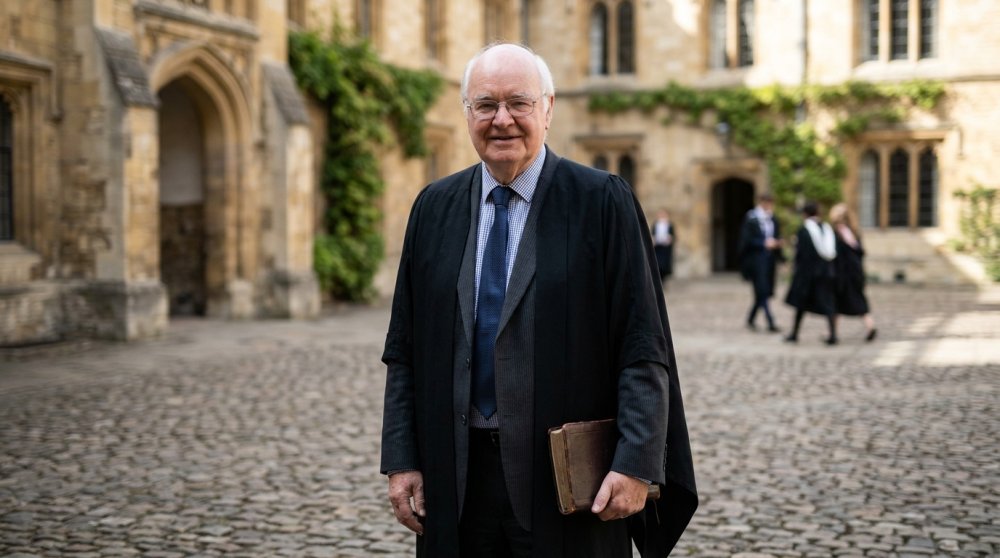
- Oxford mathematician and Christian apologist Professor John Lennox encourages believers to share their faith with confidence.
- Lennox stresses that evangelism is not reserved only for preachers, theologians, or those with extensive biblical knowledge.
- Every Christian is called to be a witness for Christ in daily life.
Oxford mathematician and Christian apologist Professor John Lennox is urging believers everywhere to share their faith with greater boldness and confidence. He reminds Christians that the call to witness is not limited to pastors or scholars but belongs to every follower of Christ.
“We’re all called to be witnesses,” Lennox declares. This simple truth challenges the idea that only trained experts can effectively share the gospel.
Professor Lennox emphasizes that evangelism is not about having every theological answer or delivering polished sermons. Instead, it is about living out and speaking the truth of Christ wherever God places His people.
His words come as a timely encouragement to Christians who may feel hesitant or unqualified to speak about their faith. Lennox points to the biblical calling that every believer is a witness, empowered by the Holy Spirit to share the hope within them.
Let us know what you think, please share your thoughts in the comments below.


-

 Self-Reliance2 years ago
Trump’s Bold Move Uncovers Massive Social Security Fraud
-

 Faith2 years ago
New Clues Emerge in Noah’s Ark Mystery
-

 News2 years ago
Governor Walz’s Rhetoric Sparks National Controversy
-

 News2 years ago
Mel Gibson’s ‘The Passion of the Christ’ Sequel Title Announced
-

 Family2 years ago
Texas Lawmaker Targets Furries in Schools
-

 Freedom2 years ago
Maine Lawmaker Challenges Sports Fairness Controversy
-

 Family1 year ago
Canada’s Controversial Policy Sparks Ethical Debate
-
Faith11 months ago
Congress Hears Pleas for Nigerian Christians