
Faith
The Apologetics Argument Every Christian Should Know


Faith Facts
- A leading Christian apologist reveals the most powerful defense of the faith often overlooked by believers.
- The argument transcends traditional apologetic methods by addressing the foundation of reason itself.
- Understanding this approach equips Christians to engage skeptics on a deeper philosophical level.
When students of faith ask about the most compelling apologetics argument, many expect to hear about cosmological proofs, archaeological evidence, or historical verification of Scripture. Yet the most powerful defense of Christianity often lies in an unexpected place — one that challenges the very foundation of atheistic worldview.
The question reveals something profound about our current cultural moment. In an age of increasing secularization and attacks on traditional faith, Christians must be equipped with more than surface-level responses. We need arguments that cut to the heart of the matter, exposing the logical inconsistencies in worldviews that reject God.
The beauty of truly effective apologetics is that it doesn’t just defend Christianity — it demonstrates the intellectual bankruptcy of alternative systems. When atheists and skeptics claim to ground their beliefs in reason and science, they overlook a critical flaw: their worldview cannot account for reason itself.
This is the argument that resonates most powerfully: If the universe is purely materialistic, the product of random processes and Darwinian evolution, then human thought is merely the result of chemical reactions in our brains. These reactions were shaped by survival needs, not by any connection to truth. In such a system, there’s no reason to trust that our reasoning leads us to truth at all — it only helps us survive.
The irony is devastating for the atheist position. To argue against God, skeptics must use reason. But if atheism is true, reason itself becomes unreliable, undermined by the very worldview that depends on it. This creates an inescapable logical trap.
C.S. Lewis articulated this brilliantly when he noted that if our thoughts are merely the products of irrational causes, then we have no basis for trusting them, including our thought that naturalism is true. The atheist essentially saws off the branch he’s sitting on.
In contrast, the Christian worldview provides a coherent foundation for reason. If we are created in the image of a rational God, our ability to think logically and discover truth makes perfect sense. Our minds were designed to comprehend reality because they were fashioned by the One who created that reality.
This argument matters because it shifts the conversation from defending individual doctrines to examining the very possibility of rational thought. It forces skeptics to confront whether their worldview can support the intellectual tools they’re using to attack Christianity.
For Christian parents, educators, and apologists, this understanding is crucial. Our young people face relentless messaging that faith is irrational and science has disproven God. But the truth is precisely the opposite: Christianity provides the only coherent basis for the rational, ordered universe that science itself depends upon.
The approach also demonstrates the profound intellectual heritage of Christian thought. Far from being anti-intellectual, Christianity has historically championed reason, logic, and the pursuit of truth. The great universities, scientific advances, and philosophical systems of Western civilization emerged from Christian soil precisely because the faith affirms that creation is intelligible and that human minds, made in God’s image, can comprehend it.
When we equip ourselves and our children with this level of apologetic thinking, we do more than win arguments. We reveal the deep coherence and beauty of the Christian worldview. We show that faith and reason are not enemies but allies, both pointing to the same truth.
In our current cultural climate, where traditional values and biblical truth face increasing hostility, Christians cannot afford to be intellectually unprepared. We must know not only what we believe but why we believe it — and why alternative worldviews fail on their own terms.
This apologetic argument matters because it goes on offense rather than playing defense. Instead of merely responding to atheistic claims, it exposes the fundamental incoherence at the heart of materialistic philosophy. It shows that rejecting God doesn’t just leave questions unanswered — it destroys the very possibility of answering questions at all.
The next generation of Christians must understand these truths. They will face professors, colleagues, and a media culture that treats faith as primitive superstition. Armed with solid apologetics, they can confidently engage these challenges, demonstrating that Christianity alone provides a rational basis for the values of reason, science, morality, and human dignity that even skeptics claim to hold.
This is why thoughtful apologetics matters. It’s not about intellectual pride or winning debates. It’s about equipping believers to stand firm in truth and effectively share the gospel with a world desperately in need of the coherence only Christ provides.
Let us know what you think, please share your thoughts in the comments below.

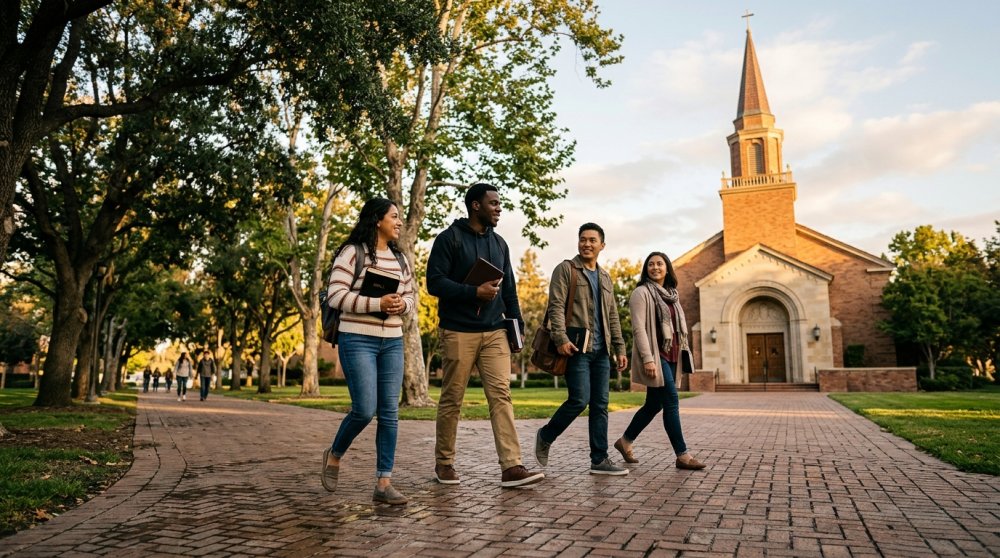
Faith Facts
- Gateway Seminary, a California-based Southern Baptist Convention theology school, reported record enrollment for the fall semester.
- Leaders at the seminary say students are actively seeking deeper study of Scripture.
- The growth reflects a renewed hunger among believers for sound biblical training and Christian service.
Gateway Seminary announced record enrollment numbers for its fall semester, continuing a trend of growth for the Southern Baptist-affiliated institution based in California.
The seminary’s leadership noted that students are expressing a strong desire to engage with the Bible and prepare for ministry roles across the nation.
“Students are hungry for God’s Word,” seminary officials stated.
The increase in enrollment comes at a time when many traditional seminaries are facing declining numbers, making Gateway’s growth stand out within the broader landscape of theological education.
School leaders attribute the surge to a growing interest in faithful biblical teaching and the desire among younger believers to serve local churches and communities with clarity and conviction.
Let us know what you think, please share your thoughts in the comments below.

Faith Facts
- Dinesh D’Souza has written a new book titled The Stones Cry Out examining biblical archaeology and end times prophecy.
- The author asserts that archaeological evidence supports the historical accuracy of Scripture.
- D’Souza connects these discoveries to biblical prophecies concerning the last days.
Author and filmmaker Dinesh D’Souza has joined Christian Post to discuss his latest work, The Stones Cry Out: Biblical Archaeology, Prophecy, and the Last Days.
The book examines how recent archaeological findings confirm the reliability of biblical accounts. D’Souza argues that these discoveries strengthen the case for the literal fulfillment of prophecy in our time.
“The Stones Cry Out is about how the ground itself testifies to the truth of Scripture and the nearness of the last days,”
he explained during the interview.
D’Souza highlights specific sites and artifacts that align with Scripture’s historical claims. He presents these findings as evidence that the Bible is not merely spiritual literature but a trustworthy historical record.
“When archaeology confirms what the prophets foretold, it becomes harder for skeptics to dismiss the Word of God,”
he stated.
The author also explores how current events appear to line up with prophetic patterns described in Scripture. He encourages believers to study both the physical evidence and the biblical text with renewed attention.
“God is not silent, and the stones continue to speak,”
D’Souza concluded.
Let us know what you think, please share your thoughts in the comments below.

Faith Facts
- Kori Pennypacker of Bible2School is helping Christian families understand that public school attendance does not require compromising faith in Jesus Christ.
- Pennypacker addresses widespread confusion among parents and educators about students’ constitutional religious freedom rights.
- The ministry equips children to live out their faith with confidence while attending public schools across America.
Christian parents across the nation face an increasingly difficult decision when it comes to their children’s education. Many wonder whether sending their sons and daughters to public schools will inevitably lead to the erosion of their faith. Kori Pennypacker, CEO of Bible2School, believes this false choice is robbing families of both educational opportunity and spiritual growth.
Pennypacker’s message centers on what she calls “God confidence” – the assurance that children can stand firm in their Christian beliefs even in secular environments. She argues that public schools remain one of the largest mission fields in America, filled with children who need to hear the Gospel.
“Christian parents don’t have to choose between sending their children to public school and teaching them to live openly for Jesus Christ,” Pennypacker states. She emphasizes that many families have been unnecessarily frightened away from public education due to misinformation about religious liberty protections.
The Bible2School ministry works to correct these misconceptions by training both parents and educators on students’ constitutional rights. Pennypacker notes that religious expression remains protected in public schools, including the right to pray, read Scripture, and share one’s faith with peers during appropriate times.
Through Bible2School’s programs, children learn how to articulate their beliefs with both courage and respect. The ministry provides practical tools that help young believers navigate classroom discussions, peer relationships, and school policies while maintaining their Christian witness.
Pennypacker believes that rather than retreating from public education, Christian families should prepare their children to engage the culture with truth and grace. This approach, she argues, produces stronger believers who understand how to live out their faith in any environment.
Let us know what you think, please share your thoughts in the comments below.


-

 Self-Reliance2 years ago
Trump’s Bold Move Uncovers Massive Social Security Fraud
-

 Faith2 years ago
New Clues Emerge in Noah’s Ark Mystery
-

 News2 years ago
Governor Walz’s Rhetoric Sparks National Controversy
-

 News2 years ago
Mel Gibson’s ‘The Passion of the Christ’ Sequel Title Announced
-

 Family2 years ago
Texas Lawmaker Targets Furries in Schools
-

 Freedom2 years ago
Maine Lawmaker Challenges Sports Fairness Controversy
-

 Family1 year ago
Canada’s Controversial Policy Sparks Ethical Debate
-
Faith11 months ago
Congress Hears Pleas for Nigerian Christians