
Family
She Took the Abortion Pill and Immediately Regretted It — What Happened Next Stunned Everyone


Faith Facts
- A pregnant mother took the first abortion pill at nine weeks but immediately regretted her decision and sought help to reverse the procedure.
- Medical professionals were able to intervene using abortion pill reversal protocols, ultimately saving the life of her baby girl.
- This testimony demonstrates the power of second chances and the life-affirming options available to women facing unplanned pregnancies.
At nine weeks and five days pregnant, a young woman made what she thought was her only choice. Scared and feeling alone, she drove to an abortion facility and took the first abortion pill, mifepristone. But almost immediately after swallowing the pill, she knew something was terribly wrong.
The crushing weight of regret hit her like a wave. What she had done in a moment of fear suddenly felt like the biggest mistake of her life.
Instead of giving up or resigning herself to the decision she had made under pressure, this brave mother did something remarkable. She began searching for help, desperately hoping there might be a way to undo what had been done. That search led her to medical professionals who specialize in abortion pill reversal — a protocol that can sometimes save a pregnancy even after the first abortion pill has been taken.
Time was of the essence. The abortion pill regimen typically involves two medications: mifepristone, which blocks progesterone and stops the pregnancy from developing, followed by misoprostol, which causes contractions to expel the baby. But if a woman takes only the first pill and seeks help quickly, medical intervention using progesterone may counteract the effects of mifepristone.
This mother reached out for help immediately, and doctors were able to administer the reversal protocol. The natural hormone progesterone was used to support the pregnancy, essentially giving her baby a fighting chance at life. The hours and days that followed were filled with prayer, hope, and medical monitoring.
Against the odds, the reversal worked. Her baby girl survived.
Today, that little girl is a living testament to the power of second chances and the incredible resilience of life. Her mother’s story is one of courage — courage to admit a mistake, courage to seek help, and courage to fight for her child’s life even when the situation seemed hopeless.
This remarkable testimony highlights an important truth that many women facing unplanned pregnancies don’t know: abortion pill reversal is possible, and it has saved thousands of babies. Organizations across the country operate 24/7 hotlines connecting frightened mothers with medical professionals who can help them reverse a chemical abortion if they change their minds after taking the first pill.
The medical establishment has sometimes been reluctant to acknowledge abortion pill reversal, despite growing evidence of its effectiveness and safety. Yet stories like this one continue to emerge, each one a powerful reminder that women deserve to know all their options — including the option to change their minds.
For pro-life advocates, this story reinforces the vital importance of providing compassionate alternatives to abortion. Women in crisis pregnancies need support, not pressure. They need accurate information about all available options, not a rushed decision they may regret for the rest of their lives.
This mother’s quick action and willingness to fight for her baby’s life made all the difference. Her daughter is alive today because she refused to accept that her initial decision was final. She sought help, found hope, and gave her baby the gift of life.
Her story is a beacon of hope for any woman who has taken the abortion pill and immediately regretted it. It’s not too late. Help is available. Medical professionals are standing by to assist women who want to continue their pregnancies, even after taking mifepristone.
Every life is precious, and every mother deserves the chance to choose life — even if that choice comes in the eleventh hour. This baby girl’s survival is a miracle made possible by her mother’s love, the dedication of pro-life medical professionals, and the grace of God who values every single life.
Let us know what you think, please share your thoughts in the comments below.


Faith Facts
- Clyde and Gwen Antwine celebrated 70 years of marriage rooted in Christian service and missionary work across Europe and the United States.
- The couple met at a youth camp in Texas and built their relationship on shared faith, mission trips, and a commitment to mentoring young Christians.
- They helped establish a healthy church in Zurich, Switzerland, and continued to serve faithfully at Memorial Road Church of Christ in Oklahoma.
The Antwines first met as teenagers at a two-week encampment at Abilene Christian University. Clyde was 15 years old and sold his FFA prize-winning steer for $40 to attend. That is where he first saw Gwen, then 14, and asked to take her picture.
He carried that photograph in his wallet for five years before they reunited at Abilene Christian during his sophomore year. They married six months later.
“The last day of camp, I worked up the courage to ask her if I could take her picture, and she posed. And I put that picture in my wallet. I didn’t even know her name. I just knew she was pretty.”
After Clyde graduated, the couple boarded a boat for Europe in 1959. They served seven years in Zurich, helping to strengthen a young congregation of the Church of Christ. Their work laid a foundation that still bears fruit today.
Later the Antwines served in the German cities of Augsburg and Munich. After nearly two decades overseas, they returned to the United States. Clyde became missionary in residence at Oklahoma Christian University while Gwen served as office manager for The Christian Chronicle.
“Gwen would get you laughing and see the positive side when things got tough, and Clyde, in his quiet voice, would somehow say the exact words you needed to hear to keep you spiritually grounded.”
Their legacy continues through the many students they mentored for mission work. The Antwines never sought recognition. Their only goal was to prepare others for Kingdom service.
Today, Clyde still carries that original photograph of Gwen from their teenage years. Their story stands as a clear testimony of enduring love, steadfast faith, and lifelong commitment to the Lord’s work.
Let us know what you think, please share your thoughts in the comments below.

Faith Facts
- Ashley Flynn’s family states she “wanted her life to point people to Jesus.”
- She is remembered as a mother of two who “loved Jesus with her whole heart.”
- The case centers on the tragic loss of a Christian wife and mother whose testimony continues to inspire faith.
The family of the late Ashley Flynn is remembering the slain mother of two as someone who “loved Jesus with her whole heart” after her husband Caleb was found guilty of murdering her as the defendant’s family maintains his innocence.
Let us know what you think, please share your thoughts in the comments below.
Faith Facts
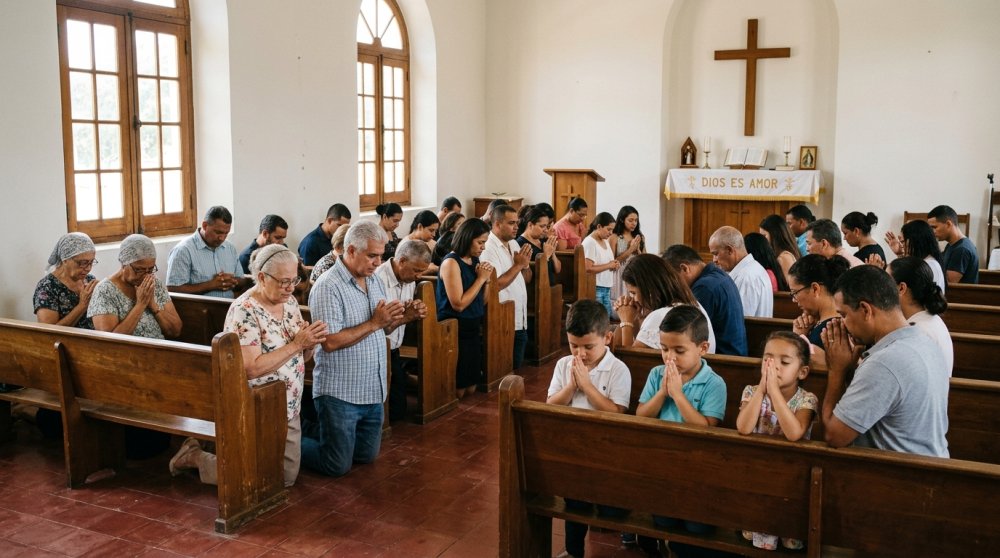
- Christians across Puerto Rico are gathering for six days of prayer for families, churches and the island’s future.
- The island is a U.S. territory located in the Caribbean.
- The multi-day prayer initiative reflects a commitment to faith, family and national values.
Christians across Puerto Rico are gathering this week for six days of prayer for families, churches and the future of the island, a U.S. territory in the Caribbean.
Believers are uniting in churches and communities to seek God’s guidance and blessing over their households and the territory’s future.
Participants are lifting up concerns ranging from family stability and spiritual renewal to economic growth and cultural preservation.
Let us know what you think, please share your thoughts in the comments below.


-

 Self-Reliance2 years ago
Trump’s Bold Move Uncovers Massive Social Security Fraud
-

 Faith2 years ago
New Clues Emerge in Noah’s Ark Mystery
-

 News2 years ago
Governor Walz’s Rhetoric Sparks National Controversy
-

 News2 years ago
Mel Gibson’s ‘The Passion of the Christ’ Sequel Title Announced
-

 Family2 years ago
Texas Lawmaker Targets Furries in Schools
-

 Freedom2 years ago
Maine Lawmaker Challenges Sports Fairness Controversy
-

 Family1 year ago
Canada’s Controversial Policy Sparks Ethical Debate
-
Faith11 months ago
Congress Hears Pleas for Nigerian Christians