
Faith
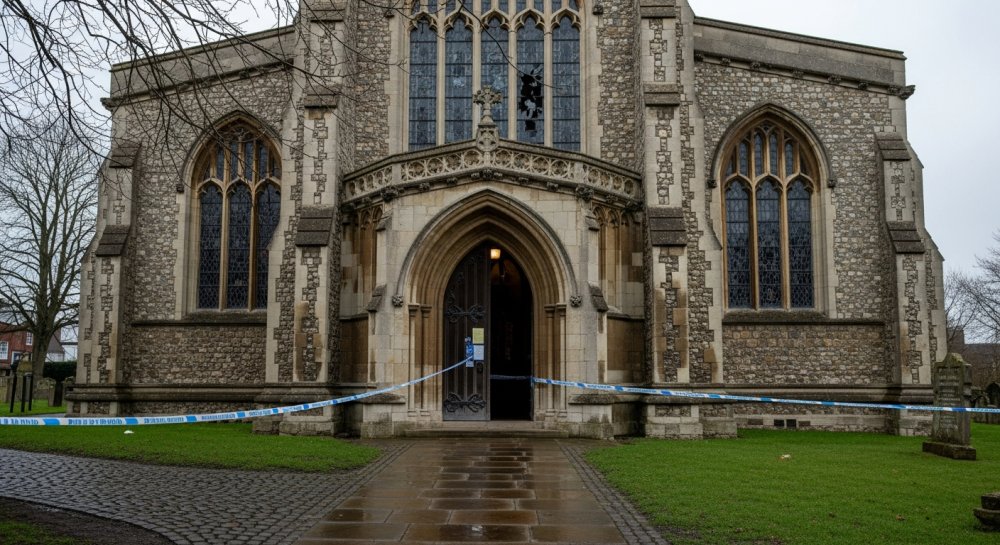
Sacred Spaces Under Siege as Crime Ravages Britain’s Churches

Faith Facts
- UK churches experience an average of 10 crimes per day, threatening historic sacred spaces and their communities
- The National Churches Trust warns that rising crime is forcing congregations to choose between security and welcoming worshipers
- Attacks on churches represent a broader assault on Christian heritage and religious freedom in Britain
Britain’s historic churches, once safe havens for prayer and community gathering, are now facing an unprecedented crisis. A troubling new report reveals that these sacred spaces are being targeted by criminals at an alarming rate of ten crimes daily across the United Kingdom.
Claire Walker of the National Churches Trust has spoken out about the devastating impact this crime wave is having on churches and the faithful communities they serve. The attacks go far beyond simple property damage—they strike at the heart of Britain’s Christian heritage and the ability of congregations to worship freely.
These houses of God, some standing for centuries as beacons of faith and stability, now find themselves vulnerable to theft, vandalism, and desecration. Church leaders face an impossible dilemma: invest precious resources in security measures or maintain the open, welcoming atmosphere that has defined Christian worship for generations.
The financial burden falls heaviest on smaller congregations already struggling with declining attendance and mounting maintenance costs for aging buildings. Money that could support ministry, outreach, and community programs instead goes toward locks, cameras, and repairs from criminal damage.
Beyond the monetary cost lies something even more precious—the loss of sacred peace. Parishioners who once found solace and refuge within church walls now enter their sanctuaries with wariness. Clergy must balance their calling to offer hospitality with the stark reality of protecting irreplaceable religious artifacts and the safety of their flocks.
The crime epidemic affecting Britain’s churches reflects a broader cultural shift away from respect for religious institutions and Christian values. What was once unthinkable—violating a sacred space—has become commonplace as traditional moral boundaries erode.
Historic stained glass windows, priceless religious artwork, and ancient architectural features that survived wars and centuries of turmoil now face destruction at the hands of modern criminals. Each act of vandalism or theft doesn’t just damage property; it severs another link to Britain’s rich Christian past.
Church communities are calling for stronger protections and increased law enforcement attention to these crimes. They argue that attacks on religious buildings should be treated with the seriousness they deserve, not dismissed as minor property crimes but recognized as assaults on religious freedom and cultural heritage.
Some congregations have begun organizing volunteer watch programs and installing sophisticated security systems. While these measures provide some protection, they cannot fully replace the organic security that once came from a society that universally respected sacred spaces.
The situation demands urgent action from both government authorities and communities. Britain’s churches have served as spiritual anchors and community centers for countless generations. Allowing them to become crime targets unchecked threatens not just buildings, but the very fabric of Christian community life.
As people of faith, we must stand firm in protecting these sacred spaces while continuing to fulfill our mission of welcoming all who seek God. The answer lies not in retreating behind fortress walls, but in reclaiming the moral foundation that once made such defenses unnecessary.
Let us know what you think, please share your thoughts in the comments below.

Faith Facts
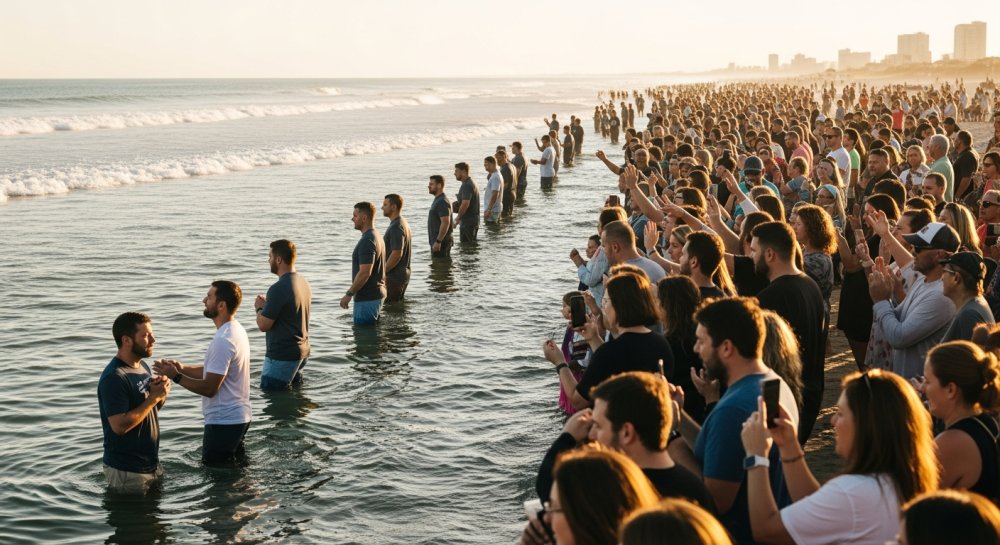
- Over 1,000 people gathered at Bournemouth beach for mass baptisms, marking the second consecutive year of this powerful witness
- Five churches from different denominations collaborated in unity to celebrate new believers entering the faith
- Rev Tim Matthews attributes the spiritual breakthrough to ten years of church leaders learning to love one another as Jesus commanded
A remarkable scene unfolded on the shores of Bournemouth beach as more than 1,000 believers gathered to witness mass baptisms for the second year running. The event brought together five churches in a powerful display of Christian unity and evangelistic fruitfulness that speaks to what’s possible when God’s people set aside denominational differences.
According to Rev Tim Matthews, the catalyst behind this spiritual breakthrough isn’t a complex church growth strategy or cutting-edge ministry program. Instead, it’s something far more fundamental to the Christian faith: genuine love among believers.
“There’s no special secret to the growth we’re seeing,” Matthews explained. “Just ten years of church leaders learning to love one another as Jesus commanded.”
The mass baptisms represent the visible fruit of a decade-long commitment to unity among pastors and congregations in the Bournemouth area. In an era when churches often compete rather than collaborate, these five congregations chose a different path—one rooted in the prayer of Jesus in John 17 that His followers “may be one.”
This kind of cooperation across denominational lines reflects the early church’s witness in Acts, where believers devoted themselves to fellowship and the apostles’ teaching. The result wasn’t just internal harmony but external growth, as “the Lord added to their number daily those who were being saved.”
The beach baptisms serve as a public testimony to the transforming power of the Gospel in individual lives. Baptism, a command given by Christ Himself, symbolizes death to the old life and resurrection to new life in Him. When conducted en masse in a public setting, these baptisms become a powerful witness to the broader community.
For traditional Christians and conservatives who value both doctrinal integrity and practical unity, this story offers encouragement. It demonstrates that churches can maintain their distinctive beliefs while working together for the kingdom of God. The emphasis on loving one another as Jesus commanded (John 13:34-35) reminds us that our witness to a watching world depends significantly on how we treat fellow believers.
The decade-long journey to this point underscores an important truth: genuine spiritual fruit often requires patient cultivation. Church leaders didn’t rush into collaboration or force artificial unity. Instead, they invested years in building authentic relationships founded on mutual respect and shared mission.
As American churches face increasing cultural pressure and declining attendance in many regions, the Bournemouth example provides a potential roadmap. Rather than viewing neighboring churches as competition, congregations might consider how strategic partnerships could advance the Gospel more effectively than isolated efforts.
The success of these mass baptisms also challenges the prevailing narrative that Christianity is in inevitable decline. While secularization continues in many Western nations, pockets of vibrant faith remain and even flourish where believers commit to biblical principles of unity and evangelism.
For families seeking a church home, events like these demonstrate the kind of spiritual vitality worth pursuing—congregations more interested in reaching the lost and celebrating new believers than in building their own kingdoms. The focus on baptism, a non-negotiable ordinance of the faith, signals these churches’ commitment to biblical Christianity rather than watered-down cultural accommodation.
The visual impact of mass baptisms in a public space like a beach cannot be overstated. In an age when many Christians hesitate to publicly identify with their faith, these believers made an unmistakable declaration of allegiance to Christ. Their willingness to be baptized before crowds serves as both inspiration and challenge to American Christians who sometimes practice their faith only in private.
Rev Matthews’ emphasis on love among church leaders points to a principle often overlooked in discussions of church growth: the spiritual health of leadership directly impacts congregational fruitfulness. When pastors genuinely care for one another across denominational lines, it creates a culture that values people over programs and mission over institutional preservation.
The story also highlights the importance of patience in ministry. Ten years represents a significant investment of time and energy with no guarantee of spectacular results. Yet the leaders persevered in building relationships, and now they’re witnessing a harvest that exceeds what any single congregation could have produced alone.
As these churches look toward continuing this work, the foundation they’ve laid through years of unity positions them well for sustained impact. The baptisms aren’t merely an annual event but the visible expression of ongoing evangelistic efforts supported by multiple congregations working in harmony.
For American Christians concerned about the future of faith in our nation, this account from across the Atlantic offers both inspiration and instruction. Unity grounded in biblical truth, sustained commitment to relationship-building among leaders, and faithful proclamation of the Gospel remain as effective today as in the early church.
Let us know what you think, please share your thoughts in the comments below.

Faith Facts
- Arsenal’s Bukayo Saka and Chelsea’s Noni Madueke are competing for the same position on England’s national team yet maintain a relationship built on mutual respect and brotherhood rather than rivalry.
- Both young soccer stars openly express their Christian faith, with their relationship reflecting biblical principles of love, humility, and supporting one another despite competition.
- Saka describes their bond as transcending professional rivalry, choosing to uplift each other rather than view one another as obstacles to overcome.
In a sports world often defined by cutthroat competition and self-promotion, two young English soccer stars are demonstrating a different path forward. Bukayo Saka of Arsenal and Noni Madueke of Chelsea find themselves vying for the same coveted position on England’s national team. Yet instead of the jealousy and animosity that typically defines such professional rivalry, these young men have chosen brotherhood.
The relationship between Saka and Madueke stands as a powerful testimony to Christian values in action. Both athletes have been open about their faith, and it shows in how they treat one another. Rather than viewing each other as threats or obstacles, they have embraced mutual encouragement and genuine respect.
“It’s not about rivalry for us,” Saka has said of their relationship. “We push each other to be better, but there’s love and respect there. That’s what matters most.”
This perspective reflects the biblical principle found in Philippians 2:3: “Do nothing out of selfish ambition or vain conceit. Rather, in humility value others above yourselves.” In an era where professional athletes often cultivate personal brands built on dominance and individualism, Saka and Madueke are living out a counter-cultural witness.
Their bond reminds us that competition and compassion need not be mutually exclusive. The Christian faith calls believers to excellence in their vocations while simultaneously loving their neighbors as themselves. These young men are proving that you can pursue your professional dreams with intensity while still viewing your competitors through the lens of Christian charity.
Both players have spoken about how their faith grounds them in an industry filled with pressure, fame, and temptation. For Christian families raising children in competitive environments—whether in sports, academics, or other pursuits—the Saka-Madueke friendship offers a practical example of how biblical values can shape character even in high-stakes situations.
The relationship also speaks to the importance of mentorship and community within the faith. When young believers see their peers living out Christian principles in public, it strengthens their own resolve to do likewise. Saka and Madueke are not just competing for their country; they’re bearing witness to a better way of approaching success.
In American sports culture, we’ve seen similar examples—from Tim Tebow’s humility to coaches who prioritize character development alongside athletic achievement. These testimonies matter because they demonstrate that faith is not merely a private belief system but a transformative force that reshapes how we interact with the world around us.
As both young men continue their careers, their friendship will undoubtedly face tests. Selection decisions will favor one over the other at various times. Injuries, form, and coaching preferences will create natural tensions. Yet if they continue to root their relationship in the solid ground of Christian brotherhood, their bond will endure beyond the temporary ups and downs of professional sport.
The story of Bukayo Saka and Noni Madueke is ultimately about more than soccer. It’s about how faith calls us to a higher standard in every arena of life. It’s about choosing love over envy, encouragement over sabotage, and eternal values over temporary gain.
For Christian families, this narrative provides a teaching moment: success and godliness are not opposing forces. Young people can pursue excellence with every ounce of their ability while still treating others with the dignity and respect that flows from recognizing we are all made in God’s image.
Let us know what you think, please share your thoughts in the comments below.

Faith Facts
- Nearly half of all Christians generate income through business ventures or side hustles, yet most churches offer little to no support for their entrepreneurial journey.
- Christian entrepreneurs face unique spiritual challenges in the marketplace but are often left to navigate faith and business alone without church community backing.
- Churches have largely focused on traditional employment while overlooking the growing number of believers called to create, innovate, and build businesses as an expression of their faith.
The modern American church has a blind spot. While nearly half of all Christians are generating income through their own businesses or side ventures, stepping out in faith every single day, their spiritual community often fails to recognize or support this vital calling.
Derek Hughes highlights a concerning reality: Christian entrepreneurs are trusting God with significant financial risks and daily decisions that impact their families and communities. Yet when Sunday comes, the church rarely acknowledges this form of ministry or provides the spiritual support these believers desperately need.
The traditional church model has long emphasized serving through volunteering or working secular jobs with integrity. But entrepreneurship — the act of creating value, providing jobs, and stewarding resources — represents a powerful expression of faith that deserves recognition and support from the body of Christ.
Christian business owners face unique spiritual battles. They must navigate ethical dilemmas, trust God during financial uncertainty, and lead employees according to biblical principles. They’re making kingdom decisions in the marketplace every day, often without the prayer support or biblical guidance their pastors receive for pulpit ministry.
The absence of church support leaves these entrepreneurs spiritually isolated. While small groups discuss parenting and marriage, few create space for believers to process the moral complexities of pricing, hiring, competition, and growth through a biblical lens.
This represents a massive missed opportunity for the church. Entrepreneurs don’t just need business advice — they need spiritual community that understands their calling. They need prayer warriors who recognize that negotiating contracts and managing employees are spiritual acts of worship when done unto the Lord.
The early church understood that tent-making and marketplace ministry were legitimate callings. The Apostle Paul himself supported his ministry through business. Yet modern churches often treat entrepreneurship as merely secular work rather than a potential mission field and ministry platform.
Churches that embrace and equip their entrepreneurs unlock tremendous kingdom potential. Business owners can model Christian excellence in the marketplace, create employment opportunities that reflect biblical values, and generate resources for gospel advancement. But they can’t do it alone.
The solution starts with recognition. Pastors and church leaders must acknowledge that starting and running a business requires just as much faith as entering foreign missions. Entrepreneurs need commissioning, accountability, and ongoing spiritual support for their calling.
Creating dedicated small groups, mentorship programs, and prayer networks for Christian entrepreneurs would transform isolated believers into a powerful community. These spaces would allow business owners to wrestle with difficult questions: How do I honor God in contract negotiations? What does biblical stewardship look like in expansion decisions? How do I lead employees with both grace and accountability?
The church must also celebrate entrepreneurial success as kingdom advancement, not worldly ambition. When Christian businesses thrive through ethical practices and biblical principles, they demonstrate God’s goodness and provide a counter-witness to corrupt marketplace practices.
Nearly half of the congregation is already in the entrepreneurial arena, whether church leaders recognize it or not. These believers are exercising faith, stewarding resources, creating jobs, and impacting their communities through commerce. They deserve the same spiritual support and recognition the church readily provides to other callings.
The modern marketplace desperately needs Christians who conduct business with integrity, treat employees with dignity, and view profit as a tool for kingdom purposes rather than an end in itself. But these marketplace missionaries need their church family standing with them in prayer and support.
It’s time for the American church to wake up to the entrepreneurial calling among its members. By creating intentional space for business owners, providing biblical framework for marketplace decisions, and celebrating entrepreneurship as legitimate ministry, churches can unleash a powerful force for kingdom advancement.
Let us know what you think, please share your thoughts in the comments below.


-

 Self-Reliance1 year ago
Trump’s Bold Move Uncovers Massive Social Security Fraud
-

 Faith1 year ago
New Clues Emerge in Noah’s Ark Mystery
-

 News1 year ago
Governor Walz’s Rhetoric Sparks National Controversy
-

 News1 year ago
Mel Gibson’s ‘The Passion of the Christ’ Sequel Title Announced
-

 Family1 year ago
Texas Lawmaker Targets Furries in Schools
-

 Freedom1 year ago
Maine Lawmaker Challenges Sports Fairness Controversy
-

 Family1 year ago
Canada’s Controversial Policy Sparks Ethical Debate
-
Faith7 months ago
Congress Hears Pleas for Nigerian Christians