
Faith
Pakistani Court Delivers Rare Victory for Religious Freedom

Faith Facts
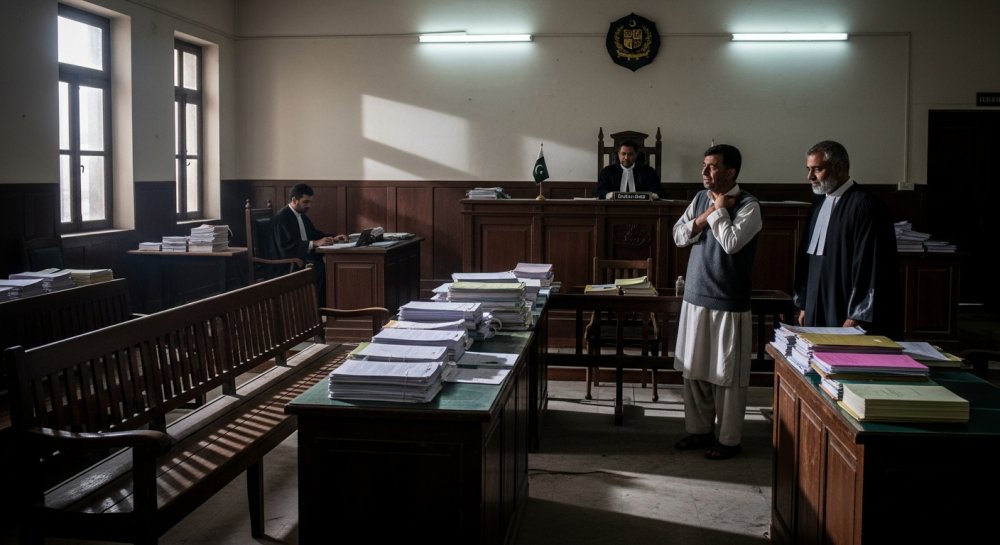
- A Pakistani court acquitted a Catholic man of blasphemy charges on Monday, July 6, in a rare legal victory for religious minorities in the Muslim-majority nation.
- Pakistan’s blasphemy laws carry severe penalties, including the death sentence, and are frequently used to target Christians and other religious minorities.
- The acquittal represents a significant moment for religious freedom advocates who have long called for reform of Pakistan’s blasphemy statutes.
In a remarkable turn of events, a Pakistani court has granted freedom to a Catholic man who faced blasphemy accusations, marking an unusual victory in a country where such charges often result in tragedy for Christians. The Monday ruling brings hope to religious freedom advocates who have witnessed countless believers persecuted under Pakistan’s stringent blasphemy laws.
The defendant’s lawyer confirmed the acquittal, which stands as a beacon of judicial fairness in a legal landscape that has historically been perilous for religious minorities. Pakistan’s blasphemy laws have long drawn international criticism for their severe penalties and the ease with which they can be weaponized against innocent believers.
Christians in Pakistan live under constant threat of false accusations that can result in mob violence, lengthy imprisonment, or death sentences. This acquittal demonstrates that the truth can still prevail in Pakistan’s courts, though such outcomes remain tragically rare.
The case highlights the ongoing persecution of Christians throughout the Muslim-majority nation, where followers of Christ often face discrimination, violence, and legal jeopardy simply for practicing their faith. Religious freedom organizations have consistently documented the abuse of blasphemy laws as a tool for settling personal scores or silencing religious minorities.
While this verdict offers a glimmer of hope, it does not erase the reality that Pakistan remains one of the world’s most dangerous places for Christians to live. Believers there continue to need our prayers and international advocacy as they navigate a legal system that too often fails to protect their fundamental rights.
This acquittal serves as a reminder of the importance of standing with our persecuted brothers and sisters around the world. American Christians must remain vigilant in supporting religious freedom globally and holding nations accountable for protecting the God-given rights of all people to worship freely.
Let us know what you think, please share your thoughts in the comments below.

Faith Facts
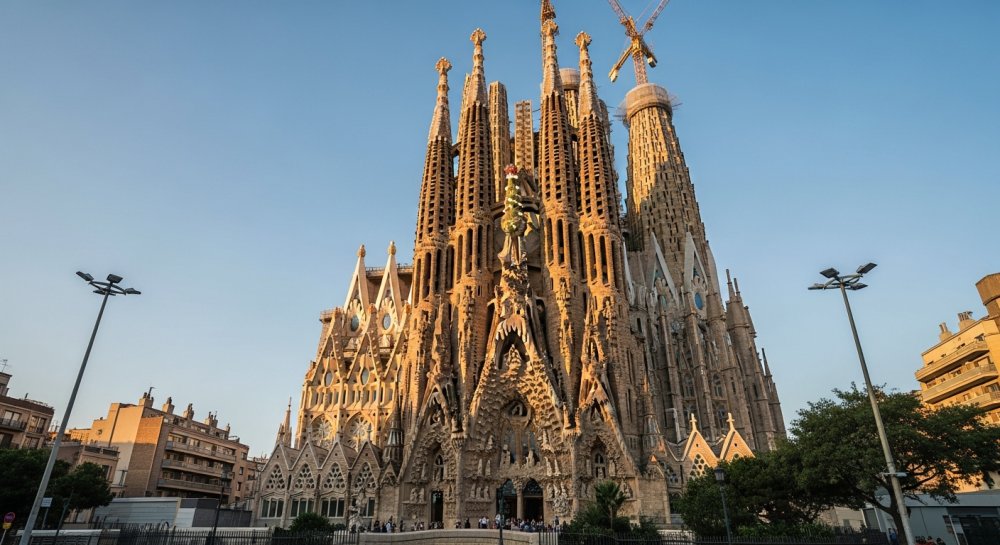
- Barcelona’s Sagrada Família has become the world’s tallest church after 144 years of continuous construction
- The iconic basilica represents a modern testament to Christian architectural devotion and the inspiration of the Holy Spirit
- The completion marks a milestone in sacred Christian art that spans more than a century of faithful dedication
After nearly a century and a half of construction, Barcelona’s magnificent Sagrada Família has reached its full height, standing as the tallest church in the world. The completion of this architectural marvel offers Christians a powerful reminder of patience, devotion, and the timeless beauty of sacred art dedicated to glorifying God.
The basilica’s extraordinary height symbolizes more than architectural ambition. It represents generations of believers who understood that some works of faith cannot be rushed, that dedication to excellence in worship spaces honors the Creator who deserves our very best.
The Sagrada Família stands as a testament to what can be accomplished when artistic vision aligns with spiritual purpose. Its soaring spires and intricate facades tell the Gospel story in stone and glass, creating a sanctuary that lifts both eyes and hearts heavenward.
For 144 years, craftsmen, architects, and artists have labored on this sacred project, each generation adding their talents to a work that would outlive them. This multigenerational dedication reflects the biblical principle of building for eternity rather than immediate gratification, a counter-cultural witness in our age of instant results.
The church’s completion at this moment in history carries particular significance. As secular forces continue their assault on Christian heritage and values across Europe and the West, the Sagrada Família stands defiantly beautiful, declaring that faith has not been vanquished and that sacred beauty still has the power to move souls toward the divine.
The basilica’s design draws inspiration directly from Scripture and nature, recognizing both as God’s revelation to humanity. Its columns rise like trees in a stone forest, its light filters through stained glass like divine illumination, and its acoustics create an atmosphere of reverence that technology alone could never replicate.
This architectural achievement challenges contemporary Christians to consider their own commitment to excellence in worship. Too often, modern church buildings prioritize efficiency and cost over beauty and permanence, forgetting that our houses of worship should reflect the majesty of the God we serve.
The completion of the world’s tallest church also serves as an inspiration for believers facing long-term challenges. Just as the Sagrada Família required patience and persistence across generations, so too does the work of advancing God’s kingdom require steadfast commitment regardless of how long results may take.
As Christians celebrate this milestone, we are reminded that beauty, truth, and devotion to God never go out of style. The Sagrada Família will stand for centuries as a witness to faith, inspiring future generations to lift their eyes above the mundane concerns of daily life and glimpse the transcendent glory of our Creator.
Let us know what you think, please share your thoughts in the comments below.

Faith Facts
- England defender Marc Guehi dropped to his knees in prayer after a dramatic World Cup victory, one of many public displays of faith at the 2026 tournament
- Christian athletes are increasingly using the global stage to publicly acknowledge God and share their faith with billions of viewers
- These moments of worship demonstrate how believers can honor Christ in their professional lives, even under intense pressure and scrutiny
The 2026 FIFA World Cup has become more than a showcase of athletic excellence. It has emerged as a powerful platform for Christian witness, as players from nations around the globe publicly declare their faith before billions of viewers.
When England secured a dramatic 3-2 victory over Mexico to advance to the quarter finals, defender Marc Guehi immediately dropped to his knees and pointed skyward in prayer and praise. His spontaneous act of worship captured what has become a defining characteristic of this tournament: athletes unashamedly honoring God on the world’s biggest stage.
Guehi’s gesture is far from isolated. From opening matches to knockout rounds, players have consistently paused amid the roar of crowds and the pressure of competition to give glory to Jesus Christ. These moments serve as powerful reminders that faith transcends nationality, language, and even the fiercest sporting rivalries.
For Christian viewers, these public displays carry profound significance. They demonstrate that believers need not compartmentalize their faith, even in secular environments that often discourage religious expression. Instead, these athletes model how to integrate devotion to God into every aspect of life, including professional achievement.
The visibility of Christian witness at the World Cup also reflects a broader cultural conversation about faith in public life. While some institutions push religion to the margins, these players are claiming their right to acknowledge the source of their strength and talent. Their courage resonates with American Christians who increasingly feel pressure to keep their beliefs private.
Each moment of prayer, each gesture heavenward, communicates a simple but transformative truth: success ultimately belongs to God. Whether in victory or defeat, these athletes recognize that their abilities are gifts to be stewarded for His glory. This perspective offers a stark contrast to the self-glorification that often dominates professional sports.
The impact of these faith-filled moments extends beyond the stadiums. Young believers watching around the world receive powerful examples of how to stand firm in their convictions. Parents gain opportunities to discuss faith and courage with their children. Churches find fresh illustrations of authentic Christian witness in contemporary culture.
As the tournament progresses, the frequency of these God-honoring moments suggests something deeper than individual piety. A generation of Christian athletes appears increasingly comfortable expressing faith publicly, even when doing so invites scrutiny or criticism. This boldness reflects the biblical call to be salt and light in the world.
The World Cup’s global audience ensures these testimonies reach places where Christian witness faces severe restrictions. A player’s simple gesture of prayer might be the only gospel presentation some viewers encounter. In this way, athletic competition becomes a vehicle for spreading hope and truth across cultural and political boundaries.
For American Christians, these international displays of faith should inspire renewed commitment to public witness. If athletes can honor God under the intense pressure of World Cup competition, believers can surely find courage to express their faith in workplaces, schools, and communities across our nation.
The tournament continues, and with it, more opportunities for players to point beyond themselves to the God who created them. Each prayer, each pointed finger toward heaven, testifies to a reality that transcends soccer: Jesus Christ remains Lord of all, including the world’s most-watched sporting event.
Let us know what you think, please share your thoughts in the comments below.
Faith Facts
- The concept of “separation of church and state” does not appear in the U.S. Constitution and has been widely misunderstood in modern American discourse.
- America’s founding documents and institutions were deeply influenced by Judeo-Christian principles, with the Founders seeking to prevent government establishment of religion while protecting religious expression.
- True neutrality in the public square is impossible, as every legal and moral framework is built upon foundational beliefs about justice, truth, and human dignity.
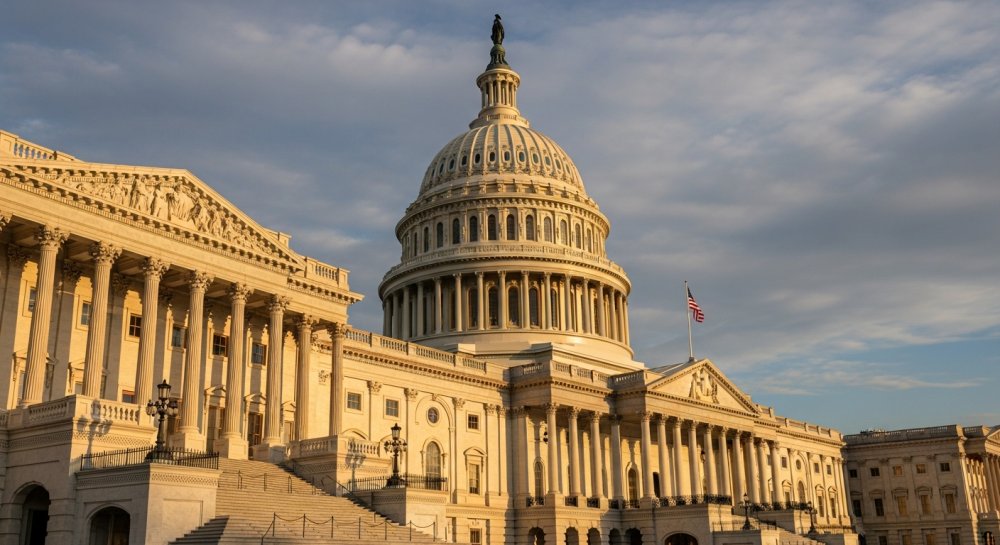
In recent decades, a popular misconception has taken hold across America: that the separation of church and state means the complete removal of God from public life. This interpretation, however, runs counter to both the original intent of our nation’s Founders and the historical reality of American governance.
The phrase “separation of church and state” appears nowhere in the Constitution. Instead, it originates from a letter Thomas Jefferson wrote to the Danbury Baptist Association, where he sought to assure them that the government would not interfere with their religious practice.
The First Amendment guarantees that “Congress shall make no law respecting an establishment of religion, or prohibiting the free exercise thereof.” This was designed to protect religious freedom, not to banish faith from the public square. Our Founders understood that a thriving republic required citizens of virtue, and that such virtue was cultivated primarily through religious faith and practice.
The notion that neutrality is achievable in matters of law and governance is fundamentally flawed. Every law, every policy, every judicial decision rests upon underlying assumptions about what is right, what is just, and what serves the common good. These assumptions inevitably flow from a worldview—whether explicitly religious or secular in nature.
When courts rule on matters of life and death, marriage and family, freedom and responsibility, they are making determinations rooted in deeply held beliefs about human nature and purpose. The question is not whether a worldview will shape our laws, but which worldview will prevail.
For most of American history, Judeo-Christian principles provided the moral foundation for our legal system. Concepts such as the inherent dignity of each person, the importance of truth-telling, and the duty to care for the vulnerable all flow from biblical teaching. These weren’t imposed by governmental decree but emerged naturally from a culture steeped in faith.
Today, as some seek to expunge every reference to God from public institutions—removing prayer from schools, Ten Commandments displays from courthouses, and religious symbols from public property—they don’t create neutrality. Instead, they establish a secular orthodoxy that is itself a form of belief system, one that often stands in opposition to traditional religious values.
The consequences of this shift have been profound. As America has moved away from its spiritual moorings, we’ve witnessed increases in social fragmentation, moral confusion, and cultural conflict. Without a shared foundation of transcendent truth, society fractures into competing tribes, each asserting its own version of justice with no common ground for resolution.
Religious Americans aren’t asking for a theocracy or state-sponsored religion. What they seek is the freedom to live according to their convictions, to participate fully in civic life without being forced to check their faith at the door, and to raise their children in communities that respect rather than ridicule their beliefs.
The public square will never be truly neutral—it will always reflect someone’s vision of the good, the true, and the just. The question facing our nation is whether we will continue to honor the religious foundations that have sustained American liberty for over two centuries, or whether we will embrace a secular ideology that, in the name of neutrality, marginalizes the very faith that made our freedom possible.
Our Founders understood what many modern Americans have forgotten: that freedom requires virtue, virtue requires faith, and faith requires freedom. These elements form a cycle that, when broken, threatens the entire foundation of self-government.
As we navigate the challenges of our time, Americans of faith must continue to speak truth with clarity and courage. The separation of church and state was never meant to silence the voice of religious conviction in public discourse. Rather, it was designed to ensure that such voices would always be free to contribute to the ongoing conversation about who we are as a people and what kind of nation we will become.
Let us know what you think, please share your thoughts in the comments below.


-

 Self-Reliance1 year ago
Trump’s Bold Move Uncovers Massive Social Security Fraud
-

 Faith1 year ago
New Clues Emerge in Noah’s Ark Mystery
-

 News1 year ago
Governor Walz’s Rhetoric Sparks National Controversy
-

 News1 year ago
Mel Gibson’s ‘The Passion of the Christ’ Sequel Title Announced
-

 Family1 year ago
Texas Lawmaker Targets Furries in Schools
-

 Freedom1 year ago
Maine Lawmaker Challenges Sports Fairness Controversy
-

 Family1 year ago
Canada’s Controversial Policy Sparks Ethical Debate
-
Faith8 months ago
Congress Hears Pleas for Nigerian Christians