
Faith
Millions Blocked From Bible in Dozens of Nations

Faith Facts
- 33 countries have extreme or severe restrictions on Bible access.
- Somalia, Afghanistan, and Yemen are the most restrictive for Christians seeking Scripture.
- Ownership, sharing, and reading the Bible are outlawed or dangerous in many regions.
Countless believers around the world remain unable to obtain or read God’s Word due to government restrictions, persecution, and poverty. New research from the Bible Access Initiative reveals both the scope and the dangers faced by Christians in 88 nations struggling for spiritual nourishment.
“A modern famine persists, not due to apathy, but because of barriers that prevent people from accessing the Bible,” said Wybo Nicolai, the list’s co-creator of BAL.
Somalia enforces the world’s worst Bible restrictions, criminalizing printing, importing, or distributing Bibles under strict Sharia law, with deep poverty worsening believers’ hardship. Severe legal penalties await those found with Bibles, while ongoing conflict and famine only compound the crisis.
Afghanistan’s small Christian community suffers nearly complete cut-off from Scripture, as Taliban rule has banned all Bible access and harshly punishes converts. “Access to Bibles in Afghanistan is not merely limited, it is nearly impossible,” the report states.
Yemen’s Christians also face life-threatening conditions; under Sharia-based law, sharing the Gospel is considered a crime that can carry a death sentence. The Christian community is almost invisible, with most believers unable to read God’s promises for themselves.
North Korea maintains its notorious position as one of the most spiritually hostile places on earth by banning all Christian practices and persecuting anyone caught with a Bible. “In North Korea, the Bible is not just banned — it is feared,” the researchers noted.
Mauritania and Eritrea likewise impose harsh penalties for those found with Christian materials, with both governments strictly monitoring believers and limiting any Scriptural access. Apostasy can result in the death penalty, and online Christian content is also policed closely, endangering faithful hearts hungering for truth.
The struggle for Bible access is a sobering call for Christians everywhere to remember our persecuted brothers and sisters and to stand up for the fundamental freedom to worship and read Scripture. Let us pray earnestly for open doors and continue to support efforts ensuring God’s Word reaches every nation.


Faith Facts
- Leadership in the local church shapes its health and spiritual direction.
- Jesus modeled servant leadership by washing His disciples’ feet.
- Healthy churches flourish when leaders prioritize humility, trust, and Scripture.
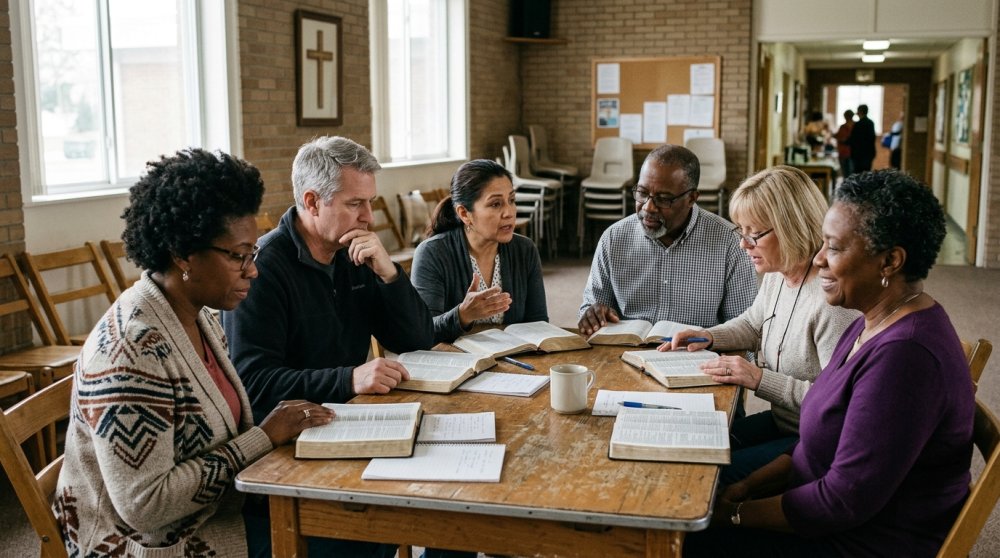
Leadership matters. When it comes to the health of a church, as the leadership goes, so goes the church. A new series of guest columns is launching to address this critical need.
The writers will come from different regions, congregations, and traditions. Some churches use songbooks while others employ praise teams. Some preach from the KJV and others from the NIV.
Yet all share key convictions. They hold an authoritative view of Scripture. They believe the God of Scripture remains active in the world today. They believe the Gospel must stay the first priority of the church. They share a deep love for the Churches of Christ.
“Leadership is more than a position or title. It is influence. It is stewardship. It is the responsibility to help people see what God may be calling them to become and then create an environment where they can grow into it.”
Jesus redefined leadership. He picked up a towel, knelt before His disciples and showed us that greatness in the kingdom is measured by our willingness to serve. That kind of leadership requires humility.
It requires leaders who can say, “I may be wrong.” Leaders who listen before they speak. Leaders who can disagree without becoming disagreeable. Leaders who are secure enough to celebrate someone else’s success. And leaders who understand that the church belongs to Christ — not to the elders, the preacher, the staff or any individual leader.
Healthy leadership also requires trust. Trust is built over time through integrity, consistency, transparency and keeping our word. It gives teams the freedom to have difficult conversations without becoming divided. It creates an environment where people can challenge one another, extend grace and pursue what is best for the kingdom rather than simply what is most comfortable.
Leadership requires teamwork. The biblical picture of leadership is rarely one person doing everything. God has always worked through communities of people with different gifts, experiences, personalities and perspectives. Healthy teams do not require uniformity; they cultivate unity.
Faithful leadership requires a high view of Scripture coupled with an understanding of the culture in which we minister. We do not change the Gospel to fit the culture. But neither should we ignore the culture around us. Effective leaders remain deeply rooted in biblical truth while learning how to build bridges to people who desperately need the hope of the Gospel.
Over the coming months, the series will explore humility, trust, teamwork, spiritual discernment, cultural awareness, courage, communication, succession and the intentional development of other leaders.
After more than two decades of ministry in the same congregation and walking alongside churches across the nation through seasons of remarkable health and painful transition, one conviction stands out. One of the great opportunities before the Churches of Christ is for our leaders to become better leaders.
Not simply more effective leaders. Not simply more strategic leaders. Leaders who look more like Jesus. Because leadership matters.
Let us know what you think, please share your thoughts in the comments below.

Faith Facts
- Christians are called to be light in dark places according to Scripture.
- Abandoning public forums entirely may limit gospel witness.
- Engaging flawed platforms can still serve truth and salt-and-light purposes.
Christians are wrestling with whether to stay on X, the platform formerly known as Twitter, amid growing concerns over trolls, deepfakes, and outrage-driven content. Many believers question if their presence on such platforms does more harm than good.
Lois Mclatchie Miller argues that retreating from every imperfect space risks silencing the Christian voice where it is most needed. She reminds readers that darkness cannot be dispelled if the light is taken away.
“If Christians abandon every flawed public forum, our light will never be able to shine in the darkness.”
The debate reflects broader tensions between protecting personal peace and fulfilling the Great Commission in a digital age. Traditional values emphasize engagement over isolation when truth is at stake.
While critics highlight the platform’s problems, supporters note that X remains one of the few spaces where open debate and conservative perspectives can still flourish. Leaving could hand ground to voices hostile to faith and family.
Let us know what you think, please share your thoughts in the comments below.
Faith Facts
- Scripture consistently affirms marriage as the lifelong union of one man and one woman, established by God in Genesis 2:24.
- Christian teaching holds that sexual intimacy is designed exclusively for the covenant of marriage between husband and wife.
- Believers are called to defend biblical truth with gentleness and clarity amid shifting cultural definitions of family and relationships.
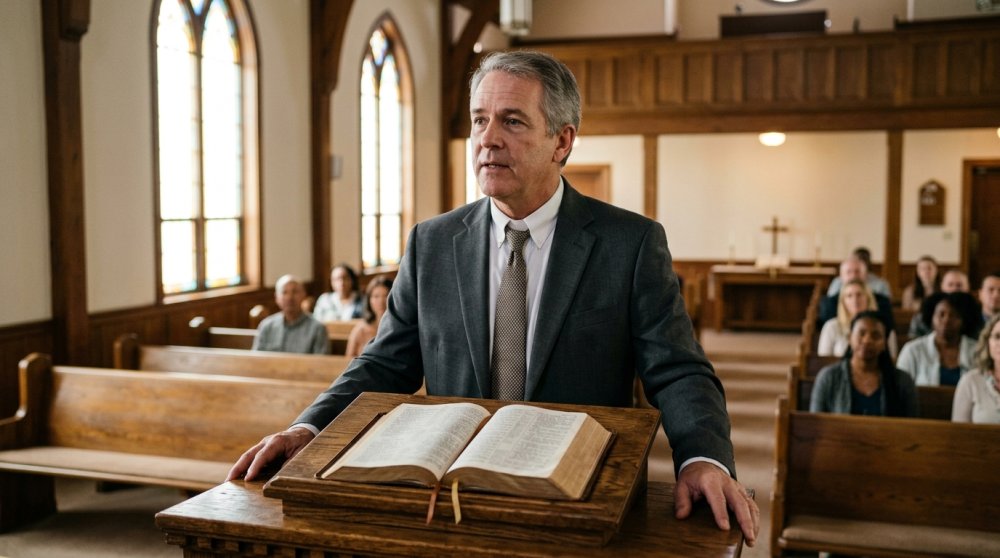
Activists pushing polyamory are now repeating the same lines once deployed to advance same-sex marriage. The familiar refrains about unclear biblical teaching and God being on the side of love are resurfacing in new debates. Christians must recognize the pattern and prepare faithful responses.
These arguments appear in recent opinion pieces and social media campaigns that frame polyamorous arrangements as simply another expression of committed love. Proponents claim that Scripture does not explicitly forbid multiple partners in all cases. They insist that genuine affection should override traditional definitions of family structure.
Yet the biblical witness remains consistent from Genesis through the New Testament. Marriage is presented as a covenant between one man and one woman, reflecting the relationship between Christ and His Church. Attempts to expand that definition rest on selective readings that ignore the full counsel of Scripture.
Church leaders and parents are increasingly confronted with these ideas in schools, workplaces, and even some congregations. Clear teaching on the sanctity of marriage provides the firm foundation needed to answer cultural pressure. Standing on God’s Word equips believers to respond with both truth and compassion.
Let us know what you think, please share your thoughts in the comments below.


-

 Self-Reliance1 year ago
Trump’s Bold Move Uncovers Massive Social Security Fraud
-

 Faith1 year ago
New Clues Emerge in Noah’s Ark Mystery
-

 News2 years ago
Governor Walz’s Rhetoric Sparks National Controversy
-

 News2 years ago
Mel Gibson’s ‘The Passion of the Christ’ Sequel Title Announced
-

 Family2 years ago
Texas Lawmaker Targets Furries in Schools
-

 Freedom2 years ago
Maine Lawmaker Challenges Sports Fairness Controversy
-

 Family1 year ago
Canada’s Controversial Policy Sparks Ethical Debate
-
Faith10 months ago
Congress Hears Pleas for Nigerian Christians