
Faith
When Church Leaders Fail, One Survivor Explains Why Faith Still Stands

Faith Facts
- Spiritual abuse in church settings often stems from leaders exploiting congregants’ trust and spiritual authority for personal gain or control
- Many survivors of church-based trauma struggle with whether to remain in the faith or abandon it entirely
- Biblical discernment and proper understanding of Christ versus His fallible followers can provide a foundation for healing and continued faith
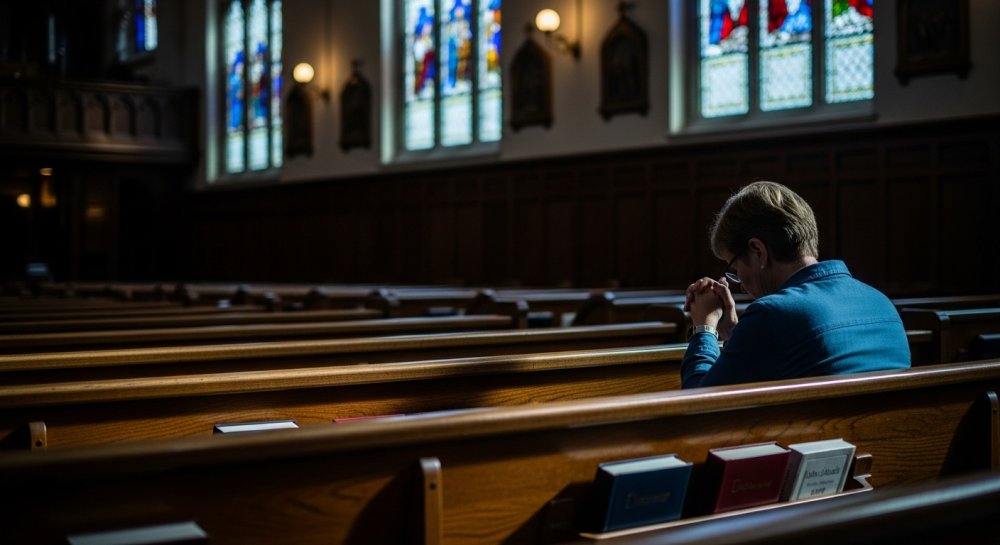
When spiritual leaders betray the trust placed in them, the wounds cut deep. For many Christians, abuse at the hands of church authorities creates a crisis of faith that threatens to upend everything they once believed.
The question becomes urgent: Should we walk away when the Church disappoints us, or should we stay?
This dilemma confronts thousands of believers who have experienced manipulation, control, or outright abuse within church walls. The pain is real, the betrayal profound. Yet some choose to remain in the faith — not out of naivety, but with clearer expectations, deeper discernment, and a stronger foundation.
The distinction between Christ and His imperfect followers becomes critical in these moments. Our faith rests not on fallible human institutions, but on the unchanging character of God Himself. Church leaders may fail spectacularly, revealing themselves as wolves in shepherd’s clothing, but that does not diminish the truth of Scripture or the redemptive work of Jesus Christ.
Spiritual abuse often manifests through manipulation of biblical teaching, exploitation of congregants’ genuine desire to serve God, and the weaponization of authority. Leaders may demand unquestioning obedience, isolate members from outside relationships, or create cultures of fear masked as reverence. These tactics have no place in authentic Christian community, which should reflect Christ’s humility and servant leadership.
Survivors of such abuse face a difficult road to healing. The trauma intertwines with their spiritual identity, making it challenging to separate the abuser’s actions from God’s character. Well-meaning friends may inadvertently add to the pain by minimizing the abuse or pressuring quick forgiveness without proper accountability.
Yet walking away entirely may not address the deeper questions that emerge from spiritual trauma. If we leave solely because of human failure, we may miss the opportunity to build a more resilient faith — one grounded in Scripture rather than personality, in Christ rather than charisma, in truth rather than tradition.
This doesn’t mean staying in abusive environments. Wisdom demands removing ourselves from harm and toxic leadership. But it does mean carefully examining what we’re leaving and what we’re keeping. Are we rejecting an abusive system, or are we rejecting Christ Himself?
The path forward requires discernment, healthy boundaries, and often professional help. It means learning to distinguish between biblical authority and authoritarian control. It involves finding communities that model Christ’s love authentically, where leadership serves rather than lords over the flock.
For those who choose to stay in the faith after experiencing church-based trauma, the journey demands courage. It requires holding leaders accountable while extending grace to imperfect congregations. It means protecting our hearts without becoming cynical, remaining engaged without becoming naive.
Scripture itself warns repeatedly about false teachers and wolves among the sheep. These warnings exist precisely because God knows the Church will face corruption. His Word equips us to recognize deception and stand firm in truth, even when institutions fail.
The decision to remain in faith after spiritual abuse isn’t about excusing wrongdoing or pretending the damage didn’t occur. It’s about recognizing that our hope was never meant to rest in human systems. Our foundation is Christ, the cornerstone that cannot be shaken, regardless of how many earthly structures crumble around it.
Those who emerge from spiritual abuse with faith intact often develop a more mature, tested Christianity. They’ve learned to read Scripture for themselves, to question leadership appropriately, to trust God rather than personalities. Their faith, forged in fire, becomes a testimony to God’s faithfulness even when His people fail.
Let us know what you think, please share your thoughts in the comments below.

Faith Facts
- Nicki Minaj revealed in a recent interview that she was unprepared for the spiritual warfare she encountered in the music industry
- The rapper spoke openly about secret societies and demonic influences pervading the entertainment world
- Christians have long warned about the spiritual dangers in Hollywood and the music industry, citing scripture’s call to discern between light and darkness
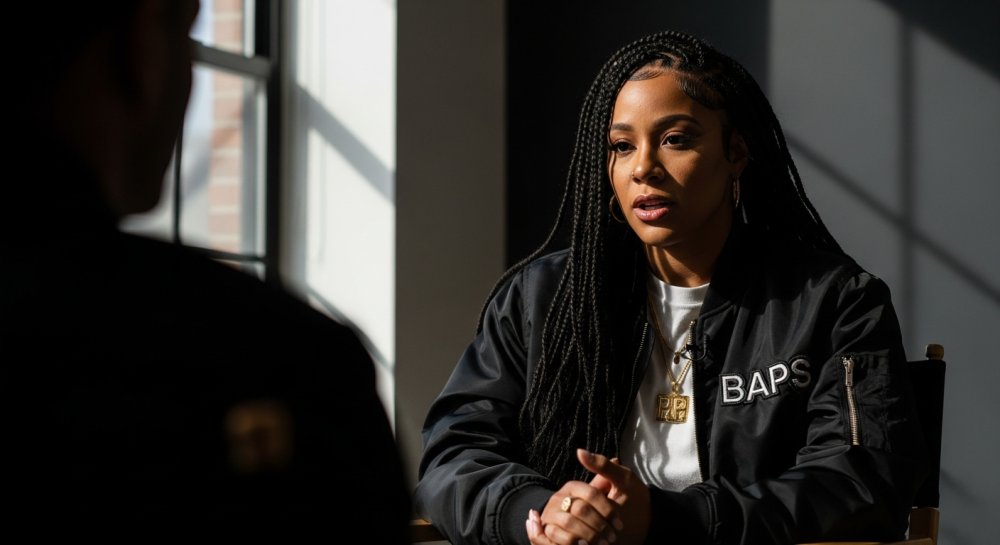
In a revealing conversation with Bryce Crawford, one of the world’s most successful rap artists opened up about the darker side of fame that most people never see. Nicki Minaj didn’t mince words when she described the spiritual battles she’s faced since entering the music industry.
The Grammy-nominated artist spoke candidly about being unprepared for what she called the demonic elements and secret societies that operate within the entertainment world. Her comments align with concerns that many Christians and conservatives have voiced for years about the moral and spiritual corruption in Hollywood.
“I was not prepared for the spiritual warfare,” Minaj stated during the interview.
The rapper’s admission raises important questions for Christian audiences who have long warned about the influence of dark spiritual forces in entertainment. For decades, faith leaders have cautioned believers about the values promoted through mainstream music and media, urging discernment and vigilance.
Minaj’s willingness to speak out about these issues is noteworthy, especially given the industry’s typical silence on such matters. While she has built her career within this system, her acknowledgment of its spiritual dangers resonates with biblical warnings about principalities and powers in high places.
The entertainment industry has increasingly pushed boundaries when it comes to traditional values, often celebrating lifestyles and messages that conflict with Christian teaching. From music videos to award show performances, many observers have noted imagery and symbolism that appears to mock faith or promote occult themes.
For Christian families, these revelations serve as a reminder to carefully monitor what influences enter their homes through music and entertainment. Scripture calls believers to test everything and hold fast to what is good, to think on things that are pure and honorable.
Minaj’s comments about secret societies within the industry also echo concerns raised by other artists over the years. While some dismiss such claims as conspiracy theories, the Bible itself warns that evil often operates in darkness and secrecy.
The rapper’s honest assessment of the spiritual landscape she encountered challenges the glamorous image often presented to young people aspiring to entertainment careers. Behind the fame and fortune lies a spiritual reality that demands discernment and spiritual protection.
Christians understand that our struggle is not against flesh and blood, but against spiritual forces of evil. The entertainment industry’s influence on culture and values makes it a significant battleground in this ongoing spiritual war.
Parents and church leaders can use Minaj’s testimony as an opportunity to discuss with young people the importance of guarding their hearts and minds. The allure of fame and success can blind individuals to the spiritual costs of compromise.
While Minaj herself continues to work within the industry, her acknowledgment of its demonic elements serves as a warning. It’s a rare moment of transparency from someone at the highest levels of commercial success.
The Christian response should be one of prayer—both for those trapped in spiritually dangerous environments and for a culture that desperately needs the light of truth. Believers are called to be salt and light, including in their engagement with popular culture.
As more voices from within the entertainment world begin to speak about these spiritual realities, it confirms what scripture has always taught: we live in a fallen world where spiritual forces battle for souls. The music industry is merely one front in this larger war.
Let us know what you think, please share your thoughts in the comments below.
Faith Facts
- Bangladesh’s new government promised religious tolerance and inclusivity for all faiths after their landslide election victory earlier this year
- Christian communities report a sharp increase in violent attacks and persecution despite government promises of protection
- Open Doors monitors reveal believers face intensifying hostility while seeking to practice their faith peacefully
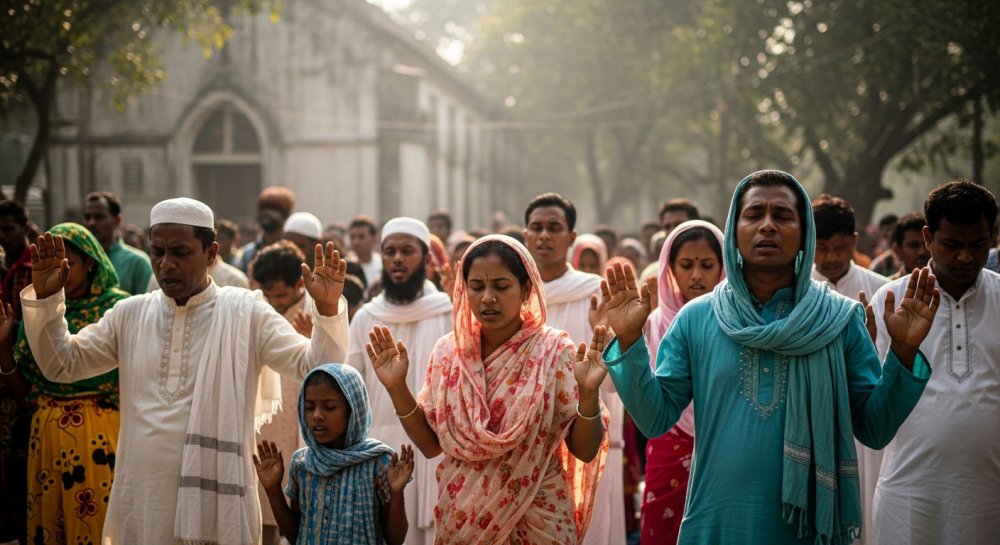
When Bangladesh’s new government swept into power with overwhelming popular support earlier this year, they made sweeping promises to build what they called a “rainbow nation” — a society where people of all faiths could worship freely and live peacefully together. For the country’s Christian minority, these words brought hope after years of mounting pressure. But that hope is quickly turning to despair as attacks against believers continue to escalate despite the government’s public commitments to religious freedom.
Asha Lindsay, an analyst with Open Doors who monitors religious persecution worldwide, has been tracking the deteriorating situation for Christians in Bangladesh. Her findings paint a troubling picture of broken promises and increasing violence against a vulnerable faith community that simply wants to worship without fear.
“Christians are telling us that the situation is getting worse, not better,” Lindsay reports. “Despite all the promises of inclusivity and tolerance, believers are experiencing more attacks, more threats, and more pressure to abandon their faith.”
The gap between the government’s rhetoric and the reality on the ground represents a profound betrayal for Bangladesh’s Christians. While officials speak publicly about protecting religious minorities and building an inclusive society, Christian families are being driven from their homes, churches are being vandalized, and believers face constant intimidation from extremist elements who appear to operate with impunity.
The attacks come in many forms. Some are violent and direct — physical assaults on worship gatherings, destruction of church property, and threats against Christian leaders. Others are more subtle but equally devastating — social ostracism, economic pressure, and systematic discrimination that makes it nearly impossible for believers to earn a living or educate their children.
“What we’re seeing is a coordinated campaign to make life so difficult for Christians that they either renounce their faith or leave the country,” Lindsay explains. “And the government that promised to protect them is doing nothing to stop it.”
For many Christian families in Bangladesh, the decision to follow Christ comes at an enormous cost. Believers who convert from the majority religion face particular danger, often experiencing rejection from their own families along with threats from their communities. These faithful men and women demonstrate extraordinary courage simply by attending church or openly identifying as Christians.
The situation reflects a broader pattern across South Asia, where religious minorities increasingly find themselves caught between governments that promise protection but fail to deliver and extremist movements that view any diversity as a threat to their vision of a religiously homogeneous society. Bangladesh’s Christians now find themselves in this dangerous middle ground, with nowhere to turn for help.
Open Doors and other ministries working to support persecuted believers are calling on Christians worldwide to pray for their brothers and sisters in Bangladesh. They’re also urging the international community to hold the Bangladeshi government accountable for its promises of religious freedom and tolerance.
“These are our family members in Christ who are suffering,” Lindsay emphasizes. “They need our prayers, our support, and our advocacy. We cannot remain silent while they’re under attack.”
The broken promises in Bangladesh serve as a sobering reminder that religious freedom cannot be taken for granted anywhere in the world. For American Christians who enjoy constitutional protections for their faith, the plight of Bangladeshi believers should inspire both gratitude and action — gratitude for the blessings of liberty and action to stand with those who don’t share those same freedoms.
As the attacks continue and the government’s promises ring increasingly hollow, Bangladesh’s Christians are holding fast to their faith despite the cost. Their perseverance stands as a powerful testimony to the truth that no government can ultimately suppress the light of the Gospel, even when they break every promise they’ve made to protect those who carry it.
Let us know what you think, please share your thoughts in the comments below.

Faith Facts
- Country music superstar Carrie Underwood publicly thanked God for allowing her to live in America as the nation approaches its 250th birthday
- The Grammy-winning artist has consistently shared her Christian faith throughout her career, using her platform to glorify God
- Underwood’s patriotic declaration reflects the deep connection between Christian values and American identity that has shaped the nation since its founding
Country music icon Carrie Underwood is making headlines once again for boldly proclaiming her Christian faith, this time expressing gratitude to God for the blessing of living in the United States of America. As our nation prepares to celebrate its semiquincentennial — 250 years since the founding — the beloved singer’s words resonate with millions of Americans who share her love of faith, family, and freedom.
“Thank you, Lord,” Underwood expressed in her heartfelt message about living in America.
The eight-time Grammy Award winner has never shied away from her Christian convictions, consistently using her massive platform to point people toward Jesus Christ. Her latest patriotic declaration comes at a time when many Americans are reflecting on the divine providence that has guided this nation since its inception in 1776.
Underwood’s gratitude for America echoes the sentiments of the Founding Fathers, who recognized that our rights come from God, not government. Her willingness to publicly thank the Lord for the privilege of American citizenship stands as a powerful witness in an entertainment industry that often discourages expressions of faith and patriotism.
The “Jesus Take the Wheel” singer has built her career on authentic faith-based messaging that resonates with traditional American values. From her breakout on “American Idol” to becoming one of country music’s biggest stars, Underwood has remained steadfast in her commitment to Christ and country.
Her latest expression of faith and patriotism reminds us that America’s greatness has always been rooted in our acknowledgment of God’s sovereignty. As we approach this historic milestone anniversary, Underwood’s words serve as a timely reminder to give thanks for the freedoms we enjoy and the divine hand that has preserved this exceptional nation.
In a culture increasingly hostile to both Christianity and American exceptionalism, Carrie Underwood’s public thanksgiving to God for America offers a refreshing contrast. Her example encourages other believers to speak boldly about their faith and gratitude for living in a nation founded on Judeo-Christian principles.
Let us know what you think, please share your thoughts in the comments below.


-

 Self-Reliance1 year ago
Trump’s Bold Move Uncovers Massive Social Security Fraud
-

 Faith1 year ago
New Clues Emerge in Noah’s Ark Mystery
-

 News1 year ago
Governor Walz’s Rhetoric Sparks National Controversy
-

 News1 year ago
Mel Gibson’s ‘The Passion of the Christ’ Sequel Title Announced
-

 Family1 year ago
Texas Lawmaker Targets Furries in Schools
-

 Freedom1 year ago
Maine Lawmaker Challenges Sports Fairness Controversy
-

 Family1 year ago
Canada’s Controversial Policy Sparks Ethical Debate
-
Faith7 months ago
Congress Hears Pleas for Nigerian Christians