
Faith
When Church Leaders Fail, One Survivor Explains Why Faith Still Stands

Faith Facts
- Spiritual abuse in church settings often stems from leaders exploiting congregants’ trust and spiritual authority for personal gain or control
- Many survivors of church-based trauma struggle with whether to remain in the faith or abandon it entirely
- Biblical discernment and proper understanding of Christ versus His fallible followers can provide a foundation for healing and continued faith
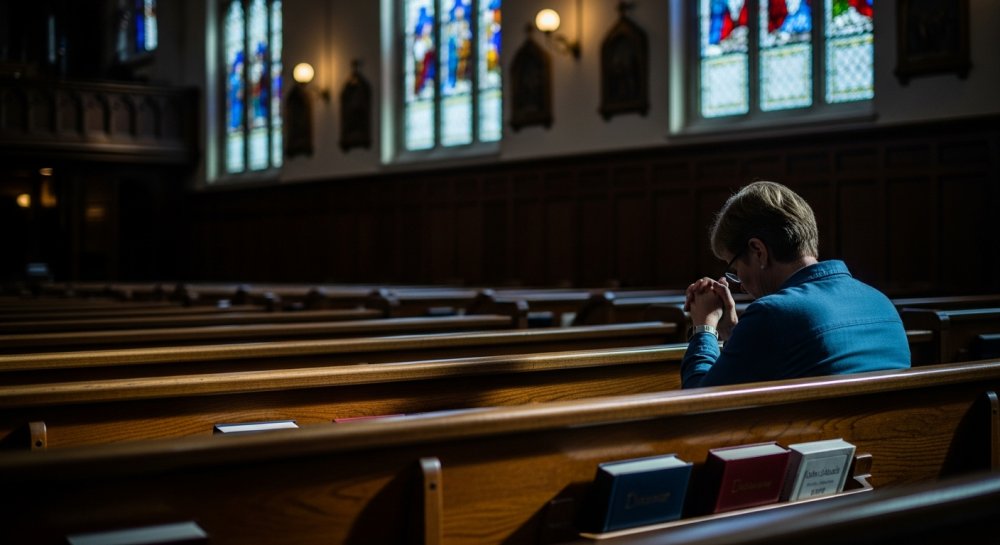
When spiritual leaders betray the trust placed in them, the wounds cut deep. For many Christians, abuse at the hands of church authorities creates a crisis of faith that threatens to upend everything they once believed.
The question becomes urgent: Should we walk away when the Church disappoints us, or should we stay?
This dilemma confronts thousands of believers who have experienced manipulation, control, or outright abuse within church walls. The pain is real, the betrayal profound. Yet some choose to remain in the faith — not out of naivety, but with clearer expectations, deeper discernment, and a stronger foundation.
The distinction between Christ and His imperfect followers becomes critical in these moments. Our faith rests not on fallible human institutions, but on the unchanging character of God Himself. Church leaders may fail spectacularly, revealing themselves as wolves in shepherd’s clothing, but that does not diminish the truth of Scripture or the redemptive work of Jesus Christ.
Spiritual abuse often manifests through manipulation of biblical teaching, exploitation of congregants’ genuine desire to serve God, and the weaponization of authority. Leaders may demand unquestioning obedience, isolate members from outside relationships, or create cultures of fear masked as reverence. These tactics have no place in authentic Christian community, which should reflect Christ’s humility and servant leadership.
Survivors of such abuse face a difficult road to healing. The trauma intertwines with their spiritual identity, making it challenging to separate the abuser’s actions from God’s character. Well-meaning friends may inadvertently add to the pain by minimizing the abuse or pressuring quick forgiveness without proper accountability.
Yet walking away entirely may not address the deeper questions that emerge from spiritual trauma. If we leave solely because of human failure, we may miss the opportunity to build a more resilient faith — one grounded in Scripture rather than personality, in Christ rather than charisma, in truth rather than tradition.
This doesn’t mean staying in abusive environments. Wisdom demands removing ourselves from harm and toxic leadership. But it does mean carefully examining what we’re leaving and what we’re keeping. Are we rejecting an abusive system, or are we rejecting Christ Himself?
The path forward requires discernment, healthy boundaries, and often professional help. It means learning to distinguish between biblical authority and authoritarian control. It involves finding communities that model Christ’s love authentically, where leadership serves rather than lords over the flock.
For those who choose to stay in the faith after experiencing church-based trauma, the journey demands courage. It requires holding leaders accountable while extending grace to imperfect congregations. It means protecting our hearts without becoming cynical, remaining engaged without becoming naive.
Scripture itself warns repeatedly about false teachers and wolves among the sheep. These warnings exist precisely because God knows the Church will face corruption. His Word equips us to recognize deception and stand firm in truth, even when institutions fail.
The decision to remain in faith after spiritual abuse isn’t about excusing wrongdoing or pretending the damage didn’t occur. It’s about recognizing that our hope was never meant to rest in human systems. Our foundation is Christ, the cornerstone that cannot be shaken, regardless of how many earthly structures crumble around it.
Those who emerge from spiritual abuse with faith intact often develop a more mature, tested Christianity. They’ve learned to read Scripture for themselves, to question leadership appropriately, to trust God rather than personalities. Their faith, forged in fire, becomes a testimony to God’s faithfulness even when His people fail.
Let us know what you think, please share your thoughts in the comments below.

Faith Facts
- Mount Holyoke Female Seminary opened its doors in 1837 as America’s first four-year college for women, grounding its mission in biblical principles and Christian service.
- Missionary Amy Carmichael reached India in 1895, where she devoted her life to rescuing children from temple slavery and establishing the Dohnavur Fellowship.
- French Catholic missionary Anne-Marie Javouhey was born in 1779 and later founded the Sisters of St. Joseph of Cluny, sending sisters across continents to serve the poor and enslaved.
This week marks three milestones that remind believers of the enduring power of Christian women who answered God’s call to education, missions, and service.
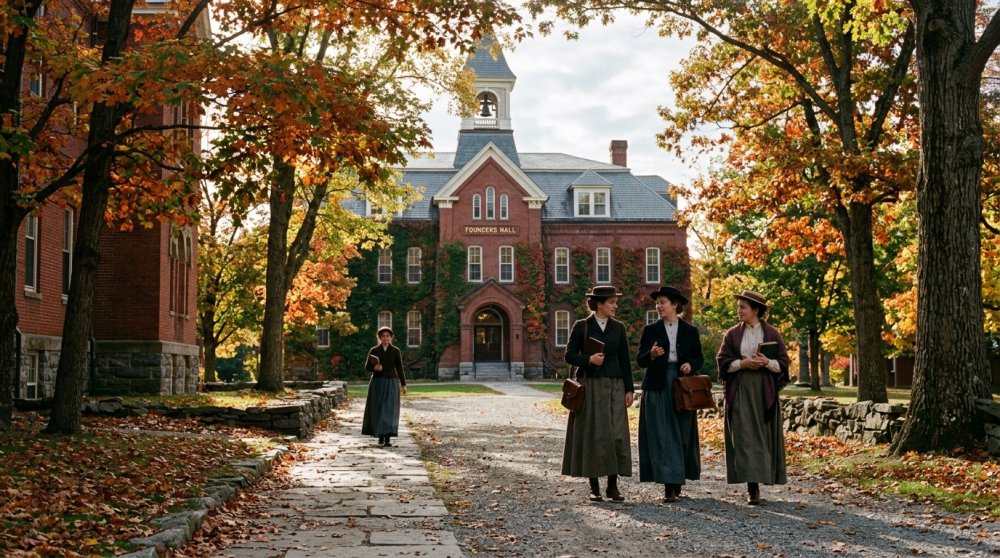
Mount Holyoke Female Seminary was established by Mary Lyon in South Hadley, Massachusetts, with the conviction that women deserved rigorous academic training rooted in Scripture.
Its curriculum required every student to perform domestic work, fostering both intellectual growth and humble service in keeping with Proverbs 31 values.
Over the decades the school trained thousands of women who became teachers, missionaries, and mothers who shaped families and communities across the young nation.
“The Lord has done great things for us, and we are filled with joy.”
That same week in 1895, twenty-eight-year-old Amy Carmichael stepped onto Indian soil, beginning a forty-five-year ministry that would rescue more than a thousand children from forced temple prostitution.
She refused to soften the gospel or compromise with local customs, insisting that only the light of Christ could set the captives free.
Her Dohnavur Fellowship still operates today, a living testimony that one life fully surrendered to the Savior can change generations.
“You can give without loving, but you cannot love without giving.”
Meanwhile, the birth of Anne-Marie Javouhey in 1779 set in motion a French Catholic movement that would send sisters around the world to educate and liberate the enslaved.
Her order established schools, hospitals, and orphanages from Africa to the Americas, embodying the Great Commission in both word and deed.
These three stories converge this week to show how Christian women, empowered by Scripture and sustained by prayer, have shaped education, rescued the oppressed, and carried the gospel to the ends of the earth.
Let us know what you think, please share your thoughts in the comments below.
Faith Facts
- Actor P.J. Byrne credits Sylvester Stallone’s success to unwavering faith and the belief of others.
- Stallone’s journey from near-poverty to Hollywood fame reflects the biblical principle of perseverance through trials.
- Byrne highlights how faith can open doors when human effort alone seems insufficient.
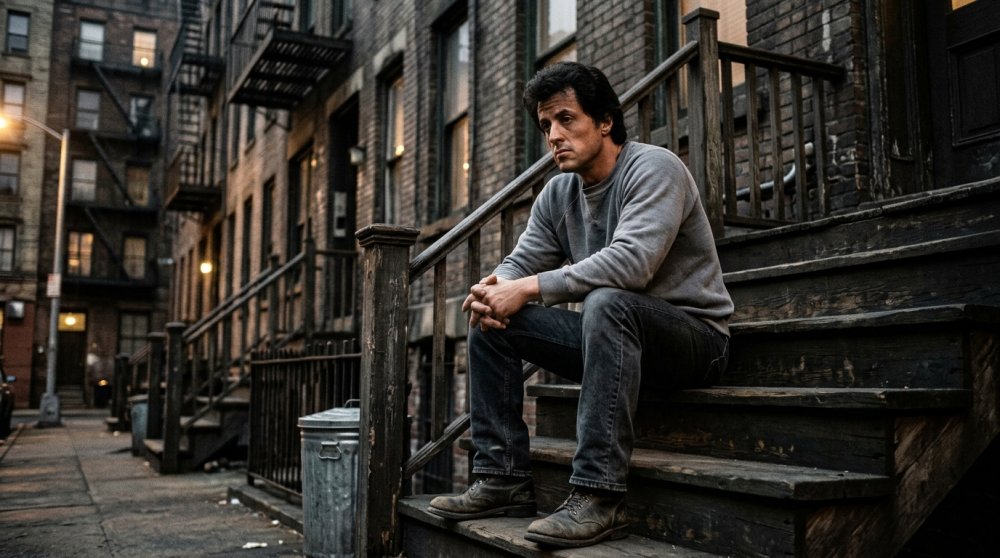
Actor P.J. Byrne says the story of Sylvester Stallone’s climb from a struggling, nearly penniless actor to one of Hollywood’s biggest stars proves the power of faith.
Byrne points to the Rocky creator’s determination and the encouragement of those who believed in him when few others did.
“Amazing things can happen when you have faith,” Byrne stated.
The actor’s remarks underscore how Stallone’s refusal to quit mirrors the biblical call to endure hardship with trust in God’s plan.
Byrne’s comments arrive as a new documentary revisits the early struggles and eventual breakthrough that turned Stallone into a household name.
“I Play Rocky” revisits Stallone’s extraordinary rise: ‘Amazing things can happen when you have faith’
Let us know what you think, please share your thoughts in the comments below.
Faith Facts
- Christians in Nigeria endure systematic persecution as a daily reality rather than an annual observance.
- Many believers worldwide observe a Day of Prayer for the persecuted church, yet the crisis continues without sustained attention.
- The Christian community in Nigeria continues to face violence and oppression that threatens families and churches across the nation.
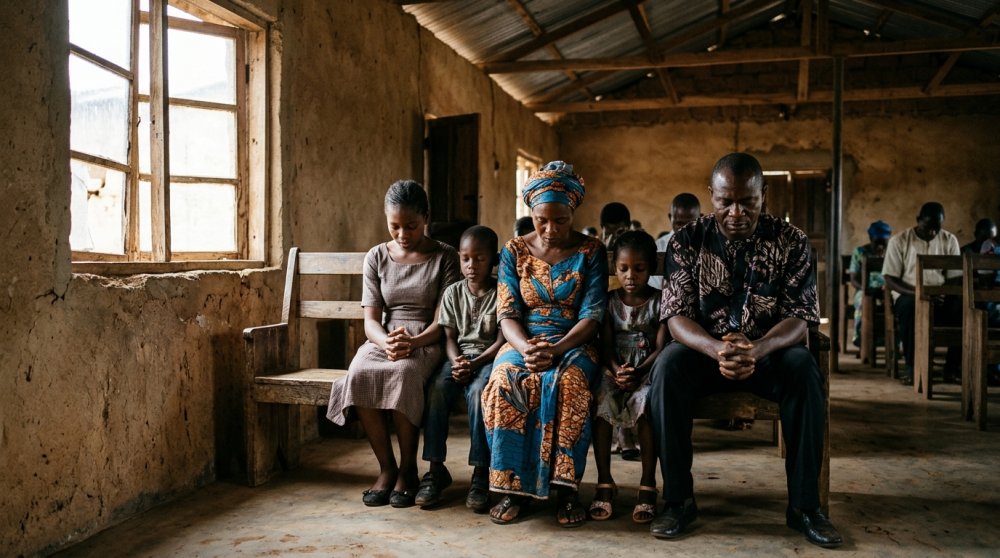
For Christians in Nigeria, persecution is not an annual observance. It is a daily reality. So when the Day of Prayer passes, why do so many of us move on?
The faithful in Nigeria wake each morning knowing that their commitment to Christ could bring danger to their doorsteps. Villages have been attacked, families torn apart, and churches burned to the ground. Yet the world often treats these tragedies as a single day on the calendar rather than an ongoing crisis that requires persistent action.
Scripture calls believers to remember those in chains as if chained with them. This command does not expire after one Sunday service or one special offering. It demands ongoing vigilance, consistent prayer, and practical support for our brothers and sisters who suffer for the name of Jesus.
“For Christians in Nigeria, persecution is not an annual observance. It is a daily reality. So when the Day of Prayer passes, why do so many of us move on?”
Let us know what you think, please share your thoughts in the comments below.


-

 Self-Reliance2 years ago
Trump’s Bold Move Uncovers Massive Social Security Fraud
-

 Faith2 years ago
New Clues Emerge in Noah’s Ark Mystery
-

 News2 years ago
Governor Walz’s Rhetoric Sparks National Controversy
-

 News2 years ago
Mel Gibson’s ‘The Passion of the Christ’ Sequel Title Announced
-

 Family2 years ago
Texas Lawmaker Targets Furries in Schools
-

 Freedom2 years ago
Maine Lawmaker Challenges Sports Fairness Controversy
-

 Family1 year ago
Canada’s Controversial Policy Sparks Ethical Debate
-
Faith12 months ago
Congress Hears Pleas for Nigerian Christians