
Faith
Faith, Hope, and Growth: Africa’s Evangelical Surge

Faith Facts
- Rev. Nelson Makanda appealed for renewed PEPFAR support as devastating aid cuts impacted HIV/AIDS care in Kenya.
- America’s commitment through PEPFAR has saved millions of lives and helped countries control HIV epidemics.
- Evangelical Christianity is booming across Africa, promising hope and growth for future generations.
Rev. Nelson Makanda, a respected Kenyan Christian leader and educator, traveled to New York during the United Nations General Assembly to seek urgent assistance for his nation’s struggle against HIV/AIDS.
America’s historical generosity, particularly through PEPFAR, has made a remarkable difference in Kenya, but suspended funding now leaves many without life-saving treatment, especially the vulnerable.
“You find young people, you find children, you find teenagers, you find mothers, who can no longer access their medical care because of the withdrawal of that fund.”
Makanda, who leads Africa International University, emphasized how the withdrawal has left clinics closed and medical staff jobless, further threatening already struggling families.
Despite these challenges, Makanda’s visit to New York included spiritual renewal through a Christian leadership conference, aiming to better serve Kenya with the life-changing message of Jesus Christ.
His long ministry reflects the vital role the Gospel plays in Africa, providing hope for the poor, the sick, and those yearning for opportunity, even as the continent battles hardships.
In recent decades, Evangelicalism in Africa has surged, with numbers rising from 1.7% of the population in 1900 to 42% by 2020, reflecting a dynamic move of God among the young and growing population.
“The Gospel as preached by Evangelicals provides hope to the poor, suffering, struggling and hopeful growing population of Africa.”
Makanda believes Africa’s youthful population will continue fueling revival, demonstrating how strong Biblical faith can shape nations and offer real solutions rooted in truth, love, and family values.
Millions are turning to Christ every year, embodying the hope found in faith, family, and freedom through the Gospel.
Let us stand together with our brothers and sisters in Africa, praying and working to ensure the blessings of faith continue to spread and meet both spiritual and practical needs worldwide.



Faith Facts
- Jubilee+ is releasing a fresh resource to help local congregations unite evangelism with practical help for the poor.
- The initiative emphasizes that sharing the gospel and meeting material needs belong together in faithful Christian witness.
- Churches are encouraged to see both spiritual and social ministry as essential parts of the same mission.
The Christian charity Jubilee+ has launched a new resource aimed at helping churches weave together their efforts to serve those in need and to share the good news of Jesus Christ.
The material is designed to show congregations that caring for the poor and proclaiming the gospel are not separate tasks, but two sides of the same calling rooted in Scripture.
Leaders behind the project hope the guide will equip pastors and ministry teams to move beyond simply meeting physical needs, reminding them that lasting transformation comes through the power of the gospel.
“We want churches to see that evangelism and social action are not in competition, but flow naturally from the same heart of compassion,”
“When the church serves the vulnerable while clearly pointing people to Christ, both the body and the soul are cared for,”
Supporters say the new resource will give practical steps for integrating gospel conversations into food banks, debt counseling, and other mercy ministries already operating in many congregations.
Let us know what you think, please share your thoughts in the comments below.
Faith Facts
- Scripture teaches that no sin is beyond the reach of God’s grace when true repentance is present.
- Many women in church pews every Sunday silently carry the weight of past abortions without hearing explicit assurance of forgiveness.
- Christian teaching holds that silence from the pulpit on abortion can be misinterpreted as ongoing condemnation rather than an invitation to healing.
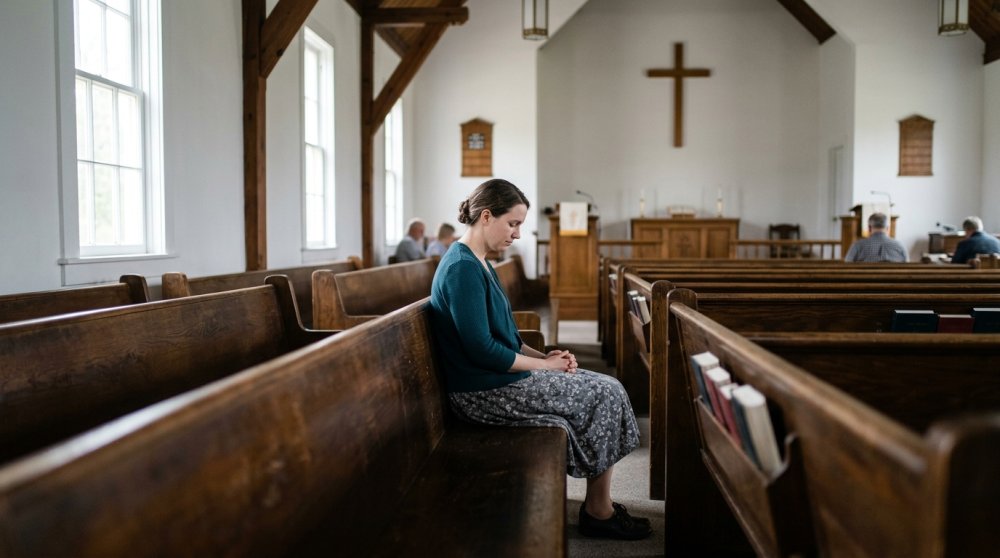
Every Sunday, women who have had abortions sit in church and hear that God forgives sin. But when abortion is never named, many conclude that the promise doesn’t include them, and they take the pastor’s silence as judgment.
Local congregations across the country are beginning to recognize this gap in ministry. Pastors are being urged to speak clearly about the forgiveness available through Christ for every sin, including abortion, so that women burdened by guilt may find hope rather than hidden condemnation.
“The blood of Jesus covers every sin that is confessed and forsaken,”
“Our churches must become places where women can bring their deepest regrets to the foot of the cross without fear.”
Let us know what you think, please share your thoughts in the comments below.

Faith Facts
- Numbers 33 warns that tolerated issues become persistent thorns that trouble future generations.
- Scripture teaches that small financial problems grow into major burdens when left unaddressed.
- Christian stewardship calls believers to confront money challenges with faith and discipline rather than avoidance.
Small financial problems rarely stay small when ignored. They quietly expand until they disrupt peace, relationships, and even spiritual focus.
Numbers 33 delivers a direct warning about the dangers of leaving problems in place. The passage speaks of tolerating what should be removed, describing the result as “thorns in your sides.”
“What we tolerate today may trouble us tomorrow,” the teaching reminds readers who are tempted to delay action on debt, overspending, or poor financial habits.
The principle applies directly to household budgets and personal finances. A single unpaid bill or unexamined expense can grow into long-term strain if left unchecked.
Christian teaching emphasizes honest assessment of resources as an act of faithful stewardship. Avoiding the numbers does not make the problems disappear.
Believers are encouraged to seek wisdom through prayer and practical steps rather than hoping difficulties resolve on their own. Scripture consistently links diligence with blessing and avoidance with loss.
Let us know what you think, please share your thoughts in the comments below.


-

 Self-Reliance1 year ago
Trump’s Bold Move Uncovers Massive Social Security Fraud
-

 Faith1 year ago
New Clues Emerge in Noah’s Ark Mystery
-

 News2 years ago
Governor Walz’s Rhetoric Sparks National Controversy
-

 News2 years ago
Mel Gibson’s ‘The Passion of the Christ’ Sequel Title Announced
-

 Family2 years ago
Texas Lawmaker Targets Furries in Schools
-

 Freedom2 years ago
Maine Lawmaker Challenges Sports Fairness Controversy
-

 Family1 year ago
Canada’s Controversial Policy Sparks Ethical Debate
-
Faith10 months ago
Congress Hears Pleas for Nigerian Christians