
News
Major Medical Shift Challenges Foundation of Gender Ideology


Faith Facts
- A significant medical development has called into question the scientific basis for transgender medical interventions
- Christian conservatives have long advocated for protecting children from irreversible medical procedures based on gender ideology
- The developments vindicate faith-based concerns about the dangers of affirming gender confusion rather than treating underlying mental health issues
The medical establishment is facing a reckoning as the foundation of transgender ideology comes under renewed scrutiny. What Christian conservatives and medical professionals grounded in biological reality have warned about for years is now becoming impossible to ignore.
The entire framework supporting so-called “gender-affirming care” rests on flawed assumptions that deny the God-given reality of male and female. For years, faithful Americans have stood firm against the cultural tide, insisting that compassion means addressing the root causes of gender confusion, not affirming a lie.
Parents across the nation have watched in horror as schools, medical institutions, and government agencies pushed experimental treatments on vulnerable children. These interventions, often irreversible, have been administered based on ideology rather than sound medical science.
The growing body of evidence against transgender medical interventions represents a vindication for those who refused to bow to political pressure. Christians who stood on biblical truth about God’s design for male and female have faced ridicule, censorship, and even professional consequences.
Mental health experts who approach gender dysphoria as a psychological condition requiring careful treatment rather than immediate affirmation have been silenced by activists. Yet the emerging data supports what Scripture has revealed from the beginning: we are fearfully and wonderfully made, male and female, in the image of God.
Families who resisted the rush to medicalize their children’s confusion are now being proven right. The protection of children from harmful ideology masquerading as healthcare has been a rallying cry for Christian conservatives, and this development strengthens that cause.
The implications extend beyond medicine into every corner of society. When we abandon biological truth for subjective feelings, we undermine the very foundations of reality itself. This affects women’s sports, privacy in bathrooms and locker rooms, and the safety of our most vulnerable citizens.
True compassion requires honesty. Affirming a young person’s confusion and setting them on a path of irreversible medical intervention is not kindness—it’s a failure to provide the genuine help they need. Mental health support, family counseling, and patience often lead to resolution of gender dysphoria, particularly in adolescents.
The medical community’s willingness to finally examine the evidence marks a potential turning point. For too long, ideology has trumped science, and political correctness has silenced legitimate concerns. The protection of children must always take precedence over adult agendas.
As this development unfolds, Christians are called to respond with both truth and grace. We must continue to stand firmly on biblical principles while extending love to those struggling with identity issues. The answer is not found in surgical alteration or hormone suppression, but in the transforming power of Christ.
Let us know what you think, please share your thoughts in the comments below.

Faith Facts
- The Costa Rican Evangelical Alliance Federation is standing for integrity and truth in public life by demanding accountability from those who misuse the name of the church.
- Scripture teaches that leaders must be above reproach, and the Alliance is upholding that standard by rejecting any suggestion that votes can be bought with money.
- Believers across Costa Rica are being called to pray for righteous governance and for pastors to remain faithful witnesses rather than political brokers.
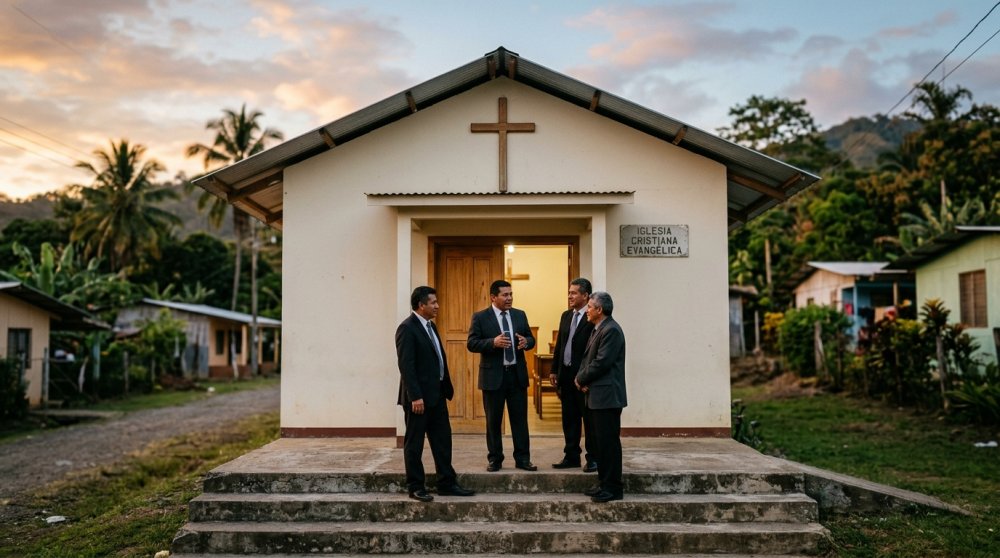
The Costa Rican Evangelical Alliance Federation has taken a firm stand for honesty in politics after an opposition lawmaker publicly claimed that a pastor offered her 42,000 votes in exchange for 420 million colones.
April Gordienko, the lawmaker who made the allegation, said the offer came during the most recent election campaign.
The federation is now insisting that Gordienko name the pastor involved so that the church can deal with the matter openly and biblically.
Evangelical leaders in Costa Rica believe that any attempt to barter spiritual influence for political favor damages the witness of the gospel and must be exposed.
“We cannot allow the name of Christ to be used as a bargaining chip in political transactions,” said a federation spokesperson.
Local pastors have echoed the call for transparency, saying the church must remain separate from any appearance of corruption.
Many Costa Rican believers view this moment as an opportunity for the body of Christ to demonstrate that its loyalty belongs first to God, not to any political party or financial promise.
Let us know what you think, please share your thoughts in the comments below.
Faith Facts
- The Archbishop of Canterbury withdrew an interfaith award from Pakistani cleric Hafiz Muhammad Tahir Mehmood Ashrafi after old remarks praising Osama bin Laden resurfaced.
- Church of Pakistan Moderator Bishop Azad Marshall had recommended Ashrafi for the honor, prompting questions among Pakistani Christians.
- Christian leaders continue to stress the importance of discernment and truth when extending recognition across religious lines.
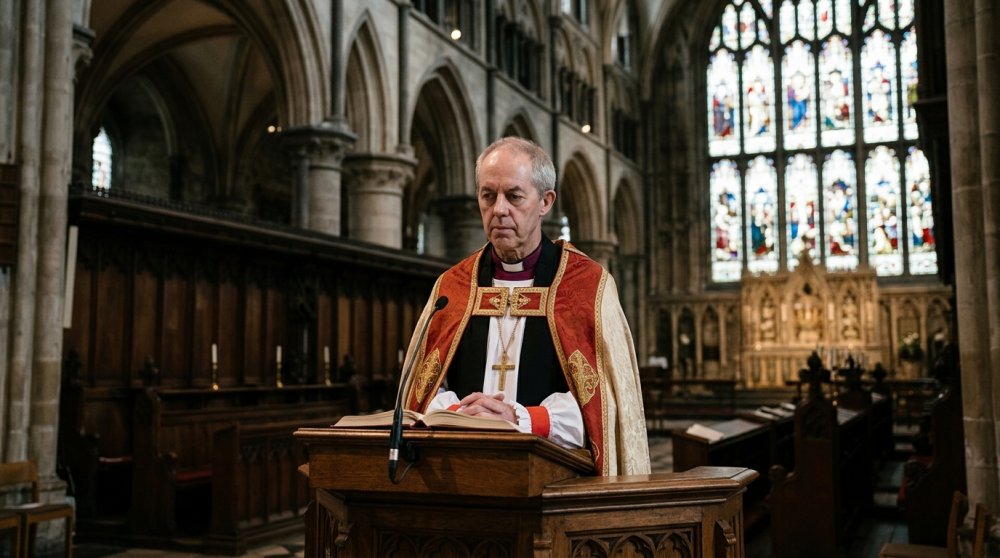
The Archbishop of Canterbury has withdrawn an interfaith award given to Pakistani Muslim cleric Hafiz Muhammad Tahir Mehmood Ashrafi. Past remarks praising Osama bin Laden resurfaced and forced the reversal.
Questions have since arisen in Pakistan about why Church of Pakistan Moderator Bishop Azad Marshall recommended Ashrafi for the honor in the first place. The decision has stirred discussion among local believers who value clarity and moral consistency.
“The Archbishop of Canterbury has withdrawn an interfaith award given to Pakistani Muslim cleric Hafiz Muhammad Tahir Mehmood Ashrafi after past remarks praising Osama bin Laden resurfaced, raising questions in Pakistan about why he was recommended for the honor by Church of Pakistan’s Moderator Bishop Azad Marshall.”
Let us know what you think, please share your thoughts in the comments below.
Faith Facts
- The Evangelical Press Association is currently voting on a proposal to rename the organization to Christian Communicators Network.
- The decision follows a virtual meeting where board members presented the rationale and addressed member concerns about the removal of the term “Evangelical.”
- The outcome will shape how Christian media organizations identify themselves moving forward.
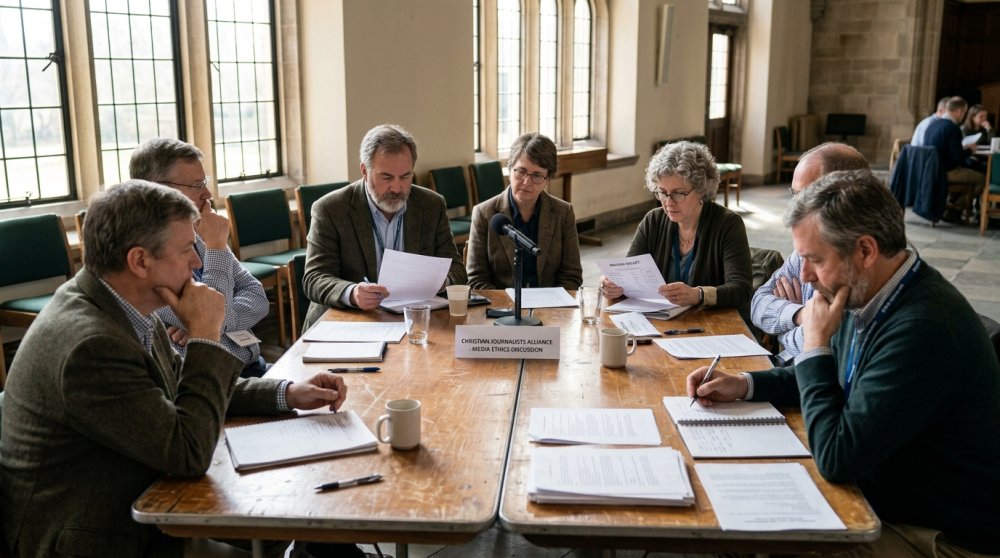
The Evangelical Press Association has begun a formal voting process among its members to determine whether the organization will change its name. The proposed new name is Christian Communicators Network. This vote follows a recent virtual meeting where board members outlined their reasoning and responded to questions from the membership.
Board members addressed concerns about the loss of the word “Evangelical” in the organization’s name. They also discussed the procedures involved in making such a significant change. The vote reflects ongoing conversations within Christian media circles about identity, mission, and public perception.
“Members are being given the opportunity to weigh in on a decision that will affect the organization’s future direction,” a board representative stated during the virtual meeting.
The outcome of this vote will determine whether the Evangelical Press Association continues under its current name or adopts the new title of Christian Communicators Network. Christian communicators across the nation are watching closely as this process unfolds.
Let us know what you think, please share your thoughts in the comments below.


-

 Self-Reliance1 year ago
Trump’s Bold Move Uncovers Massive Social Security Fraud
-

 Faith1 year ago
New Clues Emerge in Noah’s Ark Mystery
-

 News2 years ago
Governor Walz’s Rhetoric Sparks National Controversy
-

 News1 year ago
Mel Gibson’s ‘The Passion of the Christ’ Sequel Title Announced
-

 Family1 year ago
Texas Lawmaker Targets Furries in Schools
-

 Freedom2 years ago
Maine Lawmaker Challenges Sports Fairness Controversy
-

 Family1 year ago
Canada’s Controversial Policy Sparks Ethical Debate
-
Faith10 months ago
Congress Hears Pleas for Nigerian Christians