
News
Why the Church Has Been Silent on This Persecuted Group for Too Long

Faith Facts
- The Marcham+10 conference convened to address gender-specific religious persecution, a decade after the issue was first formally named in 2016
- Women face distinct forms of religious persecution including sexual violence, forced marriage, and abduction specifically targeting their faith
- The conference highlights both progress in awareness and ongoing challenges in protecting persecuted Christian women worldwide
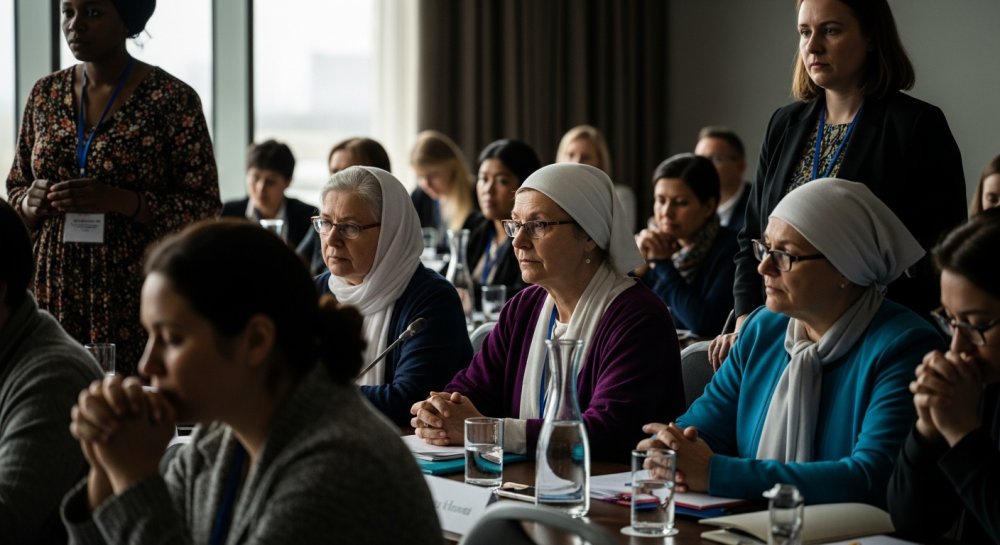
Ten years ago, a small but determined gathering sought to shine light on a crisis the global Church had largely overlooked: the unique and brutal ways religious persecution targets women. Now, the Marcham+10 conference has opened with renewed urgency, calling believers to confront what organizers describe as a pattern of suffering that demands immediate attention and action.
The conference, which began Friday, marks a decade since advocates first gave a name to the distinct horrors Christian women face in hostile regions. While persecution affects all believers, women endure additional layers of violence rooted in both their faith and their gender.
Gender-specific religious persecution encompasses forced marriages to non-believers, sexual violence used as a weapon against Christian communities, and systematic abduction of young women from minority faith groups. These tactics aim not only to punish belief but to destroy families and future generations of faithful Christians.
The Marcham gathering represents a turning point in how the global Church understands and responds to persecution. For too long, the suffering of women was grouped into general persecution statistics, obscuring the particular brutality they face. The 2016 conference changed that conversation, insisting that effective advocacy requires acknowledging these gender-specific realities.
A decade later, awareness has grown but challenges persist. Many persecuted women remain invisible to Western churches and advocacy organizations. Cultural barriers, shame, and lack of access to reporting mechanisms mean countless stories of suffering never reach those who could help.
The conference brings together church leaders, human rights advocates, and survivors to assess progress and chart a path forward. Attendees are examining both successes in raising awareness and failures in translating that awareness into meaningful protection for vulnerable women.
For American Christians, the gathering serves as a sobering reminder of the cost of faith in hostile regions. While believers in the United States debate religious freedom in courtrooms, their sisters overseas face forced conversion, abduction, and violence simply for refusing to renounce Christ.
The faith community’s response to gender-specific persecution reflects broader questions about how effectively the Church defends the most vulnerable members of the global body of Christ. Advocates argue that ignoring the distinct suffering of women amounts to abandoning them in their hour of greatest need.
As the conference unfolds, participants are calling for concrete action beyond awareness. They seek policy changes, targeted advocacy, and church-led initiatives that address the specific vulnerabilities persecuted women face. The goal is not merely to document suffering but to prevent it and provide refuge for those who escape.
The Marcham+10 gathering challenges comfortable Western Christians to remember their persecuted family. It asks hard questions about whether the American Church has done enough to advocate for those who cannot speak for themselves and whether awareness has translated into meaningful support.
The conference represents both a milestone and a call to action. A decade of work has brought gender-specific religious persecution out of the shadows, but the women who endure it still need champions willing to stand with them in practical, sustained ways.
Let us know what you think, please share your thoughts in the comments below.


Faith Facts
- Christian communities have long emphasized stewardship and wise financial practices grounded in biblical principles
- Faith-based events should prioritize transparency and protect vulnerable believers from financial exploitation
- Churches and ministries are called to exercise discernment when partnering with organizations that promise material wealth
Life Surge, the traveling faith-based wealth seminar under fire for aggressive marketing tactics, has relocated its corporate headquarters to Palmetto, Florida. The move comes as the organization continues to face criticism over claims that attendees were pressured into spending large sums on real estate and stock investment courses.
The controversy centers on allegations that the company used high-pressure sales techniques during its Christian-focused events. Former participants have reported being urged to make significant financial commitments, sometimes exceeding tens of thousands of dollars, in pursuit of promised wealth-building strategies.
Critics argue that such tactics exploit the trust of believers seeking to honor God through financial stewardship. The relocation to Florida places the company’s operations in a new state while questions about its practices remain unresolved.
“Life Surge has moved into a new corporate headquarters in Palmetto, Florida, amid ongoing backlash from the allegations.”
Observers within the Christian community have called for greater accountability from organizations that blend faith with financial promises. The situation highlights the need for believers to exercise wisdom and caution when approached with investment opportunities framed around spiritual values.
Let us know what you think, please share your thoughts in the comments below.
Faith Facts
- Rev. Jacqui Lewis, ordained in the Presbyterian Church (U.S.A.), publicly asserted that God is nonbinary and transgender.
- She incorrectly claimed that the original Hebrew and Greek texts of Scripture describe the Holy Spirit as female.
- Traditional Christian teaching holds that God is revealed as Father, Son, and Holy Spirit in Scripture, with no support for gender fluidity in the Godhead.
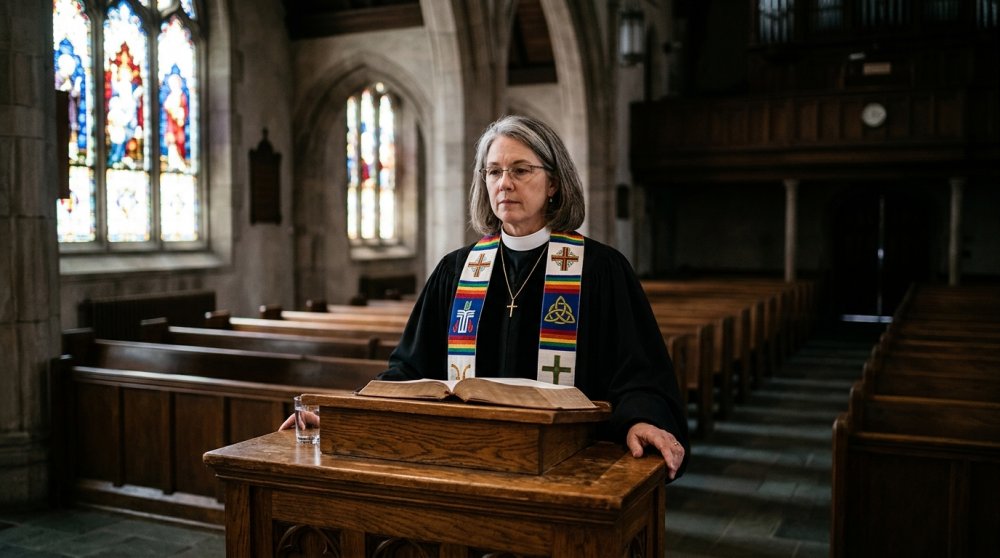
The Rev. Jacqui Lewis, a female pastor ordained in the Presbyterian Church (U.S.A.), has drawn attention for asserting that God Himself is also queer and transgender, incorrectly claiming the ancient Hebrew and Greek of the Bible describe the Holy Spirit as female.
“God is a nonbinary transgender God,” Lewis stated, adding that the Holy Spirit is “she” in the original languages of Scripture.
“God is a nonbinary transgender God,” Lewis stated, adding that the Holy Spirit is “she” in the original languages of Scripture.
PCUSA “pastor” Jacqui Lewis says God is “trans” because the Bible says “they” were hovering over the waters “God doesn’t have a p*nis…or a v*gina” Then the co-host implicates Veggie Tales creator, Phil Vischer, and says that he “validates” his view that God is trans. https://t.co/41NpdnG5RD
— The Dissenter (@disntr) November 18, 2026
Dr. Jacqui Lewis of Middle Church explains that because the Trinity is non-gendered, having “feminine energy,” that, there’s a good chance that “God may be trans” https://t.co/FP7Oa1bOaD
— Woke Preacher Clips (@WokePreacherTV) October 22, 2025
“God is a nonbinary transgender God,” Lewis stated, adding that the Holy Spirit is “she” in the original languages of Scripture.
Let us know what you think, please share your thoughts in the comments below.

Faith Facts
- Christian teachings emphasize the value of hard work and responsible stewardship of resources.
- Scripture calls believers to care for the next generation and protect the family unit.
- Traditional family values include the right to secure housing and a stable livelihood.
Young Australians are expressing record levels of worry about the cost of living and housing affordability, according to a new report from Mission Australia. The nonprofit’s annual youth survey has reached its 25-year milestone and continues to highlight the challenges facing the nation’s younger generation.
The survey shows that financial pressures are weighing heavily on young people across the country. Rising costs for essentials and the difficulty of securing affordable housing are now at the forefront of their concerns.
“Cost of living and housing are the top concerns of young Australians, according to a new survey from Mission Australia, which is marking 25 years of its annual youth survey.”
These findings reflect broader economic trends that affect families and individuals striving to maintain stability. As traditional values place strong emphasis on home and family, the ability to afford housing remains a central concern for many households.
The Mission Australia survey provides valuable insight into the priorities of young Australians and the pressures they face in today’s economy. Addressing these concerns will require thoughtful policy approaches that uphold the values of family, freedom, and personal responsibility.
Let us know what you think, please share your thoughts in the comments below.


-

 Self-Reliance2 years ago
Trump’s Bold Move Uncovers Massive Social Security Fraud
-

 Faith2 years ago
New Clues Emerge in Noah’s Ark Mystery
-

 News2 years ago
Governor Walz’s Rhetoric Sparks National Controversy
-

 News2 years ago
Mel Gibson’s ‘The Passion of the Christ’ Sequel Title Announced
-

 Family2 years ago
Texas Lawmaker Targets Furries in Schools
-

 Freedom2 years ago
Maine Lawmaker Challenges Sports Fairness Controversy
-

 Family2 years ago
Canada’s Controversial Policy Sparks Ethical Debate
-
Faith12 months ago
Congress Hears Pleas for Nigerian Christians