
News
Eight Christians Slain in Nigeria as Islamic Militants Intensify Terror Campaign

Faith Facts
- Eight Christians were killed in multiple Fulani militant attacks in Plateau state, Nigeria, in early May 2025
- The district of Wereng was attacked twice within days, leaving three believers dead in the second assault
- Fulani terrorist raids targeting Christian communities in Nigeria continue to escalate despite international calls for intervention
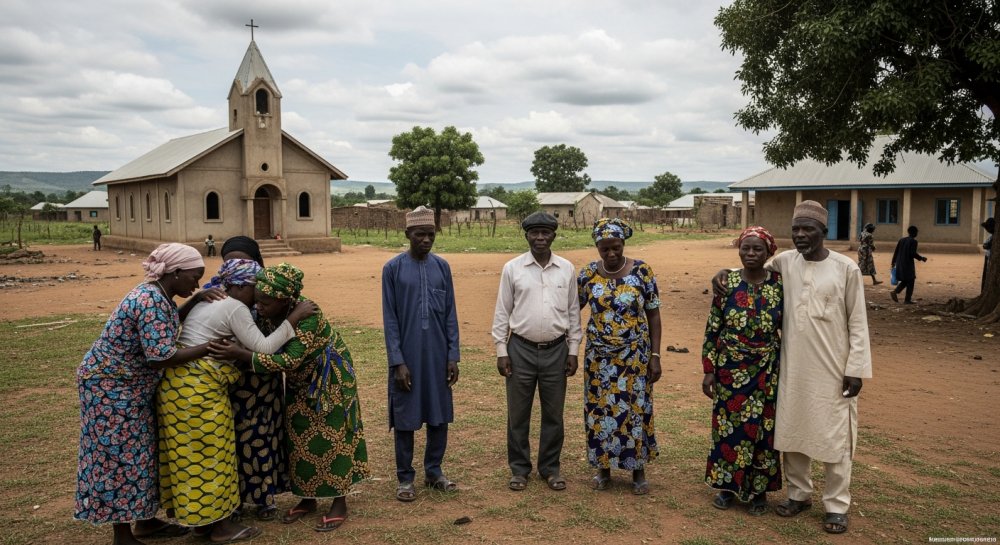
Islamic Fulani militants have murdered eight Christians in Nigeria’s Plateau state during a series of coordinated attacks earlier this month, targeting communities already reeling from previous violence. The assaults represent the latest chapter in an ongoing campaign of terror against believers in Africa’s most populous nation.
Three Christians lost their lives in Wereng district during a second raid that occurred just days after the same area had been attacked. The repeated targeting of this community demonstrates the calculated nature of the persecution facing Nigerian Christians, who find themselves defenseless against well-armed extremist groups.
Five additional believers were killed in separate attacks across Plateau state, bringing the total death toll to eight in what local observers describe as an intensifying wave of anti-Christian violence. The Fulani militants, who operate with increasing impunity, have made Christian farming communities their primary targets.
Plateau state has become ground zero for Fulani terror operations, with Christian villages facing regular raids characterized by brutal killings, property destruction, and the forced displacement of entire communities. Women and children are not spared in these attacks, which often occur under cover of darkness.
The Nigerian government’s failure to protect Christian communities has drawn sharp criticism from religious freedom advocates worldwide. Despite repeated massacres, meaningful security measures remain absent in the affected regions, leaving believers to fend for themselves against heavily armed militants.
International human rights organizations have documented thousands of Christian deaths at the hands of Fulani extremists over the past decade. Yet the crisis receives minimal attention from mainstream media outlets and Western governments that claim to champion religious freedom and human rights.
The attacks in Plateau state follow a familiar pattern: militants descend on Christian villages, kill indiscriminately, burn homes and churches, and disappear before security forces can respond. Survivors are left traumatized and impoverished, their livelihoods destroyed and their loved ones buried in mass graves.
Christian leaders in Nigeria continue to call for international intervention and protection for persecuted believers. They emphasize that what is happening constitutes genocide—a systematic effort to eradicate Christianity from large swaths of Nigerian territory through violence and intimidation.
The suffering of Nigerian Christians stands as a stark reminder that religious persecution remains a deadly reality in the 21st century. As American believers enjoy freedom of worship, their brothers and sisters in Christ face martyrdom simply for refusing to renounce their faith.
Let us know what you think, please share your thoughts in the comments below.

Faith Facts
- The Costa Rican Evangelical Alliance Federation is standing for integrity and truth in public life by demanding accountability from those who misuse the name of the church.
- Scripture teaches that leaders must be above reproach, and the Alliance is upholding that standard by rejecting any suggestion that votes can be bought with money.
- Believers across Costa Rica are being called to pray for righteous governance and for pastors to remain faithful witnesses rather than political brokers.
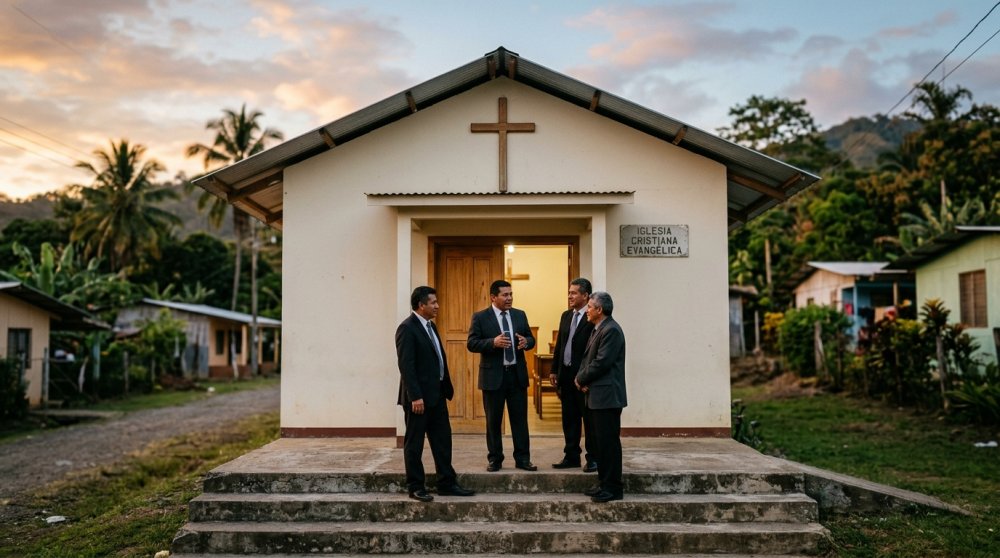
The Costa Rican Evangelical Alliance Federation has taken a firm stand for honesty in politics after an opposition lawmaker publicly claimed that a pastor offered her 42,000 votes in exchange for 420 million colones.
April Gordienko, the lawmaker who made the allegation, said the offer came during the most recent election campaign.
The federation is now insisting that Gordienko name the pastor involved so that the church can deal with the matter openly and biblically.
Evangelical leaders in Costa Rica believe that any attempt to barter spiritual influence for political favor damages the witness of the gospel and must be exposed.
“We cannot allow the name of Christ to be used as a bargaining chip in political transactions,” said a federation spokesperson.
Local pastors have echoed the call for transparency, saying the church must remain separate from any appearance of corruption.
Many Costa Rican believers view this moment as an opportunity for the body of Christ to demonstrate that its loyalty belongs first to God, not to any political party or financial promise.
Let us know what you think, please share your thoughts in the comments below.
Faith Facts
- The Archbishop of Canterbury withdrew an interfaith award from Pakistani cleric Hafiz Muhammad Tahir Mehmood Ashrafi after old remarks praising Osama bin Laden resurfaced.
- Church of Pakistan Moderator Bishop Azad Marshall had recommended Ashrafi for the honor, prompting questions among Pakistani Christians.
- Christian leaders continue to stress the importance of discernment and truth when extending recognition across religious lines.
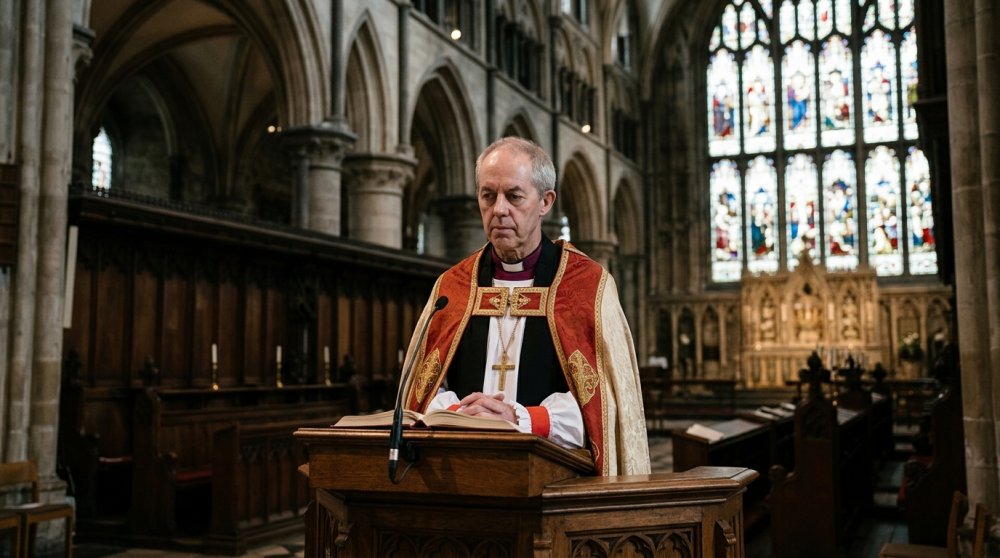
The Archbishop of Canterbury has withdrawn an interfaith award given to Pakistani Muslim cleric Hafiz Muhammad Tahir Mehmood Ashrafi. Past remarks praising Osama bin Laden resurfaced and forced the reversal.
Questions have since arisen in Pakistan about why Church of Pakistan Moderator Bishop Azad Marshall recommended Ashrafi for the honor in the first place. The decision has stirred discussion among local believers who value clarity and moral consistency.
“The Archbishop of Canterbury has withdrawn an interfaith award given to Pakistani Muslim cleric Hafiz Muhammad Tahir Mehmood Ashrafi after past remarks praising Osama bin Laden resurfaced, raising questions in Pakistan about why he was recommended for the honor by Church of Pakistan’s Moderator Bishop Azad Marshall.”
Let us know what you think, please share your thoughts in the comments below.
Faith Facts
- The Evangelical Press Association is currently voting on a proposal to rename the organization to Christian Communicators Network.
- The decision follows a virtual meeting where board members presented the rationale and addressed member concerns about the removal of the term “Evangelical.”
- The outcome will shape how Christian media organizations identify themselves moving forward.
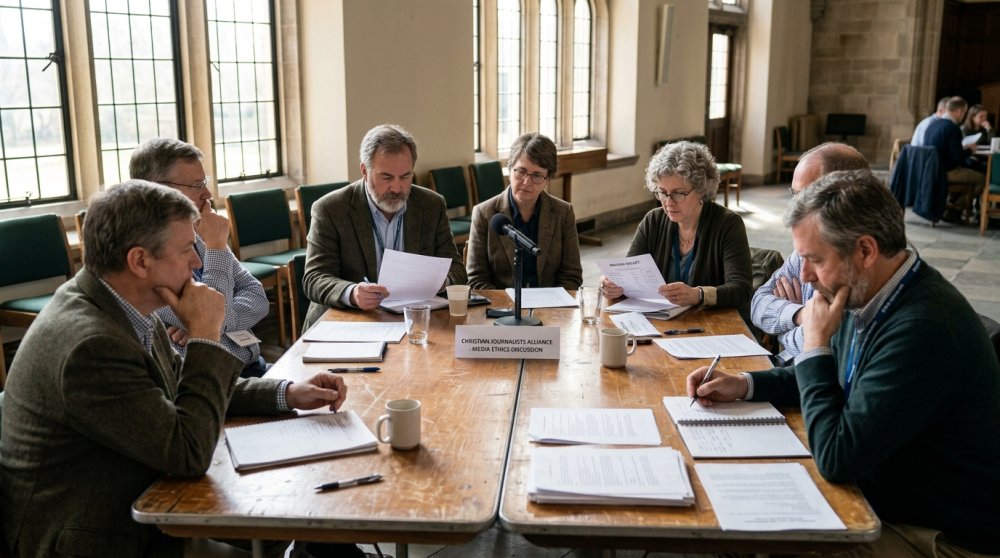
The Evangelical Press Association has begun a formal voting process among its members to determine whether the organization will change its name. The proposed new name is Christian Communicators Network. This vote follows a recent virtual meeting where board members outlined their reasoning and responded to questions from the membership.
Board members addressed concerns about the loss of the word “Evangelical” in the organization’s name. They also discussed the procedures involved in making such a significant change. The vote reflects ongoing conversations within Christian media circles about identity, mission, and public perception.
“Members are being given the opportunity to weigh in on a decision that will affect the organization’s future direction,” a board representative stated during the virtual meeting.
The outcome of this vote will determine whether the Evangelical Press Association continues under its current name or adopts the new title of Christian Communicators Network. Christian communicators across the nation are watching closely as this process unfolds.
Let us know what you think, please share your thoughts in the comments below.


-

 Self-Reliance1 year ago
Trump’s Bold Move Uncovers Massive Social Security Fraud
-

 Faith1 year ago
New Clues Emerge in Noah’s Ark Mystery
-

 News2 years ago
Governor Walz’s Rhetoric Sparks National Controversy
-

 News1 year ago
Mel Gibson’s ‘The Passion of the Christ’ Sequel Title Announced
-

 Family1 year ago
Texas Lawmaker Targets Furries in Schools
-

 Freedom2 years ago
Maine Lawmaker Challenges Sports Fairness Controversy
-

 Family1 year ago
Canada’s Controversial Policy Sparks Ethical Debate
-
Faith10 months ago
Congress Hears Pleas for Nigerian Christians