
Faith
Korean Scholars Defend Life Against Legal Erosion

Faith Facts
- Korean experts warn legalization of assisted suicide and broader abortion access could erode core bioethical values.
- Seminar speakers stressed that legal proposals mix crucial distinctions between assisted suicide, euthanasia, and death with dignity—posing serious moral and legal risks.
- Medical and ethical concerns highlight that so-called “safe” alternatives often obscure grave dangers for mothers and the unborn.
Korean academics gathered at the Sungsan Bioethics Research Institute’s 28th anniversary seminar to warn that efforts to legalize assisted suicide and expand medication abortion threaten the sanctity of life and ethical foundations.
Participants highlighted that ambiguous laws and weakened safeguards in other countries led to a dangerous expansion of practices once introduced as tightly regulated exceptions.
“‘Death with dignity’ refers to withdrawing life-sustaining treatment at a terminal patient’s request, while assisted suicide involves a person ending their life with help from others, and euthanasia means a third party directly causes death,” Shin Hyo-sung stated.
Law experts noted that Korean legislative proposals rely on after-the-fact review, failing to provide robust protections for the most vulnerable, and risk following the troubling example of the Netherlands, where eligibility for euthanasia has dramatically widened over time.
“The Dutch case is a clear warning that laws introduced with good intentions can expand in unintended directions,” Shin warned.
Medical professionals cautioned against treating medication abortion as a safe shortcut, exposing women to significant and poorly reported health dangers.
“Misoprostol was originally developed to treat gastric ulcers,” Dr. Hong Soon-cheol explained. “Its use as an abortion drug emerged from its side effect of inducing uterine contractions, not from being designed for reproductive care.”
Dr. Hong emphasized that the rise of commercial abortion pills outside of medical supervision has led to complications such as heavy bleeding, uterine rupture, and further surgery—making the procedure hidden but not harmless.
“This is not a safe procedure,” Hong warned. “It is simply a ‘hidden abortion’ — less visible, but not less dangerous.”
Speakers urged policy approaches that defend life and affirm the God-given value of every individual, calling on society not to hide behind rights-based language that ignores genuine long-term health and moral considerations.
“Medication abortion is often described as a ‘safe choice’ or a matter of women’s rights,” Jang Ji-young stated. “But international data show it frequently leads to complications requiring emergency care, hospitalization or surgery.”
Jang further warned that describing abortion access as healthcare actually places greater risk on women and the unborn, contrary to the biblical mandate to cherish life.
“Language such as ‘choice’ and ‘reproductive rights’ can obscure the reality that risk is being transferred to women,” Jang said. “This weakens both women’s health rights and the protection of fetal life.”
Academic respondents noted that all forms of assisted death ethically equate to ending life with medical assistance, regardless of terminology, and that faith-based guidance is crucial as lawmakers debate these profound issues.
“All involve ending life with medical assistance,” Lee Sang-won said.
Nurses called for better end-of-life care education as an alternative to normalized euthanasia, noting the need to strengthen palliative care rooted in compassion and dignity for those near their earthly journey’s end.
“Without proper experience in end-of-life care, medical professionals may see euthanasia as an alternative rather than a last resort,” Choi Ga-eun cautioned.
Organizers encouraged a return to Biblical ethical principles in lawmaking, reminding the public that decisions on life and death speak to the soul of the nation and its commitment to God’s gift of life.
“These are not narrow policy questions,” Hong said. “They are questions about what kind of society we are becoming, and how we define the value of human life.”



Faith Facts
- The Message Bible paraphrase author Eugene Peterson passed away this week in Christian history.
- The Edict of Nantes, which granted religious freedom to French Protestants, was revoked in the seventeenth century.
- Christian history continues to record both faithful perseverance and grave setbacks for believers.
Christian history is filled with moments that shaped the Church, from milestones and triumphs to tragedies and controversies, as well as the lasting impact of influential believers. These events remind believers of the enduring cost of standing for the faith once delivered to the saints.
Each week brings fresh reminders that the Church has weathered storms and celebrated victories for centuries. Remembering these milestones helps strengthen the resolve of Christians today to hold fast to biblical truth.
Let us know what you think, please share your thoughts in the comments below.

Faith Facts
- Tony Dungy has consistently spoken about his Christian faith throughout his NFL coaching career and broadcasting work.
- Dungy has been a vocal advocate for pro-life causes, aligning with traditional Christian teachings on the sanctity of life.
- His commitment to living out biblical principles publicly has been a hallmark of his career in professional sports.
Former NFL coach and longtime sportscaster Tony Dungy suggested his pro-life activism and willingness to speak publicly about his Christian faith may have contributed to his departure from NBC Sports, though he said he cannot be certain.
Though Dungy did not accuse NBC of discrimination, his comments raised questions about how networks value employees who openly share their faith. He indicated that networks sometimes prefer commentators who keep their beliefs private.
“They don’t always appreciate you speaking about your faith,” Dungy said.
His departure comes as more Christian athletes and coaches face pressure to remain silent about their beliefs in mainstream media. Dungy’s experience highlights the tension between personal conviction and corporate expectations in today’s sports broadcasting landscape.
“It’s something that I’ve always tried to do,” he added, referring to his habit of sharing his faith when opportunities arise.
Let us know what you think, please share your thoughts in the comments below.
Faith Facts
- The title ‘reverend’ is rooted in Scripture’s command to give honor where honor is due.
- Baptist tradition has long valued reverence for the pastoral office as a biblical calling.
- Pastor appreciation month highlights the need to respect and uphold the dignity of gospel ministry.
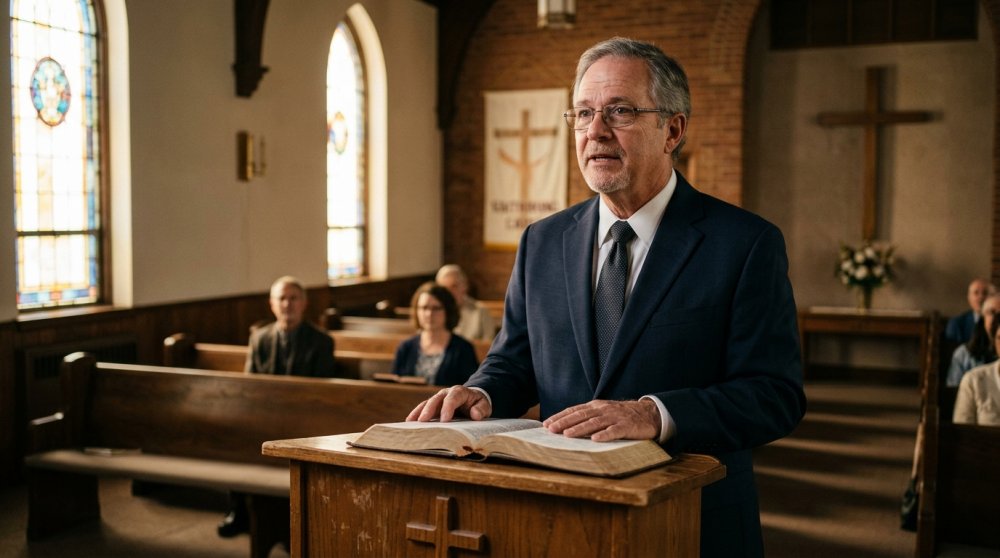
Among many Baptist congregations the title reverend has been viewed with suspicion, even dismissed as presumptuous. Yet one seasoned pastor sees no cause to set it aside. He argues that the title carries weight that reflects the sacred nature of the calling rather than personal pride.
Scripture teaches believers to esteem those who labor in the Word and doctrine. The pastoral office is not a casual role but a divine appointment that deserves recognition. When a church uses the title reverend it publicly affirms the weight of that responsibility.
“After decades in ministry, one pastor explains why he has never seen reason to apologize for it.”
Retaining the title does not elevate the man above the congregation. It simply acknowledges the office God has established for the shepherding of His people. In an age that often diminishes spiritual authority, such clarity helps preserve the biblical pattern of respect for those who preach the gospel.
Churches that drop the title risk communicating that the pastoral role is interchangeable with any other profession. That mindset weakens the church’s witness and confuses younger believers about the seriousness of gospel ministry. Maintaining the title serves as a quiet but consistent reminder of God’s order in the local assembly.
Let us know what you think, please share your thoughts in the comments below.


-

 Self-Reliance2 years ago
Trump’s Bold Move Uncovers Massive Social Security Fraud
-

 Faith2 years ago
New Clues Emerge in Noah’s Ark Mystery
-

 News2 years ago
Governor Walz’s Rhetoric Sparks National Controversy
-

 News2 years ago
Mel Gibson’s ‘The Passion of the Christ’ Sequel Title Announced
-

 Family2 years ago
Texas Lawmaker Targets Furries in Schools
-

 Freedom2 years ago
Maine Lawmaker Challenges Sports Fairness Controversy
-

 Family1 year ago
Canada’s Controversial Policy Sparks Ethical Debate
-
Faith11 months ago
Congress Hears Pleas for Nigerian Christians