
Faith
Korean Scholars Defend Life Against Legal Erosion

Faith Facts
- Korean experts warn legalization of assisted suicide and broader abortion access could erode core bioethical values.
- Seminar speakers stressed that legal proposals mix crucial distinctions between assisted suicide, euthanasia, and death with dignity—posing serious moral and legal risks.
- Medical and ethical concerns highlight that so-called “safe” alternatives often obscure grave dangers for mothers and the unborn.
Korean academics gathered at the Sungsan Bioethics Research Institute’s 28th anniversary seminar to warn that efforts to legalize assisted suicide and expand medication abortion threaten the sanctity of life and ethical foundations.
Participants highlighted that ambiguous laws and weakened safeguards in other countries led to a dangerous expansion of practices once introduced as tightly regulated exceptions.
“‘Death with dignity’ refers to withdrawing life-sustaining treatment at a terminal patient’s request, while assisted suicide involves a person ending their life with help from others, and euthanasia means a third party directly causes death,” Shin Hyo-sung stated.
Law experts noted that Korean legislative proposals rely on after-the-fact review, failing to provide robust protections for the most vulnerable, and risk following the troubling example of the Netherlands, where eligibility for euthanasia has dramatically widened over time.
“The Dutch case is a clear warning that laws introduced with good intentions can expand in unintended directions,” Shin warned.
Medical professionals cautioned against treating medication abortion as a safe shortcut, exposing women to significant and poorly reported health dangers.
“Misoprostol was originally developed to treat gastric ulcers,” Dr. Hong Soon-cheol explained. “Its use as an abortion drug emerged from its side effect of inducing uterine contractions, not from being designed for reproductive care.”
Dr. Hong emphasized that the rise of commercial abortion pills outside of medical supervision has led to complications such as heavy bleeding, uterine rupture, and further surgery—making the procedure hidden but not harmless.
“This is not a safe procedure,” Hong warned. “It is simply a ‘hidden abortion’ — less visible, but not less dangerous.”
Speakers urged policy approaches that defend life and affirm the God-given value of every individual, calling on society not to hide behind rights-based language that ignores genuine long-term health and moral considerations.
“Medication abortion is often described as a ‘safe choice’ or a matter of women’s rights,” Jang Ji-young stated. “But international data show it frequently leads to complications requiring emergency care, hospitalization or surgery.”
Jang further warned that describing abortion access as healthcare actually places greater risk on women and the unborn, contrary to the biblical mandate to cherish life.
“Language such as ‘choice’ and ‘reproductive rights’ can obscure the reality that risk is being transferred to women,” Jang said. “This weakens both women’s health rights and the protection of fetal life.”
Academic respondents noted that all forms of assisted death ethically equate to ending life with medical assistance, regardless of terminology, and that faith-based guidance is crucial as lawmakers debate these profound issues.
“All involve ending life with medical assistance,” Lee Sang-won said.
Nurses called for better end-of-life care education as an alternative to normalized euthanasia, noting the need to strengthen palliative care rooted in compassion and dignity for those near their earthly journey’s end.
“Without proper experience in end-of-life care, medical professionals may see euthanasia as an alternative rather than a last resort,” Choi Ga-eun cautioned.
Organizers encouraged a return to Biblical ethical principles in lawmaking, reminding the public that decisions on life and death speak to the soul of the nation and its commitment to God’s gift of life.
“These are not narrow policy questions,” Hong said. “They are questions about what kind of society we are becoming, and how we define the value of human life.”



Faith Facts
- Christians in Essex are taking legal action to defend their right to share the Gospel in public spaces.
- A local council has banned the use of loudspeakers and prohibited street preaching about Hell.
- The church maintains that sharing the Gospel belongs on the streets and is a core expression of faith.
Christians at a church in Essex are fighting in court for the right to share the Gospel on British streets after a city council banned their use of loudspeakers and ordered them to stop warning people about Hell.
The case highlights growing tensions between traditional Christian witness and local government restrictions on public preaching.
“The Gospel belongs on the streets,” church leaders declared in their legal challenge.
Faithful believers see this as part of a broader pattern of restrictions aimed at silencing biblical truth in the public square.
“We will not be silenced from proclaiming the truth that saves,” a church spokesperson stated.
Let us know what you think, please share your thoughts in the comments below.

Faith Facts
- A Colombian pastor was murdered in Cartagena for refusing to allow gang members he had evangelized to use his motorcycle.
- The pastor’s death highlights the dangers faced by Christians boldly sharing the Gospel in violent urban areas.
- His sacrifice serves as a sobering reminder of the cost of faithfulness to Christ in regions controlled by criminal gangs.
A Colombian pastor was beaten to death by members of a criminal gang he had been evangelizing in the city of Cartagena.
The gang members attacked the pastor after he refused to allow them to use his motorcycle, according to a report.
Let us know what you think, please share your thoughts in the comments below.
Faith Facts
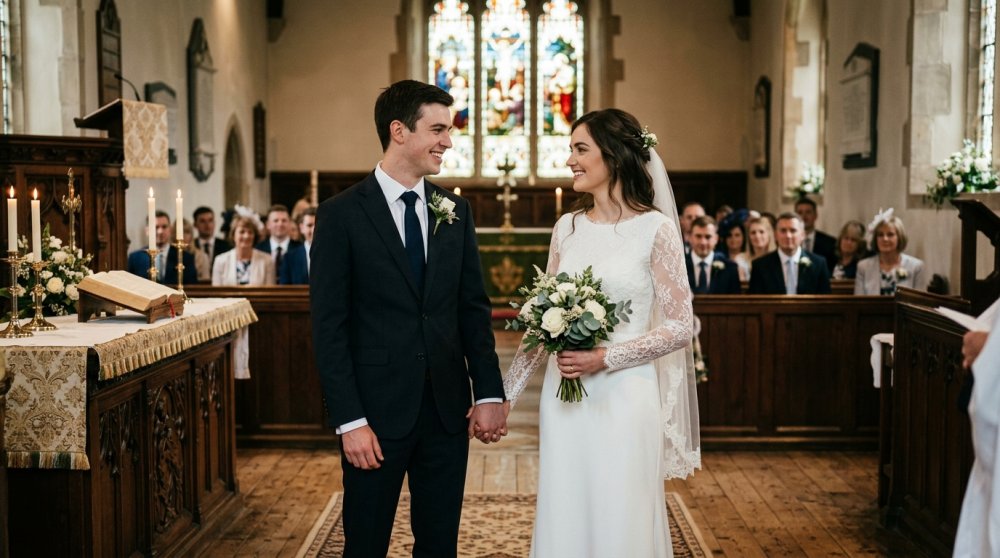
- Research from the Institute for Family Studies shows couples with different last names divorce at a 50% higher rate.
- A shared family name reflects the biblical call for husband and wife to become one flesh in covenant marriage.
- Taking a husband’s last name serves as a visible sign of leaving, cleaving, and surrender within Christian marriage.
New research is shining a light on a simple yet profound tradition many Christian couples continue to embrace.
Couples who choose to keep separate last names after marriage face a divorce rate 50% higher than those who share one name, according to findings from the Institute for Family Studies.
“A shared name is an outward sign of the leaving, cleaving and covenantal surrender at the heart of biblical marriage,” the report notes.
This practice aligns with Scripture’s description of marriage as a lifelong union where two become one, both in spirit and in name.
Christian wives who adopt their husband’s surname often see it as an act of unity and humility that strengthens their household witness.
Let us know what you think, please share your thoughts in the comments below.


-

 Self-Reliance2 years ago
Trump’s Bold Move Uncovers Massive Social Security Fraud
-

 Faith2 years ago
New Clues Emerge in Noah’s Ark Mystery
-

 News2 years ago
Governor Walz’s Rhetoric Sparks National Controversy
-

 News2 years ago
Mel Gibson’s ‘The Passion of the Christ’ Sequel Title Announced
-

 Family2 years ago
Texas Lawmaker Targets Furries in Schools
-

 Freedom2 years ago
Maine Lawmaker Challenges Sports Fairness Controversy
-

 Family1 year ago
Canada’s Controversial Policy Sparks Ethical Debate
-
Faith11 months ago
Congress Hears Pleas for Nigerian Christians