
Faith
Joe Rogan’s Surprising New Spiritual Journey

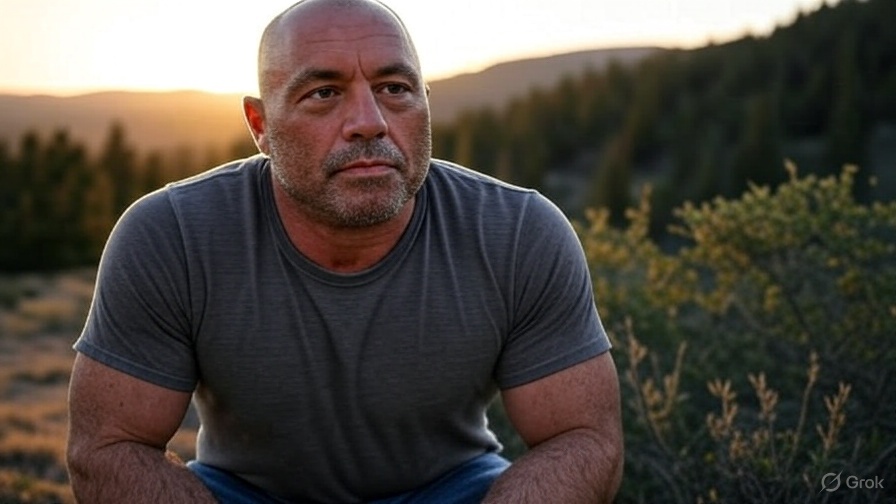
In a heartening turn of events that underscores the timeless relevance of faith and traditional values, renowned podcast host Joe Rogan has reportedly begun attending church regularly. This development was shared by Christian apologist Wesley Huff, who appeared on “The Joe Rogan Experience” earlier this year. Huff, who serves as the Central Canada director for Apologetics Canada, revealed this uplifting news during a recent podcast appearance.
“Joe Rogan and I have had on and off communication since then,” Huff stated. “I can tell you for a fact that he is attending a church, and that has been a consistent thing. And so, things are happening.”
This change in Rogan’s routine is not just a personal journey but a reflection of a broader resurgence in interest in Christianity across the nation. As Huff noted, Rogan is an “inquisitive individual” who is engaging with influential voices that guide him through the profound truths of the Bible. This shift aligns with a growing cultural movement that sees more individuals, particularly the younger generation, seeking spiritual grounding and purpose.
The resurgence is not limited to church attendance. Bible sales are experiencing a notable uptick, with young people leading the charge. Huff shared an anecdote about teenagers visiting a Christian bookstore, eager to get their hands on the Holy Scriptures, reportedly saying, “All my friends are reading this thing.” This phenomenon is supported by data from the American Bible Society, which highlights a rise in Bible users from 38% to 41%, with significant increases among young people and men.
“Millennials saw a 29% increase in Bible use from 2024 to 2025 and men saw a 19% increase, closing the long-time gender gap in Bible use,” according to a press release by the American Bible Society.
This trend is a testament to the enduring power of faith and the Bible’s role as a beacon of truth and morality in our society. It is a reminder that, despite the challenges of modernity, the foundational principles of Christianity continue to resonate deeply with individuals seeking meaning and direction.
The growing interest in Christianity and the Bible among Gen Z is particularly noteworthy. Scripture engagement among this demographic rose from 11% in 2024 to 15% in 2025. Huff observed, “If the Bible is, you know, becoming popular with teenagers, then something is happening and the Lord is moving.”
In a world often marked by uncertainty and moral ambiguity, the return to faith and traditional values offers hope and stability. Joe Rogan’s journey is a microcosm of a larger cultural shift, one that champions faith, family, and freedom as the cornerstones of a thriving society. As more individuals turn to the Bible and Christian teachings, we are reminded of the profound impact that faith can have in shaping a nation rooted in biblical principles and individual responsibility.
Let us know what you think, please share your thoughts in the comments below.



Faith Facts
- The Restoration Movement produced three distinct fellowships by 1906, with Churches of Christ emerging as a conservative, Bible-focused body
- Early 20th-century leaders in Indiana, Tennessee, and Texas held differing convictions on the Holy Spirit, millennial teaching, and church institutions
- The conservative Texas tradition ultimately shaped the doctrinal identity that guided Churches of Christ for much of the twentieth century
A new book from Abilene Christian University Press offers a detailed look at the doctrinal battles that forged the identity of Churches of Christ in the decades after 1906. The volume, the first of three planned works, draws on essays by eight authors who trace how congregations navigated questions of Scripture, worship, and church order.
By the early twentieth century, the Restoration Movement had separated into three distinct groups. Churches of Christ stood apart for their commitment to congregational autonomy and a plain reading of the New Testament.
The collection opens with Daniel Sommer’s 1889 Address and Declaration, which set the tone for separation from the Disciples of Christ. Subsequent chapters highlight the contributions of David Lipscomb and respected African-American leaders such as Preston Taylor, S.W. Womack, and Marshall Keeble.
“Allen and Hicks are to be commended for editing a splendid and illuminating volume. Readers interested in the history of Churches of Christ will eagerly anticipate the next installment in the series.”
Three regional traditions emerged, each with its own convictions. Leaders in Tennessee upheld belief in miraculous divine action and a future millennial kingdom, while Indiana voices favored noninstitutional simplicity and resisted Bible colleges. The Texas tradition, emphasizing the Word alone and strict obedience to positive commands, gradually gained dominance.
Through influential publications like R.L. Whiteside and C.R. Nichol’s Sound Doctrine series and N.B. Hardeman’s Tabernacle Sermons, the Texas perspective reached congregations across the nation. By the 1930s, the Gospel Advocate had become its leading voice.
The book closes with primary source excerpts that allow readers to hear the founders in their own words. Christian families and church libraries will find this careful history both instructive and encouraging for the challenges of today.
Let us know what you think, please share your thoughts in the comments below.

Faith Facts
- Bank of America closed a Christian ministry’s account in 2020 citing internal policies against certain business types.
- Multiple ministries and faith-based organizations have reported similar account closures from major financial institutions.
- Faith-based groups are increasingly facing challenges accessing traditional banking services across the United States.
In 2020, Bank of America informed a Christian ministry that its account was being closed because the institution had chosen not to service certain types of businesses. The ministry initially believed this decision was isolated to their organization alone.
Further investigation revealed that other faith-based groups had encountered the same treatment from the same financial institution. The pattern suggests a broader policy affecting religious organizations seeking banking services.
“I thought we were the only ones. We weren’t.”
This experience highlights growing concerns among Christian ministries about access to essential financial services. Many traditional banks appear to be reevaluating their relationships with faith-based organizations.
The closure of accounts for religious ministries raises questions about religious liberty and equal access to financial services. Christian organizations across the country are exploring alternative banking options that align with their values and mission.
Let us know what you think, please share your thoughts in the comments below.
Faith Facts
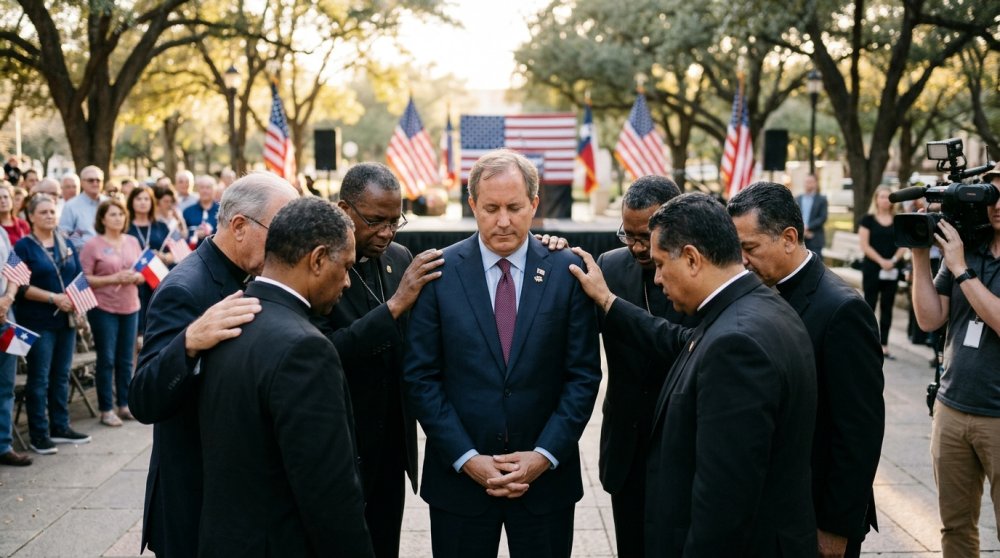
- A group of pastors gathered to pray over Texas Attorney General Ken Paxton at a campaign rally, calling on God for supernatural favor in the final weeks before the Senate election.
- The clergy specifically invoked Romans 13, urging divine support for Paxton as he seeks to represent Texas in the United States Senate.
- The public prayer event reflects a growing trend of faith leaders openly supporting conservative candidates who align with traditional Christian values.
A group of Texas pastors publicly prayed over Republican Attorney General Ken Paxton at a campaign rally this week, asking God to grant him favor with voters in the final stretch of his Senate bid.
The clergy cited Romans 13 during the prayer, reminding supporters that governing authorities are called to serve as ministers of God for justice and order.
Pastors for Paxton gathered to pray over @KenPaxtonTX at his rally today in Conroe. Pastors @Steve_Riggle and @BuntrockJames led us in asking God to grant him wisdom, strength, and protection as he serves Texas. ???? https://t.co/8GQVrU5zxO
— Pastors For Paxton (@pastors4paxton) October 20, 2026
“Give him favor with voters.”
Paxton, who has long positioned himself as a defender of biblical values on issues like life, marriage, and religious liberty, welcomed the spiritual covering from the pastors in attendance.
The event underscores the deep connection many conservative voters in Texas feel between their faith and their political choices.
Let us know what you think, please share your thoughts in the comments below.


-

 Self-Reliance2 years ago
Trump’s Bold Move Uncovers Massive Social Security Fraud
-

 Faith2 years ago
New Clues Emerge in Noah’s Ark Mystery
-

 News2 years ago
Governor Walz’s Rhetoric Sparks National Controversy
-

 News2 years ago
Mel Gibson’s ‘The Passion of the Christ’ Sequel Title Announced
-

 Family2 years ago
Texas Lawmaker Targets Furries in Schools
-

 Freedom2 years ago
Maine Lawmaker Challenges Sports Fairness Controversy
-

 Family1 year ago
Canada’s Controversial Policy Sparks Ethical Debate
-
Faith11 months ago
Congress Hears Pleas for Nigerian Christians