Faith
What Happens When Sharing the Gospel Becomes a Crime
Faith Facts
- Criminalizing public expression of the Gospel directly harms those most in need of its hope and redemption
- Silencing Christian voices in the public square denies vulnerable populations access to life-changing spiritual truth
- When faith is pushed from public life, society’s most broken and marginalized lose their greatest source of healing
Across Western nations, Christians increasingly face legal and social barriers when sharing their faith publicly. What many fail to recognize is that these restrictions don’t just affect believers—they devastate the very people who need the Gospel’s transformative message most desperately.
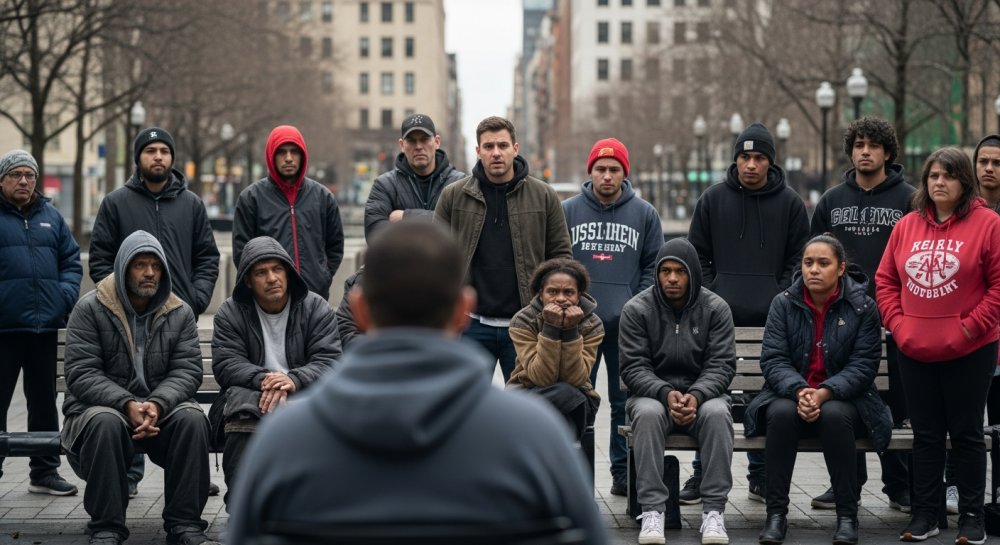
When laws and cultural pressures silence Christian witness in public spaces, the consequences ripple far beyond courtrooms and legislative chambers. The homeless searching for purpose, the addicted seeking freedom, the grieving looking for comfort—these are the real casualties when the Good News is criminalized.
The Gospel has always been most powerful among society’s forgotten and overlooked. Throughout history, Christian ministry has reached into the darkest corners of human suffering, bringing light where government programs and secular initiatives have failed. From prison cells to addiction recovery centers, from homeless shelters to crisis pregnancy centers, the message of Christ’s redemption has rebuilt shattered lives.
Yet today’s anti-Christian climate threatens to cut off this lifeline. When street preachers are arrested, when Christian counselors are forbidden from sharing biblical truth, when ministries are sued for maintaining their convictions, the ultimate victims aren’t the Christians facing persecution—they’re the hurting souls who never hear the message that could save them.
Consider the former gang member who finds new life through a prison ministry. Think of the woman escaping sex trafficking who discovers her worth through a faith-based recovery program. Imagine the suicidal teenager who finds hope through a youth pastor’s compassionate witness. These transformations happen because Christians were free to share truth without fear of prosecution.
The secularization of public life creates a spiritual vacuum that government cannot fill. Social programs may address material needs, but they cannot heal the soul. Psychology may offer coping mechanisms, but it cannot provide eternal hope. Only the Gospel offers complete restoration—spirit, soul, and body.
When we allow the criminalization of Christian witness, we don’t create a more inclusive society. We create a society where the most vulnerable are denied access to the most powerful force for genuine change. We tell the broken that their deepest needs don’t matter, that spiritual truth must be hidden, that eternal questions have no public answers.
Religious freedom isn’t just about protecting Christians—it’s about protecting everyone’s access to the truth that sets people free. Every law that restricts Gospel proclamation, every policy that punishes Christian conviction, every cultural pressure that silences biblical truth ultimately harms those society claims to protect.
The call to share the Gospel isn’t optional for Christians—it’s the Great Commission given by Christ Himself. When governments and institutions attempt to criminalize this sacred duty, they don’t just violate constitutional rights. They commit an injustice against every person who might have encountered life-changing truth.
History demonstrates that societies flourish when Christianity speaks freely into public life. Hospitals, universities, orphanages, and countless charitable institutions trace their origins to Christian witness. The abolition of slavery, civil rights advances, and humanitarian movements have been driven by believers who refused to keep their faith private.
Today’s battles over religious freedom will determine tomorrow’s reality for countless searching souls. Will they encounter Christians free to share hope, or will they be left in despair because speaking truth became a crime?
The price of silencing the Gospel is always paid by those who can least afford it—the lost, the broken, the desperate, and the dying. When we defend Christian freedom in the public square, we defend their right to hear the message that can transform their eternity.
Let us know what you think, please share your thoughts in the comments below.
Faith
Two England Stars Reject Rivalry, Choose Brotherhood Instead
Faith Facts
- Arsenal’s Bukayo Saka and Chelsea’s Noni Madueke are competing for the same position on England’s national team yet maintain a relationship built on mutual respect and brotherhood rather than rivalry.
- Both young soccer stars openly express their Christian faith, with their relationship reflecting biblical principles of love, humility, and supporting one another despite competition.
- Saka describes their bond as transcending professional rivalry, choosing to uplift each other rather than view one another as obstacles to overcome.
In a sports world often defined by cutthroat competition and self-promotion, two young English soccer stars are demonstrating a different path forward. Bukayo Saka of Arsenal and Noni Madueke of Chelsea find themselves vying for the same coveted position on England’s national team. Yet instead of the jealousy and animosity that typically defines such professional rivalry, these young men have chosen brotherhood.
The relationship between Saka and Madueke stands as a powerful testimony to Christian values in action. Both athletes have been open about their faith, and it shows in how they treat one another. Rather than viewing each other as threats or obstacles, they have embraced mutual encouragement and genuine respect.
“It’s not about rivalry for us,” Saka has said of their relationship. “We push each other to be better, but there’s love and respect there. That’s what matters most.”
This perspective reflects the biblical principle found in Philippians 2:3: “Do nothing out of selfish ambition or vain conceit. Rather, in humility value others above yourselves.” In an era where professional athletes often cultivate personal brands built on dominance and individualism, Saka and Madueke are living out a counter-cultural witness.
Their bond reminds us that competition and compassion need not be mutually exclusive. The Christian faith calls believers to excellence in their vocations while simultaneously loving their neighbors as themselves. These young men are proving that you can pursue your professional dreams with intensity while still viewing your competitors through the lens of Christian charity.
Both players have spoken about how their faith grounds them in an industry filled with pressure, fame, and temptation. For Christian families raising children in competitive environments—whether in sports, academics, or other pursuits—the Saka-Madueke friendship offers a practical example of how biblical values can shape character even in high-stakes situations.
The relationship also speaks to the importance of mentorship and community within the faith. When young believers see their peers living out Christian principles in public, it strengthens their own resolve to do likewise. Saka and Madueke are not just competing for their country; they’re bearing witness to a better way of approaching success.
In American sports culture, we’ve seen similar examples—from Tim Tebow’s humility to coaches who prioritize character development alongside athletic achievement. These testimonies matter because they demonstrate that faith is not merely a private belief system but a transformative force that reshapes how we interact with the world around us.
As both young men continue their careers, their friendship will undoubtedly face tests. Selection decisions will favor one over the other at various times. Injuries, form, and coaching preferences will create natural tensions. Yet if they continue to root their relationship in the solid ground of Christian brotherhood, their bond will endure beyond the temporary ups and downs of professional sport.
The story of Bukayo Saka and Noni Madueke is ultimately about more than soccer. It’s about how faith calls us to a higher standard in every arena of life. It’s about choosing love over envy, encouragement over sabotage, and eternal values over temporary gain.
For Christian families, this narrative provides a teaching moment: success and godliness are not opposing forces. Young people can pursue excellence with every ounce of their ability while still treating others with the dignity and respect that flows from recognizing we are all made in God’s image.
Let us know what you think, please share your thoughts in the comments below.
Faith
Half of All Christians Are Entrepreneurs — And the Church Is Ignoring Them
Faith Facts
- Nearly half of all Christians generate income through business ventures or side hustles, yet most churches offer little to no support for their entrepreneurial journey.
- Christian entrepreneurs face unique spiritual challenges in the marketplace but are often left to navigate faith and business alone without church community backing.
- Churches have largely focused on traditional employment while overlooking the growing number of believers called to create, innovate, and build businesses as an expression of their faith.
The modern American church has a blind spot. While nearly half of all Christians are generating income through their own businesses or side ventures, stepping out in faith every single day, their spiritual community often fails to recognize or support this vital calling.
Derek Hughes highlights a concerning reality: Christian entrepreneurs are trusting God with significant financial risks and daily decisions that impact their families and communities. Yet when Sunday comes, the church rarely acknowledges this form of ministry or provides the spiritual support these believers desperately need.
The traditional church model has long emphasized serving through volunteering or working secular jobs with integrity. But entrepreneurship — the act of creating value, providing jobs, and stewarding resources — represents a powerful expression of faith that deserves recognition and support from the body of Christ.
Christian business owners face unique spiritual battles. They must navigate ethical dilemmas, trust God during financial uncertainty, and lead employees according to biblical principles. They’re making kingdom decisions in the marketplace every day, often without the prayer support or biblical guidance their pastors receive for pulpit ministry.
The absence of church support leaves these entrepreneurs spiritually isolated. While small groups discuss parenting and marriage, few create space for believers to process the moral complexities of pricing, hiring, competition, and growth through a biblical lens.
This represents a massive missed opportunity for the church. Entrepreneurs don’t just need business advice — they need spiritual community that understands their calling. They need prayer warriors who recognize that negotiating contracts and managing employees are spiritual acts of worship when done unto the Lord.
The early church understood that tent-making and marketplace ministry were legitimate callings. The Apostle Paul himself supported his ministry through business. Yet modern churches often treat entrepreneurship as merely secular work rather than a potential mission field and ministry platform.
Churches that embrace and equip their entrepreneurs unlock tremendous kingdom potential. Business owners can model Christian excellence in the marketplace, create employment opportunities that reflect biblical values, and generate resources for gospel advancement. But they can’t do it alone.
The solution starts with recognition. Pastors and church leaders must acknowledge that starting and running a business requires just as much faith as entering foreign missions. Entrepreneurs need commissioning, accountability, and ongoing spiritual support for their calling.
Creating dedicated small groups, mentorship programs, and prayer networks for Christian entrepreneurs would transform isolated believers into a powerful community. These spaces would allow business owners to wrestle with difficult questions: How do I honor God in contract negotiations? What does biblical stewardship look like in expansion decisions? How do I lead employees with both grace and accountability?
The church must also celebrate entrepreneurial success as kingdom advancement, not worldly ambition. When Christian businesses thrive through ethical practices and biblical principles, they demonstrate God’s goodness and provide a counter-witness to corrupt marketplace practices.
Nearly half of the congregation is already in the entrepreneurial arena, whether church leaders recognize it or not. These believers are exercising faith, stewarding resources, creating jobs, and impacting their communities through commerce. They deserve the same spiritual support and recognition the church readily provides to other callings.
The modern marketplace desperately needs Christians who conduct business with integrity, treat employees with dignity, and view profit as a tool for kingdom purposes rather than an end in itself. But these marketplace missionaries need their church family standing with them in prayer and support.
It’s time for the American church to wake up to the entrepreneurial calling among its members. By creating intentional space for business owners, providing biblical framework for marketplace decisions, and celebrating entrepreneurship as legitimate ministry, churches can unleash a powerful force for kingdom advancement.
Let us know what you think, please share your thoughts in the comments below.
Faith
Grace to You Leader Steps Down After Decades of Faithful Service
Faith Facts
- Phil Johnson, executive director of Grace to You ministry for 43 years, has announced his retirement following a diagnosis of incurable cancer.
- Johnson’s departure comes less than a year after the death of Pastor John MacArthur, the ministry’s founder and longtime leader.
- Johnson emphasized the need for a new generation of leadership to carry forward the ministry’s mission of biblical teaching and evangelism.
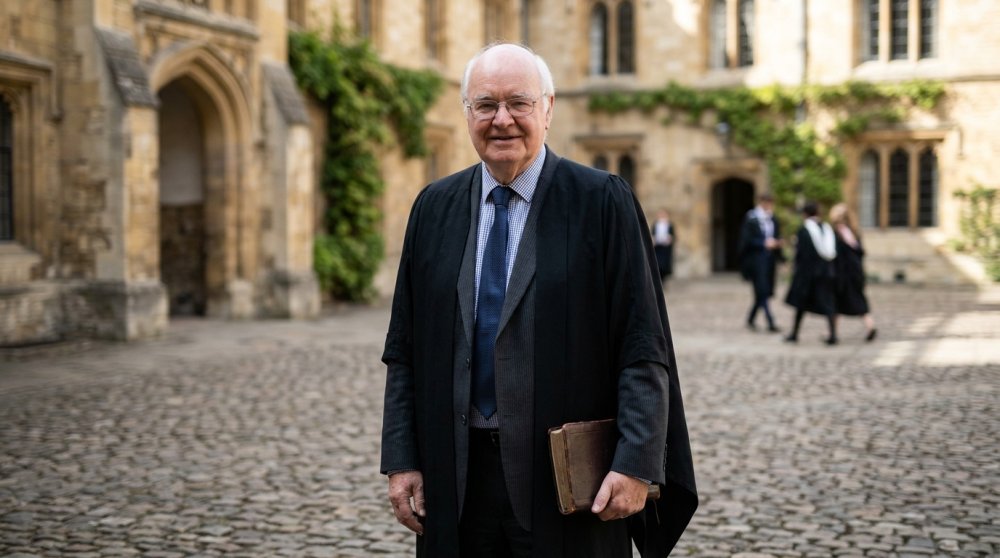
A beloved figure in Christian ministry is stepping aside after more than four decades of faithful service. Phil Johnson, who has served as the executive director of Grace to You ministry for 43 years, announced his retirement in a statement that revealed both his personal health struggles and his vision for the ministry’s future.
Johnson disclosed that he has been diagnosed with incurable cancer, a reality that has shaped his decision to transition leadership responsibilities. His announcement comes at a particularly poignant time for the ministry, arriving less than a year after the passing of Pastor John MacArthur, the founder and spiritual cornerstone of Grace to You.
Throughout his tenure, Johnson has been instrumental in expanding the reach and impact of Grace to You, helping to disseminate MacArthur’s expository preaching and biblical teaching to millions worldwide. The ministry has grown into one of the most respected voices for sound doctrine and faithful biblical exposition in the evangelical world.
In his retirement announcement, Johnson emphasized the importance of preparing the next generation to carry forward the ministry’s commitment to Scripture and theological faithfulness. His focus on succession planning reflects a servant’s heart and wisdom about the continuity of gospel work beyond any single individual.
Johnson’s leadership has been marked by unwavering dedication to biblical truth and a commitment to supporting MacArthur’s teaching ministry. His work behind the scenes has enabled countless believers to access solid biblical teaching through books, broadcasts, and digital media.
The Christian community has responded with gratitude for Johnson’s decades of service and prayers for his health during this difficult season. His legacy includes not only the institutional growth of Grace to You but also his personal mentorship and encouragement of countless ministry leaders and believers.
As Grace to You enters this new chapter, the foundation laid by MacArthur and strengthened by Johnson’s faithful stewardship positions the ministry to continue its mission of proclaiming biblical truth. The transition represents both an ending and a beginning—the close of one faithful servant’s active ministry and the opportunity for new leaders to step forward in service to Christ and His church.
Let us know what you think, please share your thoughts in the comments below.

-
Self-Reliance1 year agoTrump’s Bold Move Uncovers Massive Social Security Fraud
-

Faith1 year agoNew Clues Emerge in Noah’s Ark Mystery
-

News1 year agoGovernor Walz’s Rhetoric Sparks National Controversy
-

News1 year agoMel Gibson’s ‘The Passion of the Christ’ Sequel Title Announced
-

Family1 year agoTexas Lawmaker Targets Furries in Schools
-

Freedom1 year agoMaine Lawmaker Challenges Sports Fairness Controversy
-

Family1 year agoCanada’s Controversial Policy Sparks Ethical Debate
-
Faith7 months ago
Congress Hears Pleas for Nigerian Christians