
Faith
Island Christians Refuse to Scatter Despite Broken Doors and Scattered Bibles

Faith Facts
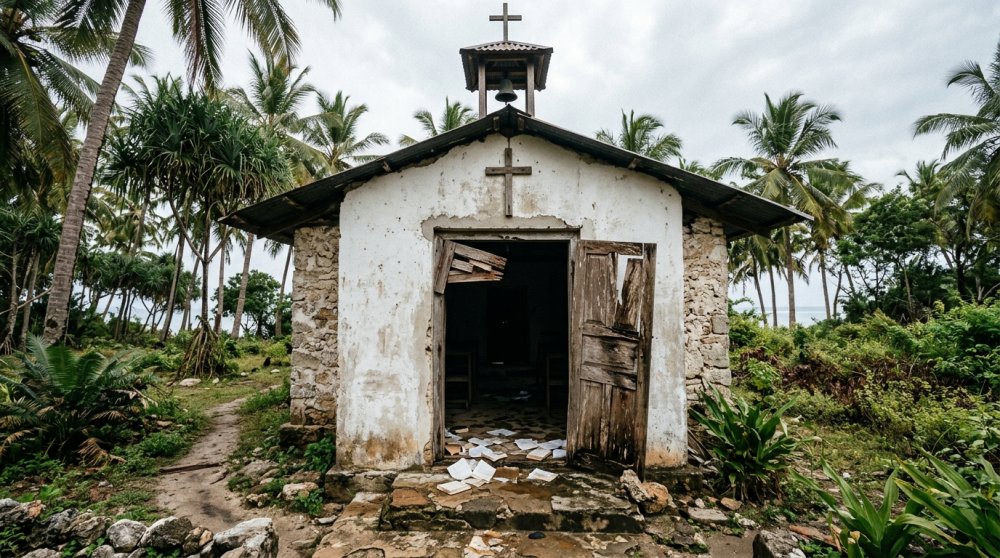
- Christians in Zanzibar continue worshiping despite vandalized churches, broken doors, and scattered Bibles
- The semi-autonomous Tanzanian archipelago remains predominantly Muslim with rising social pressure against Christian communities
- Believers gather for worship despite legitimate fears of additional attacks and persecution
In the semi-autonomous archipelago of Zanzibar, off the coast of Tanzania, Christian believers face mounting opposition that has turned violent. Small churches have been vandalized, their doors broken and their Bibles thrown across floors. Yet the faithful continue to gather, demonstrating a resilience rooted in conviction that transcends fear.
The attacks represent more than property damage. They signal an escalating pattern of hostility toward Christian worship in Muslim-majority communities throughout the islands. Congregations that once met openly now face the dual burden of physical threats and intensifying social pressure designed to silence their witness.
Despite the very real danger, these believers have chosen to stand firm. Their continued gathering for worship speaks to a faith that cannot be intimidated by broken doors or scattered Scripture. In communities where professing Christianity can invite ostracism or worse, their persistence carries significant cost.
The situation in Zanzibar reflects broader challenges facing Christian minorities in regions where religious freedom remains contested. While Tanzania’s mainland generally allows for religious pluralism, the semi-autonomous status of Zanzibar has allowed for stricter Islamic influence in governance and social norms.
These island Christians exemplify the kind of steadfast faith that has characterized believers under pressure throughout church history. Their decision to continue meeting, even as threats mount and attacks materialize, demonstrates that authentic faith cannot be legislated away or intimidated into silence.
The vandalism of churches and desecration of Bibles represents an attack not merely on property but on the freedom to worship according to conscience. Yet the response of these congregations—gathering again despite the risks—offers a powerful testimony to faith that endures persecution.
For Christians committed to religious liberty worldwide, the situation in Zanzibar serves as a reminder that freedom of worship remains under threat in many corners of the globe. These believers deserve both prayer and advocacy as they navigate an increasingly hostile environment.
Let us know what you think, please share your thoughts in the comments below.

Faith Facts
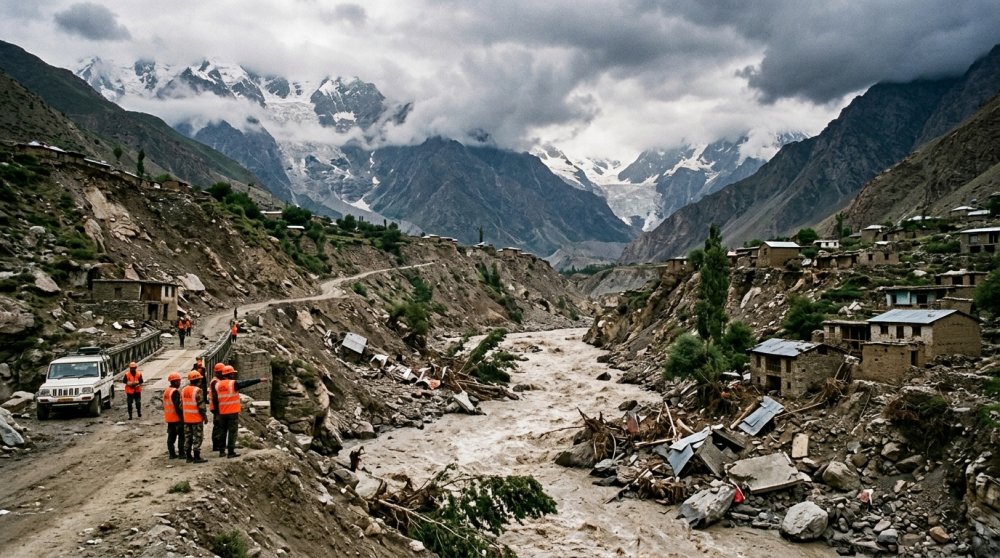
- A rare glacial flood has killed or left missing approximately 6,000 people across Nepal and China, highlighting the unpredictability of life and the urgent need for spiritual preparedness.
- The sudden tragedy serves as a biblical reminder of Christ’s teaching about the necessity of watchfulness and readiness for His return, as life can change in an instant.
- Christians are called to respond with both prayer and action, supporting relief efforts while recognizing natural disasters as opportunities to reflect on eternal priorities.
A devastating glacial flood has swept across regions of Nepal and China, claiming the lives of or leaving missing approximately 6,000 people in what experts are calling an exceptionally rare natural disaster. The sudden nature of the catastrophe has left communities reeling and families searching for loved ones.
The tragedy unfolded with little warning, as massive volumes of water were released from glacial formations, cascading through valleys and villages with destructive force. Entire communities were caught off guard by the rapidly advancing floodwaters.
For Christians observing this heartbreaking event from afar, the disaster carries profound spiritual lessons rooted in Scripture. The suddenness of this tragedy echoes Christ’s own warnings about the unpredictability of life and the certainty of eternity.
Throughout the Gospels, Jesus repeatedly emphasized the importance of spiritual readiness. He taught that no one knows the day or hour of His return, and that life’s circumstances can change without warning. This glacial flood demonstrates that truth in the starkest terms.
The Bible consistently calls believers to live with an eternal perspective rather than becoming consumed by temporary earthly concerns. When thousands can be swept away in a single day by forces beyond human control, the fragility of our earthly existence becomes undeniable.
James 4:14 poses the question: “What is your life? You are a mist that appears for a little while and then vanishes.” This ancient wisdom takes on fresh urgency when confronted with the reality of 6,000 souls whose earthly journeys ended or were dramatically altered in moments.
Christian response to such disasters should be twofold: practical compassion and spiritual reflection. Believers are called to support relief efforts through prayer, financial giving, and when possible, direct assistance to those affected by this catastrophe.
Yet the tragedy also serves as a divine reminder to examine our own lives. Are we living with eternity in view? Have we made peace with God through faith in Jesus Christ? Are we sharing the Gospel with those around us who may face their own sudden end?
The biblical account of Noah’s flood stands as perhaps the most dramatic historical parallel, when God judged the earth through water while preserving those who trusted in His provision. While natural disasters today are not necessarily direct judgments, they do remind us that God remains sovereign over creation and that this fallen world groans under the weight of sin.
For the families directly affected in Nepal and China, this is a time of unimaginable grief and hardship. Christian believers worldwide should lift these regions in prayer, asking God to comfort the mourning, provide for the displaced, and open hearts to the eternal hope found only in Christ.
Natural disasters also demonstrate the limitations of human power and planning. Advanced technology and modern infrastructure provide no guarantee of safety when nature’s forces are unleashed. This reality should humble us and direct our ultimate trust toward the One who controls the winds and the waves.
The sudden nature of this glacial flood also challenges American Christians to consider whether we are storing up treasures in heaven or on earth. Material possessions, career achievements, and earthly status can vanish in an instant, but a life built on faith in Christ has eternal significance.
As we process this tragedy, we must resist the temptation toward either callous indifference or paralyzing fear. Instead, biblical faith calls us to sober watchfulness combined with confident hope in God’s ultimate goodness and justice.
The deaths and displacement of 6,000 people serve as a stark reminder that this world is not our final home. Christians are called to be pilgrims passing through, with our citizenship ultimately in heaven and our hope anchored in the resurrection promise of Jesus Christ.
Let us know what you think, please share your thoughts in the comments below.

Faith Facts
- The U.S. Congress officially endorsed Robert Aitken’s Bible in 1782, recommending it to the American people during a time when Bibles were scarce due to the Revolutionary War.
- The Catholic Church formally condemned Blaise Pascal’s influential “Provincial Letters” for their defense of Jansenism and criticism of Jesuit casuistry.
- Pioneer missionary Samuel Marsden survived a shipwreck while traveling to establish Christian ministry among indigenous peoples.
This week marks the anniversary of several pivotal moments in Christian history that shaped the faith across continents and centuries. From congressional action in early America to theological controversies in Europe, these events reveal the enduring impact of Christian thought and witness.
In 1782, the Continental Congress took the remarkable step of endorsing a Bible published by Philadelphia printer Robert Aitken. This endorsement came during the Revolutionary War, when British blockades made imported Bibles scarce in the American colonies.
Congress recommended Aitken’s English Bible “to the inhabitants of the United States,” marking one of the few times in American history that the federal government officially endorsed a religious text. The action reflected the Christian character of the founding era and the practical needs of a nation seeking spiritual resources during wartime.
The Aitken Bible stands as a testament to the integral role of Christian faith in early American life. Today, original copies of this congressionally endorsed Bible are valuable collector’s items that remind Americans of their nation’s spiritual heritage.
In a separate event, the Catholic Church moved to condemn the “Provincial Letters” written by French mathematician and theologian Blaise Pascal. These influential letters, written in defense of Jansenism, critiqued certain Jesuit teachings on grace and moral theology.
Pascal’s sharp wit and compelling prose made the letters widely read across Europe. However, church authorities viewed them as theologically problematic, particularly regarding questions of divine grace, human will, and moral decision-making.
The condemnation highlighted ongoing tensions within Catholic theology during the 17th century. Despite official censure, Pascal’s writings continued to influence Christian thought and remain studied today for their literary merit and theological insight.
Additionally, this week marks the anniversary of missionary Samuel Marsden’s shipwreck. Marsden, known as the “Apostle of New Zealand,” survived the harrowing experience while traveling to bring the Gospel to indigenous peoples in the Pacific.
His perseverance through such trials exemplified the commitment of early missionaries who risked everything to spread Christian faith. Marsden would go on to establish significant ministry work that laid foundations for Christianity in New Zealand.
These historical moments remind contemporary believers of the sacrifices, controversies, and governmental recognition that have marked Christianity’s journey through the centuries. From congressional chambers to storm-tossed seas, the faith has endured through both official endorsement and official opposition.
Let us know what you think, please share your thoughts in the comments below.
Faith Facts
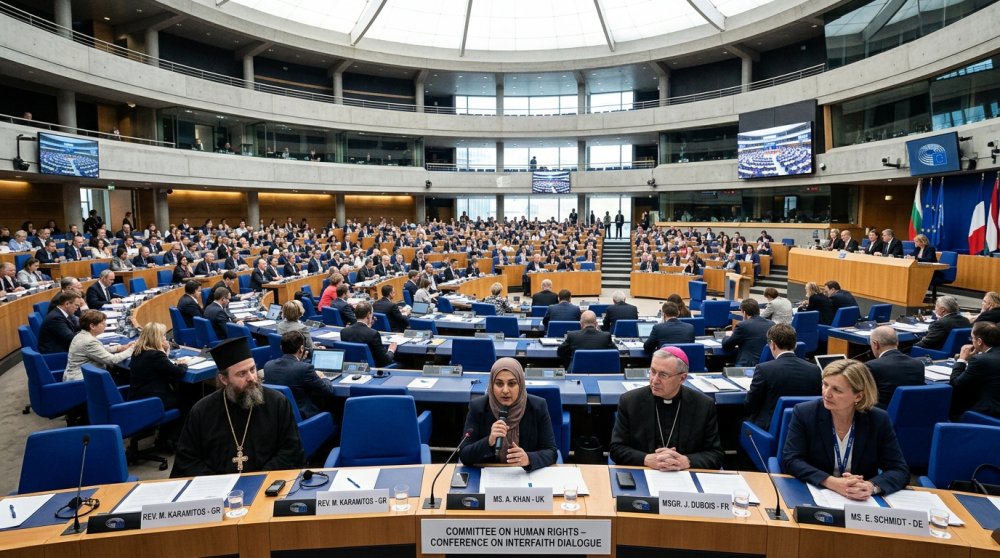
- The European Parliament hosted a conference focused exclusively on the future of Christian communities in Syria
- Church leaders, EU policymakers, and Syrian representatives gathered to address the plight of persecuted believers in the war-torn nation
- The conference represents a rare institutional acknowledgment of the targeted persecution Christians face in the Middle East
In a significant move that recognizes the dire situation facing believers in the Middle East, the European Parliament convened a special conference dedicated to the future of Christians in Syria. The gathering brought together an important coalition of voices committed to protecting religious freedom in one of the world’s most dangerous regions for people of faith.
The conference united church leaders, European Union policymakers, and Syrian representatives under one roof. This collaboration signals a growing awareness among Western institutions that Christian communities in Syria face existential threats that demand immediate attention and coordinated response.
For years, Christians in Syria have endured unspeakable persecution, displacement, and violence as civil war and Islamic extremism have ravaged their ancient homeland. These communities, some of the oldest Christian populations in the world, have seen their numbers decimated through targeted attacks, forced conversions, and mass exodus.
The European Parliament’s decision to host this conference represents more than symbolic support. It demonstrates a concrete commitment to engaging with the crisis facing Syrian Christians and exploring pathways to ensure their survival and flourishing in the land where Christianity first took root and spread.
The participation of Syrian representatives adds crucial on-the-ground perspective to discussions that often occur far removed from the realities facing believers in conflict zones. Their voices provide testimony to both the suffering endured and the resilience of faith communities determined to maintain their witness despite extraordinary hardship.
This conference comes at a critical juncture when the international community must decide whether it will stand with persecuted Christians or allow these historic communities to vanish from the lands they have inhabited since the time of the apostles. The outcome of such discussions will shape not only the future of Syrian Christians but also send a message about Western commitment to religious freedom worldwide.
American Christians should pay close attention to these developments and support efforts to protect our brothers and sisters in Christ who face persecution simply for bearing the name of Jesus. Their struggle is our struggle, and their faithfulness under fire should inspire us to boldly stand for our own values here at home.
Let us know what you think, please share your thoughts in the comments below.


-

 Self-Reliance1 year ago
Trump’s Bold Move Uncovers Massive Social Security Fraud
-

 Faith1 year ago
New Clues Emerge in Noah’s Ark Mystery
-

 News1 year ago
Governor Walz’s Rhetoric Sparks National Controversy
-

 News1 year ago
Mel Gibson’s ‘The Passion of the Christ’ Sequel Title Announced
-

 Family1 year ago
Texas Lawmaker Targets Furries in Schools
-

 Freedom1 year ago
Maine Lawmaker Challenges Sports Fairness Controversy
-

 Family1 year ago
Canada’s Controversial Policy Sparks Ethical Debate
-
Faith10 months ago
Congress Hears Pleas for Nigerian Christians