
Faith
When Congress Endorsed a Bible for America


Faith Facts
- The U.S. Congress officially endorsed Robert Aitken’s Bible in 1782, recommending it to the American people during a time when Bibles were scarce due to the Revolutionary War.
- The Catholic Church formally condemned Blaise Pascal’s influential “Provincial Letters” for their defense of Jansenism and criticism of Jesuit casuistry.
- Pioneer missionary Samuel Marsden survived a shipwreck while traveling to establish Christian ministry among indigenous peoples.
This week marks the anniversary of several pivotal moments in Christian history that shaped the faith across continents and centuries. From congressional action in early America to theological controversies in Europe, these events reveal the enduring impact of Christian thought and witness.
In 1782, the Continental Congress took the remarkable step of endorsing a Bible published by Philadelphia printer Robert Aitken. This endorsement came during the Revolutionary War, when British blockades made imported Bibles scarce in the American colonies.
Congress recommended Aitken’s English Bible “to the inhabitants of the United States,” marking one of the few times in American history that the federal government officially endorsed a religious text. The action reflected the Christian character of the founding era and the practical needs of a nation seeking spiritual resources during wartime.
The Aitken Bible stands as a testament to the integral role of Christian faith in early American life. Today, original copies of this congressionally endorsed Bible are valuable collector’s items that remind Americans of their nation’s spiritual heritage.
In a separate event, the Catholic Church moved to condemn the “Provincial Letters” written by French mathematician and theologian Blaise Pascal. These influential letters, written in defense of Jansenism, critiqued certain Jesuit teachings on grace and moral theology.
Pascal’s sharp wit and compelling prose made the letters widely read across Europe. However, church authorities viewed them as theologically problematic, particularly regarding questions of divine grace, human will, and moral decision-making.
The condemnation highlighted ongoing tensions within Catholic theology during the 17th century. Despite official censure, Pascal’s writings continued to influence Christian thought and remain studied today for their literary merit and theological insight.
Additionally, this week marks the anniversary of missionary Samuel Marsden’s shipwreck. Marsden, known as the “Apostle of New Zealand,” survived the harrowing experience while traveling to bring the Gospel to indigenous peoples in the Pacific.
His perseverance through such trials exemplified the commitment of early missionaries who risked everything to spread Christian faith. Marsden would go on to establish significant ministry work that laid foundations for Christianity in New Zealand.
These historical moments remind contemporary believers of the sacrifices, controversies, and governmental recognition that have marked Christianity’s journey through the centuries. From congressional chambers to storm-tossed seas, the faith has endured through both official endorsement and official opposition.
Let us know what you think, please share your thoughts in the comments below.


Faith Facts
- Bank of America closed a Christian ministry’s account in 2020 citing internal policies against certain business types.
- Multiple ministries and faith-based organizations have reported similar account closures from major financial institutions.
- Faith-based groups are increasingly facing challenges accessing traditional banking services across the United States.
In 2020, Bank of America informed a Christian ministry that its account was being closed because the institution had chosen not to service certain types of businesses. The ministry initially believed this decision was isolated to their organization alone.
Further investigation revealed that other faith-based groups had encountered the same treatment from the same financial institution. The pattern suggests a broader policy affecting religious organizations seeking banking services.
“I thought we were the only ones. We weren’t.”
This experience highlights growing concerns among Christian ministries about access to essential financial services. Many traditional banks appear to be reevaluating their relationships with faith-based organizations.
The closure of accounts for religious ministries raises questions about religious liberty and equal access to financial services. Christian organizations across the country are exploring alternative banking options that align with their values and mission.
Let us know what you think, please share your thoughts in the comments below.
Faith Facts
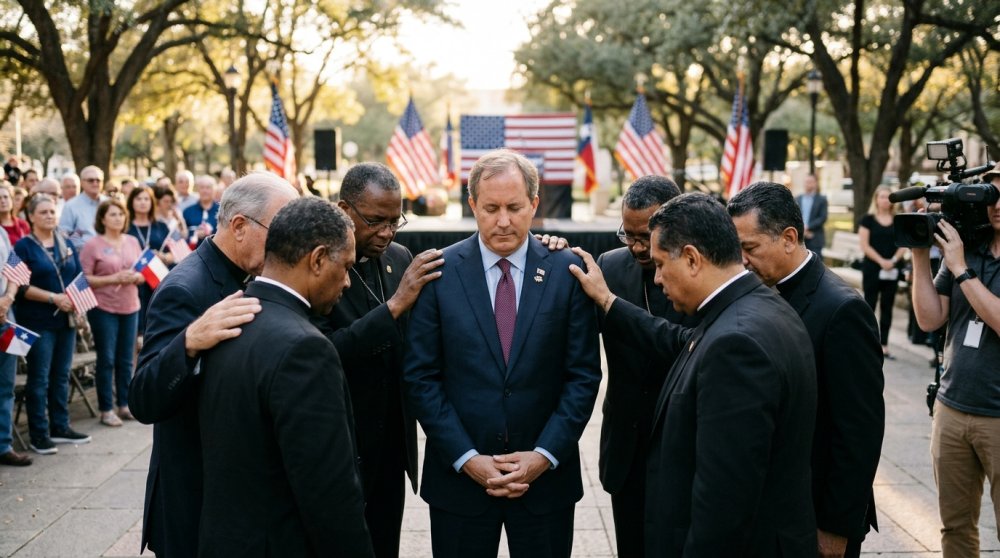
- A group of pastors gathered to pray over Texas Attorney General Ken Paxton at a campaign rally, calling on God for supernatural favor in the final weeks before the Senate election.
- The clergy specifically invoked Romans 13, urging divine support for Paxton as he seeks to represent Texas in the United States Senate.
- The public prayer event reflects a growing trend of faith leaders openly supporting conservative candidates who align with traditional Christian values.
A group of Texas pastors publicly prayed over Republican Attorney General Ken Paxton at a campaign rally this week, asking God to grant him favor with voters in the final stretch of his Senate bid.
The clergy cited Romans 13 during the prayer, reminding supporters that governing authorities are called to serve as ministers of God for justice and order.
Pastors for Paxton gathered to pray over @KenPaxtonTX at his rally today in Conroe. Pastors @Steve_Riggle and @BuntrockJames led us in asking God to grant him wisdom, strength, and protection as he serves Texas. ???? https://t.co/8GQVrU5zxO
— Pastors For Paxton (@pastors4paxton) October 20, 2026
“Give him favor with voters.”
Paxton, who has long positioned himself as a defender of biblical values on issues like life, marriage, and religious liberty, welcomed the spiritual covering from the pastors in attendance.
The event underscores the deep connection many conservative voters in Texas feel between their faith and their political choices.
Let us know what you think, please share your thoughts in the comments below.
Faith Facts
- Frank Turek wakes each morning and ends each evening thinking of Charlie Kirk.
- One year after witnessing the assassination of the conservative activist, Turek continues his commitment to share the Gospel on college campuses.
- The loss of Charlie Kirk has strengthened Turek’s resolve to defend biblical truth among young people.
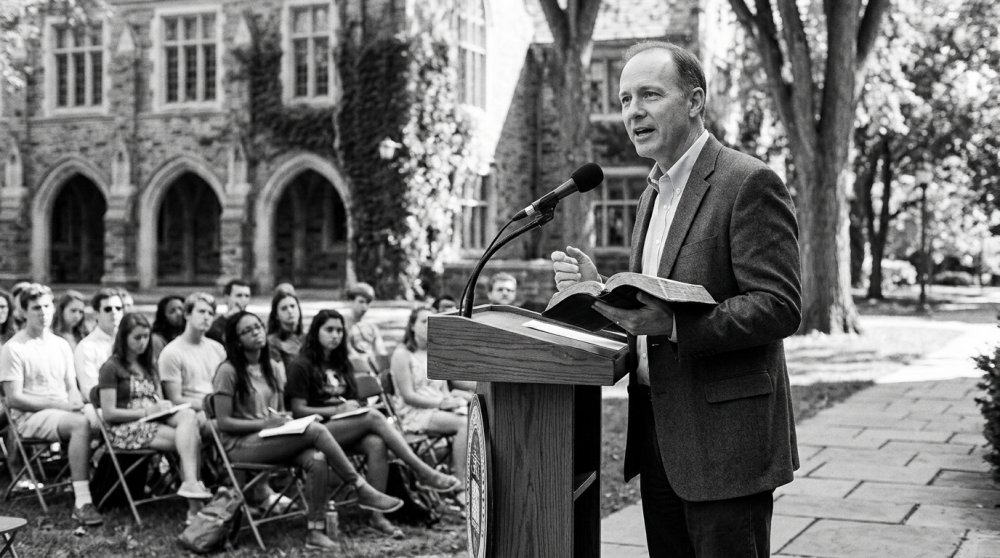
Christian apologist Frank Turek has carried the memory of Charlie Kirk with him every single day since witnessing the conservative activist’s assassination at Utah Valley University. The grief remains real, yet so does his steadfast determination to keep proclaiming the Gospel.
Each morning when he wakes and each night before he sleeps, Turek’s first and last thoughts return to Kirk. The loss of a friend and fellow defender of truth has left a deep mark, but it has not silenced his mission.
“The first person I think of when I wake up is Charlie.”
Turek’s ongoing work on college campuses reflects a commitment to the same values Kirk championed. He continues reaching students with biblical truth, refusing to let tragedy silence the message of Christ.
Let us know what you think, please share your thoughts in the comments below.


-

 Self-Reliance2 years ago
Trump’s Bold Move Uncovers Massive Social Security Fraud
-

 Faith2 years ago
New Clues Emerge in Noah’s Ark Mystery
-

 News2 years ago
Governor Walz’s Rhetoric Sparks National Controversy
-

 News2 years ago
Mel Gibson’s ‘The Passion of the Christ’ Sequel Title Announced
-

 Family2 years ago
Texas Lawmaker Targets Furries in Schools
-

 Freedom2 years ago
Maine Lawmaker Challenges Sports Fairness Controversy
-

 Family1 year ago
Canada’s Controversial Policy Sparks Ethical Debate
-
Faith11 months ago
Congress Hears Pleas for Nigerian Christians