
Freedom
How One Christian Satire Site Just Forced Hawaii to Protect Free Speech

Faith Facts
- The Babylon Bee successfully sued Hawaii over a law that criminalized online speech, forcing the state to repeal the statute
- Hawaii’s law imposed criminal penalties for online statements deemed to cause emotional distress, threatening religious and political satire
- Alliance Defending Freedom represented The Babylon Bee in defending constitutional free speech protections
A major victory for free speech and Christian expression has emerged from an unlikely battleground. The Babylon Bee, America’s leading Christian satire site, has successfully forced the state of Hawaii to back down from a law that threatened to criminalize political humor and religious commentary.
For years, progressive activists have sought to silence conservative and Christian voices through increasingly restrictive speech codes. Hawaii’s attempt represents one of the most aggressive efforts to date—a law that would have made it a crime to post online content that might cause someone emotional distress.
The implications for faith-based commentary and conservative political speech were chilling. Under Hawaii’s statute, Christian satire, biblical critiques of cultural trends, or humorous takes on political figures could have resulted in criminal prosecution if anyone claimed emotional harm.
Alliance Defending Freedom, the premier religious liberty law firm, represented The Babylon Bee in challenging this unconstitutional overreach. The lawsuit demonstrated how such vague “emotional distress” standards could be weaponized against anyone expressing traditional values or challenging progressive orthodoxy.
Rather than defend the indefensible in court, Hawaii chose to repeal the law entirely. This outcome represents more than a legal technicality—it’s a clear acknowledgment that the state knew its attempt to regulate speech would not survive constitutional scrutiny.
The case highlights a disturbing pattern across blue states where lawmakers attempt to carve out exceptions to First Amendment protections. From “hate speech” regulations to “misinformation” laws, the goal remains the same: silencing perspectives that challenge secular progressive ideology.
For Christians and conservatives, the message is clear. Our constitutional freedoms remain under constant threat from those who view traditional values and biblical truth as obstacles to their vision of America. The Babylon Bee’s willingness to stand firm reminds us that these freedoms must be actively defended, not passively assumed.
The site’s CEO noted that satire has always served as a check on government power and cultural excess. From the biblical prophets who used biting irony to confront corrupt leaders, to America’s founding era pamphleteers, pointed humor has been essential to free societies.
This victory also exposes the hypocrisy of those who claim to defend democracy while simultaneously working to restrict the speech of their political opponents. True commitment to democratic principles requires protecting even speech we find uncomfortable or offensive.
The case serves as a roadmap for other states considering similar restrictions. Legal experts suggest Hawaii’s rapid retreat signals that other jurisdictions pursuing speech restrictions may face similar defeats if challenged by organizations with the resources to fight.
For people of faith, this outcome reaffirms that standing firm on principle yields results. When Christians and conservatives unite to defend fundamental freedoms, even hostile state governments must acknowledge constitutional limits on their power.
The Babylon Bee continues its mission of providing humorous commentary on culture and politics from a Christian perspective, now with renewed confirmation that the Constitution protects that vital work.
Let us know what you think, please share your thoughts in the comments below.


Faith Facts
- A federal appeals court ruled in favor of a Christian employee fired by Kaiser Permanente for refusing the COVID-19 vaccine on religious grounds
- The court found that Kaiser Permanente failed to properly consider the employee’s sincere religious objections to the vaccine mandate
- The decision reinforces religious liberty protections in the workplace under federal civil rights law
In a significant victory for religious freedom in the workplace, a federal appeals court has ruled that Kaiser Permanente wrongfully terminated a Christian employee who refused to receive the COVID-19 vaccine based on sincerely held religious beliefs.
The court’s decision affirms that employers must respect and accommodate workers’ religious convictions, even during public health emergencies. This ruling serves as an important reminder that constitutional protections for religious liberty do not disappear when they become inconvenient for employers or conflict with corporate policies.
Kaiser Permanente, one of the nation’s largest healthcare providers, had implemented a mandatory COVID-19 vaccination policy for its employees. When the Christian worker sought a religious exemption, the company denied the request and subsequently terminated the employee for non-compliance with the vaccine mandate.
The appeals court found that Kaiser Permanente failed to adequately consider whether the employee’s religious beliefs were sincere or whether reasonable accommodations could have been made. This failure violated federal civil rights protections that safeguard religious exercise in employment settings.
The case highlights the ongoing tension between employer vaccination policies and workers’ religious convictions. Throughout the pandemic, countless Americans of faith faced similar dilemmas—forced to choose between their livelihoods and their deeply held religious beliefs about vaccine development and use.
Many Christians have raised conscience-based objections to certain vaccines due to concerns about the use of fetal cell lines in testing or development. These are not frivolous concerns but matters of profound moral and spiritual significance to believers who seek to honor God in all areas of life.
The court’s ruling reinforces that religious liberty remains a foundational American value that must be protected, even in challenging times. Employers cannot simply dismiss religious objections as inconvenient or use blanket policies to override individual rights of conscience.
This decision may provide legal precedent for other workers who faced similar discrimination for standing firm in their faith during the pandemic. It sends a clear message that religious accommodation is not optional but a legal requirement that employers must take seriously.
As our nation continues to grapple with the aftermath of COVID-19 policies, cases like this one remind us of the importance of preserving religious freedom. The right to live according to one’s conscience is not a luxury to be suspended during emergencies but a fundamental liberty that defines who we are as Americans.
For Christians and all people of faith, this ruling represents more than a legal victory—it’s an affirmation that our constitutional rights matter and that standing firm on principle, even at great personal cost, can make a difference.
Let us know what you think, please share your thoughts in the comments below.
Faith Facts
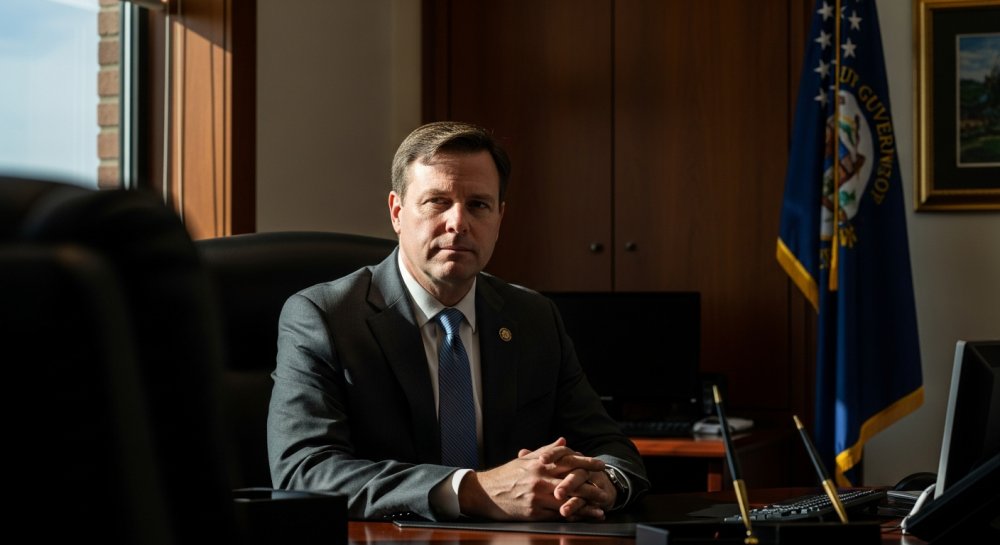
- Indiana Lieutenant Governor Micah Beckwith sparked controversy by asserting America’s Christian heritage during a podcast discussion about Muslim calls to prayer broadcast over loudspeakers.
- The Council on American-Islamic Relations (CAIR) challenged Beckwith’s position, disputing both his characterization of America as a Christian nation and his stance on public prayer broadcasts.
- The dispute highlights ongoing tensions between religious freedom, public accommodation, and the role of faith in American civic life.
A clash between Indiana’s second-highest elected official and a prominent Islamic advocacy organization has reignited debate over religious expression in the public square. The dispute centers on whether communities can regulate amplified calls to prayer and what role Christianity plays in America’s national identity.
Lieutenant Governor Micah Beckwith of Indiana made waves during a recent podcast appearance when he addressed the issue of Muslim calls to prayer being broadcast over loudspeakers in residential areas. His comments drew immediate pushback from the Council on American-Islamic Relations, one of the nation’s most visible Muslim advocacy groups.
The controversy began when Beckwith discussed whether local governments have authority to regulate religious broadcasts in public spaces. During the conversation, he invoked America’s Christian foundations as part of his reasoning.
CAIR quickly responded to Beckwith’s remarks, challenging both his policy position and his historical claims about the nation’s religious character. The organization argues that any restrictions on Islamic calls to prayer would violate constitutional protections for religious freedom.
The dispute reflects broader questions facing communities across America as religious diversity increases. Traditional Christian practices have long been woven into public life, from prayers at government meetings to religious displays on public property. Now, communities must navigate how to accommodate other faith traditions while respecting residents’ quality of life concerns.
Beckwith’s invocation of America’s Christian heritage touches on a longstanding debate among historians, legal scholars, and citizens. While the Founders drew heavily on Judeo-Christian principles and the vast majority of early Americans identified as Christians, the Constitution explicitly prohibits religious tests for office and establishes no official state religion.
The amplified call to prayer, known as the adhan, is a traditional Islamic practice calling Muslims to prayer five times daily. In many Muslim-majority countries, these calls echo from minarets across cities and towns. As Muslim populations have grown in American communities, some mosques have sought permission to broadcast the adhan outdoors, leading to debates about noise ordinances and religious accommodation.
Supporters of outdoor broadcasts argue they represent religious freedom in action and mirror Christian church bells that have rung in American towns for centuries. Critics contend that amplified broadcasts differ from bells in content and frequency, and that reasonable time, place, and manner restrictions don’t violate religious liberty.
The lieutenant governor’s office has not backed down from his original statements, with Beckwith maintaining that local communities should have the authority to establish reasonable boundaries for public religious expression. His position resonates with many conservative Christians who believe America’s founding principles should inform current policy debates.
CAIR has called Beckwith’s comments discriminatory and insists that any policy limiting Muslim religious practices while allowing Christian traditions would constitute unconstitutional religious discrimination. The organization has not indicated whether it plans legal action but continues to publicly oppose Beckwith’s position.
This controversy unfolds as religious freedom cases increasingly reach the courts, with judges weighing competing claims about expression, accommodation, and government neutrality. Recent Supreme Court decisions have generally favored robust protections for religious exercise, though each case turns on specific facts and circumstances.
For many Americans of faith, these disputes represent more than legal technicalities—they go to the heart of what it means to live in a pluralistic society while maintaining deeply held religious convictions. Christians committed to both religious freedom and their nation’s heritage must wrestle with how to honor both principles simultaneously.
The Indiana dispute remains unresolved, with both sides holding firm to their positions. As America continues to diversify religiously, similar conflicts seem likely to emerge in communities nationwide, requiring wisdom, charity, and careful attention to both constitutional principles and community harmony.
Let us know what you think, please share your thoughts in the comments below.

Faith Facts
- Courts in Nigeria and Ghana are simultaneously hearing cases about whether students can wear religious garments in mission and private schools
- The legal battles pit constitutional religious freedom protections against institutional dress code policies
- The outcomes could reshape the balance between religious expression and institutional autonomy across West Africa
A pair of constitutional battles unfolding in West Africa is bringing new attention to long-standing tensions between religious liberty and educational institutional standards. Both Nigeria and Ghana are grappling with court cases that could determine whether students have the right to wear religious dress even when it conflicts with school uniform policies.
The cases center on whether constitutional protections for religious freedom extend to overriding dress codes in private and mission-operated schools. At stake is not only the autonomy of faith-based educational institutions but also the scope of religious expression rights for students and families.
In both nations, the legal questions touch on fundamental issues that resonate with Christians and people of faith everywhere: Can government mandate that religious institutions compromise their standards? Where does religious freedom end and institutional authority begin?
Mission schools, many established by Christian denominations over a century ago, have historically maintained dress codes as part of their educational philosophy and institutional identity. These standards often reflect the founding values and operational principles that parents chose when enrolling their children.
The judicial scrutiny now being applied to these policies has far-reaching implications beyond the immediate cases. Legal observers note that the outcomes could influence how courts balance competing rights claims in other contexts, potentially affecting religious schools, hospitals, and charitable organizations.
For Christian families and educators across Africa and beyond, these cases highlight an important principle: the freedom of religious institutions to maintain their distinctive character and standards without government interference. This principle has been central to American constitutional thought and is enshrined in protections for religious schools and organizations.
As judges in Nigeria and Ghana deliberate, the decisions they reach will likely reverberate across the continent and provide precedents for future conflicts between individual religious expression and institutional religious freedom. The question before the courts is not just about clothing—it’s about who has the authority to define the mission and standards of faith-based institutions.
The cases underscore a tension familiar to Americans: how to honor both personal religious conviction and the rights of religious organizations to establish their own community standards. Finding the right balance requires wisdom, respect for constitutional principles, and recognition that religious freedom works both ways.
Let us know what you think, please share your thoughts in the comments below.


-

 Self-Reliance1 year ago
Trump’s Bold Move Uncovers Massive Social Security Fraud
-

 Faith1 year ago
New Clues Emerge in Noah’s Ark Mystery
-

 News1 year ago
Governor Walz’s Rhetoric Sparks National Controversy
-

 News1 year ago
Mel Gibson’s ‘The Passion of the Christ’ Sequel Title Announced
-

 Family1 year ago
Texas Lawmaker Targets Furries in Schools
-

 Freedom1 year ago
Maine Lawmaker Challenges Sports Fairness Controversy
-

 Family1 year ago
Canada’s Controversial Policy Sparks Ethical Debate
-
Faith8 months ago
Congress Hears Pleas for Nigerian Christians