
Freedom
Islamic Group Challenges Indiana Lieutenant Governor Over Faith and Public Prayer

Faith Facts
- Indiana Lieutenant Governor Micah Beckwith sparked controversy by asserting America’s Christian heritage during a podcast discussion about Muslim calls to prayer broadcast over loudspeakers.
- The Council on American-Islamic Relations (CAIR) challenged Beckwith’s position, disputing both his characterization of America as a Christian nation and his stance on public prayer broadcasts.
- The dispute highlights ongoing tensions between religious freedom, public accommodation, and the role of faith in American civic life.
A clash between Indiana’s second-highest elected official and a prominent Islamic advocacy organization has reignited debate over religious expression in the public square. The dispute centers on whether communities can regulate amplified calls to prayer and what role Christianity plays in America’s national identity.
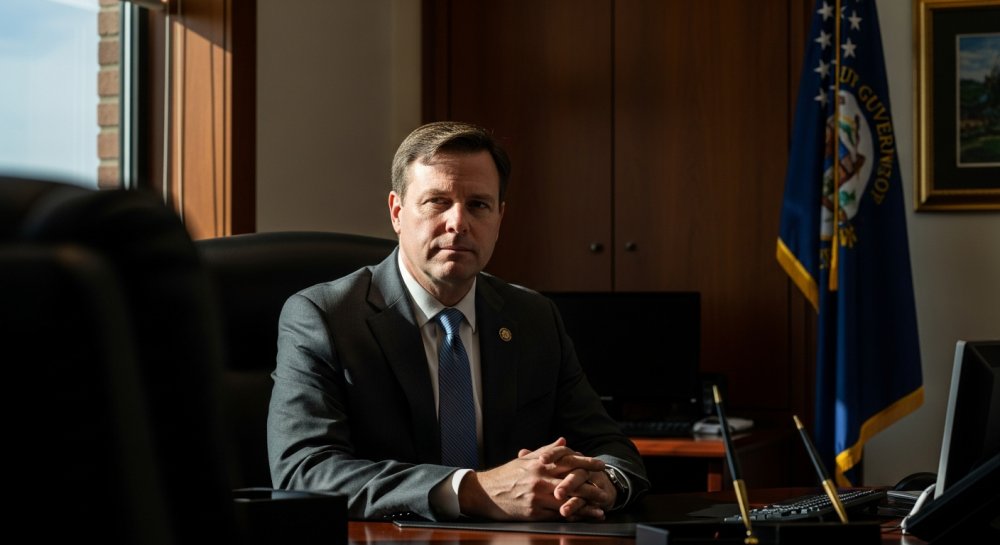
Lieutenant Governor Micah Beckwith of Indiana made waves during a recent podcast appearance when he addressed the issue of Muslim calls to prayer being broadcast over loudspeakers in residential areas. His comments drew immediate pushback from the Council on American-Islamic Relations, one of the nation’s most visible Muslim advocacy groups.
The controversy began when Beckwith discussed whether local governments have authority to regulate religious broadcasts in public spaces. During the conversation, he invoked America’s Christian foundations as part of his reasoning.
CAIR quickly responded to Beckwith’s remarks, challenging both his policy position and his historical claims about the nation’s religious character. The organization argues that any restrictions on Islamic calls to prayer would violate constitutional protections for religious freedom.
The dispute reflects broader questions facing communities across America as religious diversity increases. Traditional Christian practices have long been woven into public life, from prayers at government meetings to religious displays on public property. Now, communities must navigate how to accommodate other faith traditions while respecting residents’ quality of life concerns.
Beckwith’s invocation of America’s Christian heritage touches on a longstanding debate among historians, legal scholars, and citizens. While the Founders drew heavily on Judeo-Christian principles and the vast majority of early Americans identified as Christians, the Constitution explicitly prohibits religious tests for office and establishes no official state religion.
The amplified call to prayer, known as the adhan, is a traditional Islamic practice calling Muslims to prayer five times daily. In many Muslim-majority countries, these calls echo from minarets across cities and towns. As Muslim populations have grown in American communities, some mosques have sought permission to broadcast the adhan outdoors, leading to debates about noise ordinances and religious accommodation.
Supporters of outdoor broadcasts argue they represent religious freedom in action and mirror Christian church bells that have rung in American towns for centuries. Critics contend that amplified broadcasts differ from bells in content and frequency, and that reasonable time, place, and manner restrictions don’t violate religious liberty.
The lieutenant governor’s office has not backed down from his original statements, with Beckwith maintaining that local communities should have the authority to establish reasonable boundaries for public religious expression. His position resonates with many conservative Christians who believe America’s founding principles should inform current policy debates.
CAIR has called Beckwith’s comments discriminatory and insists that any policy limiting Muslim religious practices while allowing Christian traditions would constitute unconstitutional religious discrimination. The organization has not indicated whether it plans legal action but continues to publicly oppose Beckwith’s position.
This controversy unfolds as religious freedom cases increasingly reach the courts, with judges weighing competing claims about expression, accommodation, and government neutrality. Recent Supreme Court decisions have generally favored robust protections for religious exercise, though each case turns on specific facts and circumstances.
For many Americans of faith, these disputes represent more than legal technicalities—they go to the heart of what it means to live in a pluralistic society while maintaining deeply held religious convictions. Christians committed to both religious freedom and their nation’s heritage must wrestle with how to honor both principles simultaneously.
The Indiana dispute remains unresolved, with both sides holding firm to their positions. As America continues to diversify religiously, similar conflicts seem likely to emerge in communities nationwide, requiring wisdom, charity, and careful attention to both constitutional principles and community harmony.
Let us know what you think, please share your thoughts in the comments below.

Faith Facts
- Rand Paul calls for churches and families to take the lead in refugee sponsorship.
- The proposal would end long-term federal welfare for refugees.
- Christian communities have a long history of caring for strangers through private charity.
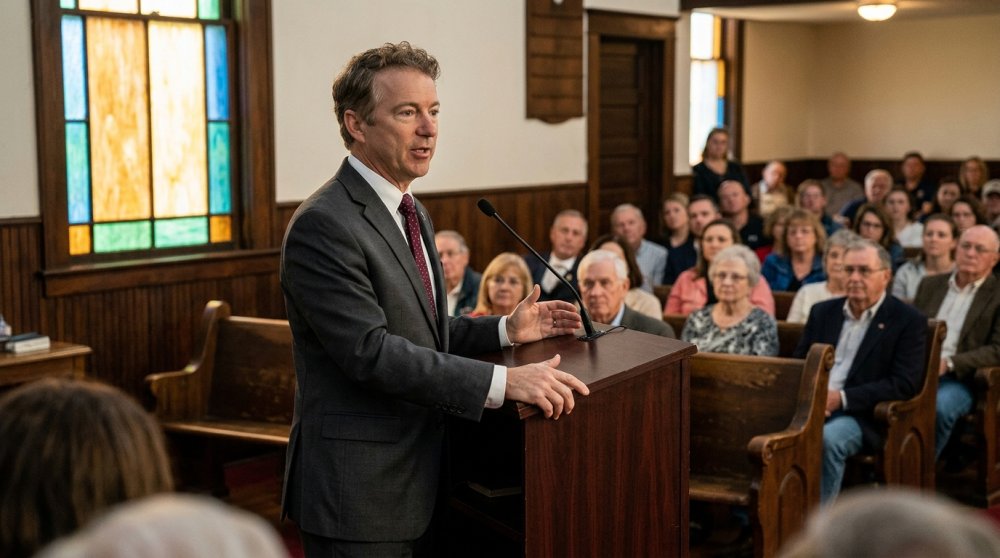
Senator Rand Paul of Kentucky is urging lawmakers to end federal welfare benefits for refugees and instead allow churches and family members to sponsor newcomers.
The Kentucky Republican says many refugees continue receiving taxpayer-funded assistance years after arrival, placing an ongoing burden on American taxpayers.
Paul argues that private sponsorship through churches and relatives would better align with America’s tradition of voluntary charity and personal responsibility.
“Churches and families should be the ones stepping up to help refugees, not the federal government,” Paul stated.
By shifting responsibility away from Washington, Paul believes communities of faith could provide more personal, accountable support while reducing federal spending.
The senator’s plan reflects a broader conservative view that government welfare programs often create dependency rather than genuine assistance.
Christian organizations already operate extensive refugee ministries, demonstrating that private groups can meet needs without taxpayer dollars.
Paul’s proposal would require legislative changes to current refugee resettlement policies, which currently rely heavily on federal funding.
Supporters say the change would strengthen family bonds and encourage local churches to expand their outreach ministries.
Let us know what you think, please share your thoughts in the comments below.

Faith Facts
- A new AEI report reveals graduate education programs are dominated by ideologically uniform professors promoting activist frameworks over practical teaching skills
- Teacher training curricula now emphasize ‘queer pedagogy’ and ‘anti-capitalist’ theories rather than classroom management and subject mastery
- Graduate schools maintain gatekeeping power over K-12 hiring, requiring teachers to complete ideologically-driven programs before entering classrooms
America’s teacher training programs have undergone a dramatic transformation that should concern every parent who values traditional education and academic excellence. A comprehensive report from the American Enterprise Institute exposes how graduate schools of education have abandoned their core mission of preparing effective classroom teachers in favor of producing social activists.
The research reveals a troubling pattern: education professors across the country share a remarkably uniform ideological perspective that prioritizes political activism over pedagogical competence. Instead of focusing on essential skills like lesson planning, classroom management, and subject matter expertise, these programs immerse future teachers in theoretical frameworks rooted in progressive social movements.
The curricula emphasize controversial concepts including “queer pedagogy” and “anti-capitalist” frameworks that have little connection to helping students master reading, mathematics, science, and history. This represents a fundamental betrayal of the teaching profession’s responsibility to parents and communities who entrust their children to public schools.
These graduate programs exercise enormous control over who can enter America’s classrooms. By requiring teachers to complete ideologically-driven coursework before receiving certification, education schools effectively function as gatekeepers who determine which perspectives will be represented in K-12 education. This monopoly on credentialing creates a pipeline that filters out teachers who prioritize academic achievement and traditional values.
The practical implications are significant for Christian families and communities across the nation. When teacher preparation programs emphasize social transformation over educational fundamentals, students suffer the consequences through declining academic performance and exposure to age-inappropriate ideological content.
The report suggests that breaking this gatekeeping power should be a priority for education reform. Alternative pathways to teacher certification could welcome talented professionals who possess subject matter expertise and share the values of the communities they serve, without requiring them to embrace the ideological uniformity that currently dominates graduate education programs.
Parents, school boards, and state legislators have a responsibility to examine what values and priorities are being instilled in those who teach America’s children. The evidence suggests that many teacher training programs have strayed far from their mission of preparing competent, professional educators focused on academic excellence.
As families increasingly seek educational options that align with their faith and values, understanding the ideological formation of teachers becomes essential. The gatekeeping function of graduate education schools represents a significant obstacle to restoring excellence and accountability in American public education.
Let us know what you think, please share your thoughts in the comments below.

Faith Facts
- Socialism has consistently failed to deliver prosperity wherever implemented, from Castro’s Cuba to post-war Britain
- Richard Land traces the common thread between socialist failures across different continents and time periods
- The pattern of economic decline under socialist policies contradicts the promises made by their proponents
The history of socialism tells a sobering story that Americans must heed today. From the Caribbean island of Cuba to the halls of power in post-war Britain, the socialist experiment has repeatedly delivered economic devastation rather than the prosperity it promised.
Richard Land, a respected Christian conservative voice, examines the stark reality behind socialism’s repeated failures. The evidence spans continents and decades, yet the pattern remains unmistakably consistent.
Castro’s Cuba transformed from a nation with potential into an economic prison where citizens risk their lives on makeshift rafts to escape. The revolution that promised equality delivered equal poverty instead, except for the ruling elite who maintained their privileges while the masses suffered.
Britain’s experiment with socialism after World War II provides another cautionary tale. A nation that had stood firm against Nazi tyranny nearly collapsed under the weight of socialist policies that stifled innovation, punished success, and created dependency rather than opportunity.
The common thread between these failures? Both nations embraced an ideology that runs counter to human nature and biblical principles of stewardship, personal responsibility, and the dignity of work.
Socialist systems inevitably concentrate power in the hands of government bureaucrats rather than trusting free citizens to make their own economic decisions. This centralization contradicts the Christian understanding of human dignity and the proper role of government.
The Bible teaches that those who work should eat and that good stewardship leads to blessing. Socialism, by contrast, punishes productivity and rewards dependency, creating a moral hazard that undermines the very foundations of a healthy society.
When governments seize control of the means of production or heavily regulate private enterprise, they remove the incentives that drive innovation and efficiency. The result is always the same: declining living standards, reduced freedom, and growing resentment.
Cuba remains trapped in a time warp, with crumbling infrastructure and an economy that cannot provide basic necessities for its people. Britain required the leadership of Margaret Thatcher to reverse course and restore market principles before the nation could recover.
These lessons from history carry urgent relevance for America today. As socialist ideas gain renewed popularity among some politicians and young people, we must remember what these policies actually produce when implemented.
The American system of limited government, free enterprise, and individual liberty has created more prosperity and lifted more people out of poverty than any other system in human history. This success flows directly from founding principles rooted in a biblical worldview.
Abandoning these principles in favor of socialist experimentation would betray both our heritage and our future generations. The evidence from Cuba, Britain, Venezuela, and countless other nations stands as an unmistakable warning.
True compassion doesn’t mean expanding government control and creating dependency. It means preserving the freedom and opportunity that allow individuals to flourish, support their families, and contribute to their communities according to their God-given talents.
Let us know what you think, please share your thoughts in the comments below.


-

 Self-Reliance1 year ago
Trump’s Bold Move Uncovers Massive Social Security Fraud
-

 Faith1 year ago
New Clues Emerge in Noah’s Ark Mystery
-

 News2 years ago
Governor Walz’s Rhetoric Sparks National Controversy
-

 News1 year ago
Mel Gibson’s ‘The Passion of the Christ’ Sequel Title Announced
-

 Family2 years ago
Texas Lawmaker Targets Furries in Schools
-

 Freedom2 years ago
Maine Lawmaker Challenges Sports Fairness Controversy
-

 Family1 year ago
Canada’s Controversial Policy Sparks Ethical Debate
-
Faith10 months ago
Congress Hears Pleas for Nigerian Christians