
Faith
Historic Final Hearing Affirms Faith’s Role in America’s Foundation


Faith Facts
- The White House Religious Liberty Commission held its seventh and final hearing at the Museum of the Bible in Washington, D.C.
- Leaders emphasized that the phrase ‘separation of church and state’ does not appear in the U.S. Constitution
- Commissioners discussed religious liberty’s past, present, and future role in American society
The White House Religious Liberty Commission convened for its historic final hearing at the Museum of the Bible on Monday, bringing together faith leaders and constitutional scholars to examine religious freedom in America. The gathering marked the culmination of the commission’s work examining the intersection of faith and public life.
The commission’s discussions centered on correcting widespread misconceptions about the relationship between faith and government. Speakers emphasized a fundamental truth often obscured in modern discourse: the Constitution does not mandate a separation of church and state.
“There is no such thing as separation of church and state,” commissioners affirmed, citing the First Amendment’s actual text which prevents government establishment of religion while protecting free exercise of faith.
The Museum of the Bible provided a fitting backdrop for the proceedings, underscoring the deep religious roots that shaped America’s founding documents and principles. Commissioners traced religious liberty from the nation’s earliest days through contemporary challenges facing people of faith.
The hearing examined how religious freedom has been protected, challenged, and defended throughout American history. Commissioners discussed current threats to religious expression and proposed frameworks for safeguarding these fundamental rights for future generations.
Faith leaders participating in the hearing stressed that religious liberty remains essential to American identity and constitutional governance. They noted that the Founders intended to prevent government interference with religious practice, not to exclude faith from public discourse.
The commission’s work has focused on protecting the rights of believers to live according to their convictions in all spheres of life, including business, education, and civic engagement. Monday’s final hearing represented a capstone to these efforts.
Discussions addressed contemporary challenges including restrictions on worship, conscience protections for religious organizations, and the ability of faith-based institutions to operate according to their beliefs. Commissioners evaluated both progress made and ongoing concerns requiring vigilance.
The gathering brought together diverse perspectives united by commitment to constitutional religious freedom. Participants emphasized that protecting religious liberty strengthens American democracy rather than threatening it.
As the commission concluded its work, members reflected on the enduring importance of First Amendment protections. They called on Americans to understand and defend the true meaning of religious freedom as envisioned by the Founders.
Let us know what you think, please share your thoughts in the comments below.

Faith Facts
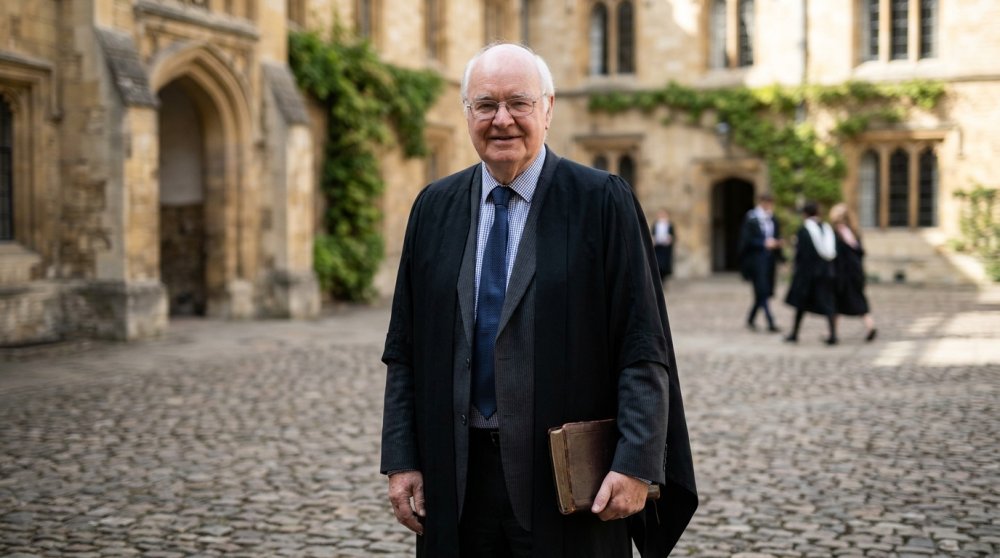
- Oxford mathematician and Christian apologist Professor John Lennox encourages believers to share their faith with confidence.
- Lennox stresses that evangelism is not reserved only for preachers, theologians, or those with extensive biblical knowledge.
- Every Christian is called to be a witness for Christ in daily life.
Oxford mathematician and Christian apologist Professor John Lennox is urging believers everywhere to share their faith with greater boldness and confidence. He reminds Christians that the call to witness is not limited to pastors or scholars but belongs to every follower of Christ.
“We’re all called to be witnesses,” Lennox declares. This simple truth challenges the idea that only trained experts can effectively share the gospel.
Professor Lennox emphasizes that evangelism is not about having every theological answer or delivering polished sermons. Instead, it is about living out and speaking the truth of Christ wherever God places His people.
His words come as a timely encouragement to Christians who may feel hesitant or unqualified to speak about their faith. Lennox points to the biblical calling that every believer is a witness, empowered by the Holy Spirit to share the hope within them.
Let us know what you think, please share your thoughts in the comments below.
Faith Facts
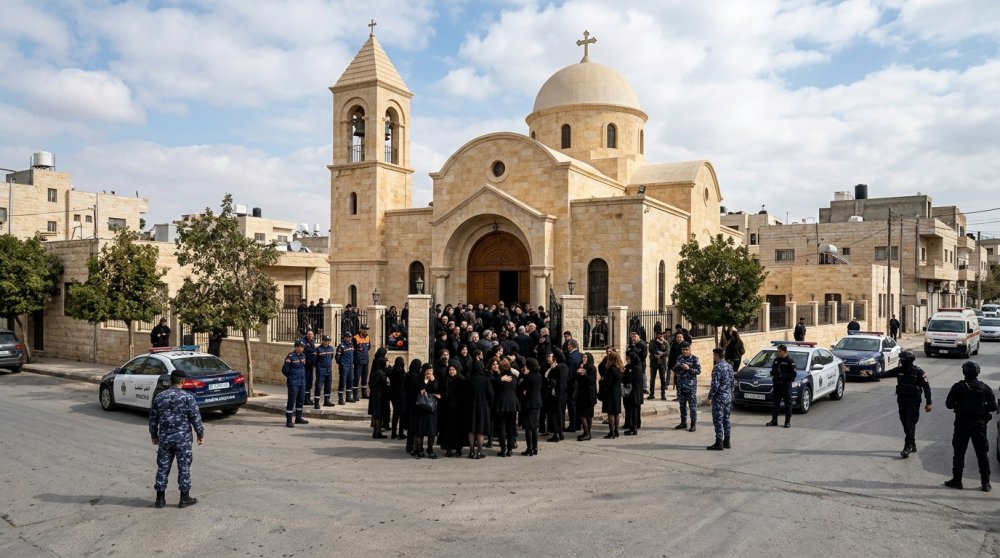
- At least seven Christians were killed in a targeted attack on a Greek Orthodox funeral service in Jordan.
- The assault occurred at a church known for peaceful worship and interfaith coexistence in the region.
- The attack highlights the ongoing threat of Islamic extremism to Christian communities worldwide.
In a rare attack in a country known for peaceful inter-faith coexistence, suspected Islamic extremists attacked a funeral at a Greek Orthodox church in Jordan on Friday (Oct. 23), shooting at least seven people to death and wounding 28 others, according to reports.
The violence interrupted a sacred time of mourning and remembrance, striking at the heart of a Christian community gathered in faith.
Let us know what you think, please share your thoughts in the comments below.
Faith Facts
- God examines the heart rather than outward gestures during worship.
- Scripture teaches that authentic faith is shown through obedience and love, not visible enthusiasm.
- Believers are called to honor every sincere heart that worships in spirit and truth.
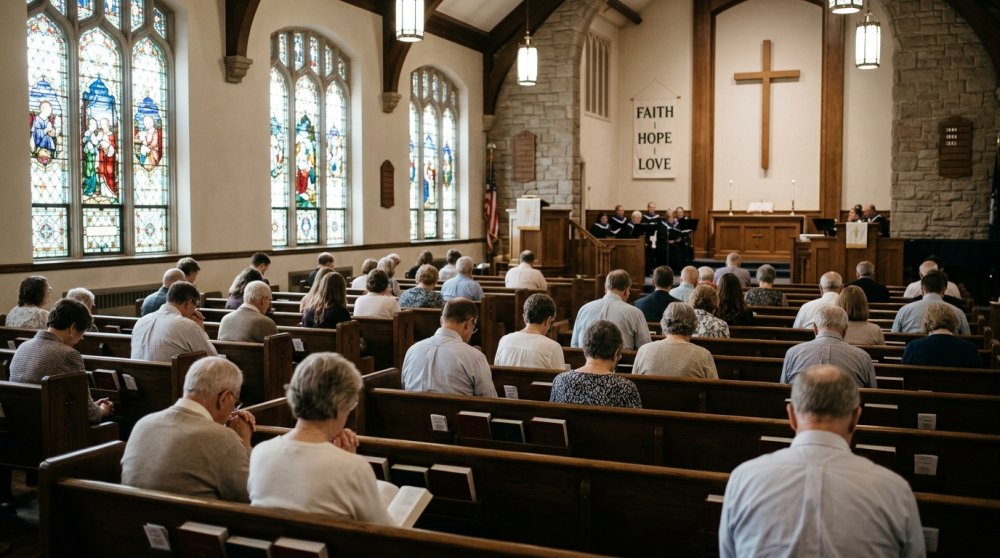
Too often, outward expressions of enthusiasm are mistaken for spiritual maturity. But God looks at the heart, not whether we’re standing, sitting or raising our hands, says Dawn Butler.
“God looks at the heart, not whether we’re standing, sitting or raising our hands,”
Churches across America have seen a growing emphasis on physical expressions during worship. This trend can unintentionally pressure believers who prefer quieter reverence. The result is that some faithful Christians feel judged for their personal style of worship.
“Too often, outward expressions of enthusiasm are mistaken for spiritual maturity.”
True worship flows from a surrendered heart that seeks to honor God in every area of life. Scripture consistently points to inward devotion rather than external performance. When congregations focus on visible actions, they risk overlooking the quiet strength of those who serve faithfully in the background.
Christian liberty allows room for both raised hands and bowed heads. The key is whether each believer approaches the Lord with reverence and sincerity. Families benefit when churches encourage unity over uniformity in worship practices.
“God looks at the heart, not whether we’re standing, sitting or raising our hands.”
Let us know what you think, please share your thoughts in the comments below.


-

 Self-Reliance2 years ago
Trump’s Bold Move Uncovers Massive Social Security Fraud
-

 Faith2 years ago
New Clues Emerge in Noah’s Ark Mystery
-

 News2 years ago
Governor Walz’s Rhetoric Sparks National Controversy
-

 News2 years ago
Mel Gibson’s ‘The Passion of the Christ’ Sequel Title Announced
-

 Family2 years ago
Texas Lawmaker Targets Furries in Schools
-

 Freedom2 years ago
Maine Lawmaker Challenges Sports Fairness Controversy
-

 Family1 year ago
Canada’s Controversial Policy Sparks Ethical Debate
-
Faith11 months ago
Congress Hears Pleas for Nigerian Christians