
Faith
Nearly 500 Leaders Gather for Historic Week-Long Bible Reading in Nation’s Capital

Faith Facts
- Nearly 500 political leaders, pastors, and celebrities will participate in a continuous weeklong public reading of the entire Bible in Washington, D.C.
- The event aims to inspire a nationwide return to Scripture as America approaches its 250th anniversary in 2026.
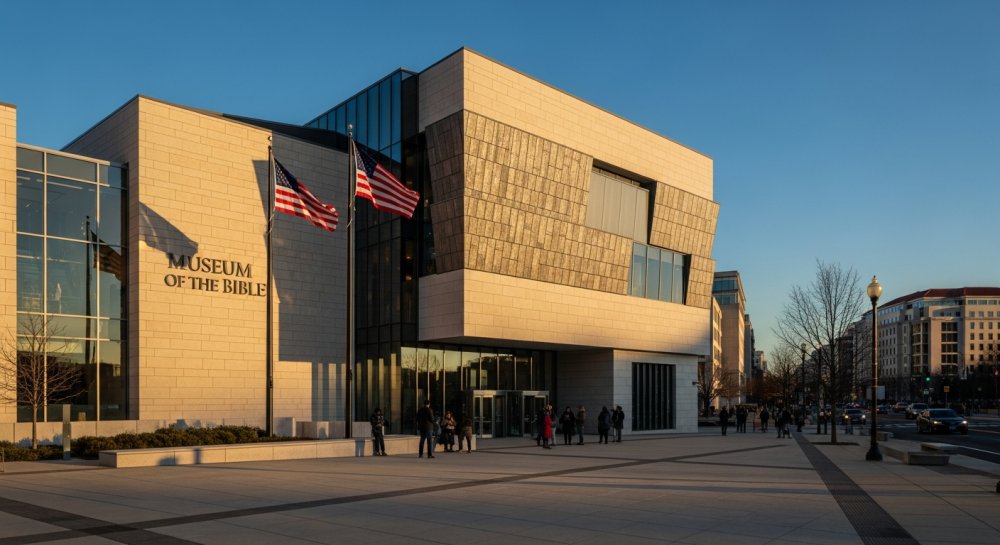
- Participants include prominent Christian figures such as Patricia Heaton and Candace Cameron Bure, gathering at the Museum of the Bible.
A powerful demonstration of faith is coming to the heart of our nation’s capital. Nearly 500 political leaders, pastors, and Christian celebrities are preparing to participate in a historic weeklong public reading of the entire Bible in Washington, D.C. The event represents a bold statement of faith at a time when many Americans are seeking spiritual renewal and a return to the biblical foundations that shaped our country.
Organizers describe the initiative as more than just a public reading—it’s a spiritual offering and a call to national repentance and revival. The continuous marathon reading will take place at the Museum of the Bible, providing a fitting backdrop for this demonstration of devotion to God’s Word.
The timing of this event is particularly significant as America approaches its 250th anniversary in 2026. Many Christian leaders see this milestone as an opportunity to recommit the nation to the biblical principles that guided our Founding Fathers. By reading Scripture publicly and continuously for an entire week, participants hope to inspire millions of Americans to rediscover the transformative power of the Bible.
Among the notable participants are beloved Christian actresses Patricia Heaton and Candace Cameron Bure, both known for their unwavering faith and willingness to stand for biblical values in Hollywood. Their participation brings visibility to the event and demonstrates that prominent figures are willing to publicly align themselves with Scripture, even in an increasingly secular culture.
The diverse group of readers includes members of Congress, state legislators, ministry leaders, and everyday believers who understand the urgency of this moment in American history. Each participant will take turns reading passages aloud, ensuring that the Word of God is proclaimed without interruption throughout the entire week.
Organizers have framed the event as “an offering at the feet of Jesus,” emphasizing that the primary purpose is worship and reverence for God’s Word rather than political activism. However, the spiritual implications for our nation cannot be ignored. Throughout American history, periods of biblical revival have often preceded national renewal and reformation.
The public nature of the reading is intentional. By making the event accessible to all who wish to attend or watch online, organizers hope to reach people who might never open a Bible on their own. The continuous format also serves as a reminder that God’s Word is living and active, relevant to every moment of our lives, not just Sunday mornings.
This initiative comes at a critical time for religious freedom in America. As Christian values face increasing opposition in public spaces, events like this demonstrate that believers will not be silenced or pushed to the margins. The weeklong Bible reading is a peaceful but powerful assertion that Scripture still has a place in the public square of our nation.
The event also serves as a unifying moment for Christians across denominational lines. Whether Baptist, Methodist, Pentecostal, or non-denominational, all participants share a common commitment to the authority and sufficiency of Scripture. This unity around God’s Word provides a model for how the broader Church can work together despite secondary differences.
For those unable to attend in person, the entire reading will be available online, allowing believers across the country to participate virtually. Organizers encourage churches, families, and individuals to tune in and join the reading from wherever they are, creating a truly national moment of engagement with Scripture.
The selection of Washington, D.C., as the location is deeply symbolic. Our nation’s capital, where laws are made and policies are set, desperately needs the wisdom and guidance that can only come from God’s Word. By flooding the city with Scripture for an entire week, participants are making a statement about the foundation upon which good governance must rest.
As America faces mounting challenges—moral confusion, political division, economic uncertainty, and cultural decay—many believers see a return to Scripture as the only path forward. The Bible has guided our nation through previous crises, from the Revolution to the Civil War to the Civil Rights Movement. This weeklong reading is a declaration that God’s Word remains relevant and essential today.
The event organizers hope that this gathering will be just the beginning of a broader movement. Their vision is for similar Scripture readings to take place in state capitals, city halls, and communities across America, creating a groundswell of biblical engagement leading up to the nation’s 250th birthday.
Let us know what you think, please share your thoughts in the comments below.


Faith Facts
- Isaac Watts, one of Britain’s most celebrated hymnwriters, authored over 750 hymns including beloved classics still sung in churches today
- Contemporary scholars suggest Watts may have conflated Old Testament promises to Israel with modern nation-states in some of his writings
- This theological debate remains highly relevant as Christians today navigate the relationship between faith, patriotism, and biblical interpretation
Isaac Watts stands as a towering figure in Christian hymnody, his words having shaped worship services for generations of believers. Yet a closer examination of his theological writings reveals a complex relationship with scripture that deserves careful consideration by today’s faithful.
The question at hand is whether Watts, in his zeal for his nation, misunderstood God’s covenant promises. According to Daniel Johnson, the issue centers on whether Watts confused the specific promises God made to the children of Israel with broader applications to modern nation-states.
This isn’t merely an academic debate confined to dusty theology books. The conversation strikes at the heart of how Christians today should understand their dual citizenship—one in the kingdom of heaven, and one in their earthly nation.
Watts’ hymns continue to resonate in evangelical churches across America, with songs like “When I Survey the Wondrous Cross” and “Joy to the World” forming the backbone of Christian worship. His theological influence extends far beyond his musical contributions, making this examination of his scriptural interpretation particularly significant.
The tension between loving one’s country and maintaining proper biblical perspective remains as relevant today as it was in Watts’ era. Christians must carefully distinguish between the unique covenant relationship God established with Israel and the role of faith in contemporary civic life.
This doesn’t diminish Watts’ extraordinary contribution to Christian worship or his deep love for God. Rather, it serves as a reminder that even the most gifted servants of Christ benefit from careful biblical interpretation and humble submission to scripture’s actual teaching.
Understanding this nuance helps believers today navigate similar challenges. We can love our nation, pray for its leaders, and work for its flourishing while recognizing that God’s redemptive plan transcends national boundaries and political systems.
The legacy of Isaac Watts remains secure as one of Christianity’s greatest hymnwriters. Yet his example also teaches us the importance of rightly dividing the word of truth, ensuring our patriotism remains properly ordered under our ultimate allegiance to Christ and His kingdom.
Let us know what you think, please share your thoughts in the comments below.
Faith Facts
- Jordan’s Cabinet approved amendments allowing Christians to bypass mandatory Sharia inheritance laws for the first time
- The reforms permit Christian families to use wills to distribute inheritance according to their faith and values
- The legislation also grants Christians legal rights to adopt children, previously restricted under Islamic law
In a significant development for religious freedom in the Middle East, Jordan has taken steps to protect the rights of its Christian minority. The Jordanian Cabinet approved groundbreaking amendments that will allow Christians to opt out of male-based Sharia inheritance laws and establish their own inheritance arrangements through legally recognized wills.
For decades, Christians in Jordan have been subject to Islamic inheritance rules that favor male heirs and distribute estates according to Sharia principles, often conflicting with Christian beliefs about family and property rights. Under the traditional system, daughters typically receive half the inheritance of sons, and certain relatives are automatically entitled to fixed shares regardless of the deceased’s wishes.
The new legislation represents a major victory for religious liberty, affirming that Christian families should have the freedom to organize their affairs according to their own faith traditions. By allowing wills to supersede mandatory Sharia rules, the amendments respect the conscience rights of believers who follow Biblical principles rather than Islamic jurisprudence.
Equally important, the reforms grant Christians the legal right to adopt children. Adoption has been largely prohibited under traditional Islamic law, which emphasizes biological lineage and does not recognize adoptive relationships in the same manner as Western legal systems. This restriction has prevented many Christian families from providing homes to orphaned and vulnerable children, despite the strong Biblical mandate to care for the fatherless.
The changes come as Christians throughout the Middle East face increasing pressure and persecution. Jordan has historically been more tolerant of religious minorities than many of its neighbors, and these reforms demonstrate a continued commitment to protecting the rights of its Christian citizens. Christians comprise approximately 2-3% of Jordan’s population, with many belonging to ancient communities that predate Islam in the region.
Religious freedom advocates have welcomed the amendments as an important recognition that religious minorities should not be forced to conform to Islamic legal principles that violate their deeply held beliefs. The ability to write wills according to Christian values and to adopt children are fundamental rights that strengthen families and protect vulnerable members of society.
While the reforms are limited to Christians and do not extend to Muslims or other religious groups in Jordan, they represent a meaningful step toward greater religious tolerance and legal pluralism in a region where such freedoms are often restricted. The amendments acknowledge that in a diverse society, different faith communities should have the ability to govern family matters according to their own traditions.
The Cabinet’s approval marks the first stage in the legislative process. The amendments will now move forward for further consideration and implementation, giving hope to Christian families who have long sought the freedom to organize their estates and families according to their faith.
Let us know what you think, please share your thoughts in the comments below.

Faith Facts
- God uses trials and difficulties as a refining process to mature believers into Christ-likeness
- Christians are called to trust God’s purposes during hardship rather than resist the transformation process
- Spiritual refinement through fire is a biblical principle designed to produce positive change in believers
As American Christians face increasing cultural challenges and personal hardships, understanding God’s purpose in our trials has never been more critical. The refining process—though painful—stands at the heart of how our Creator molds us into the image of His Son.
Too many believers today view their difficulties as obstacles to avoid rather than opportunities for growth. Yet Scripture consistently reveals that God permits and even orchestrates trials to burn away impurities in our faith and character.
The refining fire serves a divine purpose: transforming ordinary believers into extraordinary disciples who reflect the full and complete standard of Christ. This maturation process cannot be rushed or bypassed—it requires endurance through seasons of testing.
During fiery trials, our natural instinct is to flee or fight against the discomfort. But spiritual wisdom calls us to lean into God’s presence, trusting that His purposes transcend our immediate pain and will produce lasting transformation.
Just as gold must pass through intense heat to remove impurities and reveal its true value, Christians must embrace the refining fires that purify our faith. The temporary suffering produces eternal weight of glory that far exceeds our present troubles.
This biblical truth offers profound hope for believers navigating difficult circumstances. Whether facing persecution for our values, struggling with personal loss, or enduring cultural opposition to our faith, we can rest assured that God wastes nothing in the lives of His children.
The key to spiritual maturity lies not in avoiding hardship but in responding rightly when it comes. Those who surrender to God’s refining work emerge stronger, purer, and more effective in advancing His kingdom.
As our nation faces moral decline and attacks on traditional values, refined believers become essential witnesses to God’s transforming power. The church needs Christians who have been tested and proven through the fires of life.
Let us know what you think, please share your thoughts in the comments below.


-

 Self-Reliance1 year ago
Trump’s Bold Move Uncovers Massive Social Security Fraud
-

 Faith1 year ago
New Clues Emerge in Noah’s Ark Mystery
-

 News1 year ago
Governor Walz’s Rhetoric Sparks National Controversy
-

 News1 year ago
Mel Gibson’s ‘The Passion of the Christ’ Sequel Title Announced
-

 Family1 year ago
Texas Lawmaker Targets Furries in Schools
-

 Freedom1 year ago
Maine Lawmaker Challenges Sports Fairness Controversy
-

 Family1 year ago
Canada’s Controversial Policy Sparks Ethical Debate
-
Faith7 months ago
Congress Hears Pleas for Nigerian Christians