
Faith
His Voice Failed While Preaching the Entire Bible — Then These Pastors Prayed

Faith Facts
- Pastor Matthew Olson preached the entire Bible from Genesis to Revelation over 96 consecutive hours in a record-breaking marathon event.
- When his voice began to fail midway through, fellow pastors gathered to pray for him, and he experienced what he called a miraculous restoration.
- The marathon sermon drew thousands of viewers online and raised awareness about the power of God’s Word and intercessory prayer.
In an extraordinary display of endurance and faith, Pastor Matthew Olson embarked on what many would consider impossible: preaching through every book of the Bible without stopping for four full days. The ambitious undertaking pushed him to the very edge of human capability, testing not just his physical stamina but his spiritual resolve.
Olson’s marathon sermon began with enthusiasm and energy, drawing viewers from across the country who tuned in online to witness this remarkable feat. The goal was clear: to honor God’s Word by proclaiming it from cover to cover, demonstrating that Scripture remains living and active in our modern age.
But somewhere in the middle of this grueling journey, disaster struck. Olson’s voice, strained beyond its natural limits, began to fail him. For a preacher attempting to deliver God’s Word continuously for 96 hours, losing his voice could have meant the end of the entire endeavor.
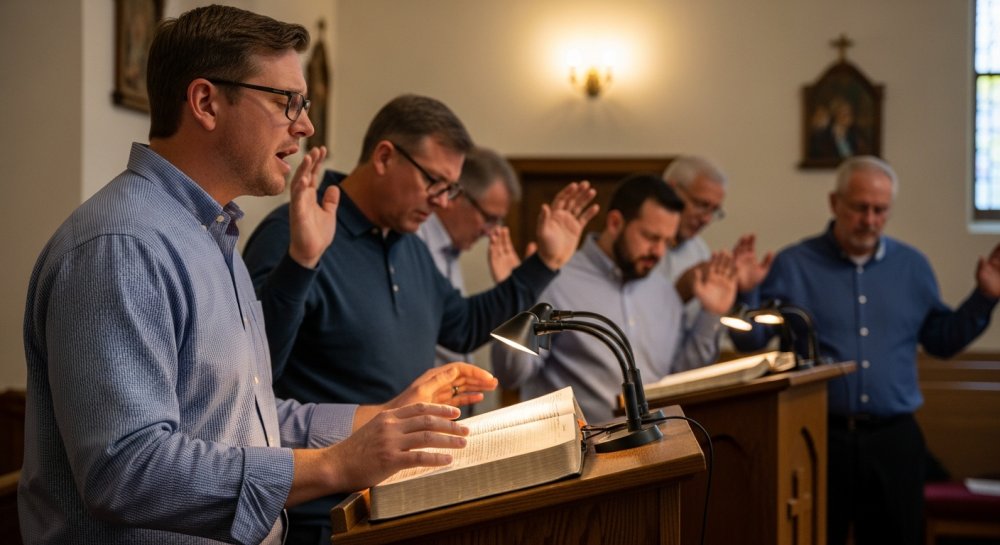
What happened next has become a testimony to the power of corporate prayer and God’s faithfulness. When word spread that Olson was struggling, fellow pastors and believers gathered around him to lay hands and pray for healing and strength.
The response was immediate and undeniable. Witnesses reported that Olson’s voice returned with renewed strength, allowing him to continue his mission. Many who watched described the moment as nothing short of miraculous — a modern-day demonstration of God responding to the prayers of His people.
This remarkable event serves as a powerful reminder that God still works through His servants today. In an era when many question the relevance of Scripture or the power of prayer, Olson’s experience stands as compelling evidence that both remain central to the Christian life.
The 96-hour sermon marathon also highlights the enduring value of God’s Word. From the creation account in Genesis to the apocalyptic visions in Revelation, the Bible contains God’s revealed truth for humanity. Olson’s dedication to proclaiming all of it demonstrates a reverence for Scripture that our culture desperately needs to reclaim.
For believers watching from home, the event became more than entertainment or spectacle. It transformed into a shared spiritual journey, reminding Christians of the depth and breadth of the biblical narrative. Many reported being encouraged in their own faith walk by witnessing such dedication to preaching the Gospel.
The prayer intervention that restored Olson’s voice also speaks to the importance of Christian community and mutual support. When one member of the Body of Christ struggles, others step in to bear the burden. This biblical principle came alive in real time as pastors gathered to intercede for their brother in ministry.
Olson’s accomplishment now stands as a testament to what God can do through those willing to push beyond normal limits for His glory. The record-breaking sermon demonstrates that with faith, determination, and the support of fellow believers, Christians can achieve what seems impossible.
This event also challenges believers to consider their own commitment to Scripture. If one pastor could dedicate 96 hours to preaching the entire Bible, how much time are we dedicating to reading and studying God’s Word in our daily lives?
As news of this remarkable achievement spreads throughout the Christian community, it serves as an encouraging reminder that God is still at work in powerful ways. The combination of human dedication and divine intervention created a moment that will inspire believers for years to come.
Let us know what you think, please share your thoughts in the comments below.

Faith Facts
- God examines the heart rather than outward gestures during worship.
- Scripture teaches that authentic faith is shown through obedience and love, not visible enthusiasm.
- Believers are called to honor every sincere heart that worships in spirit and truth.
Too often, outward expressions of enthusiasm are mistaken for spiritual maturity. But God looks at the heart, not whether we’re standing, sitting or raising our hands, says Dawn Butler.
“God looks at the heart, not whether we’re standing, sitting or raising our hands,”
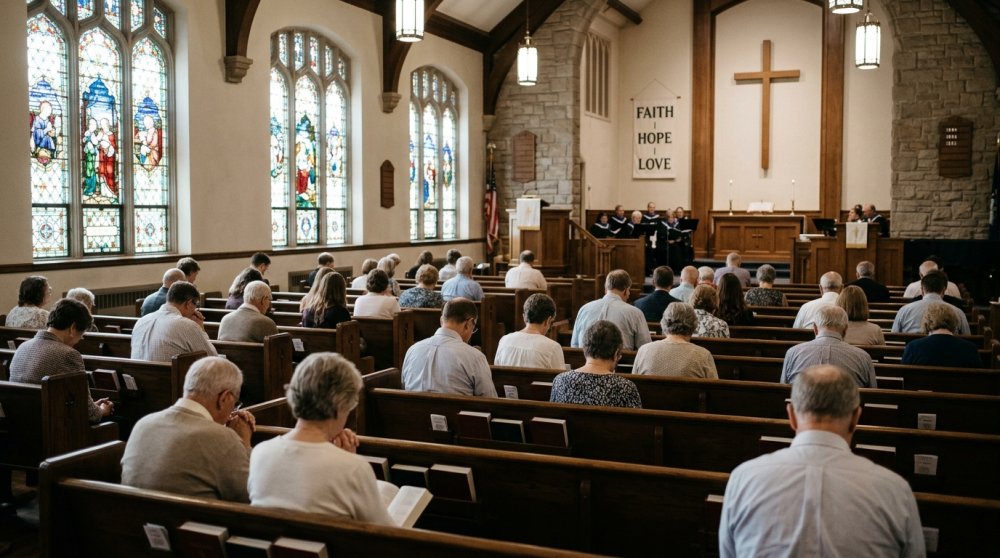
Churches across America have seen a growing emphasis on physical expressions during worship. This trend can unintentionally pressure believers who prefer quieter reverence. The result is that some faithful Christians feel judged for their personal style of worship.
“Too often, outward expressions of enthusiasm are mistaken for spiritual maturity.”
True worship flows from a surrendered heart that seeks to honor God in every area of life. Scripture consistently points to inward devotion rather than external performance. When congregations focus on visible actions, they risk overlooking the quiet strength of those who serve faithfully in the background.
Christian liberty allows room for both raised hands and bowed heads. The key is whether each believer approaches the Lord with reverence and sincerity. Families benefit when churches encourage unity over uniformity in worship practices.
“God looks at the heart, not whether we’re standing, sitting or raising our hands.”
Let us know what you think, please share your thoughts in the comments below.
Faith Facts
- The Restoration Movement produced three distinct fellowships by 1906, with Churches of Christ emerging as a conservative, Bible-focused body
- Early 20th-century leaders in Indiana, Tennessee, and Texas held differing convictions on the Holy Spirit, millennial teaching, and church institutions
- The conservative Texas tradition ultimately shaped the doctrinal identity that guided Churches of Christ for much of the twentieth century
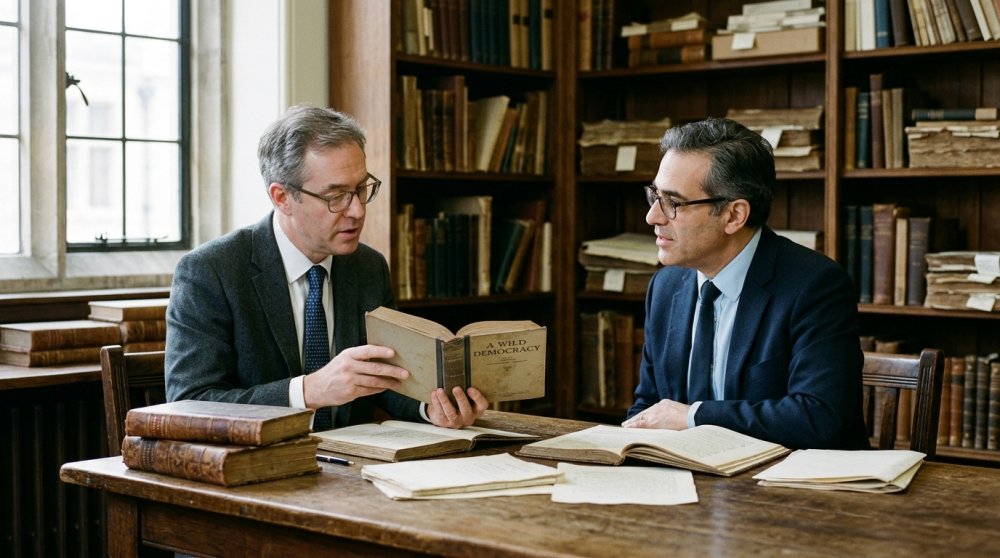
A new book from Abilene Christian University Press offers a detailed look at the doctrinal battles that forged the identity of Churches of Christ in the decades after 1906. The volume, the first of three planned works, draws on essays by eight authors who trace how congregations navigated questions of Scripture, worship, and church order.
By the early twentieth century, the Restoration Movement had separated into three distinct groups. Churches of Christ stood apart for their commitment to congregational autonomy and a plain reading of the New Testament.
The collection opens with Daniel Sommer’s 1889 Address and Declaration, which set the tone for separation from the Disciples of Christ. Subsequent chapters highlight the contributions of David Lipscomb and respected African-American leaders such as Preston Taylor, S.W. Womack, and Marshall Keeble.
“Allen and Hicks are to be commended for editing a splendid and illuminating volume. Readers interested in the history of Churches of Christ will eagerly anticipate the next installment in the series.”
Three regional traditions emerged, each with its own convictions. Leaders in Tennessee upheld belief in miraculous divine action and a future millennial kingdom, while Indiana voices favored noninstitutional simplicity and resisted Bible colleges. The Texas tradition, emphasizing the Word alone and strict obedience to positive commands, gradually gained dominance.
Through influential publications like R.L. Whiteside and C.R. Nichol’s Sound Doctrine series and N.B. Hardeman’s Tabernacle Sermons, the Texas perspective reached congregations across the nation. By the 1930s, the Gospel Advocate had become its leading voice.
The book closes with primary source excerpts that allow readers to hear the founders in their own words. Christian families and church libraries will find this careful history both instructive and encouraging for the challenges of today.
Let us know what you think, please share your thoughts in the comments below.

Faith Facts
- Bank of America closed a Christian ministry’s account in 2020 citing internal policies against certain business types.
- Multiple ministries and faith-based organizations have reported similar account closures from major financial institutions.
- Faith-based groups are increasingly facing challenges accessing traditional banking services across the United States.
In 2020, Bank of America informed a Christian ministry that its account was being closed because the institution had chosen not to service certain types of businesses. The ministry initially believed this decision was isolated to their organization alone.
Further investigation revealed that other faith-based groups had encountered the same treatment from the same financial institution. The pattern suggests a broader policy affecting religious organizations seeking banking services.
“I thought we were the only ones. We weren’t.”
This experience highlights growing concerns among Christian ministries about access to essential financial services. Many traditional banks appear to be reevaluating their relationships with faith-based organizations.
The closure of accounts for religious ministries raises questions about religious liberty and equal access to financial services. Christian organizations across the country are exploring alternative banking options that align with their values and mission.
Let us know what you think, please share your thoughts in the comments below.


-

 Self-Reliance2 years ago
Trump’s Bold Move Uncovers Massive Social Security Fraud
-

 Faith2 years ago
New Clues Emerge in Noah’s Ark Mystery
-

 News2 years ago
Governor Walz’s Rhetoric Sparks National Controversy
-

 News2 years ago
Mel Gibson’s ‘The Passion of the Christ’ Sequel Title Announced
-

 Family2 years ago
Texas Lawmaker Targets Furries in Schools
-

 Freedom2 years ago
Maine Lawmaker Challenges Sports Fairness Controversy
-

 Family1 year ago
Canada’s Controversial Policy Sparks Ethical Debate
-
Faith11 months ago
Congress Hears Pleas for Nigerian Christians