
Faith
What the Methodist Split Really Reveals About Traditional Faith

Faith Facts
- The United Methodist Church recently adopted progressive stances on sexuality and gender that contradict traditional Methodist doctrine and Scripture
- Over 7,600 conservative congregations representing more than 2 million members have disaffiliated from the UMC since 2019
- The departing churches are maintaining John Wesley’s original teachings while the UMC hierarchy embraces secular cultural trends
The ongoing split within the United Methodist Church has prompted many to ask a fundamental question: Who is actually abandoning the faith John Wesley established centuries ago?
The answer may surprise those who only follow mainstream media narratives.
When the UMC officially removed restrictions on same-sex marriage and ordination of non-celibate LGBTQ clergy in 2024, denominational leaders celebrated it as progress. But for millions of faithful Methodists, it represented a complete departure from biblical Christianity and the theology that defined their movement for generations.
The departing congregations aren’t leaving Methodism—they’re preserving it. These churches continue to uphold Wesley’s commitment to scriptural authority, orthodox Christian teaching, and the transformative power of the Gospel. They maintain the theological distinctives that made Methodism a powerful force for spiritual renewal in America and around the world.
Meanwhile, the institutional UMC has embraced the very cultural accommodation that Wesley himself warned against. The founder of Methodism emphasized personal holiness, biblical fidelity, and resistance to worldly compromise. Today’s UMC leadership promotes positions that would be unrecognizable to Wesley and the early Methodist pioneers.
The numbers tell the story. Thousands of churches representing some of the most vibrant, evangelistic, and missions-focused congregations in American Methodism have chosen to disaffiliate. These aren’t peripheral communities—they’re often the churches with the strongest youth ministries, the most active mission programs, and the deepest commitment to biblical preaching.
What remains in the UMC increasingly resembles mainline Protestant denominations that have been in numerical and spiritual decline for decades. When churches prioritize cultural relevance over biblical faithfulness, history shows the inevitable result: empty pews and theological confusion.
The conservative Methodist denominations emerging from this split—including the Global Methodist Church—are experiencing growth and renewed mission focus. They’re attracting not only disaffiliating UMC congregations but also new church plants led by younger pastors committed to orthodox Christianity.
This pattern repeats throughout church history. When institutional bodies drift from their theological foundations, faithful remnants preserve the original vision. The Reformation itself began when church leaders prioritized institutional power over biblical truth.
The irony is profound: those accused of leaving Methodism are actually the ones staying faithful to Methodist teaching. They hold to the same doctrines, embrace the same scriptural commitments, and pursue the same mission that defined Methodism from the beginning. The institutional UMC, by contrast, has adopted positions that explicitly contradict Methodist historical teaching and the clear witness of Scripture.
For conservative Christians watching this unfold, the lesson is clear. Denominations and institutions are only valuable insofar as they remain faithful to biblical truth. When leadership abandons that foundation, the truly faithful response isn’t blind institutional loyalty—it’s preserving authentic Christianity, even if that means forming new structures.
The exodus from the UMC also highlights a broader reality in American Christianity. Millions of believers are tired of churches that sound more like the culture than like Scripture. They’re hungry for leaders who will teach biblical truth without apology, even when that truth conflicts with popular opinion.
As this realignment continues, one thing becomes increasingly evident: the future of vibrant, growing Christianity in America belongs to those who refuse to compromise biblical teaching for cultural acceptance. The churches departing the UMC understand this. They’re not abandoning Methodism—they’re fighting to preserve it for future generations.
Let us know what you think, please share your thoughts in the comments below.

Faith Facts
- Frank Turek wakes each morning and ends each evening thinking of Charlie Kirk.
- One year after witnessing the assassination of the conservative activist, Turek continues his commitment to share the Gospel on college campuses.
- The loss of Charlie Kirk has strengthened Turek’s resolve to defend biblical truth among young people.
Christian apologist Frank Turek has carried the memory of Charlie Kirk with him every single day since witnessing the conservative activist’s assassination at Utah Valley University. The grief remains real, yet so does his steadfast determination to keep proclaiming the Gospel.
Each morning when he wakes and each night before he sleeps, Turek’s first and last thoughts return to Kirk. The loss of a friend and fellow defender of truth has left a deep mark, but it has not silenced his mission.
“The first person I think of when I wake up is Charlie.”
Turek’s ongoing work on college campuses reflects a commitment to the same values Kirk championed. He continues reaching students with biblical truth, refusing to let tragedy silence the message of Christ.
Let us know what you think, please share your thoughts in the comments below.
Faith Facts
- Scripture shows God pairing leaders such as Moses with Joshua, David with Jonathan, and Paul with Barnabas and Timothy.
- Jesus sent the seventy-two disciples out in pairs, modeling shared leadership rather than isolation.
- Healthy Christian leaders are called to build friendships that strengthen their walk with Christ and service to others.
Leadership brings heavy responsibility whether you run a business, shepherd a congregation or coach a youth team. Decisions rest on your shoulders and burdens often feel uniquely yours.
Many leaders quietly admit that the role can feel lonely. Yet loneliness does not have to become isolation that harms both the leader and the people served.
“Leadership will always have moments of loneliness. That comes with the territory. But that doesn’t have to mean isolation.”
Throughout the Bible, God provides companions for those He calls to lead. These relationships offer wisdom, encouragement and accountability that solitary leadership cannot supply.
“Build deep friendships with fellow leaders. No leader feels like they have time for this. Yet few leaders make it to the finish line healthy without it.”
Leaders are encouraged to take two practical steps. First, seek a coach or mentor who is a few steps ahead and willing to share honest insight and guidance.
Regular meetings with such a mentor can help a leader recognize blind spots, set growth goals and stay faithful when the fire of service begins to fade.
Second, build deep friendships with other leaders who share the same values and challenges. These relationships offer laughter, correction, prayer and perspective that refresh the soul.
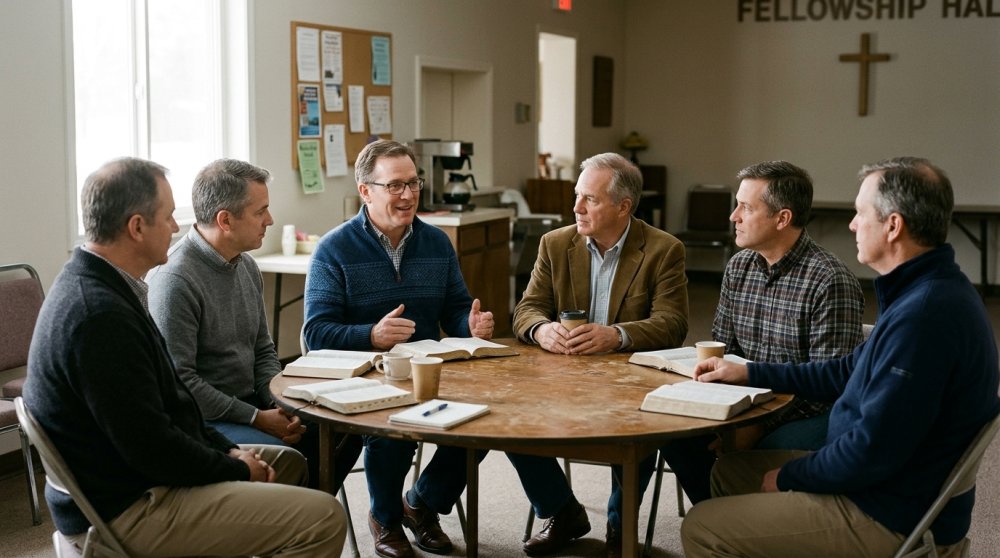
For more than twenty years, one minister has walked alongside six fellow leaders from Texas, Oklahoma and California. They meet weekly by video, attend conferences together and retreat each year for three days of honest conversation and prayer.
The investment of time and travel has strengthened each man’s ministry and personal walk with the Lord. Distance and busy schedules require intentionality, yet the spiritual return far outweighs the cost.
Christian leaders are urged to pray for the right companions, take the initiative to reach out and keep showing up even when the effort feels awkward at first. The people entrusted to their care deserve leaders who remain spiritually and emotionally healthy.
Let us know what you think, please share your thoughts in the comments below.

Faith Facts
- God’s design for human sexuality is rooted in marriage between one man and one woman.
- Scripture teaches that our bodies are temples of the Holy Spirit and should be honored accordingly.
- Christian teaching holds that sexual expression outside of biblical marriage leads to spiritual harm.
New legislation targeting extreme violent pornography marks a step toward protecting families from harmful content.
James Mildred, a Christian commentator, welcomes the criminalization of violent pornographic material while calling for broader restrictions.
“New legislation will criminalise some of the most extreme forms of violent pornography.”
Mildred argues that partial restrictions fail to address the deeper moral concerns surrounding all pornography.
The Christian perspective emphasizes that pornography in any form contradicts God’s intended purpose for human sexuality.
“James Mildred welcomes the change, but argues that God’s design for sex means porn should be banned altogether.”
This position reflects traditional Christian teaching that sexual intimacy belongs exclusively within the covenant of marriage.
Let us know what you think, please share your thoughts in the comments below.


-

 Self-Reliance2 years ago
Trump’s Bold Move Uncovers Massive Social Security Fraud
-

 Faith2 years ago
New Clues Emerge in Noah’s Ark Mystery
-

 News2 years ago
Governor Walz’s Rhetoric Sparks National Controversy
-

 News2 years ago
Mel Gibson’s ‘The Passion of the Christ’ Sequel Title Announced
-

 Family2 years ago
Texas Lawmaker Targets Furries in Schools
-

 Freedom2 years ago
Maine Lawmaker Challenges Sports Fairness Controversy
-

 Family1 year ago
Canada’s Controversial Policy Sparks Ethical Debate
-
Faith11 months ago
Congress Hears Pleas for Nigerian Christians