
Faith
Four Million Children in Poverty — Government Turns to Churches for Help


Faith Facts
- A new government report acknowledges four million children in the UK remain in poverty and identifies faith organizations as key partners in addressing the crisis.
- The report marks a significant recognition of the church’s role in supporting vulnerable families and delivering community-based solutions.
- Faith groups are being called upon to expand their existing charitable work, providing practical assistance and spiritual support to struggling families.
A newly released government report on child poverty has shone a spotlight on the critical role that churches and faith organizations can play in helping the four million children currently affected by poverty across the nation. The acknowledgment represents a significant recognition of the vital work faith communities already perform in supporting vulnerable families.
The report comes at a time when families across the country continue to struggle with the rising cost of living and economic uncertainty. Churches have long been on the front lines of poverty relief, operating food banks, clothing drives, after-school programs, and family support services that meet both physical and spiritual needs.
By turning to faith organizations, the government is recognizing what Christians have known for generations: that the church is uniquely positioned to serve those in need with both material assistance and the hope of the Gospel. Local congregations understand their communities intimately and can provide personalized, compassionate care that bureaucratic programs often cannot match.
The report’s findings underscore the ongoing crisis facing millions of children who lack basic necessities. Faith-based responses to poverty have historically proven effective because they address not just immediate material needs, but also offer moral guidance, community support, and pathways to long-term stability grounded in biblical principles of dignity, work, and family.
Churches across denominational lines have consistently demonstrated their commitment to serving “the least of these,” as Scripture commands. From providing nutritious meals to offering mentorship programs and job training, faith communities have built robust networks of care that complement and often exceed government assistance programs.
The recognition of faith organizations in this government report validates the essential public service churches provide. It also presents an opportunity for expanded partnership between government and religious institutions, while respecting the distinct mission and character of faith-based work.
As churches consider how to respond to this call, many are already well-equipped with volunteers, facilities, and experience in compassionate outreach. The challenge will be scaling these efforts to meet the magnitude of need while maintaining the personal, faith-centered approach that makes church-based assistance uniquely effective.
For Christian families and congregations, this report serves as both an affirmation of ongoing ministry and a renewed call to action. Caring for children in poverty is not merely a social program but a biblical imperative that reflects the heart of God for the vulnerable and marginalized.
Let us know what you think, please share your thoughts in the comments below.

Faith Facts
- Pastor Philip Anthony Mitchell warned that biblical illiteracy and cultural Christianity are weakening the Church.
- He identified a growing appetite for soft, comfortable sermons as a threat to spiritual vitality.
- The pastor called believers back to the authority of Scripture and unapologetic truth.
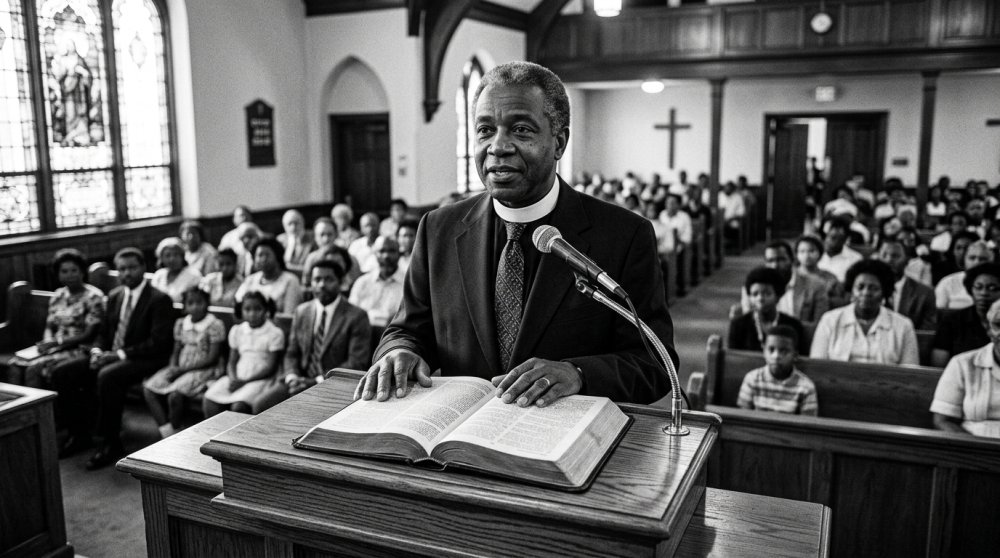
Pastor Philip Anthony Mitchell delivered a sobering assessment of the modern Church. He argued that biblical illiteracy is leaving believers unequipped to stand against cultural pressure.
“The Church is being weakened by a lack of biblical literacy,” Mitchell stated. He warned that many Christians now rely on surface-level knowledge rather than deep engagement with God’s Word.
“We are raising a generation that knows the language of culture better than the language of Scripture,” the pastor said. He urged pastors and parents to prioritize serious Bible study in homes and congregations.
Mitchell also pointed to cultural Christianity as another danger. He explained that many attend services for social comfort rather than genuine transformation through Christ.
“Soft sermons that avoid the hard truths of Scripture are feeding this problem,” Mitchell declared. He stressed that the pulpit must proclaim the full counsel of God without compromise.
The pastor called for a return to preaching that convicts and transforms. He said only the unfiltered Word of God can revive a weakening Church and restore its witness in America.
Let us know what you think, please share your thoughts in the comments below.

Faith Facts
- Michael Porter Jr openly shared the gospel with a Muslim streamer during a live conversation.
- The NBA player spoke with clarity, confidence, and compassion about his Christian faith.
- The exchange highlights the power of respectful witness in a divided culture.
NBA star Michael Porter Jr recently engaged a Muslim streamer named N3on in a candid conversation about faith. The discussion took place in a public online setting where the athlete presented the gospel with both boldness and gentleness. His approach drew attention for its clarity and sincerity.
“The exchange shows how believers can speak truth with both conviction and kindness,” said commentator AJ Gomez. “Michael Porter Jr modeled the kind of evangelism that respects the listener while remaining faithful to Scripture.”
Christian viewers praised the player for using his platform to proclaim the gospel without compromise. The moment stood out in a culture where public expressions of faith often face criticism or ridicule. Porter Jr’s example encouraged many to seek similar opportunities in their own circles.
“It is important for young people to see professional athletes who are unashamed of Jesus,” one observer noted. “This kind of witness can plant seeds that last a lifetime.”
The conversation also reminded believers of the biblical call to be ready to give an answer for the hope within them. With millions watching online, Porter Jr used his influence to point others toward Christ. His tone reflected both the love of God and the truth of His Word.
Let us know what you think, please share your thoughts in the comments below.

Faith Facts
- Nearly 100 students at a Christian high school in Colorado have been baptized following athletic events this year.
- Five separate worship gatherings were organized after games, drawing students seeking faith commitments.
- The baptisms reflect a growing movement of young people responding to the Gospel in school settings.
High school athletic events have long been community gatherings, but one Colorado Christian school is seeing those moments turn into something far more eternal.
After five post-game worship services, nearly 100 students stepped forward for baptism, marking a powerful season of spiritual renewal.
School leaders say the response has been both unexpected and deeply encouraging, as students publicly declare their faith in Christ.
“It has been incredible to watch these young people take this step,” one administrator shared.
The gatherings combine prayer, worship, and testimony, creating a space where students feel welcomed to respond to the message of salvation.
Parents and faculty have noted a renewed sense of purpose and unity among the student body as a result.
“We are seeing the Holy Spirit move in powerful ways,” a staff member added.
Christian education advocates view the events as evidence that faith-based environments can shape hearts as well as minds.
The school plans to continue the post-game worship gatherings in the coming seasons, hoping to build on the momentum of spiritual awakening.
Let us know what you think, please share your thoughts in the comments below.


-

 Self-Reliance1 year ago
Trump’s Bold Move Uncovers Massive Social Security Fraud
-

 Faith1 year ago
New Clues Emerge in Noah’s Ark Mystery
-

 News2 years ago
Governor Walz’s Rhetoric Sparks National Controversy
-

 News1 year ago
Mel Gibson’s ‘The Passion of the Christ’ Sequel Title Announced
-

 Family2 years ago
Texas Lawmaker Targets Furries in Schools
-

 Freedom2 years ago
Maine Lawmaker Challenges Sports Fairness Controversy
-

 Family1 year ago
Canada’s Controversial Policy Sparks Ethical Debate
-
Faith10 months ago
Congress Hears Pleas for Nigerian Christians