
Faith
Spider-Man’s Latest Adventure Reflects Timeless Biblical Truth


Faith Facts
- The latest Spider-Man film incorporates powerful themes of sacrifice and redemption that resonate with Christian audiences
- The story explores the concept of grace through selfless acts that mirror Christ’s love
- Biblical principles of hope and goodness are woven throughout the narrative, offering meaningful lessons for families
While Hollywood rarely produces overtly Christian content, ‘Spider-Man: Brand New Day’ stands out as a film that reflects timeless biblical values. The latest installment in the beloved franchise offers families an opportunity to engage with themes that align closely with Scripture, even if that wasn’t the filmmakers’ primary intent.
At its core, the film explores sacrifice in ways that echo the greatest sacrifice of all—Christ laying down His life for humanity. The protagonist faces difficult choices that require putting others before himself, demonstrating the kind of selfless love that Scripture calls us to embody. These moments provide natural conversation starters for parents discussing Christian values with their children.
The concept of grace permeates the storyline as characters extend forgiveness and second chances to one another. In a culture that often emphasizes revenge and holding grudges, seeing grace portrayed on screen offers a refreshing counter-narrative. This reflects the unmerited favor God extends to us daily, reminding viewers that we are called to do the same for others.
Redemption arcs throughout the film demonstrate that no one is beyond hope or transformation. Characters who have made poor choices find opportunities to change course and make things right. This mirrors the biblical truth that we serve a God of second chances, who specializes in redeeming broken situations and people.
The film’s emphasis on goodness and moral courage stands in stark contrast to much of today’s entertainment, which often blurs the lines between right and wrong. Here, heroism is defined not by power alone, but by character and the willingness to do what’s right regardless of personal cost. This aligns beautifully with Philippians 4:8, which instructs believers to focus on whatever is true, noble, right, pure, lovely, and admirable.
Hope serves as another central theme, reminding audiences that even in the darkest circumstances, light can prevail. For Christians, this resonates deeply with our eternal hope in Christ. The film suggests that maintaining hope isn’t naive—it’s essential for overcoming adversity and inspiring others to do the same.
While discernment is always important when choosing entertainment, this Spider-Man installment offers families content that can reinforce rather than undermine their values. The absence of gratuitous content that plagues much of Hollywood’s output makes this a film parents can feel more comfortable sharing with their children.
These biblical themes appearing in mainstream entertainment demonstrate that truth resonates across cultures and contexts. The principles of sacrifice, grace, and goodness are universal because they’re written on human hearts by our Creator. When we see them reflected in popular media, it provides an opportunity to point our children toward the ultimate source of these virtues.
Christian families can use films like this as teaching moments, helping children identify godly principles even in secular entertainment. Discussing what we watch together builds critical thinking skills and reinforces biblical worldview formation in the next generation.
Let us know what you think, please share your thoughts in the comments below.


Faith Facts
- A new government report acknowledges four million children in the UK remain in poverty and identifies faith organizations as key partners in addressing the crisis.
- The report marks a significant recognition of the church’s role in supporting vulnerable families and delivering community-based solutions.
- Faith groups are being called upon to expand their existing charitable work, providing practical assistance and spiritual support to struggling families.
A newly released government report on child poverty has shone a spotlight on the critical role that churches and faith organizations can play in helping the four million children currently affected by poverty across the nation. The acknowledgment represents a significant recognition of the vital work faith communities already perform in supporting vulnerable families.
The report comes at a time when families across the country continue to struggle with the rising cost of living and economic uncertainty. Churches have long been on the front lines of poverty relief, operating food banks, clothing drives, after-school programs, and family support services that meet both physical and spiritual needs.
By turning to faith organizations, the government is recognizing what Christians have known for generations: that the church is uniquely positioned to serve those in need with both material assistance and the hope of the Gospel. Local congregations understand their communities intimately and can provide personalized, compassionate care that bureaucratic programs often cannot match.
The report’s findings underscore the ongoing crisis facing millions of children who lack basic necessities. Faith-based responses to poverty have historically proven effective because they address not just immediate material needs, but also offer moral guidance, community support, and pathways to long-term stability grounded in biblical principles of dignity, work, and family.
Churches across denominational lines have consistently demonstrated their commitment to serving “the least of these,” as Scripture commands. From providing nutritious meals to offering mentorship programs and job training, faith communities have built robust networks of care that complement and often exceed government assistance programs.
The recognition of faith organizations in this government report validates the essential public service churches provide. It also presents an opportunity for expanded partnership between government and religious institutions, while respecting the distinct mission and character of faith-based work.
As churches consider how to respond to this call, many are already well-equipped with volunteers, facilities, and experience in compassionate outreach. The challenge will be scaling these efforts to meet the magnitude of need while maintaining the personal, faith-centered approach that makes church-based assistance uniquely effective.
For Christian families and congregations, this report serves as both an affirmation of ongoing ministry and a renewed call to action. Caring for children in poverty is not merely a social program but a biblical imperative that reflects the heart of God for the vulnerable and marginalized.
Let us know what you think, please share your thoughts in the comments below.
Faith Facts
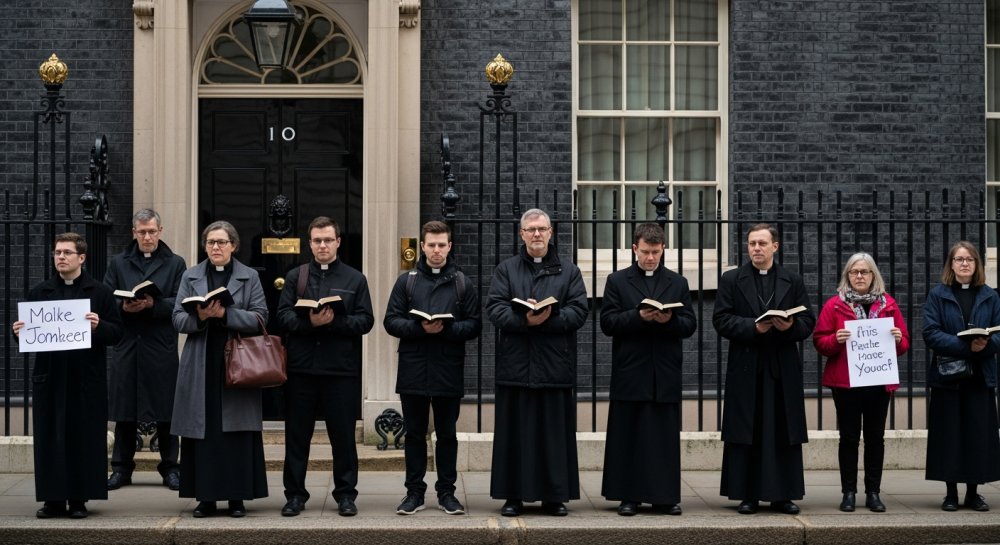
- Christians in Britain are urging Prime Minister Andy Burnham to halt expanding speech restrictions that limit public religious expression
- Existing and proposed laws are raising concerns about the erosion of Christian freedoms in the United Kingdom
- The appeal comes as faith leaders warn that religious liberty protections are being systematically weakened
Christians across the United Kingdom are sounding the alarm as their new Prime Minister faces mounting pressure to address what many see as a dangerous erosion of religious freedom. Prime Minister Andy Burnham is being called upon to defend Christian liberties as existing laws and proposed legislation increasingly restrict the public expression of faith.
The concerns center on a growing body of regulations that many believers say effectively silence Christian voices in the public square. These restrictions have created an atmosphere where expressing Biblical values can result in legal consequences, a troubling development for a nation with deep Christian heritage.
Faith leaders and Christian advocacy groups are making it clear that the time for action is now. They are urging Burnham to take a firm stand against the continued expansion of speech limitations that disproportionately impact people of faith who seek to share their beliefs openly and honestly.
The situation reflects a broader cultural shift in Britain, where traditional Christian values are increasingly marginalized in favor of secular progressive ideology. Believers argue that laws ostensibly designed to prevent offense have been weaponized against those who hold to Biblical teachings on marriage, gender, and morality.
For American Christians watching from across the Atlantic, the situation in the United Kingdom serves as a sobering reminder of what can happen when religious freedom protections are weakened. The challenges facing British believers underscore the importance of vigilantly defending First Amendment rights here at home.
The appeal to Prime Minister Burnham represents a critical moment for religious liberty in Britain. Whether the new government will stand with Christians or continue down the path of restricting faith-based speech remains to be seen, but the stakes could not be higher for millions of believers.
As this situation develops, it highlights the universal importance of protecting the fundamental right to freely express one’s faith. Christians worldwide must remain engaged and prayerful as their brothers and sisters in the U.K. fight to preserve freedoms that were once taken for granted.
Let us know what you think, please share your thoughts in the comments below.

Faith Facts
- Christians are called to be in the world but not of it, a principle that applies directly to social media engagement and digital communication.
- Every post, comment, and share reflects our witness for Christ and can either advance or hinder the Gospel message in the digital public square.
- Biblical discernment requires believers to pause and evaluate their online activity through the lens of Scripture before engaging with others on social platforms.
In an age where a single click can broadcast our thoughts to the world, Christians face a unique challenge in maintaining their witness while engaging on social media. The digital landscape has become a mission field, but it’s also a minefield where hasty words can damage our testimony and hurt others.
The timeless wisdom of Scripture remains our guide, even in this modern context. Just as we are called to be in the world but not of it, we must learn to be on social media without allowing it to conform us to its patterns of anger, division, and worldly thinking.
Before posting that comment, sharing that article, or responding to that heated thread, faithful believers should pause and ask themselves six critical questions rooted in biblical truth.
First, does this post glorify God? This foundational question should govern all our communication. Whether we’re sharing a family photo, commenting on current events, or engaging in debate, our ultimate aim should be to honor Christ and reflect His character to a watching world.
Second, is this true? In an era of misinformation and viral falsehoods, Christians must be zealous guardians of truth. Sharing unverified claims or sensational headlines without fact-checking damages our credibility and violates the biblical command against bearing false witness.
Third, is this necessary? Not every thought needs to be shared, and not every argument needs our input. Wisdom requires discernment about when to speak and when to remain silent, even when we have the platform to do otherwise.
Fourth, is this kind? The internet’s anonymity often emboldens cruelty, but followers of Christ are called to a higher standard. Even when addressing error or confronting sin, our words should be seasoned with grace and delivered with genuine love for the person on the other side of the screen.
Fifth, does this build up or tear down? Social media can be a tool for encouragement, edification, and spreading hope, or it can become a weapon of destruction. Christians should ask whether their contribution adds to the common good or merely fuels division and despair.
Sixth, would I say this face-to-face? The distance created by screens often leads us to write things we would never speak in person. If we wouldn’t say something directly to someone’s face, we probably shouldn’t type it either.
These questions aren’t meant to silence Christian voices in the digital public square. On the contrary, when believers engage thoughtfully and biblically online, they bring light to dark places and offer a compelling alternative to the world’s patterns of communication.
Our social media presence is an extension of our Christian witness. Every interaction is an opportunity to demonstrate the transforming power of the Gospel and the fruit of the Spirit in our lives.
The Apostle Paul’s words to the Ephesians ring as true today as they did two millennia ago: “Let no corrupting talk come out of your mouths, but only such as is good for building up, as fits the occasion, that it may give grace to those who hear.” In our digital age, this wisdom applies not just to our mouths, but to our fingertips as well.
By taking time to filter our online activity through these biblical questions, Christians can ensure their digital footprint reflects their faith and advances God’s kingdom rather than the kingdom of self.
Let us know what you think, please share your thoughts in the comments below.


-

 Self-Reliance1 year ago
Trump’s Bold Move Uncovers Massive Social Security Fraud
-

 Faith1 year ago
New Clues Emerge in Noah’s Ark Mystery
-

 News1 year ago
Governor Walz’s Rhetoric Sparks National Controversy
-

 News1 year ago
Mel Gibson’s ‘The Passion of the Christ’ Sequel Title Announced
-

 Family1 year ago
Texas Lawmaker Targets Furries in Schools
-

 Freedom1 year ago
Maine Lawmaker Challenges Sports Fairness Controversy
-

 Family1 year ago
Canada’s Controversial Policy Sparks Ethical Debate
-
Faith9 months ago
Congress Hears Pleas for Nigerian Christians