
Faith
Former England Manager Sounds Alarm on Boys in Crisis


Faith Facts
- Gareth Southgate’s new documentary highlights a growing crisis among young men in Britain, including rising suicide rates and social isolation
- The Church is uniquely positioned to provide mentorship, community, and moral guidance that many boys lack in modern society
- Christian leaders are being called to implement preventative measures that address the spiritual and emotional needs of boys before crisis strikes
Former England national football team manager Gareth Southgate has released a powerful documentary drawing attention to an overlooked crisis: the struggles facing young men and boys across Britain. His message resonates with what many Christian leaders have been saying for years—our boys are hurting, and they need help before it’s too late.
The statistics paint a troubling picture. Young men are experiencing record rates of suicide, social isolation, and aimlessness. Without strong male role models and community support, many boys are growing up without the guidance they desperately need to become godly men who can lead their families and serve their communities.
Southgate’s documentary doesn’t just identify the problem—it calls for action. And this is where the Church has a unique opportunity and responsibility. For centuries, the Christian faith has provided young men with purpose, brotherhood, and a moral framework for navigating life’s challenges.
Churches across America and Britain have the infrastructure, the values, and the community bonds to make a real difference. Youth groups, mentorship programs, and father-son ministries can provide what secular society increasingly fails to offer: a sense of belonging, clear moral guidance, and positive male role models who demonstrate strength tempered with compassion.
The call for preventative measures is particularly important. Too often, intervention comes only after a young man has already spiraled into depression, addiction, or worse. The Church can step in earlier, providing boys with the spiritual foundation and community support they need to thrive.
This isn’t about creating programs for the sake of programs. It’s about recognizing that boys need fathers, mentors, and communities that invest in their development—spiritually, emotionally, and practically. They need to see men of faith who work hard, love their families, serve their communities, and walk humbly with God.
The breakdown of the traditional family structure has left many boys without fathers in the home. The Church can help fill that void, not as a replacement for family, but as an extension of it—a place where every child is valued and every young person has access to godly guidance.
Christian communities have always understood what secular society is only now rediscovering: that boys and girls have different needs, that masculinity properly understood is a gift to be celebrated, and that young men flourish when given purpose, responsibility, and a mission larger than themselves.
Southgate’s willingness to speak openly about these issues should encourage Christian leaders to do the same. We cannot be silent about the crisis facing our young men. We cannot stand by while an entire generation of boys grows up without the support they need to become the men God created them to be.
The time for action is now. Churches must prioritize ministry to boys and young men, creating spaces where they can grow in faith, develop character, and build the skills they need to succeed in life. This means dedicated youth pastors, active men’s ministries, and congregations willing to invest time and resources into the next generation.
It also means teaching boys the timeless truths of Scripture—that they are made in the image of God, that they have inherent worth and dignity, and that their lives have purpose. In a world that often sends contradictory and confusing messages about masculinity, the Church can offer clarity rooted in eternal truth.
The documentary’s timing is providential. As cultural forces continue to undermine traditional values and family structures, the need for strong Christian communities has never been greater. If we want to change the future for our boys, we must act now with compassion, wisdom, and commitment.
Let us know what you think, please share your thoughts in the comments below.

Faith Facts
- God examines the heart rather than outward gestures during worship.
- Scripture teaches that authentic faith is shown through obedience and love, not visible enthusiasm.
- Believers are called to honor every sincere heart that worships in spirit and truth.
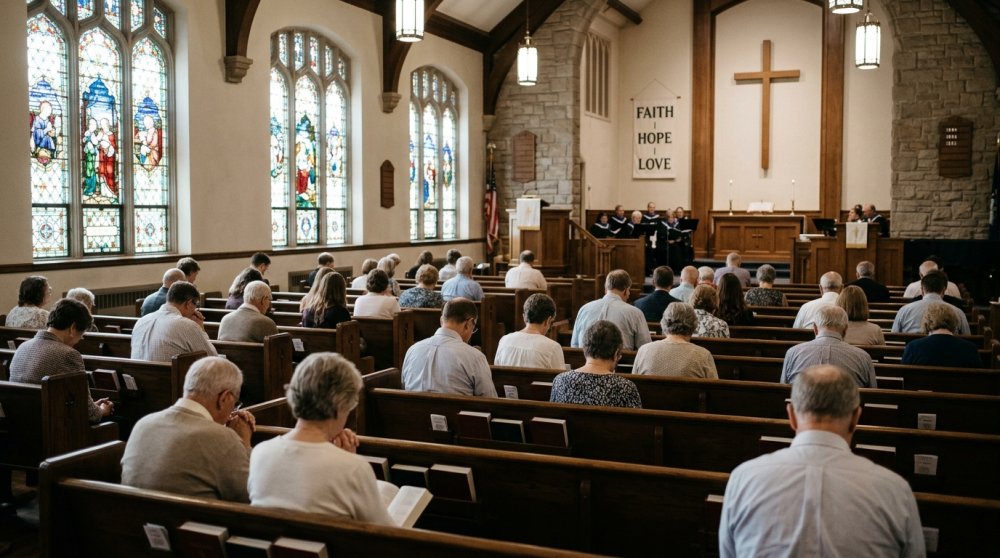
Too often, outward expressions of enthusiasm are mistaken for spiritual maturity. But God looks at the heart, not whether we’re standing, sitting or raising our hands, says Dawn Butler.
“God looks at the heart, not whether we’re standing, sitting or raising our hands,”
Churches across America have seen a growing emphasis on physical expressions during worship. This trend can unintentionally pressure believers who prefer quieter reverence. The result is that some faithful Christians feel judged for their personal style of worship.
“Too often, outward expressions of enthusiasm are mistaken for spiritual maturity.”
True worship flows from a surrendered heart that seeks to honor God in every area of life. Scripture consistently points to inward devotion rather than external performance. When congregations focus on visible actions, they risk overlooking the quiet strength of those who serve faithfully in the background.
Christian liberty allows room for both raised hands and bowed heads. The key is whether each believer approaches the Lord with reverence and sincerity. Families benefit when churches encourage unity over uniformity in worship practices.
“God looks at the heart, not whether we’re standing, sitting or raising our hands.”
Let us know what you think, please share your thoughts in the comments below.

Faith Facts
- The Restoration Movement produced three distinct fellowships by 1906, with Churches of Christ emerging as a conservative, Bible-focused body
- Early 20th-century leaders in Indiana, Tennessee, and Texas held differing convictions on the Holy Spirit, millennial teaching, and church institutions
- The conservative Texas tradition ultimately shaped the doctrinal identity that guided Churches of Christ for much of the twentieth century
A new book from Abilene Christian University Press offers a detailed look at the doctrinal battles that forged the identity of Churches of Christ in the decades after 1906. The volume, the first of three planned works, draws on essays by eight authors who trace how congregations navigated questions of Scripture, worship, and church order.
By the early twentieth century, the Restoration Movement had separated into three distinct groups. Churches of Christ stood apart for their commitment to congregational autonomy and a plain reading of the New Testament.
The collection opens with Daniel Sommer’s 1889 Address and Declaration, which set the tone for separation from the Disciples of Christ. Subsequent chapters highlight the contributions of David Lipscomb and respected African-American leaders such as Preston Taylor, S.W. Womack, and Marshall Keeble.
“Allen and Hicks are to be commended for editing a splendid and illuminating volume. Readers interested in the history of Churches of Christ will eagerly anticipate the next installment in the series.”
Three regional traditions emerged, each with its own convictions. Leaders in Tennessee upheld belief in miraculous divine action and a future millennial kingdom, while Indiana voices favored noninstitutional simplicity and resisted Bible colleges. The Texas tradition, emphasizing the Word alone and strict obedience to positive commands, gradually gained dominance.
Through influential publications like R.L. Whiteside and C.R. Nichol’s Sound Doctrine series and N.B. Hardeman’s Tabernacle Sermons, the Texas perspective reached congregations across the nation. By the 1930s, the Gospel Advocate had become its leading voice.
The book closes with primary source excerpts that allow readers to hear the founders in their own words. Christian families and church libraries will find this careful history both instructive and encouraging for the challenges of today.
Let us know what you think, please share your thoughts in the comments below.

Faith Facts
- Bank of America closed a Christian ministry’s account in 2020 citing internal policies against certain business types.
- Multiple ministries and faith-based organizations have reported similar account closures from major financial institutions.
- Faith-based groups are increasingly facing challenges accessing traditional banking services across the United States.
In 2020, Bank of America informed a Christian ministry that its account was being closed because the institution had chosen not to service certain types of businesses. The ministry initially believed this decision was isolated to their organization alone.
Further investigation revealed that other faith-based groups had encountered the same treatment from the same financial institution. The pattern suggests a broader policy affecting religious organizations seeking banking services.
“I thought we were the only ones. We weren’t.”
This experience highlights growing concerns among Christian ministries about access to essential financial services. Many traditional banks appear to be reevaluating their relationships with faith-based organizations.
The closure of accounts for religious ministries raises questions about religious liberty and equal access to financial services. Christian organizations across the country are exploring alternative banking options that align with their values and mission.
Let us know what you think, please share your thoughts in the comments below.


-

 Self-Reliance2 years ago
Trump’s Bold Move Uncovers Massive Social Security Fraud
-

 Faith2 years ago
New Clues Emerge in Noah’s Ark Mystery
-

 News2 years ago
Governor Walz’s Rhetoric Sparks National Controversy
-

 News2 years ago
Mel Gibson’s ‘The Passion of the Christ’ Sequel Title Announced
-

 Family2 years ago
Texas Lawmaker Targets Furries in Schools
-

 Freedom2 years ago
Maine Lawmaker Challenges Sports Fairness Controversy
-

 Family1 year ago
Canada’s Controversial Policy Sparks Ethical Debate
-
Faith11 months ago
Congress Hears Pleas for Nigerian Christians