
Freedom
Finnish Lawmaker Warns Court Ruling Part of Broader Silencing Campaign


Faith Facts
- Finnish Member of Parliament Päivi Räsänen was found guilty by Finland’s Supreme Court over a 22-year-old pamphlet addressing biblical views on sexuality
- Räsänen believes the verdict is designed to intimidate others from speaking on issues of sexual morality and traditional Christian teaching
- The case has raised serious concerns about religious freedom and free speech protections in Western democracies
A Finnish Christian lawmaker is sounding the alarm after her nation’s highest court delivered a guilty verdict she says was calculated to strike fear into believers everywhere. Päivi Räsänen, a member of Finland’s parliament, was convicted over a pamphlet she wrote more than two decades ago that expressed traditional biblical teaching on human sexuality.
Räsänen is not backing down. She insists the ruling was never really about her—it was about sending a chilling message to anyone who dares to speak biblical truth in the public square.
“They wanted to give a signal,” she warned, describing what she believes is a coordinated effort to silence dissenting voices on matters of sexual morality and family values.
The case centers on a pamphlet Räsänen authored 22 years ago that outlined the Christian understanding of marriage and sexuality. For more than two decades, the document existed without controversy. But in recent years, as cultural attitudes have shifted and tolerance for traditional Christian beliefs has eroded, Finnish authorities decided to prosecute the grandmother and medical doctor for expressing views that were once considered mainstream.
The Supreme Court’s decision to uphold her conviction marks a troubling milestone in the erosion of religious liberty across Europe. What was once protected speech—rooted in centuries of Christian teaching and Scripture—is now being criminalized by government authorities.
Räsänen’s warning carries weight far beyond Finland’s borders. Believers across the Western world are watching as courts and legislatures increasingly treat biblical convictions as hate speech. The message is clear: conform to the new sexual orthodoxy, or face the consequences.
For Christians who hold to the authority of Scripture, the stakes could not be higher. If a sitting member of parliament can be convicted for articulating biblical truth in a pamphlet written decades ago, what protections remain for pastors, teachers, parents, and ordinary believers?
The case also exposes the selective enforcement of speech laws. While certain viewpoints are prosecuted with vigor, others—no matter how extreme—are protected under the banner of tolerance and diversity. The double standard is glaring, and it reveals the true intent: not to protect vulnerable people, but to marginalize and punish those who refuse to surrender their convictions.
Räsänen’s courage in the face of government prosecution is a testimony to the power of faith. She has refused to recant, refused to apologize, and refused to be silent. Her witness is a reminder that when the culture demands our compliance, our allegiance must remain with Christ and His Word.
As the battle for religious freedom intensifies, Räsänen’s case serves as both a warning and a call to action. The freedoms that generations of Americans and Europeans have taken for granted are under assault. The right to speak truth, to live according to conscience, and to raise children in accordance with biblical values is being systematically dismantled by courts and bureaucrats who view traditional Christianity as a threat.
The question now is whether believers will rise to the occasion—whether we will stand firm in our convictions, support those under fire, and refuse to be intimidated into silence. Päivi Räsänen has shown us what that looks like. The world is watching to see if we will follow her example.
Let us know what you think, please share your thoughts in the comments below.


Faith Facts
- The Alliance Defending Freedom is a legal ministry defending religious liberty and free speech for Christians and other people of faith.
- Christians have faced increasing debanking due to their biblical beliefs on marriage, gender, and life issues.
- PayPal’s policy change follows years of concerns from conservatives about viewpoint discrimination by financial institutions.
PayPal has removed the terms “hate” and “intolerance” from its acceptable use policy following an objection filed by the Alliance Defending Freedom before a federal banking regulator.
The change comes after ADF raised concerns that PayPal’s previous language could be used to target Christians and conservative organizations for their biblical beliefs.
PayPal’s updated policy now focuses on illegal activities rather than vague moral judgments that critics argued opened the door to viewpoint discrimination.
Conservative leaders have long warned that financial institutions were using subjective terms like “hate” and “intolerance” to justify debanking individuals and ministries that uphold traditional values.
“We are grateful that PayPal has removed this troubling language from its rules,” said an ADF spokesperson. “Vague terms like ‘hate’ and ‘intolerance’ have been weaponized against Christians who simply believe what the Bible teaches about marriage and human sexuality.”
The policy revision represents a win for religious liberty advocates who have argued that financial service companies should not serve as arbiters of moral or political speech.
Many Christian ministries and conservative organizations have reported being denied payment processing services or having accounts frozen over their stances on life, marriage, and gender issues.
ADF’s action before the federal regulator highlighted how such policies could chill free speech and religious exercise by giving private companies broad power to define acceptable beliefs.
The change signals growing pushback against corporate attempts to enforce ideological conformity through financial gatekeeping.
Let us know what you think, please share your thoughts in the comments below.
Faith Facts
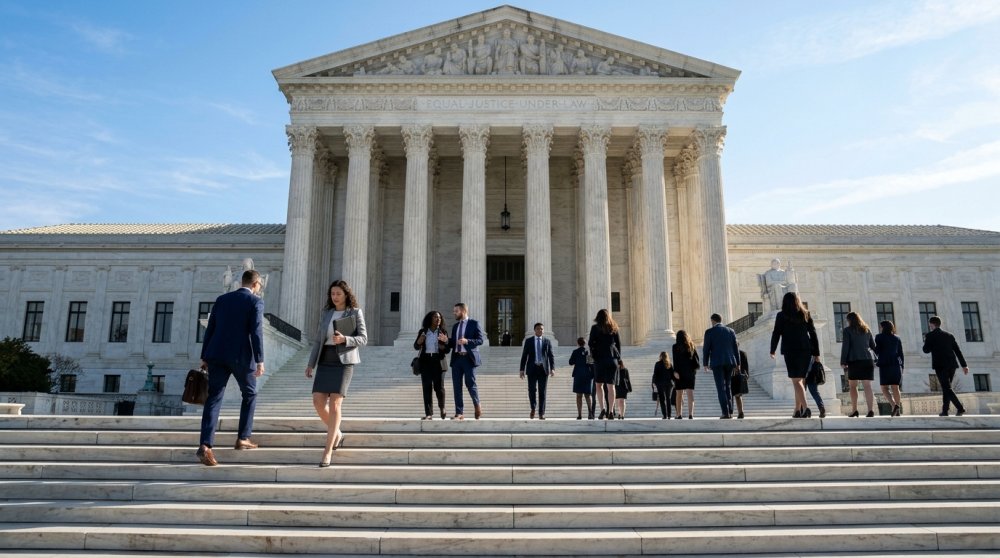
- Colorado’s universal preschool program promises a free seat to every 4-year-old yet bars the state’s 34 Catholic preschools from participation.
- Justice Brett Kavanaugh pressed state officials for a “win/win” solution during oral arguments before the Supreme Court.
- The case raises fundamental questions about religious liberty and equal treatment under the law for faith-based educational providers.
Colorado lawmakers crafted a universal preschool program that promises every four-year-old a free seat at taxpayer expense. The plan explicitly excludes the state’s 34 Catholic preschools, effectively forcing families who prefer faith-based education to forgo the benefit or leave their convictions at the door.
During oral arguments at the Supreme Court, Justice Brett Kavanaugh pressed Colorado’s attorneys to explain why the state could not accommodate religious providers. He asked whether a “win/win” arrangement was possible that would allow families to choose Catholic schools without losing the public subsidy. The state offered no answer.
Critics argue that the exclusion reflects an unconstitutional hostility toward religion that treats Catholic teaching as equivalent to racism. Supporters of the program maintain that public funds cannot flow to institutions that hold traditional beliefs on marriage, sexuality, and human life.
Christian leaders across the country see the case as another front in the ongoing struggle to preserve religious liberty in education. They note that Catholic schools have long served disadvantaged communities with strong academic and moral formation rooted in biblical principles.
Let us know what you think, please share your thoughts in the comments below.

Faith Facts
- The Bible teaches that the living cannot communicate with the dead.
- Scripture consistently portrays deceptive spirits as demons, not human souls.
- Believers are called to trust God’s Word over human experiences or feelings.
Many Christians are confused when they hear stories about loved ones appearing after death. These accounts often feel real and emotional, yet they clash with what Scripture actually teaches about the afterlife.
Author David Griffiths addresses this tension directly. He argues that the Bible makes a clear distinction between the living and the dead, warning believers not to seek contact with those who have passed on.
“The Bible is clear that the living and the dead cannot communicate,”
Griffiths writes. This teaching protects Christians from spiritual deception that can arise when grief or curiosity opens the door to experiences outside of God’s design.
Instead of viewing ghosts as harmless spirits of the departed, Griffiths presents them as demonic forces seeking to mislead people. This perspective aligns with traditional Christian understanding that places ultimate authority in Scripture rather than personal encounters.
Many families today wrestle with questions about life after death. When loved ones pass, the desire to connect can feel overwhelming, yet Griffiths encourages believers to rest in the promises of Scripture rather than chase after signs or apparitions.
“Read an alternative view here”
Griffiths notes that the culture often promotes ideas that contradict biblical truth. He urges Christians to hold fast to the Word of God as their guide, especially when emotions run high or spiritual experiences feel convincing.
By grounding discussions about the supernatural in Scripture, believers can avoid confusion and remain anchored in the truth that God has revealed. This approach strengthens faith and protects families from teachings that blur the line between good and evil.
Let us know what you think, please share your thoughts in the comments below.


-

 Self-Reliance2 years ago
Trump’s Bold Move Uncovers Massive Social Security Fraud
-

 Faith2 years ago
New Clues Emerge in Noah’s Ark Mystery
-

 News2 years ago
Governor Walz’s Rhetoric Sparks National Controversy
-

 News2 years ago
Mel Gibson’s ‘The Passion of the Christ’ Sequel Title Announced
-

 Family2 years ago
Texas Lawmaker Targets Furries in Schools
-

 Freedom2 years ago
Maine Lawmaker Challenges Sports Fairness Controversy
-

 Family1 year ago
Canada’s Controversial Policy Sparks Ethical Debate
-
Faith12 months ago
Congress Hears Pleas for Nigerian Christians