
Faith
Faith, Hope, and Endurance in Dark Seasons

Faith Facts
- 43% of UK Christians have faced mental health issues, but only 35% felt supported by their church community.
- Biblical encouragements in Romans 12:11 call believers to be joyful in hope, patient in affliction, and faithful in prayer.
- Testimonies of persecuted Christians reveal that God’s strength sustains believers through suffering and hardship.
Mental health challenges are widespread, and even among faithful believers, many silently endure struggles. World Mental Health Day reminds us to recognize and address these hidden pains within our faith communities.
The Apostle Paul’s words in Romans 12:11 urge Christians to let God’s mercy renew spiritual passion, rather than masking pain or striving through their own strength.
Paul’s first call is to be joyful in hope; instead of forced happiness, biblical joy is anchored in the eternal promise that Christ will bring full restoration. This hope sustains hearts even in the hardest times, as Hebrews 6:19 declares it an “anchor for the soul.”
A believer’s identity and hope are rooted in God’s unchanging promises rather than fleeting circumstances or approval from others.
To be “patient in affliction” is to trust God amidst trials, as Jesus cautioned that suffering is part of life. Even when answers are delayed, patience is active trust in God’s ongoing work.
Stories of resilient believers—like Esha in Bangladesh—show that following Christ can lead to real persecution, but God provides courage and comfort. Their tribulations bear witness that meaningful growth often springs from life’s darkest places.
Faithfulness in prayer is essential, nurturing trust and surrender rather than a routine. Persistent prayer strengthens God’s people through ongoing challenges, helping them stand firm in faith.
Let us be a church that cares, supports, and uplifts those who are weary, grounding our hope in Christ, persistent in prayer, and steadfast through affliction—bearing each other’s burdens in love.


Faith Facts
- The BBC’s documentary series ‘The Pilgrimage’ followed celebrities through sacred sites, demonstrating how physical locations can deepen spiritual understanding
- Christianity uniquely claims that God became human in Jesus Christ, choosing a specific time and place to enter history
- The Incarnation—God taking on flesh—affirms the value of the physical world and human experience in God’s redemptive plan
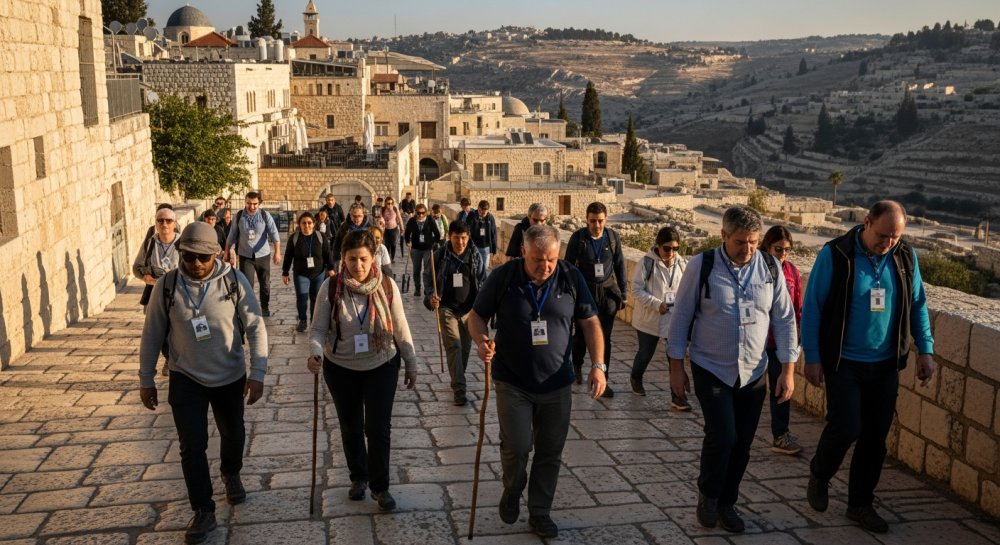
A remarkable BBC documentary series has reminded viewers of a profound truth: where we are matters spiritually. The program followed celebrities through sacred locations, and the physical places they visited left lasting impressions on their hearts and minds.
This shouldn’t surprise believers who understand the foundational claim of Christianity. Unlike religions built on abstract philosophies or disembodied spiritual experiences, the Christian faith rests on the revolutionary assertion that the eternal God entered human history at a specific time, in a specific place, as a real person.
One viewer recounted his own transformative journey visiting Mozart’s birthplace in Salzburg and the Dachau concentration camp. These physical locations connected him to history in ways mere reading never could. Standing where Mozart first drew breath or where countless souls perished under Nazi tyranny creates an encounter with reality that transcends intellectual understanding.
The physical journey mirrors spiritual truth. God didn’t send instructions from heaven or speak only through visions. He came. He walked dusty roads in Galilee, touched lepers with His own hands, wept real tears at Lazarus’s tomb, and bled actual blood on a Roman cross.
This is the scandal and the glory of the Incarnation. The Word became flesh and dwelt among us—not as metaphor, but as historical fact. Jesus was born in a particular town (Bethlehem), raised in another (Nazareth), and ministered throughout a real geographic region that exists to this day.
Why does this matter? Because it means God takes the physical world seriously. Our bodies aren’t prisons for our souls—they’re part of God’s good creation. The places we inhabit, the communities we build, and the earth we steward all carry spiritual significance.
When Christ rose from the dead, He didn’t shed His physical body like an unwanted garment. He rose bodily, ate fish with His disciples, and invited Thomas to touch His wounds. Even now, Christian theology teaches, Christ retains His glorified human body at the right hand of the Father.
This has radical implications for how we live. It means our daily work in the physical world matters eternally. It means caring for our communities, preserving historic places of faith, and honoring creation reflect godly values. It means the here and now isn’t just a waiting room for heaven—it’s the stage where God’s redemption unfolds.
The celebrities on The Pilgrimage discovered what Christians have known for two millennia: encountering the places where faith intersected history changes you. Walking where Jesus walked, standing where martyrs died, or visiting sites of great spiritual significance isn’t mere tourism. It’s a tangible connection to the reality that our faith isn’t built on myths or legends.
God chose to enter His creation not as a disembodied spirit or abstract force, but as a man. That choice validates everything about our human experience—our joys, our sorrows, our struggles, and our triumphs.
In an age of virtual experiences and digital connections, the Christian story reminds us that physical presence matters. Real relationships require real presence. True community needs actual gathering. And the God who created us understood this so deeply that He became one of us, living in a real body, in a real place, at a real time in history.
Let us know what you think, please share your thoughts in the comments below.
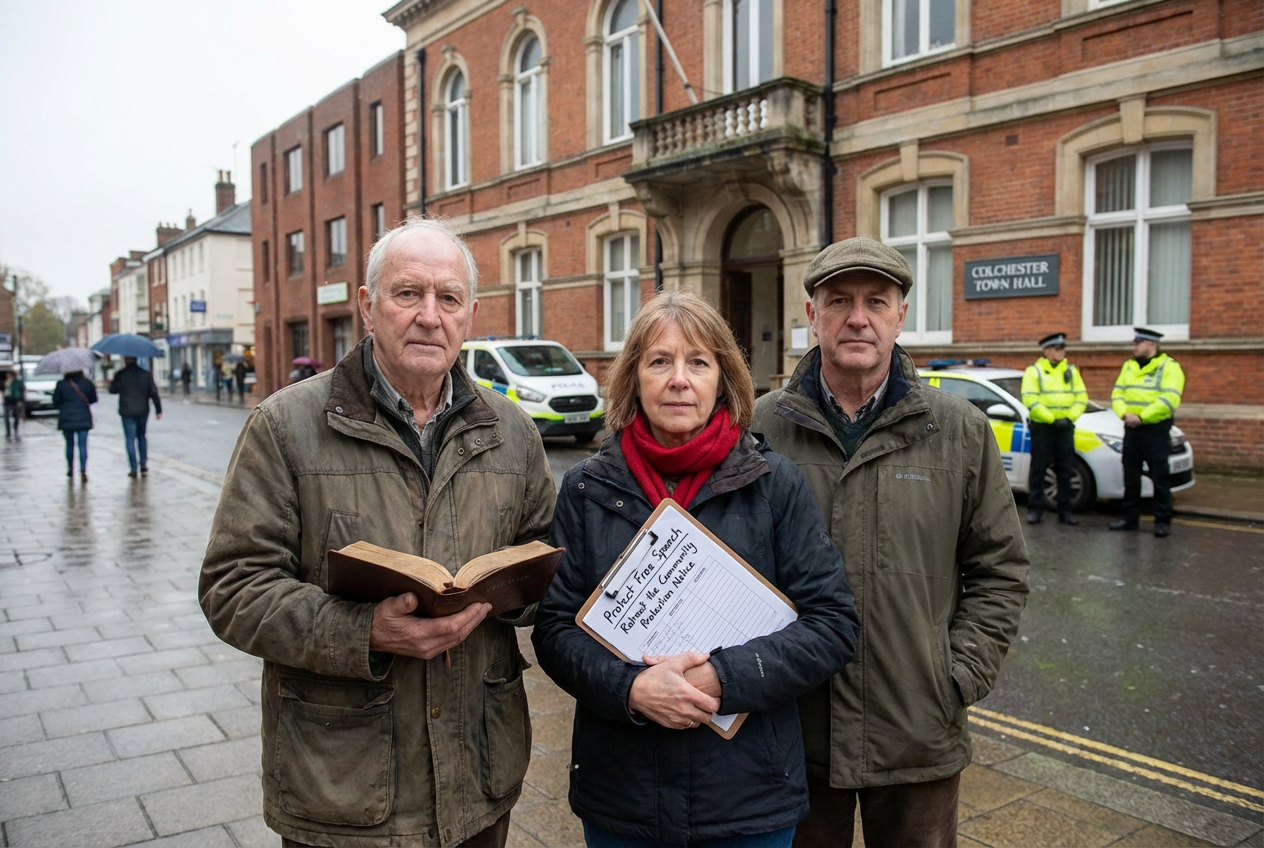
A courageous church in Colchester is fighting for the right to share the Gospel after local officials issued a restrictive Community Protection Notice.
Over 10,000 people have signed a petition demanding the city council retract the notice that labels public preaching as harassment.
Faith Facts
- Bread of Life Community Church has preached publicly for years without incident or evidence of harassment.
- Officials reportedly targeted the church for referencing biblical truths regarding hell and the need for repentance.
- Christian Concern describes the use of a CPN against an entire church body as an unprecedented overreach.
Church leaders maintain they never received complaints from the public until officials began pressuring them over their biblical message.
This unprecedented legal move targets the entire congregation, threatening the foundational British freedom to share the Word of God openly.
The church remains steadfast in its mission and recently gained support from prominent public figures during this legal battle.
They continue to document their outreach to ensure transparency while defending the life-giving Gospel that has sustained the nation for centuries.
Faith Facts
- Scripture affirms that life is a gift from God and must be protected from conception to natural death.
- Nearly half of surveyed lawmakers fear the legalization of suicide will lead to the coercion of vulnerable citizens.
- A majority of MPs acknowledge the right of the House of Lords to block the bill because it lacks a public mandate.
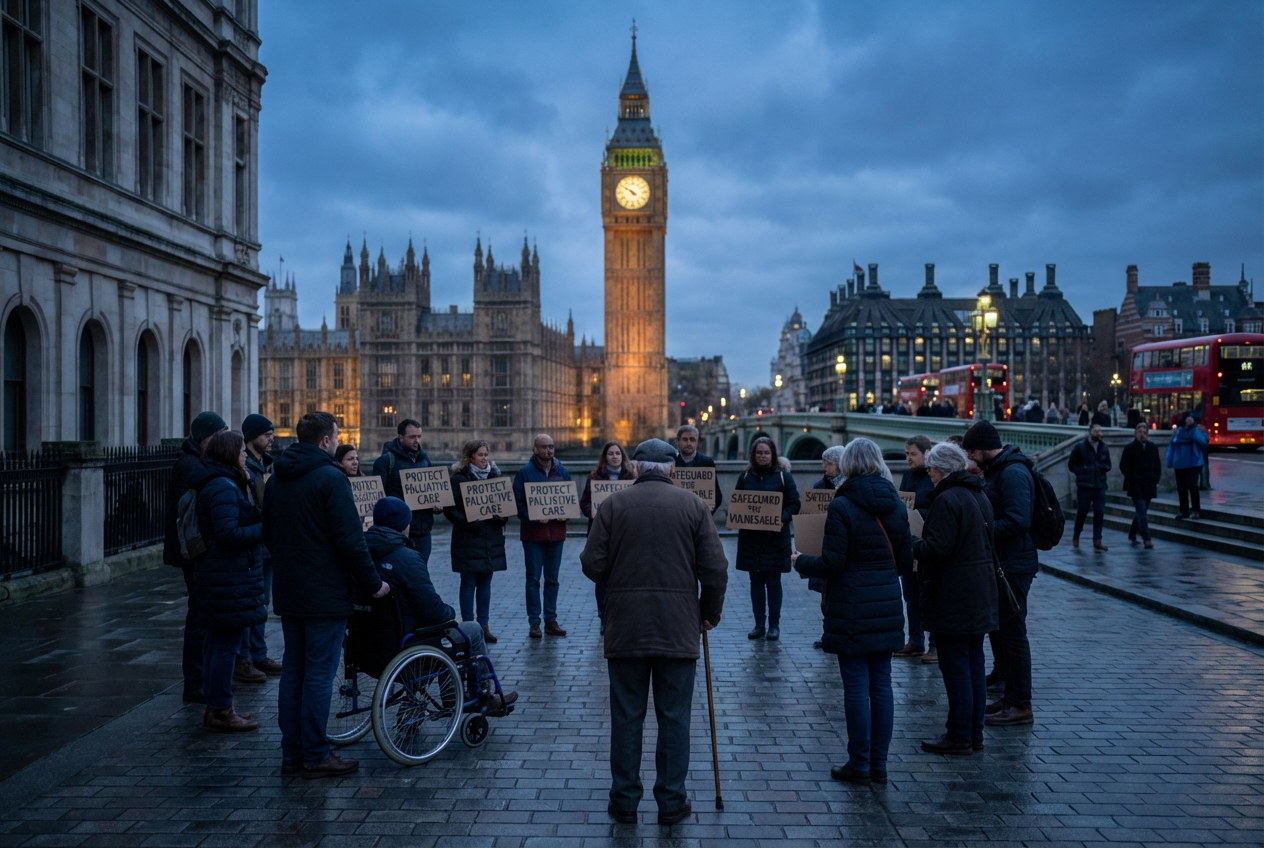
British lawmakers are increasingly recognizing the inherent dangers of legalizing assisted suicide as a new poll reveals a significant decline in support.
This shift reflects a growing awareness that such laws often target the most vulnerable members of society.
Research shows that only 40 percent of Members of Parliament now back the measure, down significantly from previous levels of support.
Many officials are voicing serious concerns about the pressure this legislation would place on the elderly and disabled.
Dr. Gordon Macdonald, CEO of Care Not Killing, emphasized the flaws within the proposed legislation.
“This poll blows apart the lie that the House of Commons is both settled and supportive of legalising assisted suicide.”
Opposition to the bill is largely driven by medical and disability groups who advocate for the sanctity of life.
Over half of the lawmakers surveyed admitted that these moral and practical concerns have heavily influenced their thinking.
The Christian worldview prioritizes compassionate palliative care over the state-sanctioned ending of life.
True mercy involves supporting the sick and dying rather than offering them a path to self-destruction.


-

 Self-Reliance1 year ago
Trump’s Bold Move Uncovers Massive Social Security Fraud
-

 Faith1 year ago
New Clues Emerge in Noah’s Ark Mystery
-

 News1 year ago
Governor Walz’s Rhetoric Sparks National Controversy
-

 News1 year ago
Mel Gibson’s ‘The Passion of the Christ’ Sequel Title Announced
-

 Family1 year ago
Texas Lawmaker Targets Furries in Schools
-

 Freedom1 year ago
Maine Lawmaker Challenges Sports Fairness Controversy
-

 Family11 months ago
Canada’s Controversial Policy Sparks Ethical Debate
-
Faith5 months ago
Congress Hears Pleas for Nigerian Christians