
Faith
Why God Chose to Walk Among Us in Flesh and Blood

Faith Facts
- The BBC’s documentary series ‘The Pilgrimage’ followed celebrities through sacred sites, demonstrating how physical locations can deepen spiritual understanding
- Christianity uniquely claims that God became human in Jesus Christ, choosing a specific time and place to enter history
- The Incarnation—God taking on flesh—affirms the value of the physical world and human experience in God’s redemptive plan
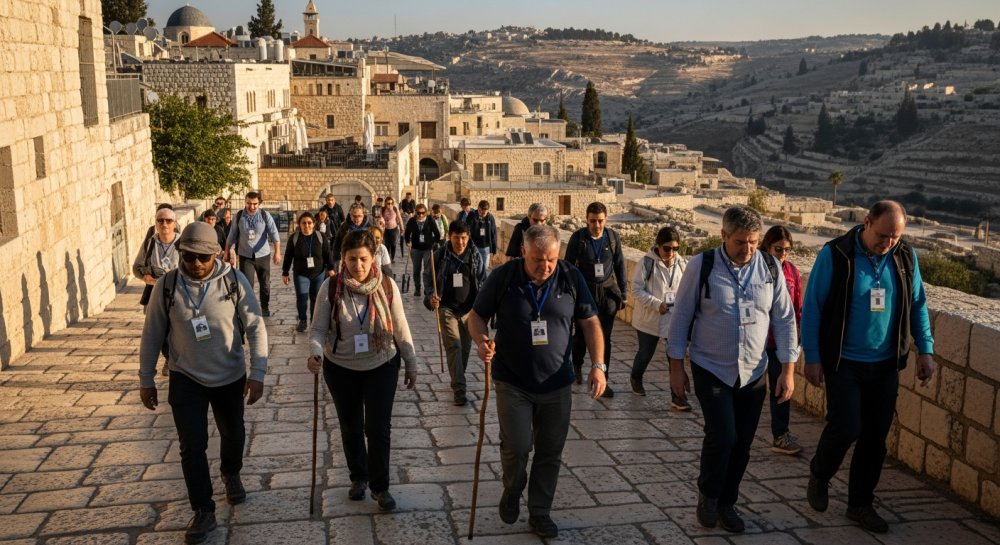
A remarkable BBC documentary series has reminded viewers of a profound truth: where we are matters spiritually. The program followed celebrities through sacred locations, and the physical places they visited left lasting impressions on their hearts and minds.
This shouldn’t surprise believers who understand the foundational claim of Christianity. Unlike religions built on abstract philosophies or disembodied spiritual experiences, the Christian faith rests on the revolutionary assertion that the eternal God entered human history at a specific time, in a specific place, as a real person.
One viewer recounted his own transformative journey visiting Mozart’s birthplace in Salzburg and the Dachau concentration camp. These physical locations connected him to history in ways mere reading never could. Standing where Mozart first drew breath or where countless souls perished under Nazi tyranny creates an encounter with reality that transcends intellectual understanding.
The physical journey mirrors spiritual truth. God didn’t send instructions from heaven or speak only through visions. He came. He walked dusty roads in Galilee, touched lepers with His own hands, wept real tears at Lazarus’s tomb, and bled actual blood on a Roman cross.
This is the scandal and the glory of the Incarnation. The Word became flesh and dwelt among us—not as metaphor, but as historical fact. Jesus was born in a particular town (Bethlehem), raised in another (Nazareth), and ministered throughout a real geographic region that exists to this day.
Why does this matter? Because it means God takes the physical world seriously. Our bodies aren’t prisons for our souls—they’re part of God’s good creation. The places we inhabit, the communities we build, and the earth we steward all carry spiritual significance.
When Christ rose from the dead, He didn’t shed His physical body like an unwanted garment. He rose bodily, ate fish with His disciples, and invited Thomas to touch His wounds. Even now, Christian theology teaches, Christ retains His glorified human body at the right hand of the Father.
This has radical implications for how we live. It means our daily work in the physical world matters eternally. It means caring for our communities, preserving historic places of faith, and honoring creation reflect godly values. It means the here and now isn’t just a waiting room for heaven—it’s the stage where God’s redemption unfolds.
The celebrities on The Pilgrimage discovered what Christians have known for two millennia: encountering the places where faith intersected history changes you. Walking where Jesus walked, standing where martyrs died, or visiting sites of great spiritual significance isn’t mere tourism. It’s a tangible connection to the reality that our faith isn’t built on myths or legends.
God chose to enter His creation not as a disembodied spirit or abstract force, but as a man. That choice validates everything about our human experience—our joys, our sorrows, our struggles, and our triumphs.
In an age of virtual experiences and digital connections, the Christian story reminds us that physical presence matters. Real relationships require real presence. True community needs actual gathering. And the God who created us understood this so deeply that He became one of us, living in a real body, in a real place, at a real time in history.
Let us know what you think, please share your thoughts in the comments below.


Faith Facts
- Michael Porter Jr openly shared the gospel with a Muslim streamer during a live conversation.
- The NBA player spoke with clarity, confidence, and compassion about his Christian faith.
- The exchange highlights the power of respectful witness in a divided culture.
NBA star Michael Porter Jr recently engaged a Muslim streamer named N3on in a candid conversation about faith. The discussion took place in a public online setting where the athlete presented the gospel with both boldness and gentleness. His approach drew attention for its clarity and sincerity.
“The exchange shows how believers can speak truth with both conviction and kindness,” said commentator AJ Gomez. “Michael Porter Jr modeled the kind of evangelism that respects the listener while remaining faithful to Scripture.”
Christian viewers praised the player for using his platform to proclaim the gospel without compromise. The moment stood out in a culture where public expressions of faith often face criticism or ridicule. Porter Jr’s example encouraged many to seek similar opportunities in their own circles.
“It is important for young people to see professional athletes who are unashamed of Jesus,” one observer noted. “This kind of witness can plant seeds that last a lifetime.”
The conversation also reminded believers of the biblical call to be ready to give an answer for the hope within them. With millions watching online, Porter Jr used his influence to point others toward Christ. His tone reflected both the love of God and the truth of His Word.
Let us know what you think, please share your thoughts in the comments below.
Faith Facts
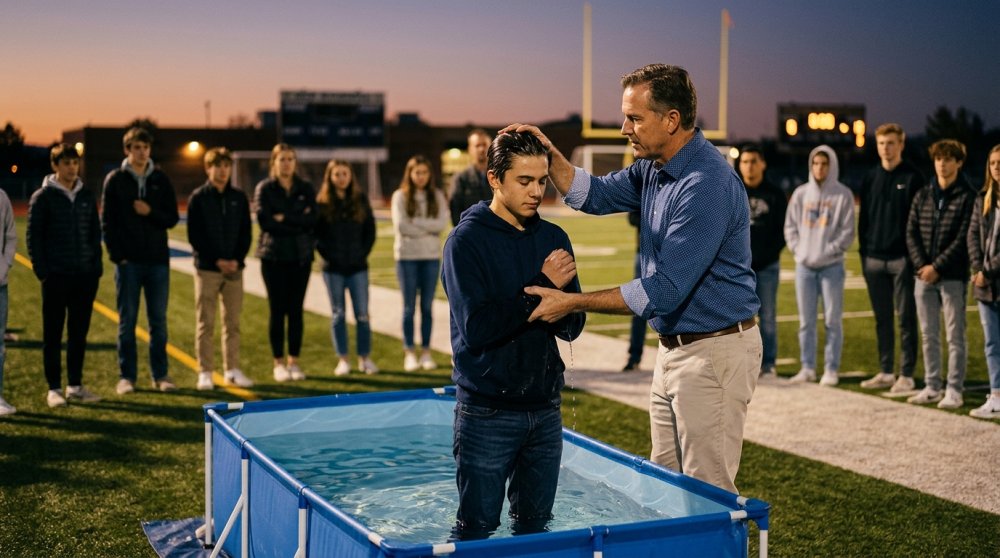
- Nearly 100 students at a Christian high school in Colorado have been baptized following athletic events this year.
- Five separate worship gatherings were organized after games, drawing students seeking faith commitments.
- The baptisms reflect a growing movement of young people responding to the Gospel in school settings.
High school athletic events have long been community gatherings, but one Colorado Christian school is seeing those moments turn into something far more eternal.
After five post-game worship services, nearly 100 students stepped forward for baptism, marking a powerful season of spiritual renewal.
School leaders say the response has been both unexpected and deeply encouraging, as students publicly declare their faith in Christ.
“It has been incredible to watch these young people take this step,” one administrator shared.
The gatherings combine prayer, worship, and testimony, creating a space where students feel welcomed to respond to the message of salvation.
Parents and faculty have noted a renewed sense of purpose and unity among the student body as a result.
“We are seeing the Holy Spirit move in powerful ways,” a staff member added.
Christian education advocates view the events as evidence that faith-based environments can shape hearts as well as minds.
The school plans to continue the post-game worship gatherings in the coming seasons, hoping to build on the momentum of spiritual awakening.
Let us know what you think, please share your thoughts in the comments below.
Faith Facts
- Matthew West releases new album titled ‘Jesus Is King’
- Album emphasizes surrender, vulnerability, and Scripture after nearly 30 years in Christian music
- West challenges the culture of self-empowerment with a message of Christ-centered living
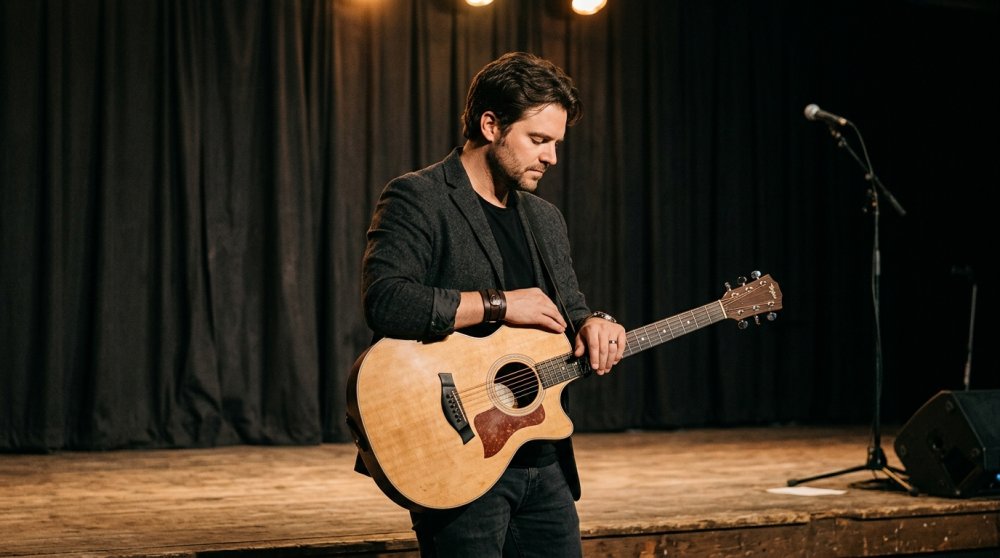
Christian music artist Matthew West is calling believers to place Jesus above self in his latest album, ‘Jesus Is King.’ The project comes after nearly three decades of ministry and reflects a deeper commitment to Scripture and surrender.
West says the album confronts a culture obsessed with self-empowerment by lifting up the lordship of Christ instead. He believes true strength comes from laying down personal control and trusting God’s Word.
"The message of this album is that Jesus is King, and that changes everything."
Through honest lyrics and personal testimony, West hopes listeners will rediscover the power of vulnerability before God. He points to Scripture as the foundation for every song and every season of life.
"After nearly 30 years in Christian music, I am more convinced than ever that surrender is the doorway to real freedom."
Let us know what you think, please share your thoughts in the comments below.


-

 Self-Reliance1 year ago
Trump’s Bold Move Uncovers Massive Social Security Fraud
-

 Faith1 year ago
New Clues Emerge in Noah’s Ark Mystery
-

 News2 years ago
Governor Walz’s Rhetoric Sparks National Controversy
-

 News1 year ago
Mel Gibson’s ‘The Passion of the Christ’ Sequel Title Announced
-

 Family2 years ago
Texas Lawmaker Targets Furries in Schools
-

 Freedom2 years ago
Maine Lawmaker Challenges Sports Fairness Controversy
-

 Family1 year ago
Canada’s Controversial Policy Sparks Ethical Debate
-
Faith10 months ago
Congress Hears Pleas for Nigerian Christians