
News
Kenyan Christians Sound Alarm Over New Tax Bill

Faith Facts
- Two major Christian organizations in Kenya are calling on lawmakers to reject portions of the Finance Bill 2026, citing concerns over economic burdens on families and businesses.
- The appeal comes amid memories of deadly 2024 tax protests that claimed dozens of lives across Kenya.
- Church leaders warn the proposed tax measures could deepen poverty and hinder the nation’s economic recovery.
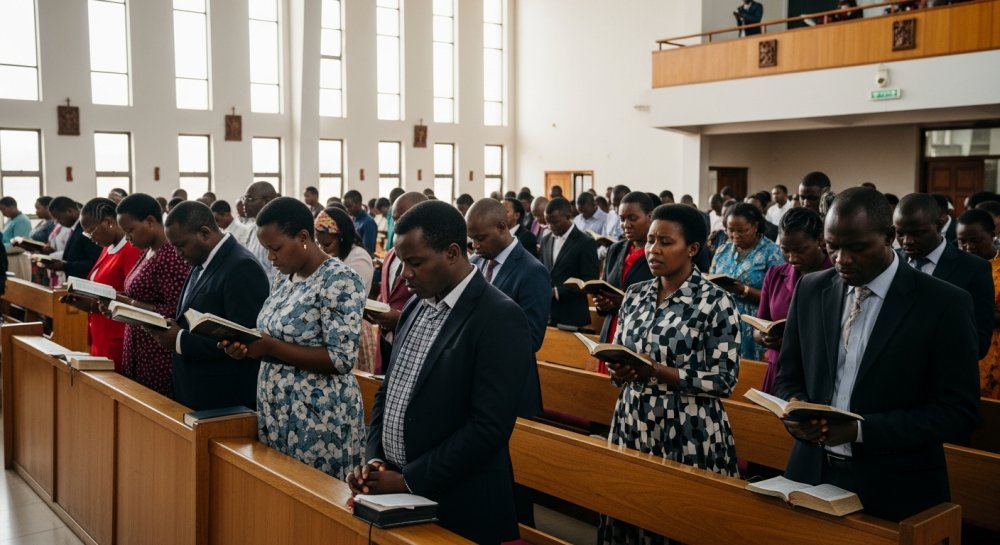
Kenya’s Christian community is taking a stand against government overreach. Two of the nation’s leading Christian organizations have issued urgent appeals to members of parliament, urging them to thoroughly review and amend the Finance Bill 2026 before it becomes law.
The faith leaders are warning that proposed tax measures in the bill could inflict severe economic hardship on Kenyan families and businesses alike. Their concerns carry particular weight given the violent tax protests that rocked the nation in 2024, leaving dozens dead and exposing deep public frustration with government fiscal policy.
The Christian groups argue that rather than stimulating economic growth as intended, the new tax provisions could have the opposite effect — stifling entrepreneurship, deepening poverty, and placing unsustainable burdens on households already struggling with inflation and unemployment.
This faith-based intervention reflects a broader principle that good governance must balance the legitimate revenue needs of government with the economic wellbeing of citizens. Christian teaching emphasizes stewardship, fair dealing, and protection of the vulnerable — principles that should guide all public policy decisions.
The 2024 tax protests serve as a sobering reminder that when governments lose touch with the struggles of ordinary citizens, the results can be catastrophic. The loss of life during those demonstrations underscores the urgent need for lawmakers to listen to voices of reason and restraint.
Kenya’s church leaders are exercising their prophetic role by speaking truth to power. They understand that healthy economies require policies that empower families and businesses, not crush them under excessive taxation. Their willingness to engage the political process demonstrates responsible Christian citizenship.
As parliament considers the Finance Bill 2026, lawmakers would be wise to heed the warnings from Kenya’s Christian community. The alternative — repeating the mistakes that led to deadly unrest in 2024 — is simply unacceptable.
The outcome of this debate will reveal whether Kenya’s government prioritizes short-term revenue collection or long-term economic health and social stability. For the sake of the nation’s families and future, the choice should be clear.
Let us know what you think, please share your thoughts in the comments below.

Faith Facts
- The Rev. Babs Miller publicly denied the virgin birth of Christ during a recorded message.
- Miller described God as vengeful and questioned whether Jesus ever lived.
- Miller serves at the Presbyterian church where Senate candidate James Talarico worships.
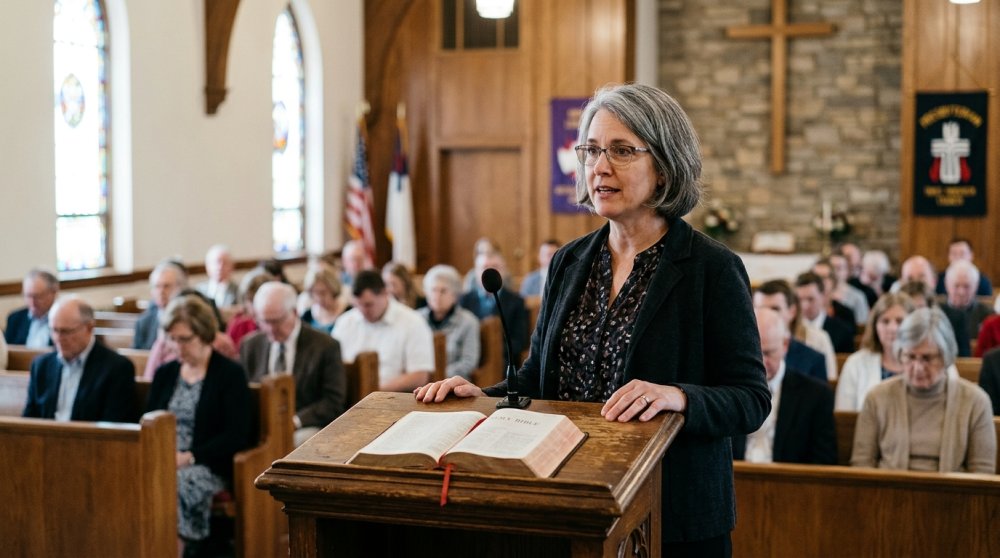
The Rev. Babs Miller, an openly lesbian minister at the Presbyterian Church (USA) congregation attended by Democratic Senate candidate James Talarico, delivered remarks that directly contradict core Christian teachings.
In the recording, Miller rejected the virgin birth, called God “vengeful,” and cast doubt on whether Jesus Christ even existed.
EXCLUSIVE: James Talarico’s Pastor Says Jesus Didn’t Die For Sins, Slanders Virgin Mary
“We have no way of knowing if Jesus really existed,” Rev. Babs Miller of St. Andrew’s Presbyterian Church says in NEW undercover video obtained by @realDailyWire. pic.twitter.com/spK4TWS4XT
— Jacob Wheeler (@JWheelertv) September 23, 2026
“The virgin birth is a story that was added later,” Miller stated. “It was never part of the original narrative.”
“I don’t believe in a God who is vengeful,” she continued. “That image of God is harmful.”
“I’m not even sure Jesus was a real person,” Miller added. “The historical evidence is thin.”
Her statements stand in direct opposition to the historic Christian confession that Jesus was conceived by the Holy Spirit and born of the virgin Mary, as affirmed in the Apostles’ Creed and Scripture.
Let us know what you think, please share your thoughts in the comments below.
Faith Facts
- Governor Andy Beshear defended his veto of legislation restricting taxpayer funding for transgender procedures on minors by invoking his Christian faith.
- Scripture teaches that God created male and female and calls His people to protect children from harm.
- Christian teaching emphasizes bodily integrity and the rejection of irreversible medical interventions on minors.
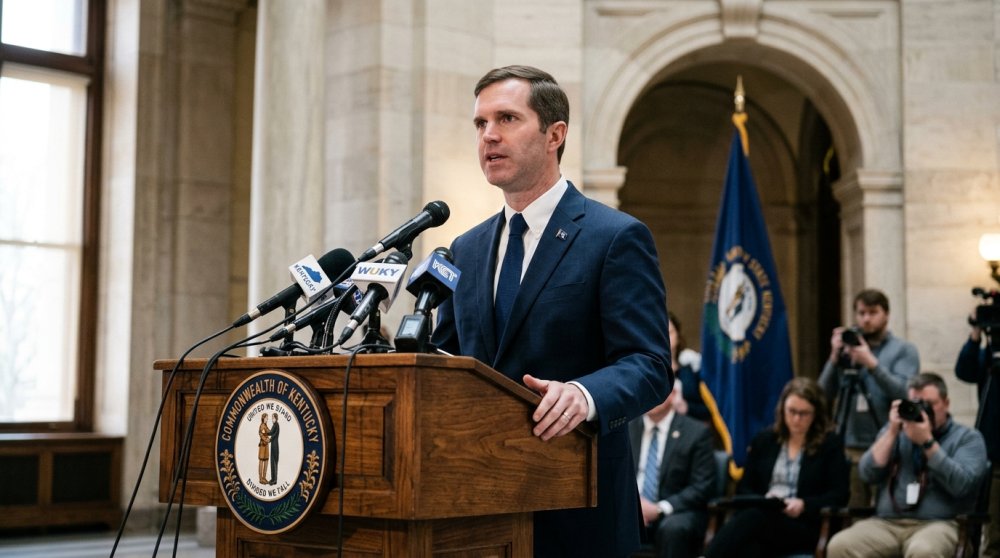
Kentucky Governor Andy Beshear has publicly tied his Christian faith to his decision to veto a bill that would have protected minors from irreversible medical procedures. The Democratic governor argued that opposition to taxpayer-funded transgender interventions on children is somehow contrary to Christianity.
The vetoed legislation would have prevented state dollars from supporting procedures that carry documented risks including infertility and permanent loss of sexual function. Beshear framed his opposition as a matter of compassion rooted in his understanding of the Christian faith.
“I believe as a person of faith that we are all created in the image of God and that we are called to love and care for one another.”
The governor also criticized Senator JD Vance’s profession of Christian faith, suggesting that Vance’s support for the bill was inconsistent with Christian values. Beshear positioned his stance as the truly compassionate and faith-informed position on the issue.
“I think it’s important that we remember that our faith calls us to be in relationship with one another and to care for the most vulnerable among us.”
Christian conservatives maintain that protecting children from experimental medical interventions aligns with both Scripture and sound medical ethics. They point to the growing number of European countries that have restricted or banned such procedures for minors due to lack of evidence and serious long-term risks.
Traditional Christian teaching holds that God created humanity as male and female and that medical interventions attempting to alter this created order contradict biblical anthropology. Many believers argue that true compassion involves addressing underlying mental health issues rather than affirming a child’s confusion through irreversible procedures.
Let us know what you think, please share your thoughts in the comments below.
Faith Facts
- Romans 16:16 calls believers to greet one another with a holy kiss while identifying congregations as churches of Christ.
- Acts 15:39 records the sharp disagreement between Paul and Barnabas that led them to part company over John Mark.
- 2 Timothy 4:11 shows that John Mark later earned Paul’s trust and respect by the end of his life.
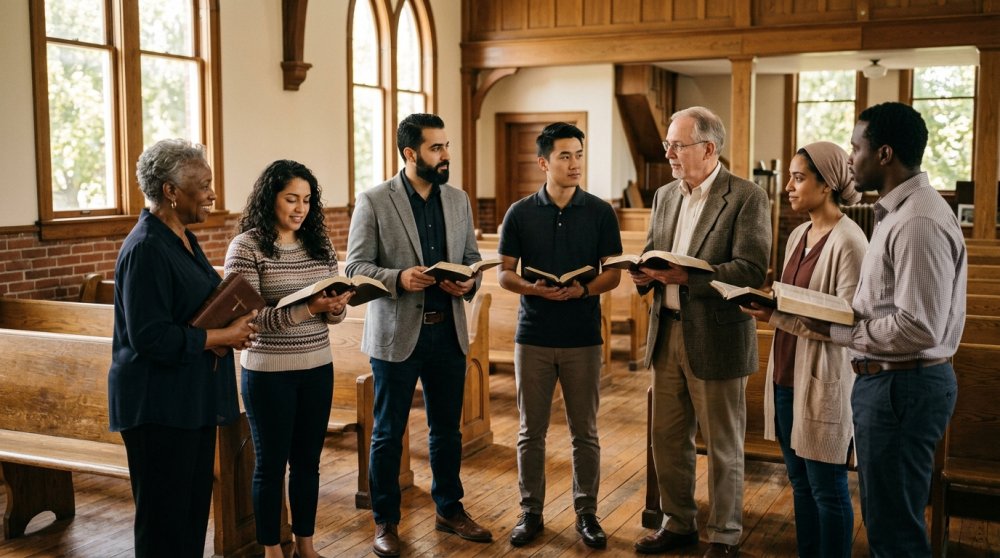
Churches of Christ carry many labels today. Conservative mainstream. Moderate mainstream. Non-institutional. Progressive. Instrumental. One cup. Little c. Big C. Doctrinally sound. Yet believers across these groups share one common sentiment.
They do not like labels. Most prefer simply to be called the church or the Lord’s church.
Congregations remain autonomous. They take their name from the second part of Romans 16:16, which states, “All the churches of Christ send greetings.”
Common beliefs exist. Differences remain over women’s roles, the number of communion cups, and hand clapping in worship. These divisions echo patterns seen throughout church history.
Social media now makes it easier for believers to stay inside smaller circles of like-minded Christians. Algorithms filter out opposing voices. This trend mirrors divisions in the wider culture.
Fellow believers can disagree. Scripture records the heated discussion between Paul and Barnabas about whether to take John Mark on their second missionary journey. “They had such a sharp disagreement that they parted company” (Acts 15:39).
John Mark had left early during the first journey. He was young. Barnabas believed in second chances. Paul later reconciled with Mark, as shown in 2 Timothy 4:11.
Both teams advanced the gospel. Paul and Silas demonstrated the Lord powerfully in Acts 16-18. Barnabas and John Mark did likewise.
“Can we disagree on such matters and find a way to move forward together? Or should we be content to labor separate and apart from each other?”
A disagreement over travel companions differs from disagreements over instruments in worship. Yet the principle remains the same.
Reporting for the “Who Are We?” series reveals a shared desire to proclaim the Kingdom. Brothers and sisters across the right, left, and center of the fellowship express the same hope.
“I wish we could get past all this and concentrate on seeking and saving the lost.”
Perhaps this shared mission offers a starting point for unity. The holy kiss may take more time.
Let us know what you think, please share your thoughts in the comments below.


-

 Self-Reliance1 year ago
Trump’s Bold Move Uncovers Massive Social Security Fraud
-

 Faith1 year ago
New Clues Emerge in Noah’s Ark Mystery
-

 News2 years ago
Governor Walz’s Rhetoric Sparks National Controversy
-

 News1 year ago
Mel Gibson’s ‘The Passion of the Christ’ Sequel Title Announced
-

 Family2 years ago
Texas Lawmaker Targets Furries in Schools
-

 Freedom2 years ago
Maine Lawmaker Challenges Sports Fairness Controversy
-

 Family1 year ago
Canada’s Controversial Policy Sparks Ethical Debate
-
Faith10 months ago
Congress Hears Pleas for Nigerian Christians