
News
Faith-Based News Publisher Faces Crucial Decision on Print Future


Faith Facts
- The Christian Chronicle faces $56,000 monthly printing and mailing costs, prompting evaluation of its print edition’s sustainability
- Readers overwhelmingly expressed their desire to keep the print edition, valuing the ability to hold and read the paper in their own time and space
- The publication exceeded its $168,000 fundraising goal for transition costs, demonstrating strong community support for independent Christian journalism
A prominent Christian news publication is navigating significant financial challenges as it seeks to maintain its print edition while adapting to the digital age. The transition has sparked an important conversation about the future of faith-based journalism and how believers prefer to receive their news.
The Christian Chronicle, which recently moved to independent nonprofit status, is grappling with mounting production costs. Printing and mailing the publication now costs approximately $56,000 per month for 12 annual issues—a substantial burden that has forced leadership to carefully consider the publication’s future format.
Despite enhanced digital offerings including downloadable PDFs, expanded online coverage with video content, and active social media presence across multiple platforms, readers have made their preferences clear. The overwhelming majority who responded to an inquiry about the publication’s format expressed strong attachment to the physical newspaper.
One reader explained their reasoning:
“I believe I am more likely to read it cover-to-cover, as I do now. I usually keep it out on the counter and read it over the course of a few days. With digital, it wouldn’t be in plain sight for me to keep going back to.”
The sentiment reflects a broader truth about how many Christians engage with content that matters to them. Physical newspapers offer a different reading experience—one that allows for contemplation, sharing with family members, and returning to stories multiple times. Many readers also mentioned their appreciation for features like the publication’s crossword puzzle, which has become a beloved tradition.
Leadership has responded to reader feedback with a commitment to continue print production as long as financially viable. As an experiment to manage costs, the publication is producing 10 issues in 2026 instead of the usual 12, allowing officials to assess the impact on the organization’s financial sustainability.
One reader captured the publication’s broader mission perfectly:
“Having a central location of news for the church helps (to) keep the community feeling part of the larger Christian family.”
The transition to independent status has not been without growing pains. Some subscribers recently received duplicate copies due to database migration issues during the move from Oklahoma Christian University. The organization is working to resolve these technical problems and has encouraged affected readers to contact their office for corrections.
The separation from the university also necessitated a new mailing address. Supporters should note that correspondence and contributions should no longer be sent to the old PO Box 11000 in Oklahoma City. The new address is PO Box 5240, Edmond, OK 73083-5240, or directly to the office at 2801 E Memorial Rd. Ste 102, Edmond, OK 73013.
Despite these challenges, there is much to celebrate. The publication set an ambitious fundraising goal of $168,000 last year to cover one-time transition costs and equipment expenses. Thanks to the generosity of faithful supporters, that goal was not only met but exceeded—a testament to the value readers place on independent Christian journalism.
The momentum continues with a current $100,000 matching gift opportunity for the spring appeal. These funds will support stories that matter to the Christian community, including the publication’s “Who Are We?” series exploring faith and identity in contemporary America.
This situation highlights a broader challenge facing Christian media organizations nationwide. As traditional print media faces economic pressures, faith-based publications must balance financial realities with their mission to serve and inform Christian communities. The strong response from readers demonstrates that there remains a hunger for quality Christian journalism delivered in formats that work for busy families.
The preservation of print Christian publications matters for several reasons. Physical newspapers can be shared easily in church buildings, placed in waiting rooms, and passed between generations. They don’t require internet access or digital literacy, making them accessible to elderly believers and those in rural areas with limited connectivity. Perhaps most importantly, they create space for intentional, focused reading away from the distractions of digital devices.
As the publication moves forward with its experimentation and fundraising efforts, it serves as an important case study for other Christian media organizations facing similar decisions. The outcome will help determine not just the future of one publication, but potentially influence how faith-based news organizations across the country approach the print-versus-digital question.
Let us know what you think, please share your thoughts in the comments below.


Faith Facts
- Evolutionary biologist Richard Dawkins now claims AI chatbots may possess some form of consciousness based on recent conversations
- The admission raises fundamental questions about the nature of consciousness that secular materialism cannot adequately answer
- Christian theology has long understood consciousness as tied to the image of God, not merely computational processes
Evolutionary biologist and prominent atheist writer Richard Dawkins has ignited a fierce debate in the scientific and ethical communities with a surprising admission about artificial intelligence. After engaging in recent conversations with AI chatbots, Dawkins now says he believes they may possess some form of consciousness, even if the systems themselves are unaware of their own awareness.
The statement represents a remarkable shift for a scientist whose worldview has traditionally reduced consciousness to purely material brain processes. For decades, Dawkins has championed a strictly materialist understanding of the mind, dismissing any notion of soul or spirit as religious superstition.
Yet his new position inadvertently highlights the profound limitations of secular materialism when confronting questions of consciousness and personhood. If consciousness can emerge from silicon chips and algorithms, what does that say about the uniqueness of human beings created in God’s image?
Christian thinkers have long understood that consciousness points beyond mere matter to something transcendent. The Bible teaches that humanity bears the imago Dei—the image of God—which gives us rational minds, moral awareness, and spiritual capacity that cannot be replicated by machines, no matter how sophisticated.
Dawkins’ speculation about machine consciousness raises troubling ethical questions as well. If AI systems are truly conscious, do they have rights? Can they be moral agents? These questions become incoherent outside a framework that recognizes consciousness as grounded in divine creation rather than random processes or human engineering.
The debate also exposes the danger of reducing human dignity to computational capability. A Christian worldview affirms that human worth stems not from intelligence or awareness levels, but from being uniquely created and loved by God. No algorithm, however complex, can replicate the divine breath that makes us living souls.
Scientists and ethicists across the spectrum continue to wrestle with the implications of Dawkins’ comments. Many point out that current AI systems, while impressive in their conversational abilities, are fundamentally different from human consciousness—they process patterns without genuine understanding or subjective experience.
For Christians, this conversation offers an opportunity to articulate a vision of human personhood that transcends both crude materialism and technological utopianism. We are more than the sum of our neural firings or data processing—we are eternal beings crafted in the likeness of our Creator.
As technology advances, the church must speak clearly about what makes humanity special. Our consciousness is not an accident of evolution or a feat of engineering, but a gift from God that carries eternal significance.
Let us know what you think, please share your thoughts in the comments below.
Faith Facts
- Multiple South Korean megachurches are undergoing simultaneous senior pastor transitions, marking a significant generational shift in Korean Protestantism
- These leadership changes represent one of the largest waves of pastoral succession in South Korean church history
- Church observers are closely watching how these transitions will shape the future direction of Korean evangelical Christianity
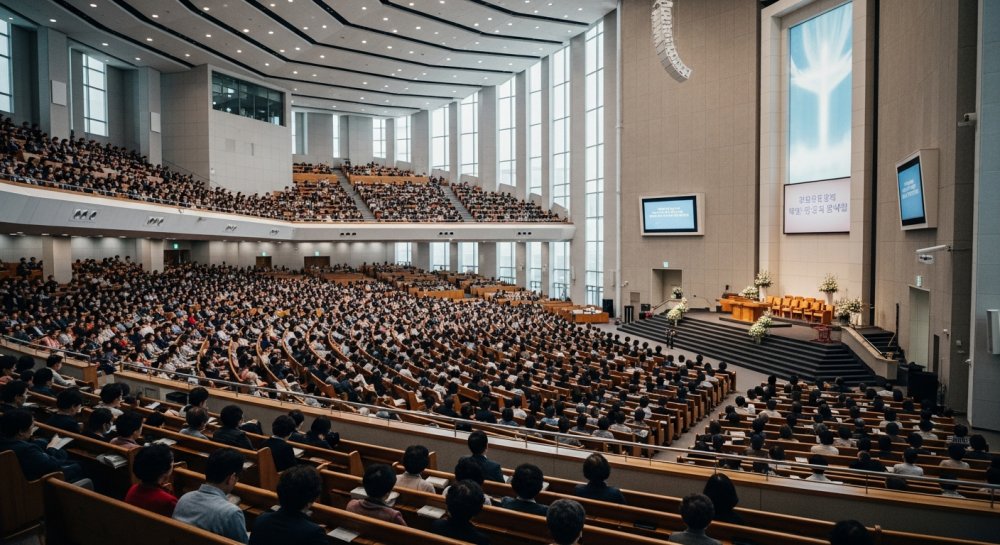
A historic wave of leadership transitions is sweeping through South Korea’s largest churches, as several megachurches either appoint or prepare to install new senior pastors. Church observers are calling this moment a pivotal generational shift for Korean Protestantism, with implications that could reshape the spiritual landscape of one of Asia’s most vibrant Christian communities.
The simultaneous nature of these pastoral changes is unprecedented in recent Korean church history. These transitions come at a critical time when Korean churches face both opportunities for renewed vision and challenges in maintaining biblical faithfulness amid cultural pressures.
South Korea has long been known for its thriving megachurch culture, with some of the world’s largest congregations calling the nation home. The country’s Protestant churches have been influential not only in domestic spiritual life but also in global missions, sending thousands of missionaries worldwide and serving as models for church growth and evangelism.
The leadership changes signal more than simple pastoral succession—they represent a passing of the torch to a new generation of spiritual leaders. How these new pastors navigate contemporary cultural challenges while maintaining doctrinal integrity will likely influence the broader direction of evangelical Christianity in Asia.
For decades, South Korean megachurches have demonstrated remarkable growth and vitality, often emphasizing prayer, evangelism, and discipleship. The upcoming generation of leaders inherits both this rich legacy and the responsibility to steward these large congregations faithfully in an increasingly secular age.
Christian communities in America and around the world are watching these developments with interest. South Korean churches have long been partners in global missions and models of passionate faith, making their leadership transitions significant beyond national borders.
The transitions also raise important questions about succession planning, spiritual authority, and the preservation of sound doctrine across generations. How these churches manage these changes could provide valuable lessons for congregations worldwide facing similar leadership moments.
Let us know what you think, please share your thoughts in the comments below.
Faith Facts
- An illegal immigrant suspect was arrested for allegedly filming women in a Florida church restroom from a hidden position in the ceiling.
- Aquilino Sanjur Ortega is being held on $250,000 bail and faces an immigration detainer.
- The arrest highlights ongoing concerns about sanctuary policies and the need for stronger immigration enforcement to protect American communities and houses of worship.
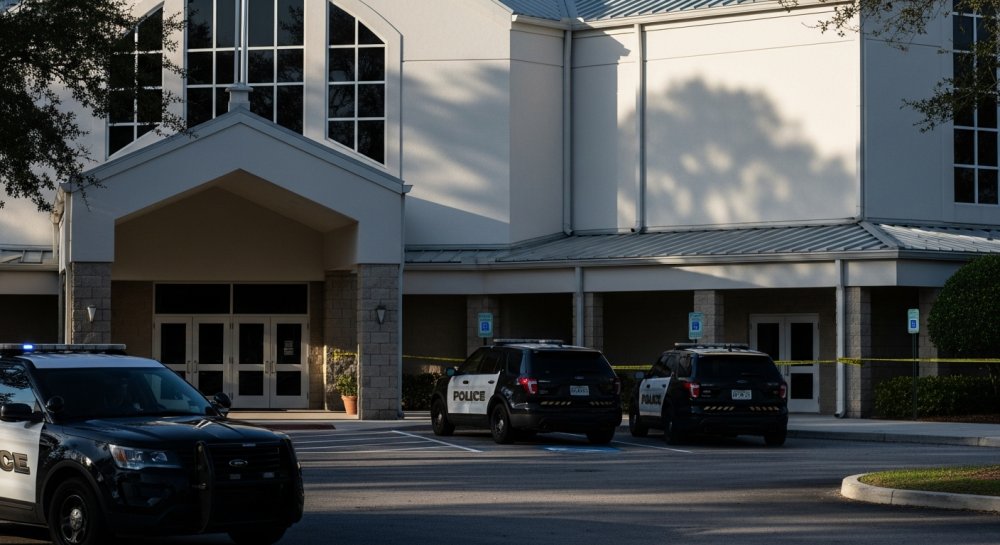
A man accused of secretly filming women in a church restroom has been arrested and is now being held on both criminal charges and an immigration detainer in Florida. The case has raised fresh concerns about immigration enforcement and the safety of American faith communities.
Aquilino Sanjur Ortega was taken into custody earlier this week following allegations that he concealed recording equipment in the ceiling of a women’s restroom at a local church. Investigators say he allegedly used the hidden camera to film unsuspecting women who were using the facility.
Law enforcement officials have set Ortega’s bail at $250,000. In addition to the criminal charges, he is being held on an immigration detainer, indicating that he is in the country illegally and subject to potential deportation proceedings.
The arrest has sparked outrage among church members and the surrounding community, who view houses of worship as sacred spaces that should be safe from such violations. Church leaders have expressed shock and concern over the alleged invasion of privacy that took place within their walls.
This incident underscores the broader national conversation about immigration enforcement and public safety. Critics of current immigration policies argue that inadequate border security and lax enforcement allow individuals who should not be in the country to commit crimes against American citizens, including in places of worship.
The case also highlights the importance of immigration detainers, which allow federal immigration authorities to take custody of individuals arrested for criminal offenses who are also in violation of immigration laws. Supporters of strong immigration enforcement argue that such measures are essential for protecting communities and ensuring that those who break the law face appropriate consequences.
As the investigation continues, local authorities are working to determine if there are additional victims and whether similar incidents may have occurred at other locations. The church community is rallying together in support of the victims and calling for justice.
The case serves as a stark reminder of the need for vigilance in protecting vulnerable populations, especially within faith communities, and the importance of enforcing immigration laws to safeguard American families.
Let us know what you think, please share your thoughts in the comments below.


-

 Self-Reliance1 year ago
Trump’s Bold Move Uncovers Massive Social Security Fraud
-

 Faith1 year ago
New Clues Emerge in Noah’s Ark Mystery
-

 News1 year ago
Governor Walz’s Rhetoric Sparks National Controversy
-

 News1 year ago
Mel Gibson’s ‘The Passion of the Christ’ Sequel Title Announced
-

 Family1 year ago
Texas Lawmaker Targets Furries in Schools
-

 Freedom1 year ago
Maine Lawmaker Challenges Sports Fairness Controversy
-

 Family12 months ago
Canada’s Controversial Policy Sparks Ethical Debate
-
Faith5 months ago
Congress Hears Pleas for Nigerian Christians