
News
Church Restroom Surveillance Suspect Detained on Immigration Hold

Faith Facts
- An illegal immigrant suspect was arrested for allegedly filming women in a Florida church restroom from a hidden position in the ceiling.
- Aquilino Sanjur Ortega is being held on $250,000 bail and faces an immigration detainer.
- The arrest highlights ongoing concerns about sanctuary policies and the need for stronger immigration enforcement to protect American communities and houses of worship.
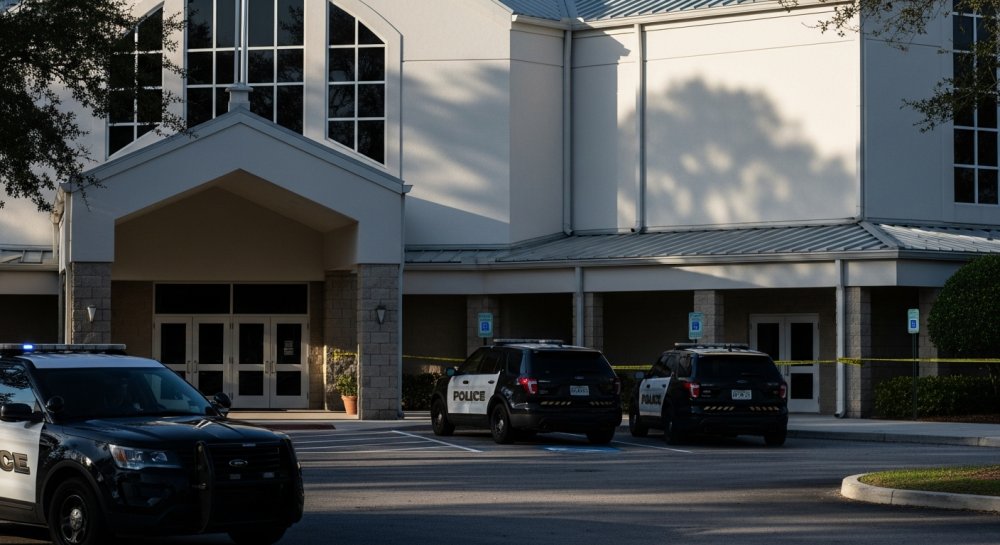
A man accused of secretly filming women in a church restroom has been arrested and is now being held on both criminal charges and an immigration detainer in Florida. The case has raised fresh concerns about immigration enforcement and the safety of American faith communities.
Aquilino Sanjur Ortega was taken into custody earlier this week following allegations that he concealed recording equipment in the ceiling of a women’s restroom at a local church. Investigators say he allegedly used the hidden camera to film unsuspecting women who were using the facility.
Law enforcement officials have set Ortega’s bail at $250,000. In addition to the criminal charges, he is being held on an immigration detainer, indicating that he is in the country illegally and subject to potential deportation proceedings.
The arrest has sparked outrage among church members and the surrounding community, who view houses of worship as sacred spaces that should be safe from such violations. Church leaders have expressed shock and concern over the alleged invasion of privacy that took place within their walls.
This incident underscores the broader national conversation about immigration enforcement and public safety. Critics of current immigration policies argue that inadequate border security and lax enforcement allow individuals who should not be in the country to commit crimes against American citizens, including in places of worship.
The case also highlights the importance of immigration detainers, which allow federal immigration authorities to take custody of individuals arrested for criminal offenses who are also in violation of immigration laws. Supporters of strong immigration enforcement argue that such measures are essential for protecting communities and ensuring that those who break the law face appropriate consequences.
As the investigation continues, local authorities are working to determine if there are additional victims and whether similar incidents may have occurred at other locations. The church community is rallying together in support of the victims and calling for justice.
The case serves as a stark reminder of the need for vigilance in protecting vulnerable populations, especially within faith communities, and the importance of enforcing immigration laws to safeguard American families.
Let us know what you think, please share your thoughts in the comments below.

Faith Facts
- Samuel Rodriguez is a prominent Hispanic evangelical leader focused on faith, family, and freedom.
- Conservative values emphasize personal responsibility, limited government, and secure borders.
- Latino voters have historically prioritized faith-based principles and traditional American ideals.
Samuel Rodriguez, president of the National Hispanic Christian Leadership Conference, warned that Republican candidates could face significant Latino voter abstention during the 2026 midterm elections. He attributes this risk to rising living costs and the Trump administration’s firm immigration policies.
"Hispanic Evangelical leader Samuel Rodriguez believes conservatives could most certainly lose ground with Latino voters in the 2026 midterm elections through what he calls votes of abstention as the community struggles with higher costs of living and the Trump administration’s aggressive immigration enforcement."
Rodriguez highlights that many Latino families are feeling financial strain from inflation and everyday expenses. These pressures, combined with strict border enforcement, may lead some voters to stay home on election day.
"Hispanic Evangelical leader Samuel Rodriguez believes conservatives could most certainly lose ground with Latino voters in the 2026 midterm elections through what he calls votes of abstention as the community struggles with higher costs of living and the Trump administration’s aggressive immigration enforcement."
While acknowledging the importance of border security, Rodriguez urges Republican leaders to communicate their policies with compassion and clarity to maintain support among faith-minded Latino voters.
Let us know what you think, please share your thoughts in the comments below.
Faith Facts
- Scripture warns against false witness and calls believers to defend truth with love and clarity.
- Christian teaching upholds the unique biblical connection of the Jewish people to the land of Israel.
- Faithful Christians are called to stand with Israel and reject rhetoric that distorts history or stirs division.
Former President Barack Obama recently told an audience in Belfast that the Jews “took land off people” and were “excessive.” The remarks drew swift and pointed criticism from Elisha Wiesel, son of the late Nobel laureate Elie Wiesel. Wiesel’s public response highlighted the troubling nature of the former president’s language.
Christians who hold to the authority of Scripture recognize that such statements misrepresent both history and God’s covenant promises. The Bible consistently affirms the Jewish people’s connection to the land of Israel, from Genesis through the prophets.
“It is dangerous for a former president of the United States to use such language,” Elisha Wiesel stated.
The comment comes amid ongoing global debates over Israel’s right to exist and defend itself. Many American believers see these discussions as spiritual as well as political, rooted in the promises recorded in Scripture.
“Words have consequences, especially when spoken by those who once held the highest office in our nation,” Wiesel added.
Faithful Christians are increasingly vocal in their support for Israel and their concern over rhetoric that echoes historic patterns of blame. Standing with the Jewish people remains a matter of biblical conviction for many American believers.
Let us know what you think, please share your thoughts in the comments below.
Faith Facts
- An Indian AI specialist addressed church leaders about the dangers of relying on artificial intelligence for sermon preparation.
- Pastors were instructed to take complete ownership of their messages and never upload private pastoral data to public AI platforms.
- The guidance emphasizes the irreplaceable role of human spiritual leadership in the life of the church.
Church leaders across India heard a clear warning about the growing use of artificial intelligence in ministry preparation.
An Indian AI specialist cautioned that while technology can assist with research and organization, it cannot replace the God-given responsibility pastors carry in the pulpit.
“AI cannot pray for us,” the specialist declared, underscoring that spiritual authority remains firmly in human hands.
Pastors were advised to carefully review and claim every word they deliver from Scripture, ensuring their sermons reflect personal conviction and biblical fidelity rather than machine-generated content.
The specialist also stressed the importance of protecting confidential pastoral information, urging ministers never to input personal or sensitive data into publicly accessible AI tools.
This guidance comes as many pastors explore digital resources to ease the burden of weekly preparation, yet the specialist reminded them that technology serves the shepherd, not the other way around.
Let us know what you think, please share your thoughts in the comments below.


-

 Self-Reliance2 years ago
Trump’s Bold Move Uncovers Massive Social Security Fraud
-

 Faith2 years ago
New Clues Emerge in Noah’s Ark Mystery
-

 News2 years ago
Governor Walz’s Rhetoric Sparks National Controversy
-

 News2 years ago
Mel Gibson’s ‘The Passion of the Christ’ Sequel Title Announced
-

 Family2 years ago
Texas Lawmaker Targets Furries in Schools
-

 Freedom2 years ago
Maine Lawmaker Challenges Sports Fairness Controversy
-

 Family1 year ago
Canada’s Controversial Policy Sparks Ethical Debate
-
Faith11 months ago
Congress Hears Pleas for Nigerian Christians