
Faith
Congo’s Christians Face Mounting Crisis as Violence and Disease Converge

Faith Facts
- Thousands of Christians in eastern Congo are trapped between systematic Islamist violence and the deadly Ebola outbreak
- Militant groups including ISIS-affiliated factions are targeting Christian communities, forcing mass displacement and creating a severe humanitarian emergency
- Believers in the region urgently need prayer support as they face persecution, disease, and the destruction of their homes and churches
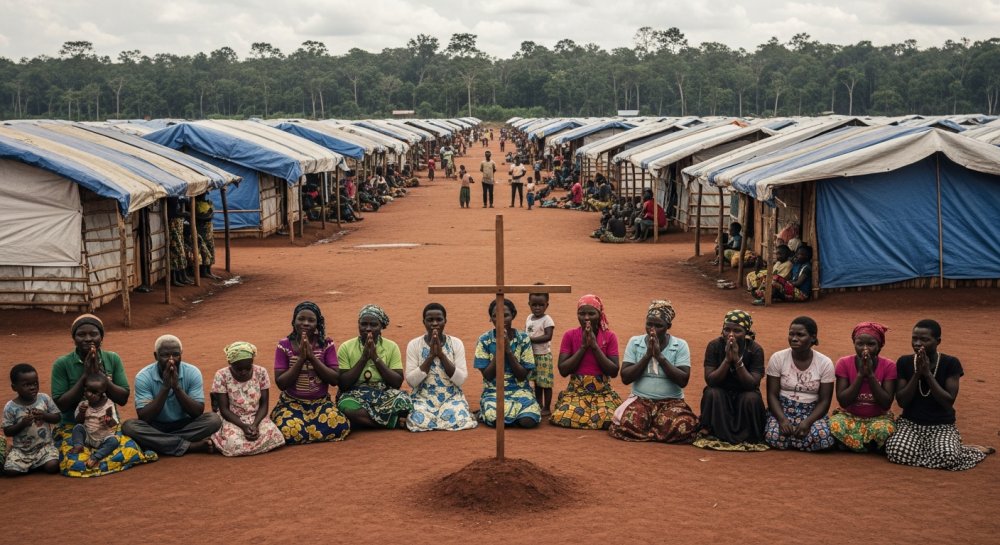
In the eastern region of the Democratic Republic of Congo, a perfect storm of tragedy is unfolding. Christian communities find themselves caught in a devastating crossfire between escalating Islamist terrorism and a deadly Ebola epidemic that has already claimed thousands of lives.
The crisis represents one of the most severe challenges facing the global body of Christ today, yet it remains largely unreported by mainstream media outlets.
According to reports from Open Doors, an organization dedicated to serving persecuted Christians worldwide, Islamist militant groups have systematically targeted Christian villages throughout the region. These attacks have resulted in mass displacement, destroyed churches, and a climate of fear that has made normal life impossible for believers trying to maintain their faith.
Ben Cohen from Open Doors has documented firsthand accounts from Christians living through this nightmare. The testimonies reveal a pattern of coordinated violence aimed specifically at Christian communities, forcing families to flee their homes with nothing but the clothes on their backs.
The situation is further complicated by the ongoing Ebola outbreak, which has created additional barriers to safety and survival. Healthcare infrastructure has been decimated by the violence, making it nearly impossible for displaced Christians to receive medical care when they need it most. The combination of disease and terrorism has created a humanitarian catastrophe that demands the attention and prayers of Christians worldwide.
ISIS-affiliated groups operating in the region have openly declared their intention to establish Islamic governance, viewing Christian communities as obstacles to their agenda. This ideology-driven violence represents a direct assault on religious freedom and the right of Christians to worship according to their conscience.
The persecution extends beyond physical violence. Christian families report systematic discrimination, forced conversion attempts, and the deliberate destruction of Bibles and religious materials. Children have been orphaned, and entire congregations have been scattered as believers flee for their lives.
Despite these overwhelming challenges, reports indicate that Congolese Christians continue to demonstrate remarkable faith and resilience. Underground church meetings continue, and believers are finding ways to support one another even in the midst of unimaginable hardship. Their testimony serves as a powerful reminder of the strength that comes from placing trust in God during life’s darkest moments.
The crisis in Congo underscores the urgent need for the American church to remember and support our persecuted brothers and sisters. While we enjoy religious freedom in the United States, Christians in Congo are paying the ultimate price for their faith. Their situation calls for sustained prayer, advocacy, and practical support from the global Christian community.
International relief organizations working in the region emphasize that security conditions make aid delivery extremely difficult. The combination of active conflict zones and disease quarantine areas has created a logistical nightmare for those attempting to provide humanitarian assistance. Yet the need remains urgent and the suffering continues unabated.
This crisis also highlights the broader pattern of Christian persecution across Africa, where Islamist extremism has created widespread suffering for believers in multiple nations. The situation in Congo is part of a larger struggle for religious freedom that affects millions of Christians across the continent.
American Christians have both a moral obligation and a biblical mandate to stand with persecuted believers. Scripture calls us to remember those in prison as if we were their fellow prisoners, and to empathize with those who are mistreated as if we ourselves were suffering. The Christians of Congo need our prayers, our advocacy, and our support now more than ever.
Let us know what you think, please share your thoughts in the comments below.

Faith Facts
- More than 1,000 people died in catastrophic landslide flooding in Nepal
- Christian organizations and church networks are mobilizing for years-long relief efforts
- Countless children have been orphaned and survivors have lost everything
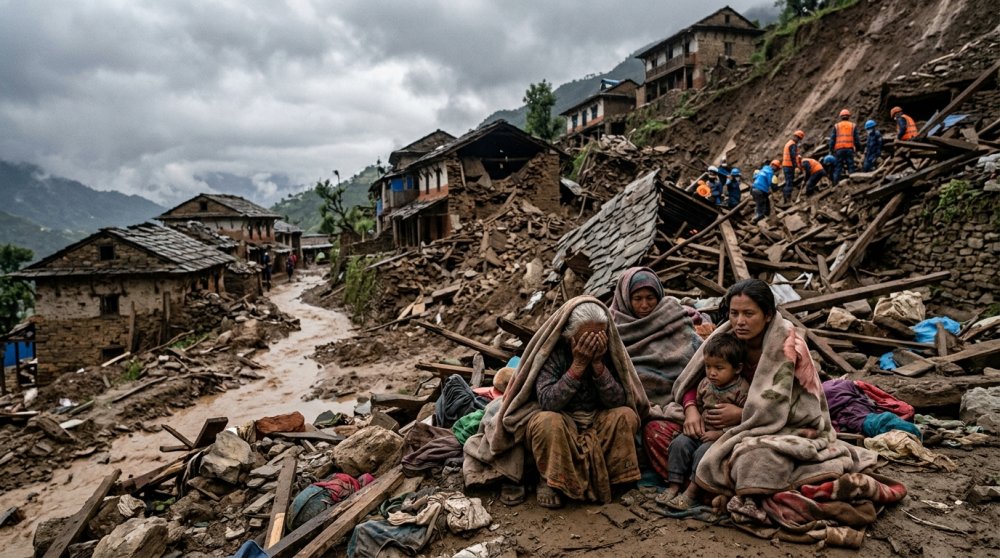
Days after devastating landslide flooding ravaged Nepal, claiming over 1,000 lives, Christian organizations and church networks across the region are launching what they expect will be a multi-year mission to serve survivors who have lost everything. Among the most vulnerable are countless children now orphaned by the disaster, facing an uncertain future without parents or homes.
The catastrophic natural disaster has left entire communities destroyed, with families torn apart and basic necessities like shelter, food, and clean water in desperately short supply. Christian relief workers on the ground report scenes of overwhelming need, with survivors struggling to comprehend the scale of loss while searching for missing loved ones.
Church networks are coordinating emergency response efforts while simultaneously preparing for the long road ahead. The scope of destruction means recovery will not be measured in weeks or months, but in years of sustained support, rebuilding, and spiritual care for traumatized communities.
For the newly orphaned children, Christian organizations are working to provide immediate care and safety while developing longer-term solutions. The faith community recognizes that beyond physical needs, these young survivors will require emotional and spiritual support to heal from unimaginable trauma.
As believers around the world lift up Nepal in prayer, Christian relief workers emphasize that prayer itself is a powerful force in times of crisis. The combination of practical aid and spiritual intercession reflects the Church’s calling to serve the least of these, demonstrating Christ’s love through action in the darkest hours.
The international Christian community is being called to support these relief efforts through donations, prayer, and long-term commitment to Nepal’s recovery. This disaster serves as a reminder of both the fragility of life and the enduring power of faith-driven compassion to bring hope where all seems lost.
Let us know what you think, please share your thoughts in the comments below.

Faith Facts
- Pastor Robert Guanco lost his life in a tragic accident during Big Church Festival while serving at the event
- Main Stage host Gemma Hunt had to make the heartbreaking announcement to thousands of festival attendees
- The Christian community responded with prayer, unity, and unwavering faith despite the devastating loss
When thousands gather to worship and celebrate their faith, the last thing anyone expects is tragedy. Yet at Big Church Festival, the joy of Christian fellowship was shattered by an accident that took the life of Pastor Robert Guanco, a faithful servant who was simply doing what he loved—serving others in the name of Christ.
For Main Stage host Gemma Hunt, the moment remains seared in her memory. Standing before a sea of believers, she faced the most difficult task of her career: announcing that a brother in Christ had gone home to be with the Lord under circumstances no one could have anticipated.
“It was the hardest announcement I have ever had to make,” Hunt shared, her voice still carrying the weight of that day.
The grief that followed rippled through the festival grounds like waves. Families who came to celebrate their faith together suddenly found themselves clinging to it in an entirely different way. Children who had been singing praises moments before now watched their parents process an incomprehensible loss.
Yet even in the darkest valley, the light of faith refused to be extinguished. The Christian community at Big Church Festival did what believers have done for two thousand years—they turned to God, to each other, and to the promises that transcend human understanding.
Pastor Guanco’s death raises questions that have no easy answers. Why would God allow a faithful servant to be taken during an event meant to glorify His name? How do we reconcile tragedy with the goodness of our Creator?
Hunt’s reflection captures the honest struggle of faith: “I don’t understand it, but I know God is good.”
This statement isn’t a platitude or a spiritual bypass of genuine grief. It’s the bedrock confession of believers who have learned that God’s goodness isn’t measured by our circumstances but by His unchanging character. It’s the faith of Job, who declared “Though He slay me, yet will I trust Him.”
The American church today desperately needs this kind of honest, resilient faith. In a culture that increasingly demands explanations for everything and views suffering as evidence against God’s existence, Christians must learn to hold tension—to grieve deeply while trusting completely, to ask hard questions while maintaining firm convictions.
Pastor Guanco’s legacy isn’t defined by how he died but by how he lived—in service to his King and his community. His life points to the truth that our time on earth, however long or short, is meant to be spent advancing God’s kingdom and loving His people.
The Big Church Festival community’s response to this tragedy demonstrates the supernatural nature of Christian fellowship. Rather than scattering in confusion or turning away from God in anger, believers gathered closer, prayed harder, and reminded each other of eternal truths that anchor the soul when earthly foundations shake.
This is what the world needs to see from the church—not perfection, not immunity from suffering, but authenticity in grief combined with unshakeable hope. We mourn, yes, but not as those who have no hope. We weep, absolutely, but we weep while standing on the promises of God.
As our nation faces increasing hostility toward Christian values and our culture promotes a worldview that can’t account for suffering beyond meaningless randomness, the church’s response to tragedy becomes a powerful witness. When Christians can say “I don’t understand, but God is good,” we testify to a reality beyond the material, a hope beyond the grave, and a love that transcends loss.
The questions raised by Pastor Guanco’s death won’t all be answered this side of heaven. That’s the nature of walking by faith. But his life, his service, and even the Christian community’s response to his passing preach a sermon more powerful than words—that Jesus Christ is Lord over life and death, and His goodness doesn’t depend on our understanding.
Let us know what you think, please share your thoughts in the comments below.
Faith Facts
- More than 70 Christian teachers and school staff members have been denied entry permits by Israeli authorities, forcing multiple Christian schools in Jerusalem to delay their start date.
- The schools, operated by the Latin Patriarchate, serve approximately 2.6 million students who would otherwise begin classes today across Israel.
- Church leaders and Christian educators are calling for immediate intervention to restore religious educational access in the Holy City.
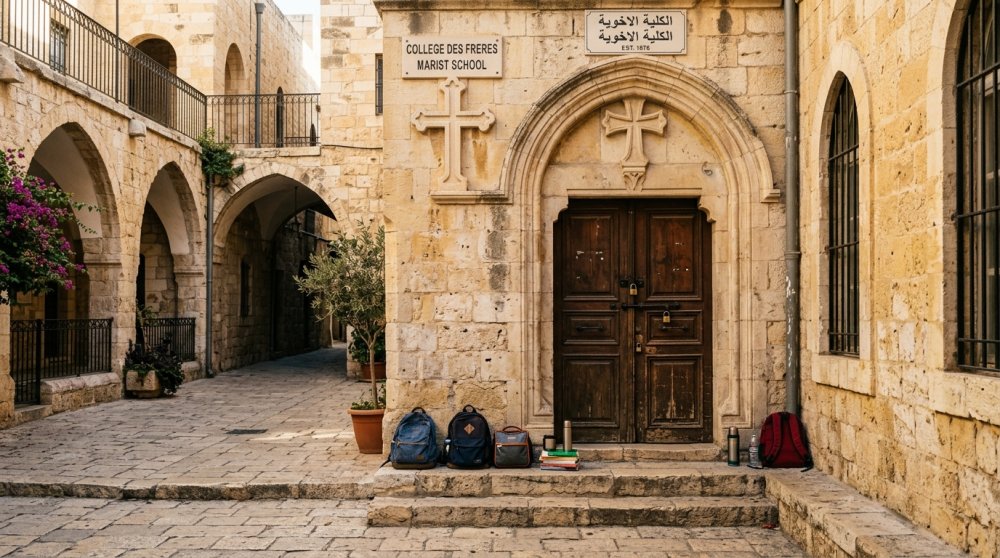
As millions of Israeli students returned to classrooms across the nation today, Christian families in Jerusalem faced closed school doors. Multiple Christian schools operating under the Latin Patriarchate have been forced to cancel classes indefinitely after Israeli government officials refused to renew entry permits for more than 70 teachers and staff members.
The permit denials have effectively shut down schools that serve thousands of Christian students in Jerusalem, leaving families scrambling for educational alternatives. While 2.6 million students nationwide began their academic year as scheduled, Christian children in the Holy City remain without access to their faith-based education.
The Latin Patriarchate schools have long served as pillars of Christian education in Jerusalem, providing instruction rooted in traditional values and biblical principles. These institutions represent centuries of Christian presence and educational ministry in the region, dating back generations.
Church authorities have expressed deep concern over the timing and scope of the permit denials. Without access to their teaching staff, school administrators have been left with no choice but to delay the start of the academic year, creating hardship for Christian families who depend on these institutions.
The situation highlights broader challenges facing Christian communities in the Middle East, where religious minorities often navigate complex bureaucratic systems. For these Jerusalem families, education grounded in Christian faith and values is not merely a preference but a fundamental expression of their religious freedom.
Parents and educators are now calling on government officials to reconsider the permit decisions and allow qualified Christian teachers to return to their classrooms. The extended closure threatens not only this academic year but the long-term viability of Christian education in one of Christianity’s most historic cities.
As this situation develops, it serves as a reminder of the ongoing need to protect religious liberty and educational access for Christian communities worldwide. The ability of parents to choose faith-based education for their children remains a cornerstone of religious freedom.
Let us know what you think, please share your thoughts in the comments below.


-

 Self-Reliance1 year ago
Trump’s Bold Move Uncovers Massive Social Security Fraud
-

 Faith1 year ago
New Clues Emerge in Noah’s Ark Mystery
-

 News1 year ago
Governor Walz’s Rhetoric Sparks National Controversy
-

 News1 year ago
Mel Gibson’s ‘The Passion of the Christ’ Sequel Title Announced
-

 Family1 year ago
Texas Lawmaker Targets Furries in Schools
-

 Freedom1 year ago
Maine Lawmaker Challenges Sports Fairness Controversy
-

 Family1 year ago
Canada’s Controversial Policy Sparks Ethical Debate
-
Faith9 months ago
Congress Hears Pleas for Nigerian Christians