Connect with us

Faith

Theologian Reveals Scripture Study That Transformed His View on Women’s Ministry Roles

Published

on

Faith Facts

  • Author Preston Sprinkle, raised in a complementarian tradition, re-examined Scripture regarding women in church leadership
  • Sprinkle concluded that biblical arguments against women in leadership positions did not align with the full witness of Scripture
  • The theologian discovered numerous examples of faithful, courageous women serving in significant roles throughout the Bible

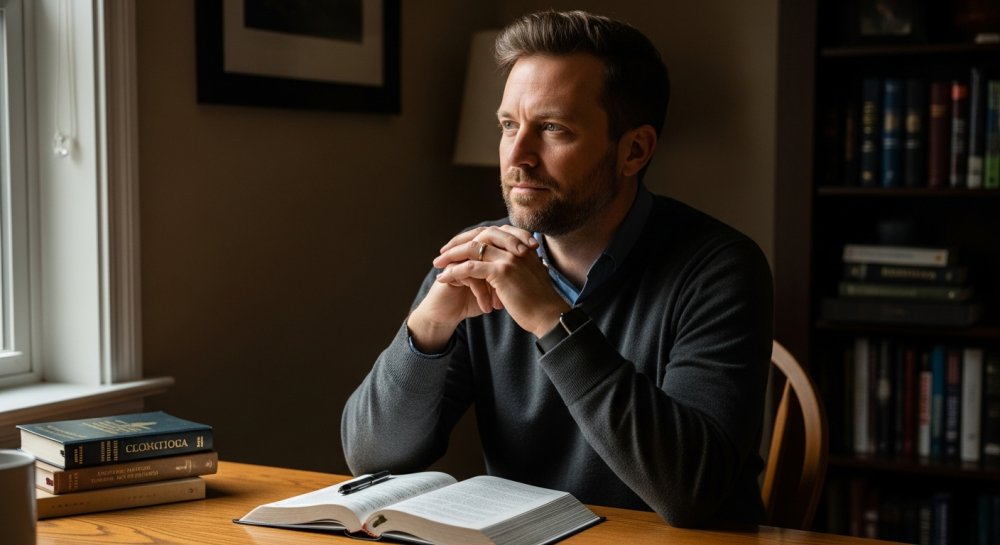
A well-known Christian author and theologian has sparked conversation in conservative Christian circles after publicly explaining his shift on the controversial topic of women in church leadership. Preston Sprinkle, who was raised in a church environment that taught complementarianism—the belief that leadership roles should be reserved for men—has shared his journey of biblical discovery that led him to different conclusions.

Sprinkle’s transformation came through what he describes as a comprehensive study of Scripture. Rather than accepting the traditional interpretation he was taught, he committed to examining the biblical text with fresh eyes and an open heart.

“There, he discovered strong, faithful women of radical courage.”

His research led him through passages often overlooked in discussions about gender roles in ministry. The Bible presents numerous women who served in significant capacities—from Deborah, who judged Israel, to Phoebe, whom Paul commended as a deacon, to Priscilla, who instructed the learned Apollos in the way of God more accurately.

The complementarian view holds that while men and women are equal in worth and dignity before God, they are designed for different roles, with pastoral and elder positions reserved exclusively for men. This interpretation relies primarily on select passages from Paul’s epistles.

Sprinkle’s conclusion represents a challenge to this traditional framework. After his deep examination of Scripture, he determined that the arguments supporting complementarianism did not hold up under scrutiny when considered alongside the full biblical narrative.

The debate over women’s roles in church leadership remains one of the most divisive issues among Bible-believing Christians. Faithful believers on both sides seek to honor Scripture and follow God’s design for His church, though they arrive at different interpretations of what that design entails.

Many churches and denominations continue to uphold complementarian teaching, viewing it as the clear instruction of Scripture and essential to maintaining biblical authority. Others have embraced egalitarian positions, believing that the Gospel breaks down hierarchies and that spiritual gifts are distributed without regard to gender.

Sprinkle’s public statement on this issue invites continued conversation among Christians who share a commitment to Scripture as the ultimate authority. His willingness to re-examine long-held beliefs demonstrates the importance of continually returning to God’s Word as the foundation for faith and practice.

For churches navigating this question, the path forward requires both conviction and grace—holding firmly to biblical truth as understood through careful study while extending charity to brothers and sisters who may interpret certain passages differently.

Let us know what you think, please share your thoughts in the comments below.

Continue Reading
Click to comment

Leave a Reply

Your email address will not be published. Required fields are marked *

Faith

Why Most Pews Are Filled With Pretenders

Published

on

Faith Facts

  • Many churches today struggle with a majority of attendees who lack genuine spiritual transformation and commitment to biblical truth
  • The rise of cultural Christianity has created congregations filled with people seeking community or tradition rather than surrendering their lives to Christ
  • Church leaders warn that false teaching, entertainment-driven services, and lack of discipleship are contributing to spiritually weak congregations

The American church faces a sobering reality that many pastors and faithful believers have quietly observed for years. While pews may be filled on Sunday mornings, the number of truly transformed, Spirit-led believers within those walls often represents only a small fraction of those in attendance.

This spiritual crisis didn’t emerge overnight. It’s the result of decades of compromise, watered-down preaching, and a shift away from biblical standards that once defined what it meant to be a follower of Jesus Christ.

The first reason many churches harbor few genuine believers is the prevalence of false teaching. Too many pulpits have abandoned the authority of Scripture in favor of messages designed to tickle ears rather than transform hearts. When pastors refuse to preach the full counsel of God—including the difficult truths about sin, repentance, and judgment—congregants remain spiritually malnourished and unchanged.

Second, the entertainment-driven church model has replaced worship with performance. Modern churches often prioritize production value over the presence of God, creating an atmosphere where people come to be entertained rather than encounter the living Christ. This approach attracts crowds but fails to produce disciples.

Third, cultural Christianity has become the norm. Many people identify as Christian because of family tradition, national heritage, or social convenience rather than personal conversion. They wear the label without experiencing the life-changing power of the Gospel.

The fourth issue is the absence of genuine discipleship. Churches have become focused on attendance numbers rather than spiritual maturity. New believers are rarely mentored, accountability is lacking, and the command to make disciples has been replaced with programs designed simply to fill seats.

Fifth, the fear of man has overtaken the fear of God. Church leaders increasingly make decisions based on what will avoid offense or maintain attendance rather than what honors Christ and His Word. This compromise has diluted the church’s witness and allowed worldly thinking to infiltrate Christian communities.

The sixth reason is the lack of personal sacrifice and commitment. True faith costs something—it demands our lives, our comfort, our plans. Many who attend church are unwilling to pay that price, preferring instead a convenient religion that requires little and promises much.

Finally, there’s a failure to teach the difference between being religious and being redeemed. Going through religious motions—attending services, saying prayers, participating in rituals—can exist entirely apart from a genuine relationship with Jesus Christ. Without clear teaching on what salvation actually means, churches become filled with people who are religious but not regenerated.

The solution to this crisis begins with a return to biblical preaching that doesn’t shy away from hard truths. Churches must prioritize authentic worship over entertainment, discipleship over attendance, and obedience to Scripture over cultural acceptance.

Faithful remnants within these churches carry the responsibility to pray for revival, speak truth in love, and model what genuine Christianity looks like. They must resist the temptation to blend in with those who merely play church while standing firm in their commitment to Christ.

The American church desperately needs spiritual awakening. Until pastors are willing to preach the uncompromising truth of God’s Word and believers are willing to live radically different lives, many congregations will remain filled with people who know about Jesus but have never truly met Him.

The question facing every person who calls themselves a Christian is simple but profound: Are you among the few who truly believe, or are you simply going through the motions?

Let us know what you think, please share your thoughts in the comments below.
Continue Reading

Faith

Why the Biblical Vision of Your Calling Is Far Bigger Than You Think

Published

on

Faith Facts

  • The biblical concept of shalom encompasses far more than personal peace—it includes the flourishing of communities, cultures, and creation itself
  • God’s mission for believers extends beyond traditional church activities to include every sphere of work and cultural influence
  • The exile of Israel provides a powerful model for how Christians should engage with secular society while maintaining their faith identity

For too long, American Christians have confined their understanding of God’s calling to a narrow set of activities: church programs, evangelism efforts, small group Bible studies, and altar calls. While these spiritual disciplines remain essential to Christian formation, they represent only a fraction of the biblical vision for how believers are called to partner with God in the world.

The truth is, Scripture presents a vision of vocation and mission that encompasses every dimension of human life and society.

This fuller vision centers on the Hebrew concept of shalom—a word often translated simply as “peace” but which carries far deeper meaning. Shalom describes the flourishing of all creation under God’s design: right relationships between people and God, among individuals and communities, and between humanity and the created world. It represents wholeness, justice, beauty, abundance, and harmony across every dimension of existence.

When God calls His people to be salt and light, He isn’t limiting that influence to Sunday morning services or evangelistic crusades. He’s commissioning believers to bring His kingdom values into education, business, healthcare, the arts, government, science, agriculture, technology, and every other domain of human endeavor.

The exile of Israel provides a compelling biblical example of this comprehensive approach to faithful living. When the Babylonians conquered Judah and carried God’s people into captivity, it would have been natural for the Israelites to withdraw, to create isolated religious communities, to simply wait for rescue while avoiding contamination from pagan culture.

Instead, God gave them radically different instructions through the prophet Jeremiah. He told them to build houses and settle down, to plant gardens and eat their produce, to marry and have children, to seek the prosperity and welfare of the city where they had been exiled. This wasn’t surrender or compromise—it was faithful engagement motivated by love for neighbors and confidence in God’s sovereignty.

The exiles were called to maintain their distinct identity as God’s covenant people while simultaneously contributing to the common good of a society that didn’t share their faith. They were to pray for Babylon, to work for its flourishing, to be exemplary citizens and neighbors—all while refusing to worship false gods or abandon their core convictions.

This exile paradigm offers a powerful framework for Christians in contemporary America. Like the Israelites in Babylon, believers today live in an increasingly secular culture that often rejects biblical values. The temptation exists either to withdraw into Christian subcultures or to assimilate completely, losing distinctive witness.

The biblical alternative is robust engagement: Christians excelling in their professions, creating beauty through artistic gifts, developing innovations that serve human needs, establishing just business practices, advocating for vulnerable populations, stewarding natural resources wisely, and strengthening the institutions that hold communities together. All of this constitutes kingdom work—partnering with God to manifest shalom in every direction.

When a Christian teacher brings patience, creativity, and genuine care to students, that’s kingdom work. When a believing entrepreneur builds a company culture of integrity and invests profits in community development, that’s kingdom work. When a faithful nurse treats each patient with dignity reflecting the image of God, that’s kingdom work. When a Christian artist creates work that reveals truth, beauty, and goodness, that’s kingdom work.

This comprehensive vision doesn’t diminish the importance of evangelism or church life—it situates them within God’s larger purposes for His creation. Personal salvation matters eternally because God loves each individual. Corporate worship forms and sustains the community of faith. But redeemed individuals and gathered churches exist not as ends in themselves, but as God’s instruments for advancing His kingdom and demonstrating His character across all of life.

American Christianity needs this fuller perspective now more than ever. Cultural challenges require not retreat but faithful presence. Political divisions call not for tribalism but for principled engagement grounded in love for God and neighbor. Economic injustices demand not merely charity but structural wisdom. Environmental degradation requires not indifference but responsible stewardship rooted in our identity as image-bearers of the Creator.

The shalom vision empowers Christians to bring their faith to bear on these complex challenges without reducing them to simplistic spiritual formulas. It affirms that God cares about education policy and medical ethics, about artistic expression and scientific discovery, about criminal justice and agricultural practices. It recognizes that while all human efforts remain tainted by sin until Christ returns, God still calls His people to pursue goodness, truth, and beauty in every sphere of life.

This perspective also guards against the opposite error: assuming that political activism, social programs, or cultural influence constitute the entirety of Christian mission. The shalom vision is comprehensive precisely because it refuses to separate spiritual and material concerns, individual transformation and social renewal, evangelism and justice, worship and work.

Just as the Israelites in exile maintained their prayer life, observed the Sabbath, taught their children God’s law, and looked forward to redemption while also contributing to Babylonian society, contemporary Christians must sustain vibrant spiritual practices while fully engaging their callings in the world. The vertical relationship with God fuels and directs the horizontal engagement with culture.

Recovering this biblical vision requires intentionality. Churches must equip members not only for ministry within the congregation but for faithful presence in their workplaces and communities. Christian education should prepare students to think Christianly about every academic discipline and professional field. Believers need theological frameworks that connect Sunday worship with Monday’s work, that see all legitimate vocations as potential arenas for glorifying God and serving neighbors.

The exile example reveals that God’s people can thrive and contribute even in contexts that don’t acknowledge Him as Lord. It demonstrates that faithfulness doesn’t require controlling political power or cultural dominance, but rather excellence, integrity, compassion, and wisdom wherever God has placed us. It shows that seeking shalom in every direction—working for the flourishing of our cities, institutions, and neighbors—is itself an act of worship and obedience.

For Christians concerned about the direction of American culture, this vision offers hope grounded not in political strategies or culture war victories, but in the ordinary faithfulness of believers living out kingdom values in countless contexts. It’s the cumulative impact of millions of Christians doing their work with excellence, treating people with dignity, speaking truth with grace, creating beauty that points beyond itself, and building institutions and relationships that reflect God’s justice and love.

This is the partnership with God that Scripture envisions: not a narrow religious sphere separated from “real life,” but the transformation of all of life under Christ’s lordship. It’s a vision big enough to encompass the diversity of gifts, callings, and contexts among God’s people. And it’s a vision desperately needed in our time.

Let us know what you think, please share your thoughts in the comments below.

Continue Reading

Faith

Two Churches Reunite After Decades of Division

Published

on

Faith Facts

  • The Coventry Hills Church of Christ and Chesmont Church of Christ merged to become Cornerstone Church of Christ in Pottstown, Pennsylvania, after decades of separation following an early 1990s split.
  • Coventry Hills had a building but only 30 members, while Chesmont had 110 attendees, elders, and a full-time minister—creating complementary strengths for a unified congregation.
  • Members describe the merger as “God’s timing,” emphasizing healing, humility, and a shared commitment to scriptural unity and evangelism in their community.

A match made in heaven. In God’s timing.

That’s how members and leaders alike characterize the merger of the Coventry Hills Church of Christ and the Chesmont Church of Christ. After decades apart, the congregations—halfway between the high-rises of Philadelphia and the horse-drawn buggies of Amish country—have joined together to become the Cornerstone Church of Christ.

“It feels like the work of the Lord,” said Christine Ober, 36, wife of Caleb and mother of 8-month-old Mabel May.

The Obers were among the few young families at Coventry Hills, which averaged Sunday attendance of roughly 30. Chesmont, which met at a Christian school 6.5 miles away, drew about 110 men, women and children on a typical Lord’s Day.

“The members that were here at Coventry Hills were willing to come under the leadership at Chesmont,” said Josh Dove, who was one of three elders at Chesmont and now serves in that role for Cornerstone.

“It just seemed like it was God leading us that way.”

The pieces fit. Coventry Hills had a church building.

Chesmont had a full-time preacher and elders. Both congregations had members eager to serve the Lord and reach the lost.

Together, members and leaders believe, the new intergenerational body offers a brighter future.

“When God’s people do God’s things in God’s ways, we let all the extra stuff go, and we can dwell in unity,” said minister Thomas Wise, pointing to the apostle Paul’s admonition in Philippians 2:3-4 to do nothing out of selfish ambition or vain conceit but in humility value others above yourselves.

‘Wounds Were Deep’

In the case of Coventry Hills and Chesmont, “all the extra stuff” included trauma, hurt feelings and lingering concerns about past differences that caused a church split in the early 1990s.

Elder Rick Elam came to the Chesmont church with his wife, Kathy, in 1996 after the split occurred, so he has no firsthand knowledge of what transpired. “But I know that those wounds were deep and painful for those involved,” Elam said.

“This has been a big healing process,” he said of the merger, which became official earlier this year.

“People have joy here.”

Over the years, the frosty relationship between the congregations in Pottstown—a town of 23,000 about 40 miles northwest of Philadelphia—had thawed. Chesmont had used the Coventry Hills baptistery from time to time since the school didn’t have one.

Members of both congregations had enjoyed hymn singings together.

“Coventry Hills was dying. That was true,” Wise said.

“At Chesmont, we had just grown stagnant in the environment we were in. The elders recognized it, and for (the merger) to work, each group of people needed to see who they are and where they’re at clearly,” the minister added.

“And I believe that starts with God’s authority … and will we choose to put others above ourself?”

Coventry Hills members had a knack for greeting visitors and making them feel welcome, Wise said. Chesmont members were known for engaging and teaching young people and for their volunteer spirit, he said.

That spirit has come in handy as the merged body works to refurbish the church building, which was constructed in 1973 and could use a few improvements, such as new carpeting. In becoming one, the previously separate congregations have brought those talents together.

‘God’s Timing’

Talk of the possible merger began organically—as Wise remembers it—with Chesmont elder Jeff Custer, who was preaching at Coventry Hills once a month.

“Jeff made some kind of comment in a sermon about not knowing why the churches weren’t together,” Wise said.

“And then one of the younger Coventry Hills members was inspired by it and made up a survey about merging and got the ball rolling.”

The merger possibility had prompted conversation in the past, but this time the idea gained traction.

“It definitely seems like God’s timing is always the right timing,” Wise said.

Emmitt Channell, 90, has preached for more than 70 years. Channell said he and other Coventry Hills members welcomed the latest overture.

“We were down to about 20 or 25 members at that point,” he said.

“We had a lot of deaths, and a lot of people moved back to the South, so we were very glad to have new life. So it’s been really great.”

Wise, 34, recalls that he was 12 years old when he was baptized—by Channell.

“It’s crazy how the circle goes,” said Wise, who later moved away from Pennsylvania before returning five years ago to serve as Chesmont’s preacher.

“It’s great to see old faces, like Emmitt, whom I’ve known my whole life.”

Channell emphasized that brothers and sisters in Christ “need to be working together and healing all kinds of personal problems that we’ve had.

“Christ is our focus, and that’s where we should put our efforts in working together for the Lord,” added the retired minister, whose late wife, Betty, once served as the secretary for Olan Hicks, who founded The Christian Chronicle in 1943.

‘Don’t Hold Grudges’

Nancy McGrady, who attended Coventry Hills in past decades, said she left the church for “a very long time” because she didn’t feel like she belonged. But the merger inspired her to return to worship.

“When Cornerstone came together, it was amazing for me,” said McGrady, 52.

“I just love being here. … It’s everything that I’ve ever dreamed for a church family to be.”

Ken Anderson, 71, was a part of the Coventry Hills congregation before the merger.

“I was always taught that you don’t hold grudges,” Anderson said.

“You just prayed that things will change. And I know it took a lot of years, but we prayed about it, and we’re all together as a family.”

A Building to Call Their Own

Coventry Hills served as the original home for Coventry Christian Schools, which has roots dating back to 1984 and has grown to more than 630 students in prekindergarten through 12th grade. By 1993, Coventry Christian moved to a new location, and the Chesmont church began meeting in a school auditorium.

Matt Richard—now a deacon at Cornerstone after serving in that role at Chesmont—attended Coventry Hills in the early 2000s.

“The funny thing was that originally, the church here would talk about that church being progressive over there,” Richard said.

But then Richard visited Chesmont when Coventry Hills canceled services during an ice storm. “We wound up going over there, and we were like, ‘There’s nothing crazy going on,'” he said.

“So then one of the ladies invited my wife, Meredith, to a Bible study, and we started visiting with Chesmont. And then we just decided to change churches.”

Now the deacon and his family—including two young children—are back worshiping in the Coventry Hills building.

“We were definitely excited about having our own space,” said Richard, who is also the facilities supervisor at nearby Camp Manatawany, which is associated with Churches of Christ. “It’s always hard when you’re a tenant in a building—we were renting from the Christian school—because nothing’s your own as a congregation,” Richard added.

“You always had to worry about what the kids were doing after church.”

Another deacon, Daniel Niehls, echoed Richard.

“If you’re a tenant anywhere, if you’re renting, you’re kind of limited with what you can do,” Niehls said.

“So it’s just nice, and it feels more like a church, when you have your own building. So that’s really been a benefit and blessing.

“Unfortunately, not all of my family decided to come join us here, so that’s been a little bit of a challenge at times,” he added.

“But we’re very happy here. We’re excited to be here.”

‘A Pleasant View’

About one-third of the previous Chesmont congregation did not make the move to Coventry Hills. Those members, including Mark Niehls, Daniel’s uncle and a founder of Coventry Christian Schools, formed the new Pleasantview Church of Christ, which meets at the school.

“Those of us that are still meeting on the school’s campus have felt that our initial vision and mission for the church to reach out and evangelize in our community is still very valid and needed,” said Mark Niehls, the school’s president emeritus.

Coventry Christian draws students from about 70 churches in and around Pottstown, he said. Only a handful of those congregations are Churches of Christ.

“The Pleasantview Church of Christ that’s meeting on the school’s campus sees that as an opportunity to reach those people who are maybe not really churched,” Mark Niehls said.

“They may be on an attendance or membership role somewhere, but they don’t regularly attend, or they’re dissatisfied with where they’re at.”

Mark Niehls declined to discuss the merger of Coventry Hills and Chesmont. “We’re still meeting on the school’s campus on Pleasantview Road,” he said, “and we’ve kind of adopted the motto that we’re going to have a pleasant view.”

Elam, one of Cornerstone’s three elders, said he doesn’t believe any hard feelings exist between Cornerstone and Pleasantview.

“Maybe at the outset, but those seem to have calmed down,” Elam said.

“We all feel like we’re wishing them well and godspeed, and they’re doing the same for us. We’re praying for each other.”

Let us know what you think, please share your thoughts in the comments below.

Continue Reading

Trending