
Faith
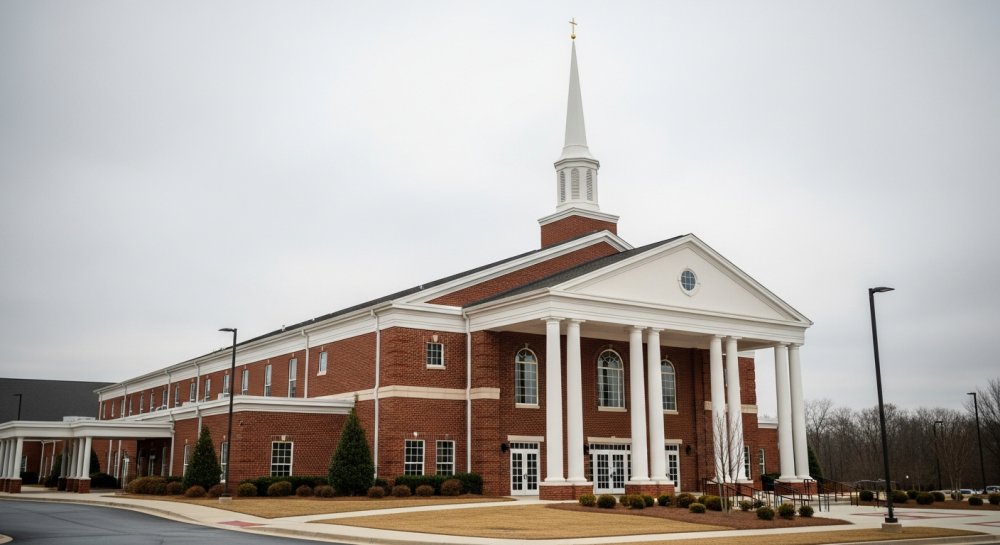
Alabama Megachurch Pastor Steps Down After Sudden Announcement

Faith Facts
- A senior pastor of a 7,800-member Alabama megachurch resigned abruptly Friday via social media video
- The pastor called his decision to step down ‘heartbreaking’ and requested prayer from his congregation
- The resignation comes with limited public explanation, leaving church members seeking answers and guidance
The senior pastor of Shades Mountain Baptist Church in Vestavia Hills, Alabama, announced his sudden resignation Friday in a video posted to social media. The church, located in a suburb of Birmingham, has approximately 7,800 members.
In the video announcement, the pastor revealed that his final Sunday sermon would take place just two days later. He characterized the decision as deeply painful and urged his congregation to unite in prayer during this transitional period.
“Please pray like crazy,” the pastor requested in his message to church members.
The abrupt nature of the announcement has left many in the congregation searching for clarity about the circumstances surrounding the resignation. Details about what led to the decision remain limited, raising questions among church members about the future direction of their spiritual home.
Shades Mountain Baptist Church represents a significant presence in the Birmingham area faith community. The congregation’s size and influence make this leadership transition particularly impactful for both the local church body and the broader evangelical community in Alabama.
The timing of the announcement—just days before the pastor’s final sermon—suggests an urgent situation that required immediate action. Church leadership has not yet provided comprehensive details about succession planning or interim pastoral arrangements.
For a congregation of nearly 8,000 members, such sudden leadership changes can create uncertainty and concern. The pastor’s call for intensive prayer indicates recognition of the challenges ahead for both himself and the church family he has served.
As the situation develops, church members and the wider Christian community await further information about what precipitated this heartbreaking decision and how the church will move forward in maintaining its mission and ministry.
Let us know what you think, please share your thoughts in the comments below.


Faith Facts
- Legendary singer-songwriter Dolly Parton has passed away at age 80, prompting an outpouring of grief from Christian artists and fans nationwide
- Parton’s career spanned decades, touching millions through her music, philanthropy, and unmistakable voice that became synonymous with American values
- Christian musicians and ministry leaders have taken to social media to honor her memory and celebrate her impact on faith and culture
The nation mourns the loss of a true American treasure. Dolly Parton, whose voice echoed through generations and whose heart touched countless lives, has passed away at 80. Her death marks the end of an era in American music and culture.
Christian artists across the country have responded with heartfelt tributes. Their messages reflect not only professional admiration but deep personal connection to a woman who embodied traditional values while reaching the highest pinnacles of success.
“We will miss you down here,” expressed one sentiment that captured the collective grief sweeping through the faith community.
Parton’s influence extended far beyond the stage. Her philanthropic work, particularly in literacy and education, demonstrated the kind of servant leadership that resonates deeply with Christian values. She gave generously, spoke kindly, and lived authentically—qualities that made her a role model for millions.
Her music bridged divides in ways few artists ever achieve. From country to gospel, pop to bluegrass, Parton’s versatility never compromised her authenticity. She remained true to her roots, her faith, and her values throughout a career that spanned more than six decades.
The outpouring of love on social media reveals the profound impact one life can have when lived with purpose and grace. Christian musicians, many of whom grew up listening to her songs or were inspired by her example, shared memories and expressed gratitude for her legacy.
Parton’s passing reminds us that even the brightest stars eventually return home. Yet her influence—through music, charity, and unwavering commitment to lifting others—will continue to inspire future generations. She lived a life that mattered, touching hearts and changing lives through talent given by God and used for good.
In an entertainment industry often marked by fleeting fame and compromised values, Parton stood as a beacon of consistency. She proved that success and integrity need not be mutually exclusive, that fame could be wielded for good, and that staying true to one’s roots was not a limitation but a strength.
Let us know what you think, please share your thoughts in the comments below.

Faith Facts
- Leading Bible scholar N.T. Wright argues that Paul’s letter to the Ephesians deserves the same sustained attention Christians give to Romans and Galatians
- The church is called to be a “small working model” of God’s promised new creation, serving as an advance sign of redeemed creation
- Paul describes believers as God’s “poetry” or artwork, meant to embody and enact the new creation here and now
At Crowley’s Ridge College in Paragould, Arkansas, where history professor Shannon Beasley teaches, each class begins with a verse of the day to encourage students and give them a grounding, reorienting start to the morning. Then they turn to the news of the day, the top stories shaping their world.
Beasley notes how often the verse of the day illuminates the news of the day. She is also struck by how frequently, when she asks students to name their favorite Bible verses, something from Ephesians appears — such as Ephesians 3:20.
While Romans and Galatians tend to dominate church conversations, leading Bible scholar N.T. Wright believes Ephesians deserves equally sustained attention. Wright, a senior research fellow at Wycliffe Hall, Oxford, has written “The Vision of Ephesians: The Task of the Church and the Glory of God.”
The letter to the Ephesians is generally accepted as having been written by the apostle Paul, a conclusion Wright defends while giving little weight to arguments against Pauline authorship. Importantly, Wright emphasizes that Ephesians was likely a circular letter — written not to address a single congregation’s local concerns, but to be read aloud among several house churches in and around Ephesus in modern-day western Turkey.
These were small communities — perhaps five to 30 people each — largely poor rather than wealthy, hearing this letter read while Paul himself was imprisoned.
Wright moves through the letter section by section rather than adhering rigidly to the chapter-and-verse divisions added to our Bibles some five centuries ago. Because the original Greek lacked punctuation, determining where sentences begin and end is an act of interpretation.
Wright’s remarkable facility with the language allows these interpretive decisions to yield fresh insights and renewed perspective. One striking example appears in Ephesians 2:10: “autou gar esmen poiēma.”
Wright renders “poiēma” not merely as “workmanship,” but as “poetry.”
“We are to be Renaissance-people, demonstrating the birth of the new world,”
Wright writes. We, the church, are God’s artwork — his sculpture, his poem.
This leads to the central theme of Wright’s reading of Ephesians: The church is called to be a small working model of God’s promised new creation — a heaven-and-earth community that serves as an advance sign of what redeemed creation looks like. The church is meant not only to announce this new creation, but to embody and enact it here and now.
What, then, does Paul call the Ephesian Christians — and us — to be? A people motivated by God’s glory as their goal; a praising people and a praying people; a peaceful and unified people; Spirit-filled, marked by self-giving love and clothed in the armor of God.
Read through this lens, “The Vision of Ephesians” offers rich insight for any teacher, student or reader of Scripture seeking to understand not only what the church believes but also what it is meant to be. In an age of cultural division and confusion about the church’s role in society, Paul’s letter provides a timeless blueprint for Christian community and witness.
Wright’s work stands as a reminder that Scripture speaks powerfully to contemporary challenges when we take the time to understand its original context and meaning. For Christians seeking to live out their faith authentically in today’s world, Ephesians offers a vision of the church as God’s masterpiece — a living demonstration of His transforming power.
Let us know what you think, please share your thoughts in the comments below.

Faith Facts
- Church scandals often stem from failures in governance and leadership structure, not just moral lapses
- Proactive safeguards protect congregations, preserve ministry integrity, and honor biblical standards of accountability
- Implementing these five protections strengthens a church’s witness and shields it from preventable crises
Church scandals continue to make headlines across America, and the attention is warranted. But understanding the nature of these failures is essential for prevention. While some stem from moral collapse, many originate from inadequate leadership structures, poor governance, and a lack of biblical accountability.
The good news is that churches don’t have to wait for disaster to strike. There are concrete, actionable steps that can be implemented immediately to protect congregations, preserve the integrity of ministry, and uphold the high standards Scripture calls us to maintain.
These aren’t just administrative suggestions—they’re spiritual safeguards that reflect our commitment to stewarding God’s people well. Here are five critical protections every church should adopt before a crisis emerges.
1. Establish Clear Financial Accountability
Financial transparency isn’t optional—it’s biblical. Churches must implement robust financial controls including multiple signatories on accounts, regular external audits, and transparent reporting to congregation members. When money is handled with integrity and oversight, it removes both temptation and accusation.
2. Create Strong Leadership Accountability Structures
No pastor or church leader should operate without accountability. This means active elder boards or leadership teams with real authority, not rubber-stamp committees. Biblical eldership requires mutual submission, honest evaluation, and the courage to speak truth in love when concerns arise.
3. Implement Comprehensive Background Checks and Safety Policies
Protecting the vulnerable is a Gospel imperative. Every person working with children, youth, or vulnerable adults must undergo thorough background screening. Clear safety protocols, two-adult rules, and regular training create environments where abuse cannot take root.
4. Establish Clear Boundaries and Conduct Policies
Moral failures often begin with boundary violations that seem small at first. Churches need explicit policies governing counseling relationships, social media interactions, travel arrangements, and one-on-one meetings. These aren’t signs of distrust—they’re guardrails that protect everyone involved.
5. Develop Crisis Communication and Response Plans
Hope for the best, but prepare for difficulties. Churches need predetermined plans for how to respond when allegations arise, who speaks on behalf of the church, and how to care for victims while pursuing truth. Swift, compassionate, and transparent responses demonstrate Christian character in challenging moments.
The church is called to be a city on a hill, a light to the world. That light dims when preventable scandals damage our witness and harm God’s people. These safeguards aren’t about legalism or suspicion—they’re about wisdom, stewardship, and loving our neighbors well.
Implementing these protections communicates that we take seriously our responsibility to guard the flock. They demonstrate that we value integrity over convenience and people over institutional preservation. Most importantly, they reflect our commitment to honoring Christ in every dimension of church life.
The time to act is now, before crisis strikes. Church leaders who proactively implement these safeguards position their ministries to thrive with integrity, credibility, and spiritual health for generations to come.
Let us know what you think, please share your thoughts in the comments below.


-

 Self-Reliance1 year ago
Trump’s Bold Move Uncovers Massive Social Security Fraud
-

 Faith1 year ago
New Clues Emerge in Noah’s Ark Mystery
-

 News1 year ago
Governor Walz’s Rhetoric Sparks National Controversy
-

 News1 year ago
Mel Gibson’s ‘The Passion of the Christ’ Sequel Title Announced
-

 Family1 year ago
Texas Lawmaker Targets Furries in Schools
-

 Freedom1 year ago
Maine Lawmaker Challenges Sports Fairness Controversy
-

 Family1 year ago
Canada’s Controversial Policy Sparks Ethical Debate
-
Faith9 months ago
Congress Hears Pleas for Nigerian Christians