
Faith
Five Critical Protections Every Church Must Implement Now


Faith Facts
- Church scandals often stem from failures in governance and leadership structure, not just moral lapses
- Proactive safeguards protect congregations, preserve ministry integrity, and honor biblical standards of accountability
- Implementing these five protections strengthens a church’s witness and shields it from preventable crises
Church scandals continue to make headlines across America, and the attention is warranted. But understanding the nature of these failures is essential for prevention. While some stem from moral collapse, many originate from inadequate leadership structures, poor governance, and a lack of biblical accountability.
The good news is that churches don’t have to wait for disaster to strike. There are concrete, actionable steps that can be implemented immediately to protect congregations, preserve the integrity of ministry, and uphold the high standards Scripture calls us to maintain.
These aren’t just administrative suggestions—they’re spiritual safeguards that reflect our commitment to stewarding God’s people well. Here are five critical protections every church should adopt before a crisis emerges.
1. Establish Clear Financial Accountability
Financial transparency isn’t optional—it’s biblical. Churches must implement robust financial controls including multiple signatories on accounts, regular external audits, and transparent reporting to congregation members. When money is handled with integrity and oversight, it removes both temptation and accusation.
2. Create Strong Leadership Accountability Structures
No pastor or church leader should operate without accountability. This means active elder boards or leadership teams with real authority, not rubber-stamp committees. Biblical eldership requires mutual submission, honest evaluation, and the courage to speak truth in love when concerns arise.
3. Implement Comprehensive Background Checks and Safety Policies
Protecting the vulnerable is a Gospel imperative. Every person working with children, youth, or vulnerable adults must undergo thorough background screening. Clear safety protocols, two-adult rules, and regular training create environments where abuse cannot take root.
4. Establish Clear Boundaries and Conduct Policies
Moral failures often begin with boundary violations that seem small at first. Churches need explicit policies governing counseling relationships, social media interactions, travel arrangements, and one-on-one meetings. These aren’t signs of distrust—they’re guardrails that protect everyone involved.
5. Develop Crisis Communication and Response Plans
Hope for the best, but prepare for difficulties. Churches need predetermined plans for how to respond when allegations arise, who speaks on behalf of the church, and how to care for victims while pursuing truth. Swift, compassionate, and transparent responses demonstrate Christian character in challenging moments.
The church is called to be a city on a hill, a light to the world. That light dims when preventable scandals damage our witness and harm God’s people. These safeguards aren’t about legalism or suspicion—they’re about wisdom, stewardship, and loving our neighbors well.
Implementing these protections communicates that we take seriously our responsibility to guard the flock. They demonstrate that we value integrity over convenience and people over institutional preservation. Most importantly, they reflect our commitment to honoring Christ in every dimension of church life.
The time to act is now, before crisis strikes. Church leaders who proactively implement these safeguards position their ministries to thrive with integrity, credibility, and spiritual health for generations to come.
Let us know what you think, please share your thoughts in the comments below.

Faith Facts
- James Talarico is a member of the Presbyterian Church (U.S.A.)
- Rev. Jim Rigby serves as Talarico’s longtime pastor
- Talarico describes his Senate campaign as a form of ministry
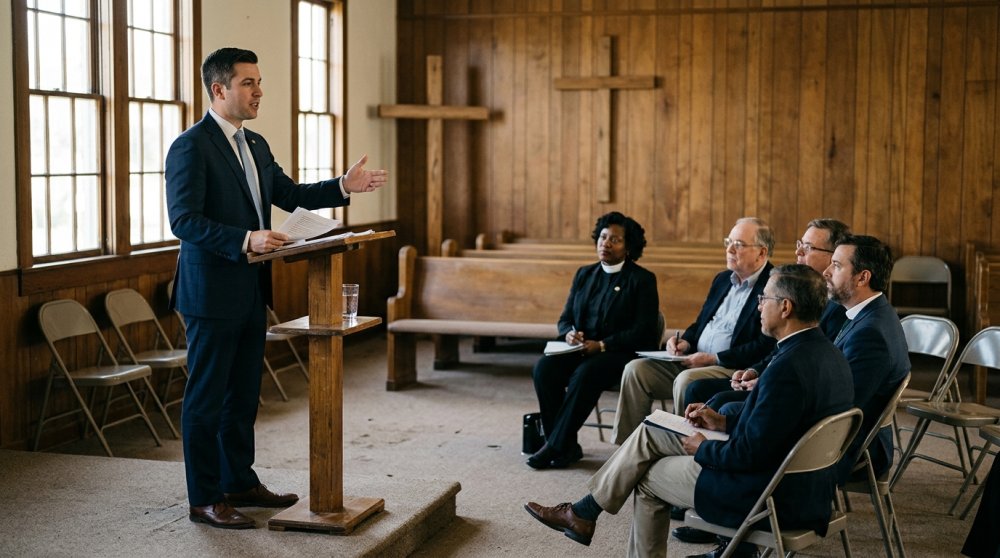
Democratic Texas state Rep. James Talarico addressed a gathering of faith leaders on Monday evening. The lawmaker shared how his pastor encouraged him to seek higher office.
Talarico credited the Rev. Jim Rigby with shaping his decision to run for the U.S. Senate. He presented the campaign as an extension of his Christian calling.
“A form of ministry.”
The PCUSA pastor reportedly framed political service as a faithful response to God’s calling. Talarico embraced this view in his remarks to the audience.
The Presbyterian Church (U.S.A.) has long maintained a progressive stance on social and political issues. Talarico’s comments align with that denominational direction.
Texas voters will soon weigh whether this interpretation of ministry resonates with their understanding of Christian citizenship. The race promises to test competing visions of faith and public service.
Let us know what you think, please share your thoughts in the comments below.
Faith Facts
- The Moulton Church of Christ in Alabama recently celebrated its 200th anniversary of gospel preaching and worship.
- Church records trace the congregation’s roots to the early 19th century Restoration Movement led by Barton W. Stone and evangelist Benjamin F. Hall.
- Five generations of the Hardin family continue to worship and serve together, preserving a legacy of faith and community leadership.
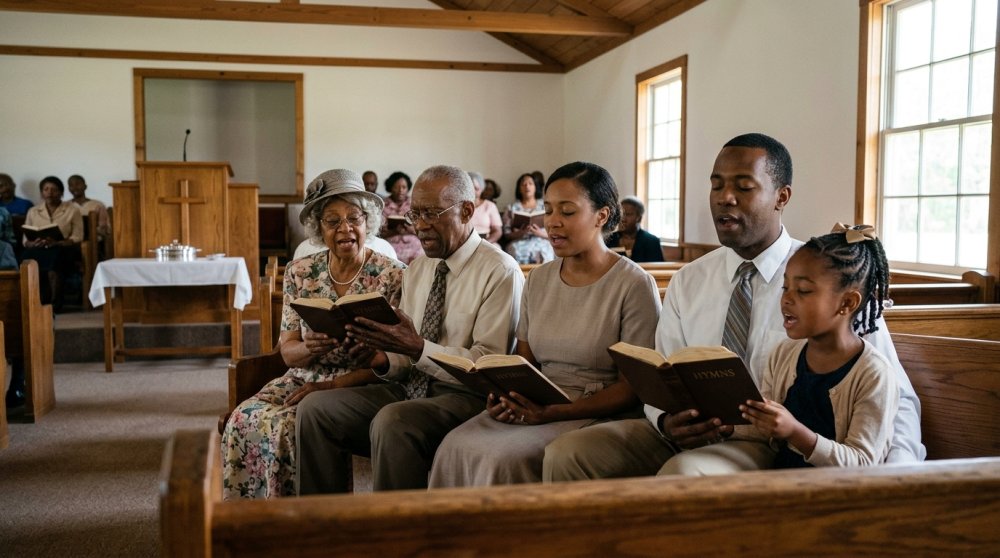
Two hundred years ago, evangelist Benjamin F. Hall planted a congregation of the Lord’s church in rural Moulton, Alabama. The congregation recently gathered to thank God for His faithfulness and to look forward with hope.
Church records credit Hall, influenced by Restoration Movement leader Barton W. Stone, with establishing the Moulton Church of Christ in 1826. Other historical sources mention Tolbert Fanning’s involvement in 1830 or a 1843 debate that brought twenty-two baptisms.
“I rejoice in such triumphs no little myself; but oh Lord, to Thee, and thy precious word, I am indebted for all that I have witnessed in Moulton,” the evangelist wrote of the church. “The brethren are strong in numbers, talent and influence, and I pray God they may be kept humble.”
Local deacon and historian Michael Strickland returned to his childhood congregation to teach its chronology and preach on the importance of remembrance. Two hundred ten members and guests attended the bicentennial worship service.
“Our mission, brothers and sisters, is to show the love of God to everyone,” Strickland told the congregation. “I want to suggest that God has been showing his love in this congregation for 200 years. And I pray he gives us 200 years more.”
Third-generation member Cindy Henry traveled from Hope Hull, Alabama, to celebrate with her family. Her grandfather and father served as elders, and her son Mitchell now serves as a deacon.
“This is still home in a lot of ways,” Henry said. “There’s new faces, but there’s still people that helped raise me.”
Her father, 88-year-old Clint Hardin, has worshiped at Moulton for most of his life. He recalls godly Sunday school teachers and parents who passed on their dedication to the word of God.
“We’ve had good preachers, and we’ve had good leadership,” Hardin said. “Really good leadership carried us through the problems I guess that all churches have.”
Young mother Ashley Nelson joined the church ten years ago through her husband Ross, whose grandfather once preached at Moulton. She now helps lead the children’s ministry known as the Sun Shiners.
“We have so many young kids now,” Nelson said. “We have a big, strong little kids group. And so, anytime we have an event, we usually have about 20 to 30 kids at those events.”
Through every season of growth and challenge, the Moulton Church of Christ has remained rooted in Scripture and committed to passing the faith to the next generation.
Let us know what you think, please share your thoughts in the comments below.
Faith Facts
- Christians in Essex are taking legal action to defend their right to share the Gospel in public spaces.
- A local council has banned the use of loudspeakers and prohibited street preaching about Hell.
- The church maintains that sharing the Gospel belongs on the streets and is a core expression of faith.
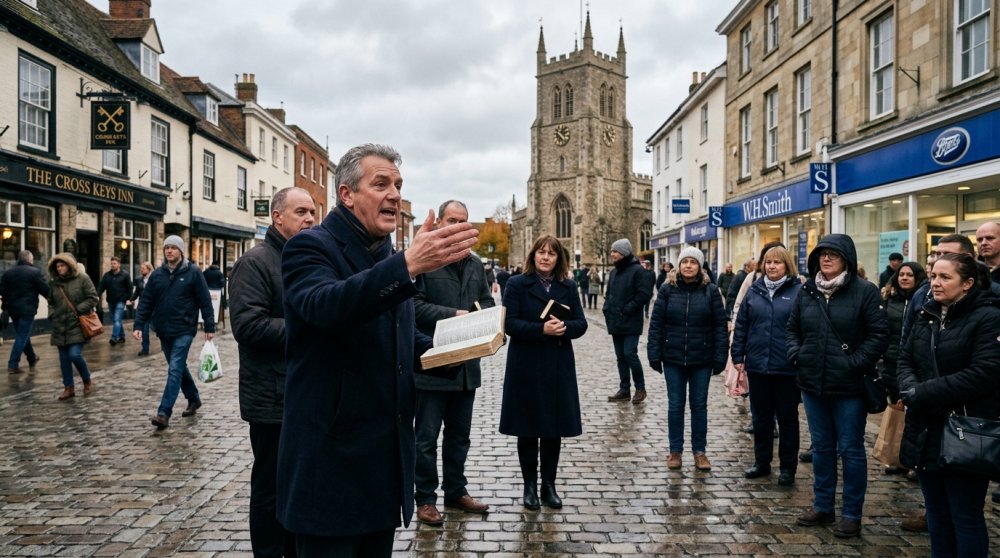
Christians at a church in Essex are fighting in court for the right to share the Gospel on British streets after a city council banned their use of loudspeakers and ordered them to stop warning people about Hell.
The case highlights growing tensions between traditional Christian witness and local government restrictions on public preaching.
“The Gospel belongs on the streets,” church leaders declared in their legal challenge.
Faithful believers see this as part of a broader pattern of restrictions aimed at silencing biblical truth in the public square.
“We will not be silenced from proclaiming the truth that saves,” a church spokesperson stated.
Let us know what you think, please share your thoughts in the comments below.


-

 Self-Reliance2 years ago
Trump’s Bold Move Uncovers Massive Social Security Fraud
-

 Faith2 years ago
New Clues Emerge in Noah’s Ark Mystery
-

 News2 years ago
Governor Walz’s Rhetoric Sparks National Controversy
-

 News2 years ago
Mel Gibson’s ‘The Passion of the Christ’ Sequel Title Announced
-

 Family2 years ago
Texas Lawmaker Targets Furries in Schools
-

 Freedom2 years ago
Maine Lawmaker Challenges Sports Fairness Controversy
-

 Family1 year ago
Canada’s Controversial Policy Sparks Ethical Debate
-
Faith11 months ago
Congress Hears Pleas for Nigerian Christians