
Faith
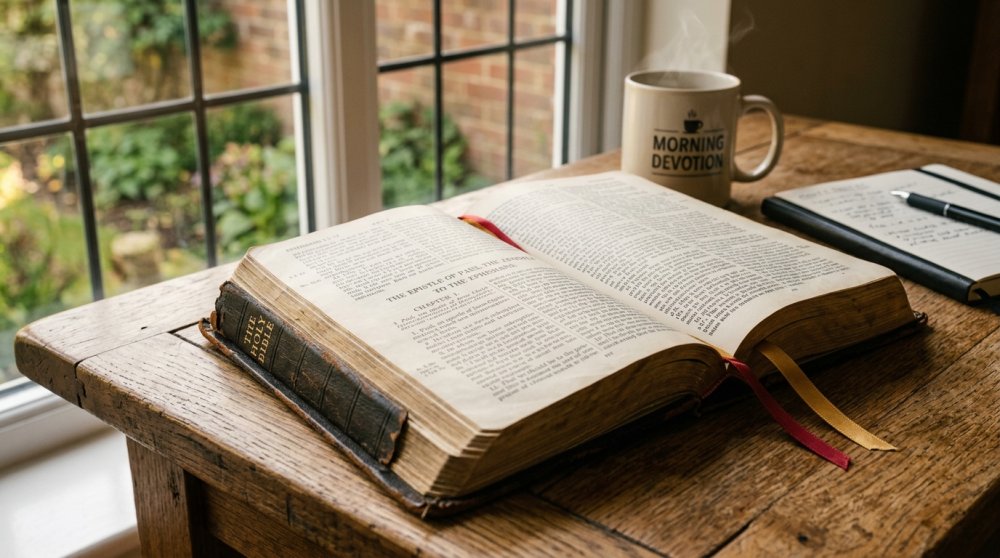
What Paul’s Letter to the Ephesians Reveals About the Church’s True Purpose

Faith Facts
- Leading Bible scholar N.T. Wright argues that Paul’s letter to the Ephesians deserves the same sustained attention Christians give to Romans and Galatians
- The church is called to be a “small working model” of God’s promised new creation, serving as an advance sign of redeemed creation
- Paul describes believers as God’s “poetry” or artwork, meant to embody and enact the new creation here and now
At Crowley’s Ridge College in Paragould, Arkansas, where history professor Shannon Beasley teaches, each class begins with a verse of the day to encourage students and give them a grounding, reorienting start to the morning. Then they turn to the news of the day, the top stories shaping their world.
Beasley notes how often the verse of the day illuminates the news of the day. She is also struck by how frequently, when she asks students to name their favorite Bible verses, something from Ephesians appears — such as Ephesians 3:20.
While Romans and Galatians tend to dominate church conversations, leading Bible scholar N.T. Wright believes Ephesians deserves equally sustained attention. Wright, a senior research fellow at Wycliffe Hall, Oxford, has written “The Vision of Ephesians: The Task of the Church and the Glory of God.”
The letter to the Ephesians is generally accepted as having been written by the apostle Paul, a conclusion Wright defends while giving little weight to arguments against Pauline authorship. Importantly, Wright emphasizes that Ephesians was likely a circular letter — written not to address a single congregation’s local concerns, but to be read aloud among several house churches in and around Ephesus in modern-day western Turkey.
These were small communities — perhaps five to 30 people each — largely poor rather than wealthy, hearing this letter read while Paul himself was imprisoned.
Wright moves through the letter section by section rather than adhering rigidly to the chapter-and-verse divisions added to our Bibles some five centuries ago. Because the original Greek lacked punctuation, determining where sentences begin and end is an act of interpretation.
Wright’s remarkable facility with the language allows these interpretive decisions to yield fresh insights and renewed perspective. One striking example appears in Ephesians 2:10: “autou gar esmen poiēma.”
Wright renders “poiēma” not merely as “workmanship,” but as “poetry.”
“We are to be Renaissance-people, demonstrating the birth of the new world,”
Wright writes. We, the church, are God’s artwork — his sculpture, his poem.
This leads to the central theme of Wright’s reading of Ephesians: The church is called to be a small working model of God’s promised new creation — a heaven-and-earth community that serves as an advance sign of what redeemed creation looks like. The church is meant not only to announce this new creation, but to embody and enact it here and now.
What, then, does Paul call the Ephesian Christians — and us — to be? A people motivated by God’s glory as their goal; a praising people and a praying people; a peaceful and unified people; Spirit-filled, marked by self-giving love and clothed in the armor of God.
Read through this lens, “The Vision of Ephesians” offers rich insight for any teacher, student or reader of Scripture seeking to understand not only what the church believes but also what it is meant to be. In an age of cultural division and confusion about the church’s role in society, Paul’s letter provides a timeless blueprint for Christian community and witness.
Wright’s work stands as a reminder that Scripture speaks powerfully to contemporary challenges when we take the time to understand its original context and meaning. For Christians seeking to live out their faith authentically in today’s world, Ephesians offers a vision of the church as God’s masterpiece — a living demonstration of His transforming power.
Let us know what you think, please share your thoughts in the comments below.


Faith Facts
- The Bible records Noah’s Ark as a historical vessel built at God’s command to preserve life during the Flood.
- Archaeologists and geologists continue to study sites in Turkey that some claim match the Ark’s resting place.
- Christians are urged to ground their faith in Scripture rather than unverified discoveries.
Explosive headlines this week announced that Noah’s Ark has been discovered beneath a mountain range in Turkey. The claims have quickly spread across social media and news outlets, stirring both excitement and skepticism among believers.
Chris Sinkinson, a respected Christian author and lecturer, cautions that such announcements often outpace the evidence. He urges fellow believers to remain anchored in Scripture and verified facts rather than sensational reports.
“Christians need to stick to the facts,” Sinkinson stated. His words serve as a timely reminder that faith rests on the unchanging Word of God, not on the latest archaeological headline.
While the possibility of discovering physical remnants of the Ark is intriguing, experts note that conclusive proof remains elusive. Many past claims have failed under closer scientific examination.
Scripture itself provides the foundation for understanding the Flood and God’s covenant with Noah. Believers are reminded that the reliability of the Bible does not depend on locating the physical Ark.
Let us know what you think, please share your thoughts in the comments below.
Faith Facts
- Revelation chapters 2 and 3 contain direct messages from Jesus to seven churches in Asia Minor, blending commendation with stern rebuke.
- Scripture records that Jesus declares, “I know your works,” underscoring His intimate awareness of both corporate and personal conduct.
- The warnings delivered to these early congregations still apply to contemporary churches that drift into compromise or complacency.
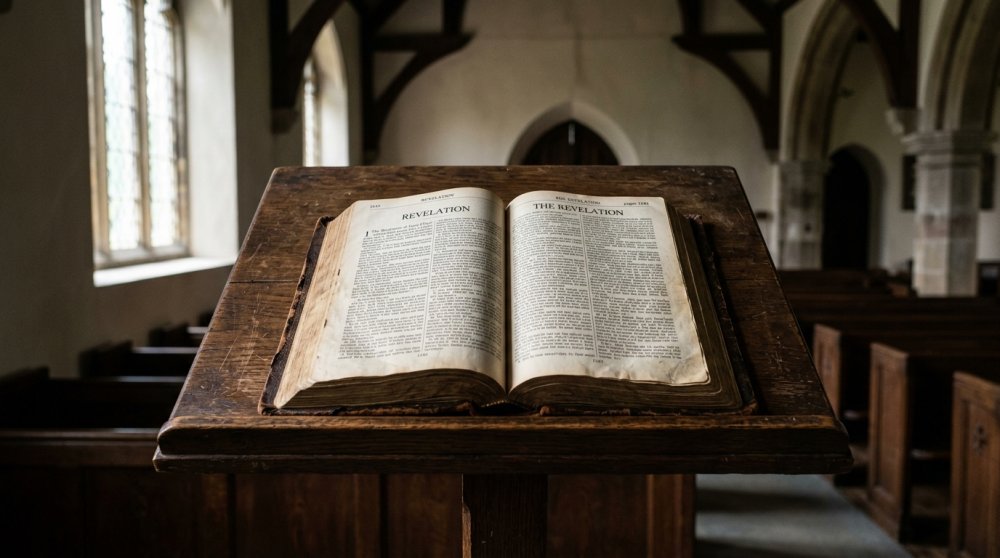
In Revelation 2 and 3, the gentle and lowly Jesus speaks to seven churches with both praise and severe warning.
He knows their works, their compromises and what they can’t see about themselves.
He knows ours, too.
Let us know what you think, please share your thoughts in the comments below.

Faith Facts
- Professional wrestler Samoa Joe has publicly encouraged Christians to give a portion of their income to the local church.
- Joe described his decision to tithe as one of his “greatest decisions.”
- The call to tithe reflects the biblical principle of returning the firstfruits of one’s labor to God.
Professional wrestler Samoa Joe is using his platform to point believers toward faithful giving. He recently shared that his commitment to tithing remains one of the most important choices he has made.
Joe described the practice as both a spiritual discipline and a source of blessing in his life. His public encouragement comes at a time when many families are weighing how to honor God with their finances amid rising costs and economic uncertainty.
“One of my greatest decisions was to tithe,”
The wrestler’s testimony underscores the biblical call found in Malachi 3:10, where God invites His people to bring the whole tithe into the storehouse. For Christian audiences, Joe’s words serve as a reminder that generosity is not limited to pastors or ministry professionals.
His straightforward challenge to tithe resonates with believers who see financial stewardship as an act of worship rather than mere obligation. In an industry often marked by self-promotion, Joe’s public stand for biblical giving offers a refreshing counter-example.
Let us know what you think, please share your thoughts in the comments below.


-

 Self-Reliance2 years ago
Trump’s Bold Move Uncovers Massive Social Security Fraud
-

 Faith1 year ago
New Clues Emerge in Noah’s Ark Mystery
-

 News2 years ago
Governor Walz’s Rhetoric Sparks National Controversy
-

 News2 years ago
Mel Gibson’s ‘The Passion of the Christ’ Sequel Title Announced
-

 Family2 years ago
Texas Lawmaker Targets Furries in Schools
-

 Freedom2 years ago
Maine Lawmaker Challenges Sports Fairness Controversy
-

 Family1 year ago
Canada’s Controversial Policy Sparks Ethical Debate
-
Faith11 months ago
Congress Hears Pleas for Nigerian Christians