
Faith
A Life of Unwavering Faith: Remembering Ann Widdecombe’s Courageous Stand for Christian Values

Faith Facts
- Former British MP Ann Widdecombe has passed away at age 78, leaving behind a legacy of principled Christian conservative leadership
- Widdecombe converted to Catholicism in 1993 and never compromised her faith-based convictions, even when it cost her career advancement
- Throughout her political career, she stood firm on traditional values including pro-life positions and opposition to social liberalism
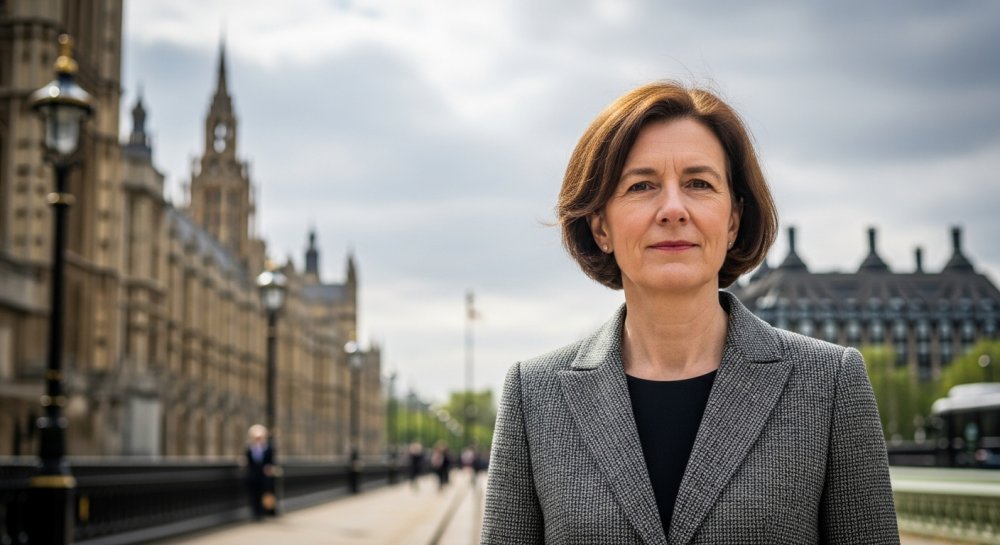
The Christian conservative movement has lost one of its most courageous voices. Ann Widdecombe, former British Member of Parliament and unwavering defender of traditional Christian values, has died at the age of 78. Her passing marks the end of an era when politicians were willing to sacrifice career advancement for the sake of deeply held convictions rooted in faith.
Widdecombe’s political career was defined by a rare quality in modern politics: the willingness to stand alone when principle demanded it. In an age when so many public figures bend to the prevailing cultural winds, she remained steadfast in her Christian beliefs, regardless of the personal or professional cost.
Her conversion to Catholicism in 1993 was not a quiet, private affair but a public declaration of faith that would shape every subsequent decision in her political life. This conversion came after the Church of England’s decision to ordain women priests, a move Widdecombe could not reconcile with her understanding of Scripture and tradition.
Throughout her time in Parliament, Widdecombe championed causes that reflected her Christian worldview. She was uncompromising in her defense of the unborn, consistently voting for pro-life measures and speaking out against the culture of death that has claimed millions of innocent lives. Her voice was a beacon of hope for those who believe in the sanctity of human life from conception to natural death.
What set Widdecombe apart from many of her political contemporaries was her refusal to moderate her views for the sake of popularity or advancement. While others calculated their positions based on polling data and focus groups, she calculated hers based on Scripture, tradition, and conscience. This approach earned her respect even from those who disagreed with her.
Her courage extended beyond the abortion issue. Widdecombe stood firm against the erosion of traditional marriage and family values, understanding that these institutions are the bedrock of a healthy society. She recognized that when we abandon God’s design for marriage and family, we don’t just harm individuals—we undermine the very foundations of civilization.
In later years, Widdecombe became a vocal critic of the European Union, seeing it as a threat to national sovereignty and traditional British values. Her support for Brexit was consistent with her lifelong commitment to self-determination and the preservation of Christian heritage in public life.
Critics often labeled her as “controversial” or “divisive,” but these terms merely revealed the discomfort that secularists feel when confronted with someone who takes Christian teaching seriously. Widdecombe understood that being salt and light in a darkening culture means being willing to be unpopular, misunderstood, and sometimes ridiculed.
Her television appearances in later years introduced her to a new generation of Britons who may not have followed her parliamentary career. Whether on reality shows or political commentary programs, she never shed her convictions or compromised her witness. She demonstrated that it’s possible to engage popular culture without being absorbed by it.
Widdecombe’s legacy challenges contemporary Christians in politics and public life. How many of us are willing to sacrifice advancement for principle? How many would choose conviction over career? In an era of calculated political positioning, her example of courage and consistency stands as a rebuke to the compromising spirit that has infected both church and state.
The tributes pouring in from across the political spectrum testify to the respect she commanded, even from ideological opponents. This respect was earned not through compromise or triangulation, but through the consistent application of Christian principles to public policy, regardless of the personal cost.
As we remember Ann Widdecombe, we should not merely celebrate her courage—we should be inspired to emulate it. The challenges facing Christians in the public square today are greater than ever. Religious liberty is under assault, traditional values are scorned, and faith is increasingly marginalized in public discourse.
We need more Ann Widdecombes—men and women who will stand firm in their faith, speak truth to power, and refuse to compromise on matters of conscience. We need leaders who fear God more than they fear public opinion, who value eternal truth more than temporal approval.
Her life reminds us that faithful Christian witness in the political arena is possible. It may not lead to the highest offices or the warmest press coverage, but it leads to something far more valuable: the ability to look in the mirror each morning knowing you have remained faithful to the One who called you.
As we mourn her passing, we should also celebrate a life well-lived in service to God and country. Ann Widdecombe fought the good fight, finished the race, and kept the faith. May her example inspire a new generation of Christian conservatives to stand firm in their convictions, no matter the cost.
Let us know what you think, please share your thoughts in the comments below.


Faith Facts
- Andy Peck dedicated over 30 years to encouraging and equipping Christian leaders through broadcasting, coaching, and widely-read Christian journalism
- He served as a trusted voice in Christian media while mentoring countless believers in their faith journeys
- Peck remained faithful to Christ throughout his life, continuing his spiritual witness until his final days
The Christian community is mourning the loss of a faithful servant who spent more than three decades quietly shaping the faith of countless believers. Through his work in broadcasting, personal coaching, and Christian journalism, one man’s dedication to encouraging fellow Christians has left an indelible mark on the faith community.
Andy Peck’s ministry touched lives across multiple platforms. His articles reached thousands of readers seeking spiritual encouragement and practical guidance in their Christian walk. Beyond the written word, he invested personally in leaders through one-on-one coaching, helping them grow in their faith and calling.
What distinguished Peck’s ministry was not flashy programs or self-promotion, but rather a consistent, authentic witness to Christ. He understood that true spiritual leadership often happens in the quiet moments—the personal conversations, the thoughtful articles, the patient mentoring that builds up the body of Christ one person at a time.
His colleague John Buckeridge remembers him as more than just a professional associate. Peck was a trusted colleague and faithful friend who exemplified what it means to be an authentic follower of Christ. In an age where Christian leadership is sometimes marked by scandal or compromise, Peck’s steadfast faithfulness stands as a testament to the power of consistent, humble service.
The impact of his broadcasting work extended the reach of his ministry. Through the airwaves, Peck brought encouragement and biblical teaching into homes across the nation. His ability to communicate complex spiritual truths in accessible ways made him a beloved voice among listeners seeking to deepen their relationship with God.
For those who knew him personally, Peck’s greatest legacy may be his unwavering commitment to keep the faith until the very end. In a culture that increasingly pressures Christians to compromise their values, he remained true to biblical principles and conservative Christian beliefs throughout his ministry.
His work in Christian journalism provided a platform for exploring issues that matter most to believers—strengthening families, defending religious freedom, and equipping the church to stand firm in challenging times. Through his articles, countless readers found wisdom and encouragement for their daily walk with Christ.
The coaching ministry he maintained allowed Peck to invest deeply in emerging Christian leaders. This personal investment represents the kind of discipleship that Jesus modeled—taking time with individuals, helping them discover their gifts, and encouraging them to faithfully serve God’s purposes.
As the Christian community reflects on his life and ministry, Peck’s example challenges believers to consider their own legacy. Will we invest in others? Will we remain faithful in both public and private? Will we use whatever platform God gives us to encourage fellow believers and point others to Christ?
Andy Peck’s life answers these questions with a resounding yes. His decades of faithful service remind us that kingdom impact isn’t always measured in large crowds or viral moments, but often in the steady, consistent work of encouraging one person at a time.
Let us know what you think, please share your thoughts in the comments below.
Faith Facts
- The Church of England’s General Synod endorsed the controversial Kairos Palestine II document, drawing sharp criticism from faithful Christians who stand with Israel
- Dr. James Patrick of Love Never Fails Ministries is challenging the Archbishop of Canterbury’s position, declaring it does not represent all British Christians
- The debate highlights a growing divide between traditional Christian support for Israel and institutional church positions influenced by Palestinian liberation theology
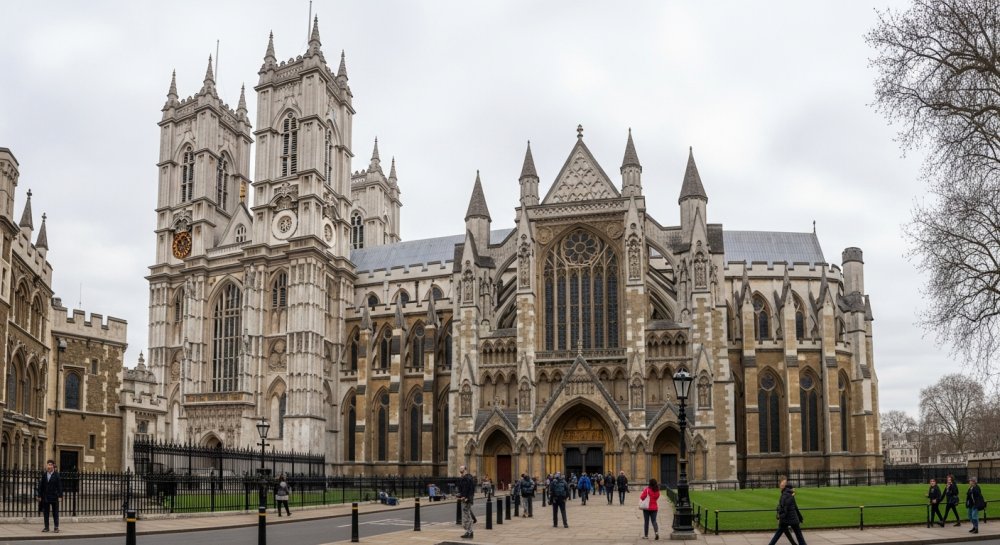
A prominent British Christian leader is speaking out against the Church of England’s recent stance on Israel, offering a message of solidarity to the Jewish community amid growing concern over institutional church positions on the Middle East conflict.
Dr. James Patrick of Love Never Fails Ministries issued a clear statement that the Archbishop of Canterbury’s views on the Israeli-Palestinian conflict do not represent all British Christians. His remarks come in response to the General Synod’s vote endorsing Kairos Palestine II and Bishop Sarah Mullally’s pastoral guidance on the matter.
The controversy centers on the Church of England’s embrace of a document that many pro-Israel advocates view as one-sided and theologically problematic. The Kairos Palestine movement has been criticized for promoting a narrative that downplays Israel’s legitimate security concerns and historic connection to the land.
Dr. Patrick’s intervention represents a significant pushback from within British Christianity against what some see as the institutional church’s drift away from traditional Christian Zionism and biblical support for the Jewish state. For generations, evangelical and conservative Christians have maintained that supporting Israel’s right to exist and defend itself is a moral and theological imperative rooted in Scripture.
The General Synod vote has raised alarm bells among British Jews and their Christian allies, who worry that mainline Protestant churches are increasingly adopting positions that effectively delegitimize Israel while offering uncritical support to Palestinian political demands. Critics argue this approach ignores the complex realities on the ground, including ongoing terrorism against Israeli civilians and the Palestinian Authority’s refusal to recognize Israel’s right to exist.
Bishop Mullally’s pastoral letter addressing the conflict has also drawn scrutiny for what observers describe as a failure to adequately acknowledge Israel’s security challenges or the antisemitism that often undergirds anti-Israel activism in church circles.
The divide reflects a broader tension within global Christianity between churches aligned with liberation theology movements and those who maintain traditional biblical interpretations regarding God’s covenant with the Jewish people and the significance of the modern State of Israel.
Conservative Christians and evangelicals have long been among Israel’s strongest supporters in the West, viewing the restoration of Jewish sovereignty in the land as fulfillment of biblical prophecy and a cause worth defending. This theological position stands in stark contrast to the increasingly critical stance taken by many mainline Protestant denominations.
Dr. Patrick’s public statement serves as an important reminder that institutional church positions do not always reflect the views of faithful believers in the pews. Many British Christians continue to stand firmly with Israel and reject attempts to paint the Jewish state as the primary obstacle to peace in the region.
The controversy also underscores the need for Christians to carefully examine the theological and political assumptions underlying church statements on complex international issues. When church leaders adopt positions that appear to single out Israel for condemnation while ignoring or minimizing the actions of terrorist groups and authoritarian regimes, they risk not only betraying biblical principles but also contributing to the climate of antisemitism.
As the Church of England continues to navigate these contentious waters, voices like Dr. Patrick’s provide an essential counterbalance, ensuring that the Jewish community knows they have allies among British Christians who refuse to abandon Israel in her hour of need.
Let us know what you think, please share your thoughts in the comments below.
Faith Facts
- Chile’s government has launched an inter-ministerial initiative to resolve decades-old legal disputes affecting church properties
- Many evangelical congregations have been unable to secure legal status for churches built on state-owned and private land
- The coordinated effort across multiple ministries represents a significant shift toward recognizing religious property rights
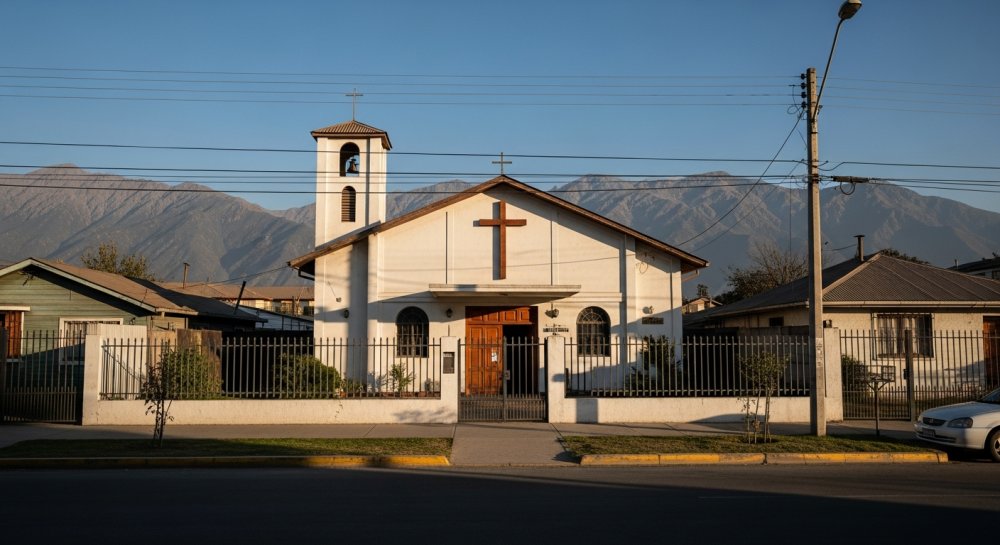
The government of Chile has initiated a comprehensive coordination effort involving multiple ministries to address a problem that has plagued religious communities for generations. The initiative aims to regularize the legal status of churches situated on both state-owned and privately owned land—a predicament that has left numerous evangelical congregations in legal limbo for decades.
For many Christian communities in Chile, the inability to secure proper legal recognition for their places of worship has created ongoing uncertainty and vulnerability. These congregations have faithfully gathered for worship, built facilities, and served their communities, yet have lacked the legal protections that come with formal property rights.
The inter-ministerial approach signals a recognition by Chilean authorities that religious freedom includes not just the right to worship, but also the right to own and maintain houses of worship without bureaucratic obstacles. By coordinating across government agencies, the Chilean government is working to streamline what has historically been a complex and often frustrating process for faith communities.
The situation has particularly affected evangelical churches, many of which were established by missionaries and local believers who prioritized ministry over navigating complicated legal frameworks. In some cases, these congregations have occupied their facilities for so long that they have become integral parts of their neighborhoods, yet still lack formal legal standing.
This initiative represents an important step toward protecting religious liberty and property rights. For conservatives who value both freedom of religion and the rule of law, this development demonstrates how government can work to remove barriers that hinder faith communities rather than create them.
The effort also highlights the importance of resolving longstanding injustices. When churches cannot secure legal recognition, they remain vulnerable to displacement and cannot fully invest in their facilities or plan for the future with confidence.
Let us know what you think, please share your thoughts in the comments below.


-

 Self-Reliance1 year ago
Trump’s Bold Move Uncovers Massive Social Security Fraud
-

 Faith1 year ago
New Clues Emerge in Noah’s Ark Mystery
-

 News1 year ago
Governor Walz’s Rhetoric Sparks National Controversy
-

 News1 year ago
Mel Gibson’s ‘The Passion of the Christ’ Sequel Title Announced
-

 Family1 year ago
Texas Lawmaker Targets Furries in Schools
-

 Freedom1 year ago
Maine Lawmaker Challenges Sports Fairness Controversy
-

 Family1 year ago
Canada’s Controversial Policy Sparks Ethical Debate
-
Faith8 months ago
Congress Hears Pleas for Nigerian Christians