
Faith
What a Bible Verse on Stage Revealed About Morgan Wallen’s Journey


Faith Facts
- Morgan Wallen, one of country music’s biggest stars, is the son of a Southern Baptist preacher and grew up deeply immersed in Christian faith and worship music
- Despite public controversies, Wallen has openly displayed his faith, including appearing onstage with a Bible verse written on his plaster cast
- The singer’s journey reflects the complexities of maintaining Christian witness amid fame, struggles, and the scrutiny of secular culture
In an era when faith is often hidden or dismissed in mainstream entertainment, one country music superstar is refusing to stay silent about his Christian roots. Morgan Wallen, the chart-topping singer whose voice has dominated radio airwaves and streaming platforms, carries a heritage that runs deeper than his hit singles—he’s the son of a Southern Baptist preacher.
Wallen’s public journey has been anything but smooth. His rise to superstardom has been marked by both extraordinary success and significant controversy. Yet through it all, glimpses of his faith continue to emerge, reminding fans and critics alike of the foundation upon which he was raised.
Morgan Wallen sported the bible verse Joshua 2:21 on his leg cast during his night 2 concert in Clemson this past weekend. The bible verse reads “Then she said, ‘According to your words, so be it!’ And she sent them away, and they departed. And she bound the scarlet cord in the… pic.twitter.com/Z9i1ESNg16
— Country Chord (@CountryChord) June 29, 2026
When Wallen appeared onstage with a Bible verse inscribed on his plaster cast, it wasn’t just a fashion statement or publicity stunt. It was a visible testament to a faith formed in the pews of a Southern Baptist church, where worship music and Scripture were woven into the fabric of his childhood. For those who grew up in similar environments, the gesture resonated as something authentic—a public acknowledgment of private belief.
The tension between Wallen’s faith background and his public missteps has sparked conversation across Christian and secular communities alike. Some see hypocrisy; others see a prodigal son still within reach of grace. What’s undeniable is that Wallen has never completely severed ties with his Christian upbringing, even as the pressures and temptations of fame have pulled him in competing directions.
His story raises important questions for Christians navigating a culture that often demands perfection from believers while celebrating brokenness in everyone else. How do we respond when someone raised in the faith stumbles publicly? Do we write them off, or do we recognize that sanctification is a lifelong process, messy and non-linear?
Wallen’s music itself often touches on themes of redemption, struggle, and the search for meaning—subjects that resonate with believers who understand that the Christian life isn’t about appearing flawless, but about returning again and again to the source of grace. His willingness to display Scripture publicly, even amid controversy, suggests a man who hasn’t abandoned the faith of his father, even if he’s wrestling with how to live it out under the spotlight.
For Christian parents and church leaders, Wallen’s journey serves as a reminder that raising children in the faith doesn’t guarantee a straightforward path. The seed planted in childhood can lie dormant for seasons, obscured by worldly pursuits and poor choices, yet never fully dead. The prodigal son parable wasn’t just a nice story—it’s a pattern we see repeated throughout Scripture and in modern life.
The secular entertainment industry has little patience for moral failure among Christians, yet it celebrates redemption narratives when they’re framed on its own terms. Wallen’s public faith, imperfect as it may be, challenges that double standard. It says that someone can be broken, make mistakes, and still point toward something greater than themselves.
As Christians, we’re called to speak truth in love—neither excusing sin nor denying the power of grace to transform. Wallen’s story is still being written. Whether it becomes a testimony of full restoration or a cautionary tale remains to be seen. What’s certain is that the faith instilled by a Southern Baptist preacher father hasn’t been completely extinguished, and where there’s a flicker, there’s hope for a flame.
In a culture increasingly hostile to Christian values, public figures who acknowledge their faith—however imperfectly—deserve our prayers more than our condemnation. The Bible verse on that cast wasn’t just ink on plaster; it was a marker, a reminder that even in the middle of fame and failure, the Word of God endures.
Let us know what you think, please share your thoughts in the comments below.


Faith Facts
- The Bible records Noah’s Ark as a historical vessel built at God’s command to preserve life during the Flood.
- Archaeologists and geologists continue to study sites in Turkey that some claim match the Ark’s resting place.
- Christians are urged to ground their faith in Scripture rather than unverified discoveries.
Explosive headlines this week announced that Noah’s Ark has been discovered beneath a mountain range in Turkey. The claims have quickly spread across social media and news outlets, stirring both excitement and skepticism among believers.
Chris Sinkinson, a respected Christian author and lecturer, cautions that such announcements often outpace the evidence. He urges fellow believers to remain anchored in Scripture and verified facts rather than sensational reports.
“Christians need to stick to the facts,” Sinkinson stated. His words serve as a timely reminder that faith rests on the unchanging Word of God, not on the latest archaeological headline.
While the possibility of discovering physical remnants of the Ark is intriguing, experts note that conclusive proof remains elusive. Many past claims have failed under closer scientific examination.
Scripture itself provides the foundation for understanding the Flood and God’s covenant with Noah. Believers are reminded that the reliability of the Bible does not depend on locating the physical Ark.
Let us know what you think, please share your thoughts in the comments below.
Faith Facts
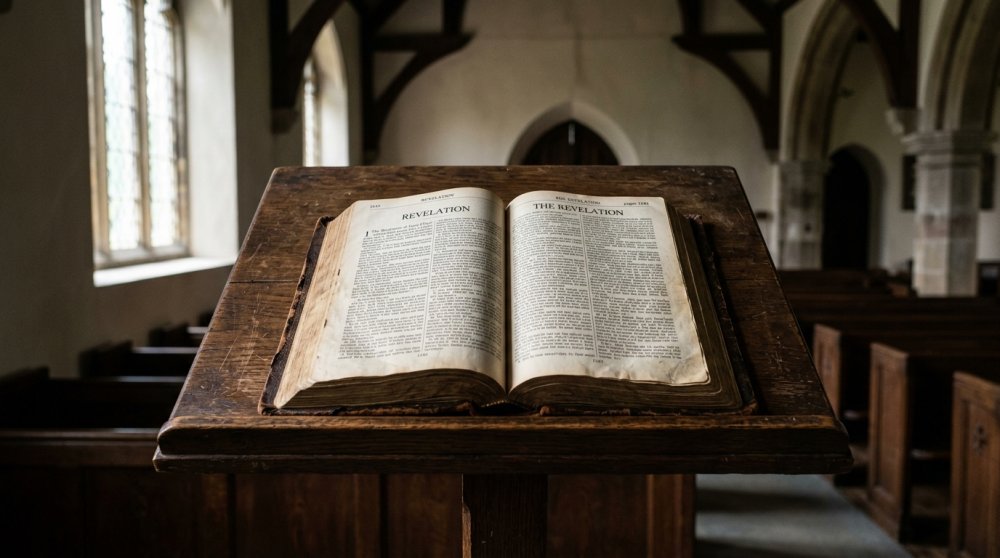
- Revelation chapters 2 and 3 contain direct messages from Jesus to seven churches in Asia Minor, blending commendation with stern rebuke.
- Scripture records that Jesus declares, “I know your works,” underscoring His intimate awareness of both corporate and personal conduct.
- The warnings delivered to these early congregations still apply to contemporary churches that drift into compromise or complacency.
In Revelation 2 and 3, the gentle and lowly Jesus speaks to seven churches with both praise and severe warning.
He knows their works, their compromises and what they can’t see about themselves.
He knows ours, too.
Let us know what you think, please share your thoughts in the comments below.

Faith Facts
- Professional wrestler Samoa Joe has publicly encouraged Christians to give a portion of their income to the local church.
- Joe described his decision to tithe as one of his “greatest decisions.”
- The call to tithe reflects the biblical principle of returning the firstfruits of one’s labor to God.
Professional wrestler Samoa Joe is using his platform to point believers toward faithful giving. He recently shared that his commitment to tithing remains one of the most important choices he has made.
Joe described the practice as both a spiritual discipline and a source of blessing in his life. His public encouragement comes at a time when many families are weighing how to honor God with their finances amid rising costs and economic uncertainty.
“One of my greatest decisions was to tithe,”
The wrestler’s testimony underscores the biblical call found in Malachi 3:10, where God invites His people to bring the whole tithe into the storehouse. For Christian audiences, Joe’s words serve as a reminder that generosity is not limited to pastors or ministry professionals.
His straightforward challenge to tithe resonates with believers who see financial stewardship as an act of worship rather than mere obligation. In an industry often marked by self-promotion, Joe’s public stand for biblical giving offers a refreshing counter-example.
Let us know what you think, please share your thoughts in the comments below.


-

 Self-Reliance2 years ago
Trump’s Bold Move Uncovers Massive Social Security Fraud
-

 Faith1 year ago
New Clues Emerge in Noah’s Ark Mystery
-

 News2 years ago
Governor Walz’s Rhetoric Sparks National Controversy
-

 News2 years ago
Mel Gibson’s ‘The Passion of the Christ’ Sequel Title Announced
-

 Family2 years ago
Texas Lawmaker Targets Furries in Schools
-

 Freedom2 years ago
Maine Lawmaker Challenges Sports Fairness Controversy
-

 Family1 year ago
Canada’s Controversial Policy Sparks Ethical Debate
-
Faith11 months ago
Congress Hears Pleas for Nigerian Christians