
Faith
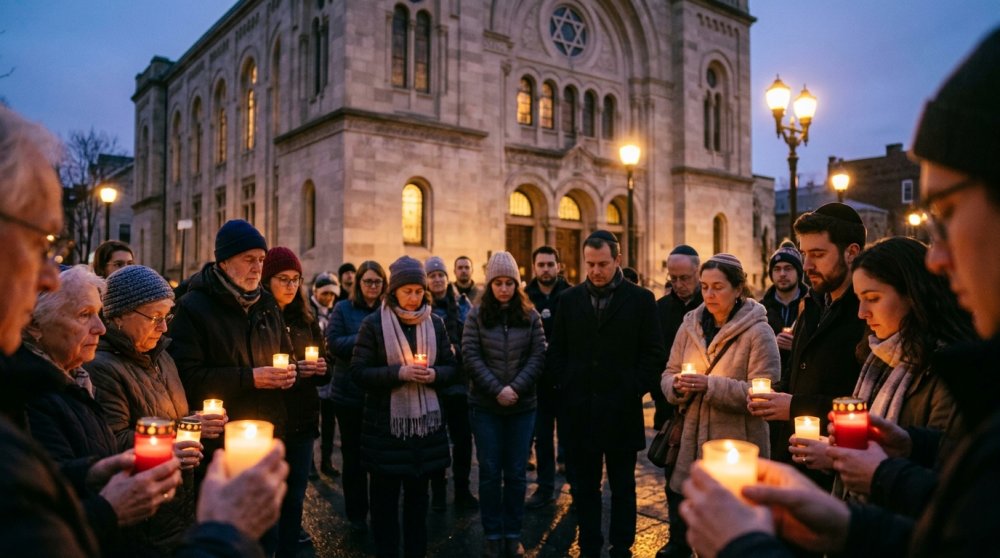
Ancient Hatred Returns: What Today’s Violence Against Jews Means for Believers

Faith Facts
- 2025 is reported as the deadliest year for antisemitic violence in thirty years, with attacks in Sydney, Manchester, and Washington, D.C.
- The pattern of hatred against the Jewish people traces back thousands of years to biblical accounts including the Book of Esther
- Christian Americans must understand that biblical warnings about persecution of God’s covenant people carry urgent relevance today
A disturbing pattern of violence has emerged across the Western world, targeting Jewish communities with a ferocity not seen in generations. At Bondi Beach in Sydney, fifteen people lost their lives. In Manchester, two were killed at a synagogue. In our nation’s capital, two were shot at a Jewish museum.
According to a new report, 2025 marks the deadliest year for antisemitic violence in three decades. But this is not merely a contemporary crisis — it is the resurgence of an ancient evil that Christians must recognize and confront.
The hatred directed at the Jewish people is not new. From the genocidal plot of Haman in the Book of Esther to the pogroms of Europe, the pattern repeats itself across history. Each generation believes it has moved past such darkness, yet the darkness returns, often cloaked in new ideologies and political movements.
For Christians, this matters deeply. Our faith is rooted in God’s covenant with Abraham, Isaac, and Jacob. The Scriptures we cherish were written primarily by Jewish hands. Our Savior was born, lived, and ministered as a Jew. To stand silent in the face of antisemitism is to deny our own spiritual heritage.
Three critical factors explain why this ancient hatred has resurged in our time.
First, moral relativism has weakened the West’s ability to recognize evil. When truth becomes subjective and all beliefs are deemed equally valid, societies lose the capacity to identify and condemn genuine wickedness. Antisemitism thrives in environments where clarity about right and wrong has been abandoned. The Judeo-Christian moral framework that once served as a bulwark against such hatred has been systematically dismantled in our schools, media, and public square.
Second, political radicalization on both extremes has provided cover for hate. Far-left ideologies have repackaged ancient antisemitic tropes as “anti-Zionism,” while fringe elements on the far right have revived older forms of racial and religious bigotry. Both threaten Jewish communities and both must be condemned by Christians who value truth over tribal loyalty.
Third, spiritual warfare intensifies when God’s purposes advance. The Jewish people remain central to God’s redemptive plan. Their miraculous preservation as a distinct people, their return to their ancestral homeland, and their ongoing role in biblical prophecy make them targets of demonic opposition. This is not merely sociology or politics — it is a cosmic conflict between the Kingdom of God and the forces of darkness.
The Book of Esther reveals a timeless truth: when the enemies of God’s people plot destruction, God raises up defenders. Mordecai and Esther risked everything to stand against genocide. Today, Christians must ask ourselves if we possess the same courage.
This is not a call to uncritical acceptance of every policy decision made by any government. It is a call to recognize that attacks on Jewish people — whether physical violence or ideological assault — represent an attack on the God who chose them as His covenant people.
American Christians have a particular responsibility in this moment. Our nation has been blessed with religious freedom precisely because it was founded on Judeo-Christian principles. If we allow those principles to erode, if we permit antisemitism to flourish unchallenged, we participate in our own spiritual and cultural destruction.
The violence in Sydney, Manchester, and Washington should serve as a wake-up call. These are not isolated incidents but manifestations of a growing darkness that will not stop with the Jewish community. History demonstrates that societies which tolerate antisemitism eventually turn on all people of faith.
We must speak boldly in our churches, our communities, and our public discourse. We must educate ourselves and our children about the unique dangers of antisemitism and its role throughout history. We must support policies that protect religious minorities while defending the freedom of all people to worship according to conscience.
Above all, we must pray. Prayer moves the hand of God and aligns our hearts with His purposes. The same God who preserved the Jews through Haman’s plot, Pharaoh’s oppression, and Hitler’s Final Solution remains sovereign today.
Antisemitism is not merely a Jewish problem. It is a test of Christian faithfulness, a measure of our commitment to truth, and a sign of the spiritual condition of our civilization. How we respond will determine not only the safety of our Jewish neighbors but the moral integrity of our own witness.
Let us know what you think, please share your thoughts in the comments below.


Faith Facts
- Pastor Samuel Rodriguez has been appointed as an ambassador for Mel Gibson’s upcoming film ‘The Resurrection of the Christ: Part One’
- Gibson’s Icon Productions made the official announcement through El Mensaje Comunicaciones
- This partnership brings together influential evangelical leadership and proven biblical filmmaking experience
A powerful new collaboration is taking shape in Hollywood as one of America’s most prominent evangelical leaders joins forces with acclaimed director Mel Gibson for a highly anticipated biblical film project. Pastor Samuel Rodriguez has officially been named an ambassador for “The Resurrection of the Christ: Part One,” marking a significant partnership between faith leadership and the entertainment industry.
Icon Productions, Gibson’s production company, made the announcement through El Mensaje Comunicaciones. The appointment signals a strategic effort to bridge the gap between Hollywood and the Christian community for this major biblical production.
Rodriguez, who serves as president of the National Hispanic Christian Leadership Conference, brings substantial influence within evangelical circles. His involvement as an ambassador suggests the film will have strong support among faith-based audiences when it releases.
Gibson previously demonstrated his ability to create compelling biblical cinema with “The Passion of the Christ,” which became a cultural phenomenon and one of the highest-grossing religious films in history. That 2004 film resonated deeply with Christian audiences and sparked nationwide conversations about faith.
The collaboration between Rodriguez and Gibson represents more than just promotional strategy. It reflects a growing recognition in Hollywood that authentic faith stories require genuine input from faith leaders who understand the spiritual significance of biblical narratives.
By appointing Rodriguez as an ambassador, Icon Productions is ensuring that evangelical perspectives are represented throughout the film’s journey to audiences. This approach stands in contrast to Hollywood’s frequent mishandling of religious themes and demonstrates respect for the Christian community.
“The Resurrection of the Christ: Part One” will focus on the most pivotal event in Christian history—the resurrection of Jesus Christ. This subject matter holds eternal significance for believers and represents the cornerstone of Christian faith.
Details about the film’s production timeline and release date have not been fully disclosed. However, the involvement of both Gibson and Rodriguez has already generated considerable interest among Christian communities nationwide.
The partnership also highlights the importance of faith leaders engaging with culture and media. Rodriguez’s ambassadorship provides an opportunity to ensure biblical accuracy and theological integrity in how this sacred story is presented to millions of viewers.
Gibson’s return to biblical filmmaking has been long anticipated by Christian audiences who appreciated his previous work. His commitment to producing “The Resurrection of the Christ” demonstrates that Hollywood can still produce content that honors Scripture and respects Christian beliefs.
Let us know what you think, please share your thoughts in the comments below.

Faith Facts
- The Bible does not condemn wealth itself but warns against the love of money and greed
- Scripture teaches that contentment and godly character matter far more than financial abundance
- God’s provision is promised to those who seek His kingdom first, not material riches
A common question among believers today touches on one of the most misunderstood topics in Christian teaching: Does God want us to be wealthy? The answer reveals a critical distinction that often gets lost in modern prosperity teaching.
The Bible does not present wealth as inherently evil or inherently good. Scripture instead focuses on the condition of the heart and the pursuit of righteousness over riches.
Throughout the Old and New Testaments, we see examples of godly people who possessed wealth—Abraham, Job, Joseph of Arimathea—alongside those who lived humbly, including Jesus Himself and many of the apostles. The difference was never the amount in their possession but their relationship with it.
First Timothy 6:10 provides crucial clarity on this matter, stating that “the love of money is a root of all kinds of evil.” Note carefully: it is the love of money, not money itself, that Scripture condemns. This distinction matters deeply for how Christians approach financial stewardship and success.
The danger emerges when believers make wealth accumulation their primary goal or measure of God’s favor. This mindset can subtly replace trust in God with trust in material security, creating an idol that competes for our devotion.
Jesus addressed this directly in Matthew 6:24, declaring, “No one can serve two masters. Either you will hate the one and love the other, or you will be devoted to the one and despise the other. You cannot serve both God and money.”
The teaching is clear: our allegiance must be singular and directed toward the Lord. When financial gain becomes our driving motivation, we have wandered from the path of faith.
Scripture consistently emphasizes contentment as a virtue far superior to wealth. Paul wrote in Philippians 4:11-12 about learning to be content in all circumstances, whether facing plenty or want. This contentment does not stem from external conditions but from an internal trust in God’s provision and timing.
Proverbs 30:8-9 offers a balanced prayer: “Give me neither poverty nor riches, but give me only my daily bread. Otherwise, I may have too much and disown you and say, ‘Who is the Lord?’ Or I may become poor and steal, and so dishonage the name of my God.”
This prayer recognizes both the spiritual dangers of wealth and poverty, seeking instead the wisdom of God’s provision according to His perfect will.
The prosperity gospel, which teaches that faith guarantees financial blessing, distorts biblical truth by reversing God’s priorities. Rather than seeking first His kingdom and His righteousness (Matthew 6:33), it encourages believers to seek material blessings as proof of spiritual favor.
God’s Word promises provision for those who follow Him faithfully, but that provision looks different for each believer according to His sovereign purpose. For some, it includes material abundance meant to be stewarded for Kingdom work; for others, it means sufficient resources for each day’s needs.
The real question is not whether God wants us to be rich but whether we want what God wants for us. Are we willing to accept His provision in whatever form it comes? Can we trust that His plan for our lives—whether it includes wealth or simplicity—is perfect?
When we shift our focus from accumulating riches to pursuing righteousness, practicing generosity, and storing up treasures in heaven, we align ourselves with eternal values rather than temporary ones. This perspective transforms how we view success, measuring it not by bank account balances but by faithfulness to God’s calling.
True biblical prosperity encompasses spiritual health, strong relationships, peace of mind, and the joy of walking in obedience to Christ. These riches far exceed any earthly fortune and cannot be diminished by economic downturns or financial loss.
For Christians navigating questions about wealth and God’s will, the path forward requires honest self-examination. What drives our financial decisions? Do we give generously and cheerfully? Are we content with what we have while working diligently with what God has entrusted to us?
The Bible calls believers to be good stewards of whatever resources come into our hands, using them to glorify God, support our families, help those in need, and advance the Gospel. Whether those resources are abundant or modest, our responsibility remains the same.
Let us know what you think, please share your thoughts in the comments below.

Faith Facts
- Illinois has agreed to temporarily halt enforcement of its assisted suicide law against Christian doctors and Catholic medical facilities who oppose the practice on religious grounds
- The Christian Medical & Dental Associations and Catholic Medical Association filed suit challenging the law’s requirement that healthcare providers facilitate access to assisted suicide
- The state acknowledged it will not penalize faith-based healthcare professionals who refuse to participate in assisted suicide procedures while the case proceeds
Illinois officials have temporarily backed down from enforcing a controversial assisted suicide law against Christian healthcare professionals and Catholic medical organizations who say the measure violates their constitutional rights and deeply held religious beliefs. The development represents a significant victory for faith-based doctors and medical facilities across the state.
The temporary reprieve comes after Christian medical associations filed legal challenges arguing the law would force them to violate their conscience rights. Under the new law, healthcare providers could face penalties for refusing to participate in or facilitate assisted suicide procedures.
The Christian Medical & Dental Associations and the Catholic Medical Association are among the groups leading the legal fight. These organizations represent thousands of healthcare professionals who view assisted suicide as fundamentally incompatible with their calling to preserve and protect life.
The state’s agreement not to enforce the law against these faith-based groups provides temporary relief while the constitutional questions are litigated. This protection ensures that Christian doctors and Catholic healthcare entities won’t face immediate legal consequences for following their religious convictions.
The lawsuit argues that forcing medical professionals to participate in assisted suicide violates their First Amendment rights to free exercise of religion and freedom of speech. The plaintiffs contend that no healthcare provider should be compelled to take actions that directly contradict their core religious beliefs about the sanctity of life.
Catholic teaching has consistently held that assisted suicide is morally wrong and contrary to the dignity of human life. Christian medical professionals argue that their Hippocratic oath to “do no harm” and their faith both call them to preserve life, not end it.
The temporary protection represents an acknowledgment by Illinois officials that serious constitutional questions surround the law’s requirements. While proponents of assisted suicide argue it provides compassion for the terminally ill, opponents maintain that true compassion involves caring for the dying, not hastening their death.
The case highlights the growing tension between state laws promoting assisted suicide and the religious liberty rights of healthcare workers. Similar conflicts have emerged in other states that have legalized the practice, with faith-based medical professionals seeking conscience protections.
For Christian doctors, the issue goes beyond professional disagreement—it strikes at the heart of their identity as healers called by God to serve and protect life. Many view their medical practice as a ministry and see participating in assisted suicide as a betrayal of both their faith and their profession.
As the legal challenge moves forward, the temporary agreement provides breathing room for these healthcare professionals to continue serving their patients according to their conscience. The outcome of this case could have far-reaching implications for religious freedom in healthcare across the nation.
Let us know what you think, please share your thoughts in the comments below.


-

 Self-Reliance1 year ago
Trump’s Bold Move Uncovers Massive Social Security Fraud
-

 Faith1 year ago
New Clues Emerge in Noah’s Ark Mystery
-

 News1 year ago
Governor Walz’s Rhetoric Sparks National Controversy
-

 News1 year ago
Mel Gibson’s ‘The Passion of the Christ’ Sequel Title Announced
-

 Family1 year ago
Texas Lawmaker Targets Furries in Schools
-

 Freedom1 year ago
Maine Lawmaker Challenges Sports Fairness Controversy
-

 Family1 year ago
Canada’s Controversial Policy Sparks Ethical Debate
-
Faith9 months ago
Congress Hears Pleas for Nigerian Christians