
Faith
Illinois Backs Down on Forcing Christian Doctors to Participate in Assisted Suicide


Faith Facts
- Illinois has agreed to temporarily halt enforcement of its assisted suicide law against Christian doctors and Catholic medical facilities who oppose the practice on religious grounds
- The Christian Medical & Dental Associations and Catholic Medical Association filed suit challenging the law’s requirement that healthcare providers facilitate access to assisted suicide
- The state acknowledged it will not penalize faith-based healthcare professionals who refuse to participate in assisted suicide procedures while the case proceeds
Illinois officials have temporarily backed down from enforcing a controversial assisted suicide law against Christian healthcare professionals and Catholic medical organizations who say the measure violates their constitutional rights and deeply held religious beliefs. The development represents a significant victory for faith-based doctors and medical facilities across the state.
The temporary reprieve comes after Christian medical associations filed legal challenges arguing the law would force them to violate their conscience rights. Under the new law, healthcare providers could face penalties for refusing to participate in or facilitate assisted suicide procedures.
The Christian Medical & Dental Associations and the Catholic Medical Association are among the groups leading the legal fight. These organizations represent thousands of healthcare professionals who view assisted suicide as fundamentally incompatible with their calling to preserve and protect life.
The state’s agreement not to enforce the law against these faith-based groups provides temporary relief while the constitutional questions are litigated. This protection ensures that Christian doctors and Catholic healthcare entities won’t face immediate legal consequences for following their religious convictions.
The lawsuit argues that forcing medical professionals to participate in assisted suicide violates their First Amendment rights to free exercise of religion and freedom of speech. The plaintiffs contend that no healthcare provider should be compelled to take actions that directly contradict their core religious beliefs about the sanctity of life.
Catholic teaching has consistently held that assisted suicide is morally wrong and contrary to the dignity of human life. Christian medical professionals argue that their Hippocratic oath to “do no harm” and their faith both call them to preserve life, not end it.
The temporary protection represents an acknowledgment by Illinois officials that serious constitutional questions surround the law’s requirements. While proponents of assisted suicide argue it provides compassion for the terminally ill, opponents maintain that true compassion involves caring for the dying, not hastening their death.
The case highlights the growing tension between state laws promoting assisted suicide and the religious liberty rights of healthcare workers. Similar conflicts have emerged in other states that have legalized the practice, with faith-based medical professionals seeking conscience protections.
For Christian doctors, the issue goes beyond professional disagreement—it strikes at the heart of their identity as healers called by God to serve and protect life. Many view their medical practice as a ministry and see participating in assisted suicide as a betrayal of both their faith and their profession.
As the legal challenge moves forward, the temporary agreement provides breathing room for these healthcare professionals to continue serving their patients according to their conscience. The outcome of this case could have far-reaching implications for religious freedom in healthcare across the nation.
Let us know what you think, please share your thoughts in the comments below.

Faith Facts
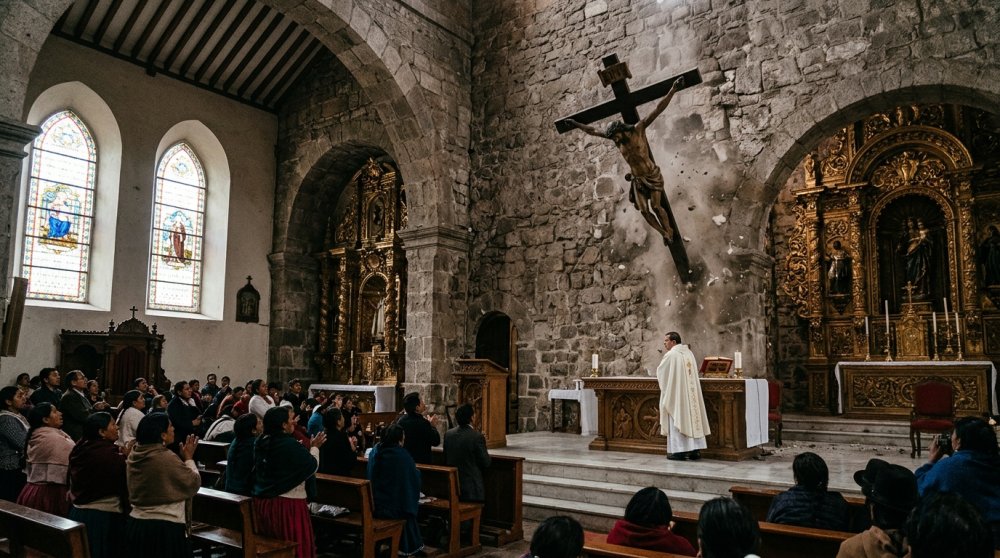
- A priest in Ecuador died during a church service when a large crucifix fell from the wall.
- Kenny Kinglesmith addresses unbelieving friends in an open letter about hope in Jesus amid suffering.
- Christian believers continue to place their trust in Christ even when tragedy strikes inside the sanctuary.
The sudden death of a priest while leading worship has shaken believers across Ecuador. Questions about suffering and divine purpose are rising again.
Kenny Kinglesmith has written an open letter to friends who do not believe. He explains why his hope in Jesus remains firm despite the pain.
“In the face of inexplicable suffering, I still choose to place my hope in Jesus.”
Many Christians are wrestling with how a loving God could allow such a loss inside His house. The event has prompted renewed reflection on the mystery of suffering.
Kinglesmith does not offer easy answers. Instead he points to the cross itself, where Christ endured the ultimate injustice yet brought redemption.
“I still choose to place my hope in Jesus.”
The tragedy has become a moment for believers to examine their own trust in God. It is also an opportunity to demonstrate compassion to those who question.
Kinglesmith urges Christians to live out their faith openly. He believes the witness of steadfast hope can speak louder than arguments.
“In the face of inexplicable suffering, I still choose to place my hope in Jesus.”
Let us know what you think, please share your thoughts in the comments below.
Faith Facts
- Franklin Graham was raised in the shadow of his father Billy Graham, one of the most influential Christian leaders of the twentieth century.
- He has publicly stated that he never tried to become Billy Graham and instead sought to follow the distinct path God set before him.
- The younger Graham has carried the Gospel message across the globe through Samaritan’s Purse and the Billy Graham Evangelistic Association while maintaining a clear Christian conservative witness.
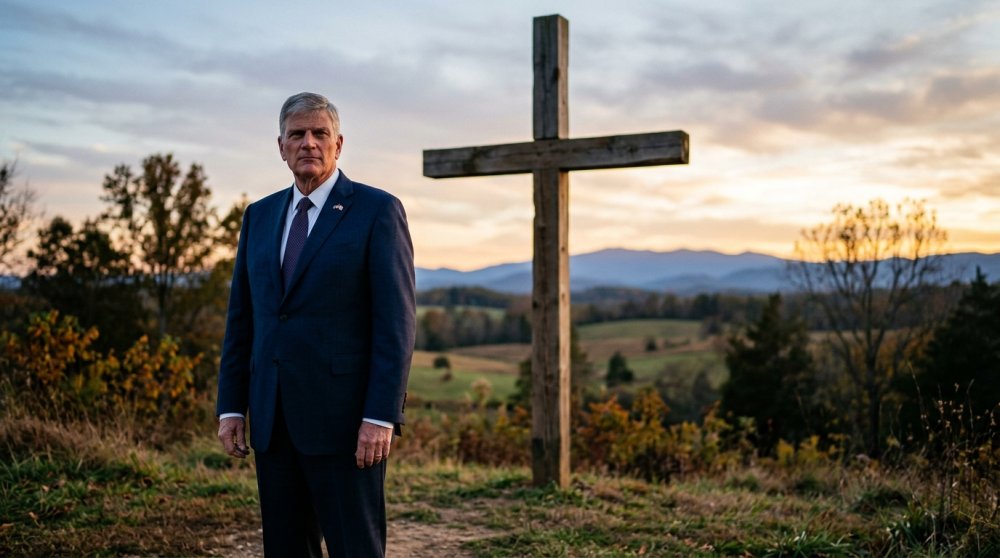
Franklin Graham recently opened up about the challenges of growing up in the household of the twentieth century’s most renowned evangelist. He explained that being the son of Billy Graham carried both a tremendous blessing and a heavy weight of expectations.
Despite the public scrutiny and inevitable comparisons, Graham made a deliberate choice early in life. He decided he would not attempt to replicate his father’s ministry or persona in any way.
“I never try to be Billy Graham,”
he said. This statement reflects the conviction that God equips each believer for a unique assignment rather than a copy of someone else’s.
Graham’s own ministry has grown into a powerful force for the Gospel through both the Billy Graham Evangelistic Association and the international relief work of Samaritan’s Purse. His approach has been marked by direct, unapologetic proclamation of biblical truth on issues ranging from religious liberty to the sanctity of life and traditional marriage.
“I never try to be Billy Graham,”
he reiterated, underscoring that his calling has always been to serve the Lord faithfully in the time and culture where God has placed him.
Today Franklin Graham continues to lead large-scale evangelistic events across the United States and around the world. He remains a steady voice for Christian values at a time when many pulpits have grown silent on cultural matters.
Let us know what you think, please share your thoughts in the comments below.
Faith Facts
- James Talarico is a member of the Presbyterian Church (U.S.A.)
- Rev. Jim Rigby serves as Talarico’s longtime pastor
- Talarico describes his Senate campaign as a form of ministry
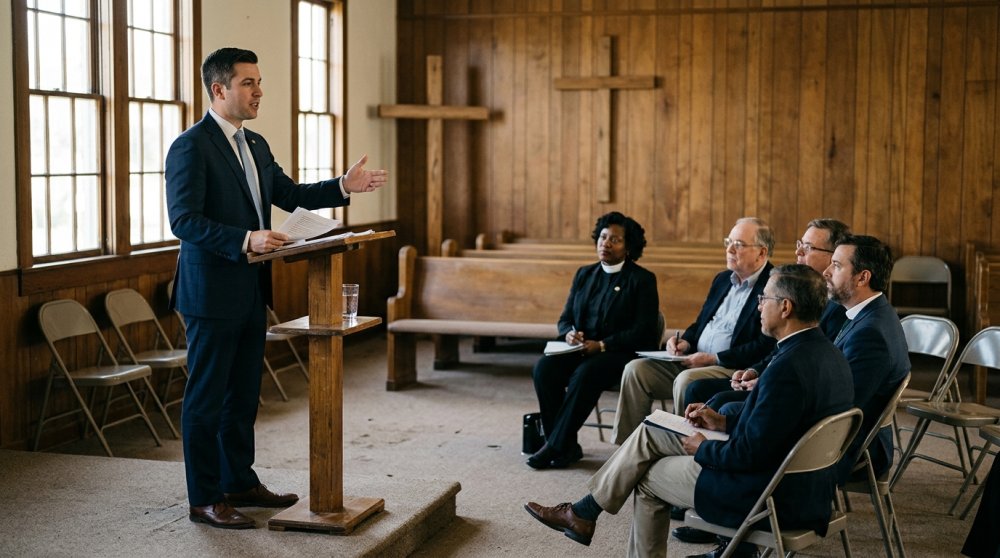
Democratic Texas state Rep. James Talarico addressed a gathering of faith leaders on Monday evening. The lawmaker shared how his pastor encouraged him to seek higher office.
Talarico credited the Rev. Jim Rigby with shaping his decision to run for the U.S. Senate. He presented the campaign as an extension of his Christian calling.
“A form of ministry.”
The PCUSA pastor reportedly framed political service as a faithful response to God’s calling. Talarico embraced this view in his remarks to the audience.
The Presbyterian Church (U.S.A.) has long maintained a progressive stance on social and political issues. Talarico’s comments align with that denominational direction.
Texas voters will soon weigh whether this interpretation of ministry resonates with their understanding of Christian citizenship. The race promises to test competing visions of faith and public service.
Let us know what you think, please share your thoughts in the comments below.


-

 Self-Reliance2 years ago
Trump’s Bold Move Uncovers Massive Social Security Fraud
-

 Faith2 years ago
New Clues Emerge in Noah’s Ark Mystery
-

 News2 years ago
Governor Walz’s Rhetoric Sparks National Controversy
-

 News2 years ago
Mel Gibson’s ‘The Passion of the Christ’ Sequel Title Announced
-

 Family2 years ago
Texas Lawmaker Targets Furries in Schools
-

 Freedom2 years ago
Maine Lawmaker Challenges Sports Fairness Controversy
-

 Family1 year ago
Canada’s Controversial Policy Sparks Ethical Debate
-
Faith11 months ago
Congress Hears Pleas for Nigerian Christians