
Faith
The Biblical Truth About Wealth That Most Christians Miss


Faith Facts
- The Bible does not condemn wealth itself but warns against the love of money and greed
- Scripture teaches that contentment and godly character matter far more than financial abundance
- God’s provision is promised to those who seek His kingdom first, not material riches
A common question among believers today touches on one of the most misunderstood topics in Christian teaching: Does God want us to be wealthy? The answer reveals a critical distinction that often gets lost in modern prosperity teaching.
The Bible does not present wealth as inherently evil or inherently good. Scripture instead focuses on the condition of the heart and the pursuit of righteousness over riches.
Throughout the Old and New Testaments, we see examples of godly people who possessed wealth—Abraham, Job, Joseph of Arimathea—alongside those who lived humbly, including Jesus Himself and many of the apostles. The difference was never the amount in their possession but their relationship with it.
First Timothy 6:10 provides crucial clarity on this matter, stating that “the love of money is a root of all kinds of evil.” Note carefully: it is the love of money, not money itself, that Scripture condemns. This distinction matters deeply for how Christians approach financial stewardship and success.
The danger emerges when believers make wealth accumulation their primary goal or measure of God’s favor. This mindset can subtly replace trust in God with trust in material security, creating an idol that competes for our devotion.
Jesus addressed this directly in Matthew 6:24, declaring, “No one can serve two masters. Either you will hate the one and love the other, or you will be devoted to the one and despise the other. You cannot serve both God and money.”
The teaching is clear: our allegiance must be singular and directed toward the Lord. When financial gain becomes our driving motivation, we have wandered from the path of faith.
Scripture consistently emphasizes contentment as a virtue far superior to wealth. Paul wrote in Philippians 4:11-12 about learning to be content in all circumstances, whether facing plenty or want. This contentment does not stem from external conditions but from an internal trust in God’s provision and timing.
Proverbs 30:8-9 offers a balanced prayer: “Give me neither poverty nor riches, but give me only my daily bread. Otherwise, I may have too much and disown you and say, ‘Who is the Lord?’ Or I may become poor and steal, and so dishonage the name of my God.”
This prayer recognizes both the spiritual dangers of wealth and poverty, seeking instead the wisdom of God’s provision according to His perfect will.
The prosperity gospel, which teaches that faith guarantees financial blessing, distorts biblical truth by reversing God’s priorities. Rather than seeking first His kingdom and His righteousness (Matthew 6:33), it encourages believers to seek material blessings as proof of spiritual favor.
God’s Word promises provision for those who follow Him faithfully, but that provision looks different for each believer according to His sovereign purpose. For some, it includes material abundance meant to be stewarded for Kingdom work; for others, it means sufficient resources for each day’s needs.
The real question is not whether God wants us to be rich but whether we want what God wants for us. Are we willing to accept His provision in whatever form it comes? Can we trust that His plan for our lives—whether it includes wealth or simplicity—is perfect?
When we shift our focus from accumulating riches to pursuing righteousness, practicing generosity, and storing up treasures in heaven, we align ourselves with eternal values rather than temporary ones. This perspective transforms how we view success, measuring it not by bank account balances but by faithfulness to God’s calling.
True biblical prosperity encompasses spiritual health, strong relationships, peace of mind, and the joy of walking in obedience to Christ. These riches far exceed any earthly fortune and cannot be diminished by economic downturns or financial loss.
For Christians navigating questions about wealth and God’s will, the path forward requires honest self-examination. What drives our financial decisions? Do we give generously and cheerfully? Are we content with what we have while working diligently with what God has entrusted to us?
The Bible calls believers to be good stewards of whatever resources come into our hands, using them to glorify God, support our families, help those in need, and advance the Gospel. Whether those resources are abundant or modest, our responsibility remains the same.
Let us know what you think, please share your thoughts in the comments below.


Faith Facts
- The Bible records Noah’s Ark as a historical vessel built at God’s command to preserve life during the Flood.
- Archaeologists and geologists continue to study sites in Turkey that some claim match the Ark’s resting place.
- Christians are urged to ground their faith in Scripture rather than unverified discoveries.
Explosive headlines this week announced that Noah’s Ark has been discovered beneath a mountain range in Turkey. The claims have quickly spread across social media and news outlets, stirring both excitement and skepticism among believers.
Chris Sinkinson, a respected Christian author and lecturer, cautions that such announcements often outpace the evidence. He urges fellow believers to remain anchored in Scripture and verified facts rather than sensational reports.
“Christians need to stick to the facts,” Sinkinson stated. His words serve as a timely reminder that faith rests on the unchanging Word of God, not on the latest archaeological headline.
While the possibility of discovering physical remnants of the Ark is intriguing, experts note that conclusive proof remains elusive. Many past claims have failed under closer scientific examination.
Scripture itself provides the foundation for understanding the Flood and God’s covenant with Noah. Believers are reminded that the reliability of the Bible does not depend on locating the physical Ark.
Let us know what you think, please share your thoughts in the comments below.
Faith Facts
- Revelation chapters 2 and 3 contain direct messages from Jesus to seven churches in Asia Minor, blending commendation with stern rebuke.
- Scripture records that Jesus declares, “I know your works,” underscoring His intimate awareness of both corporate and personal conduct.
- The warnings delivered to these early congregations still apply to contemporary churches that drift into compromise or complacency.
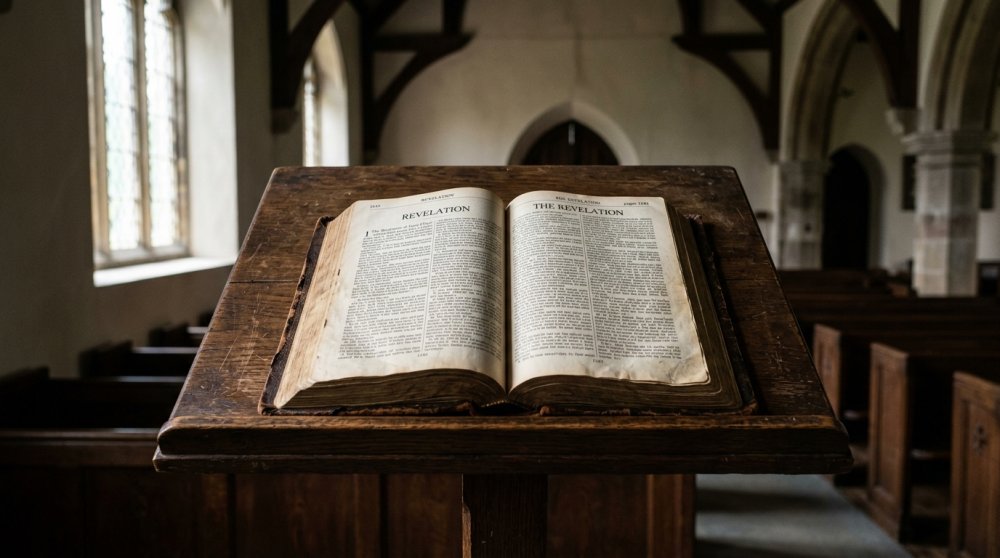
In Revelation 2 and 3, the gentle and lowly Jesus speaks to seven churches with both praise and severe warning.
He knows their works, their compromises and what they can’t see about themselves.
He knows ours, too.
Let us know what you think, please share your thoughts in the comments below.

Faith Facts
- Professional wrestler Samoa Joe has publicly encouraged Christians to give a portion of their income to the local church.
- Joe described his decision to tithe as one of his “greatest decisions.”
- The call to tithe reflects the biblical principle of returning the firstfruits of one’s labor to God.
Professional wrestler Samoa Joe is using his platform to point believers toward faithful giving. He recently shared that his commitment to tithing remains one of the most important choices he has made.
Joe described the practice as both a spiritual discipline and a source of blessing in his life. His public encouragement comes at a time when many families are weighing how to honor God with their finances amid rising costs and economic uncertainty.
“One of my greatest decisions was to tithe,”
The wrestler’s testimony underscores the biblical call found in Malachi 3:10, where God invites His people to bring the whole tithe into the storehouse. For Christian audiences, Joe’s words serve as a reminder that generosity is not limited to pastors or ministry professionals.
His straightforward challenge to tithe resonates with believers who see financial stewardship as an act of worship rather than mere obligation. In an industry often marked by self-promotion, Joe’s public stand for biblical giving offers a refreshing counter-example.
Let us know what you think, please share your thoughts in the comments below.


-

 Self-Reliance2 years ago
Trump’s Bold Move Uncovers Massive Social Security Fraud
-

 Faith1 year ago
New Clues Emerge in Noah’s Ark Mystery
-

 News2 years ago
Governor Walz’s Rhetoric Sparks National Controversy
-

 News2 years ago
Mel Gibson’s ‘The Passion of the Christ’ Sequel Title Announced
-

 Family2 years ago
Texas Lawmaker Targets Furries in Schools
-

 Freedom2 years ago
Maine Lawmaker Challenges Sports Fairness Controversy
-

 Family1 year ago
Canada’s Controversial Policy Sparks Ethical Debate
-
Faith11 months ago
Congress Hears Pleas for Nigerian Christians